
Rapid Prototyping
What Are the Key Advantages of Nylon Prototype Models?
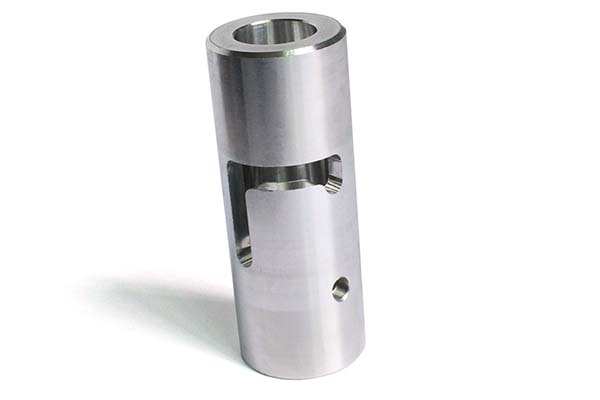
Nylon prototype models occupy a sweet spot in product development. They are stronger than standard resin prototypes, more flexible than basic plastics, and far cheaper than metal. Engineers choose nylon when they need a prototype that behaves like a production part without the cost and lead time of metal machining.
Key takeaways
- Nylon’s molecular structure gives it a unique combination of mechanical properties.
- Nylon works with multiple prototyping technologies. You are not locked into one process based on material choice.
- Nylon prototypes cost more than basic resin prints but far less than metal.
- Nylon prototype models offer a unique combination of strength, flexibility, heat resistance, and chemical stability.
Superior Material Properties: Beyond Basic Functionality
Nylon’s molecular structure gives it a unique combination of mechanical properties. It bends without breaking, resists wear from repeated contact, and handles temperatures that would soften other plastics.
High Strength and Toughness
Nylon absorbs energy before failing. It can deform up to 15% before breaking, which means it bends rather than shatters under load.
- What this means for prototypes: You can test snap fits, living hinges, and other features that require flexibility. A part that cracks in resin may survive in nylon, giving you valid data on whether the design itself works.
- Real example: A laptop hinge prototype made from nylon was tested through 10,000 open-close cycles. The hinge showed no cracks and maintained its holding force. A resin version failed before 500 cycles.
Exceptional Abrasion Resistance
Nylon’s surface resists wear from sliding contact. This matters for parts that move against each other.
- Quantitative comparison: Nylon is 50% more wear-resistant than standard resin in standardized abrasion tests.
- Real example: Small appliance gears for a blender prototype were machined from nylon. After 500 hours of testing, the gear teeth showed minimal wear and continued to mesh smoothly. Resin gears tested earlier had worn flat in 200 hours.
High Temperature Resistance
Nylon maintains its mechanical properties at temperatures that soften or deform many other plastics.
- Temperature limits: PA12 nylon melts around 180°C and remains stable up to 120°C in continuous use. Standard resin softens above 60°C.
- Real example: A car engine bracket prototype was mounted near the engine block where temperatures reach 100°C. The nylon part held its shape and continued to support the attached components. A resin bracket would have sagged and failed.
Chemical Stability
Nylon resists oils, mild acids, and alkalis. It does not corrode or degrade when exposed to common chemicals.
- What this enables: Testing parts that will contact fuels, lubricants, or cleaning agents.
- Real example: Motorcycle fuel line prototypes were made from nylon and filled with gasoline for three months. The material showed no swelling, softening, or loss of strength. The design was validated without waiting for metal prototypes.
Flexible Production: Adapting to Diverse Design Needs
Nylon works with multiple prototyping technologies. You are not locked into one process based on material choice.
Compatibility with Core Prototyping Technologies
| Method | Advantages for Nylon | Best Use Cases |
|---|---|---|
| SLS 3D printing | Creates complex internal structures, moving parts, and assemblies in one piece. No supports needed. | Robot joints with integrated hinges, lattice structures for lightweighting |
| FDM 3D printing | Low-cost filament, fast turnaround for simple parts. | Phone cases for grip testing, brackets for fit checks |
| CNC machining | Ultra-smooth surfaces, tight tolerances down to ±0.05mm. | Precision components that must mate with other parts |
Real example: A robotic finger prototype was designed with internal hinges and channels for tendon cables. SLS printing in nylon produced the entire assembly in one piece, ready for testing the next day. No assembly, no post-processing beyond powder removal.
Low-Volume Production Capability
Nylon bridges the gap between single prototypes and full production. You can make 10, 50, or 100 units economically.
- Medical application: A prosthetics company produced 50 custom prosthetic socket prototypes, each tailored to a different patient’s leg shape. SLS printing in nylon allowed individual customization without mold costs. Patients tested the sockets and provided feedback before production.
- Outdoor gear: A backpack manufacturer created 30 buckle prototypes in nylon and sent them to hikers for field testing. The buckles survived rough handling and weather exposure, proving the design before mold cutting.
How to write a spec that gets priced correctly
A drawing is a contract. If it leaves a number open, the shop fills that number in with its own default. The default is rarely the one you had in mind. Put these five lines on every RFQ and most of the back-and-forth disappears before it starts.
- A model you are willing to freeze for the build
- The question the prototype must answer
- Process and material that can answer it
- Tolerance on the features under test
- How many iterations you have budgeted
The point is not paperwork. Each line removes a decision the shop would otherwise make for you. A complete RFQ comes back priced. An incomplete one comes back guessed.
What actually drives the price
Buyers usually push on material because it is the line they can see. In practice the material is rarely the biggest number on a quote. These five lines decide most of it:
- process choice
- part size and feature count
- material
- finish and fit checks
- number of iterations
Ask for the quote split by line. A supplier who cannot break it down is guessing, and you will pay for the guess. The line you can usually renegotiate is the tolerance band, not the raw material.
Problems you will meet, and the fix
Every process has a failure mode it prefers. The same four show up again and again on this kind of work, and none of them are mysteries once you know what to look for.
- A prototype that is too good and hides a production problem
- A prototype that is too rough to test the real question
- Material chosen for speed rather than for the test
- No measurement plan, so the result is an opinion
Catch the fault on the first part, not the hundredth. A first-article check costs an hour. A bad batch costs the whole order. Write the check into the purchase order so nobody has to remember it.
What to check on the first article
The first article is the cheapest inspection you will ever buy. Use it properly and the rest of the run becomes boring, which is exactly what you want.
- Every dimension on the drawing, with the measured value written beside it.
- The material certificate, matched to the heat or lot number on the parts.
- The finish against the sample you approved, under the same light.
- Fit against the mating part, assembled rather than measured.
- Packaging, because parts that arrive damaged were never in tolerance.
Check in this order: datums, then mating features, then cosmetic faces. If the datums are wrong, every number after them is noise. Keep the report on file. When a problem shows up in month six, that document is the only thing that tells you what changed.
How to compare two quotes fairly
Two numbers are not comparable unless the scope matches. Line them up before you decide, because a low number with three gaps is not a low number.
Same drawing, same material, same finish, same inspection. Anything else is a different job wearing the same part number. Then look at what each quote leaves out. Freight, packaging, certificates and tooling are the usual gaps.
Ask each supplier to state their assumptions in writing. The one who does is usually the one who has run the process before.
Scaling from one part to a batch
The first part teaches you the process. The hundredth teaches you the process cost.
Watch three things as volume grows: setup amortisation, tool wear, and how much hand work the finish still needs. If the unit price barely moves between ten and a hundred, the cost sits in material or in hand work, not in setup. Ask which, because only one of them is negotiable.
Lead time behaves the same way. A one-off is scheduled around other jobs. A repeat order is scheduled around your forecast. Give the shop a forecast and the lead time gets shorter, not longer.
How to read a supplier's quote
A quote is a short document with a long shadow. Four things in it decide whether the job runs smoothly, and only one of them is the price.
- The scope line. It should name the process, the material and the finish, not just the part.
- The tolerance basis. General tolerance or the drawing, and which standard it follows.
- The exclusions. Tooling, freight, certificates and inspection are the usual omissions.
- The validity date. Material prices move, and an open-ended quote is a promise nobody can keep.
Read the exclusions before you read the total. A quote that leaves out tooling is not cheaper. It is a quote for a different job.
What to send with the first order
The first order sets the pattern for every order after it. Send a complete package once and the shop files it, and the second order takes a fraction of the time.
- A STEP or native model plus a PDF drawing carrying the same revision letter.
- The material callout by standard number, not by trade name.
- The finish and the exact faces it applies to.
- Any test the part must pass: fit, seal, drop, salt spray, dielectric.
- A contact who can answer a question inside one working day.
Then write down what was agreed. An email that confirms the material, the finish and the date is worth more than a longer purchase order that leaves them open.
When this is the wrong choice
A good supplier tells you when the process does not fit. These are the cases where we say so.
- The volume is so low that setup costs more than the parts are worth.
- The tolerance is tighter than the process can hold without a second operation.
- The geometry cannot be made without a tool feature that will not pay back.
- The material you need is not available in the form the process requires.
- The schedule is shorter than the tooling or setup time, and nobody has said so yet.
None of these are refusals. They are reasons to look at a different route, and the earlier that conversation happens the cheaper it is. The most expensive mistake in manufacturing is a process chosen before the question was understood.
Planning the ramp from prototype to production
The gap between one good part and a thousand identical ones is a plan, not a machine. Three decisions close it.
First, freeze the design. Every change after tooling starts is a re-cut, and re-cuts are where schedules go. Second, decide the inspection level. A prototype is checked by eye; a production part is checked against a report. Third, agree the change process in writing, including who pays for it.
Write the ramp down as dates and owners, not as intentions. A ramp plan with three names and three dates is worth more than a page of good intentions.
What documentation to expect
Paperwork is not bureaucracy when a part fails at the customer. It is the only record of what was agreed. A normal shipment should carry four documents.
- A dimensional report covering every callout on the drawing.
- A material certificate traceable to the heat or lot number.
- A finish or coating certificate where the specification requires one.
- A packing list that matches the carton labels.
If a supplier cannot produce these on request, they are not running a controlled process. Ask for one sample set before you place the first order and you will know exactly what you are buying.
How to handle a change after the order
Changes happen. What matters is whether the change is priced, scheduled and recorded, or absorbed quietly and discovered later.
Send the change as a new revision, not as a note in an email. Ask for three answers in writing: what it costs, what it does to the date, and what happens to material or tooling already committed. Then decide.
A change without a revision number is a rumour. The shop will build what it has on file, and both sides will be right and unhappy at the same time.
How the work actually runs, step by step
Most buyers see two numbers: a price and a date. Between them sits a sequence that decides both. On prototyping work it looks like this.
- File review. The model and the drawing are checked against each other. Where they disagree, the shop stops and asks, because guessing is how scrap gets made.
- DFM feedback. The features that add cost and the features that will not hold tolerance are listed. This is the cheapest hour in the whole project.
- Setup or tooling. Fixtures, programs or a tool are built. Everything downstream inherits the quality of this step.
- First article. One part is made and measured against the drawing before anything else runs. Nothing is signed until it passes.
- Production. The run goes ahead with the parameters that produced the approved first article, not with new ones.
- Inspection and packing. The callouts are measured, the certificate is matched, and the parts are packed so they arrive in the condition they left in.
Ask any supplier to walk you through these six steps on your part. The answers tell you more about the shop than the price does.
Cost-Effectiveness: Balancing Performance and Budget
Nylon prototypes cost more than basic resin prints but far less than metal. The value comes from durability that reduces reprints and testing that gives reliable data.
Cost Comparison Across Materials
| Factor | Nylon Prototype | Resin Prototype | Metal Prototype |
|---|---|---|---|
| Material cost per kg | 150-400 CNY (PA12 powder) | 80-200 CNY (standard resin) | 600-1,200 CNY (aluminum alloy) |
| Post-processing time | 1-2 hours (light sanding) | 3-4 hours (support removal, sanding, painting) | 4-6 hours (polishing, surface treatment) |
| Typical cost per part | 400-1,500 CNY (small-medium) | 200-1,200 CNY (but less durable) | 1,500-6,000 CNY |
| Long-term value | Reusable for multiple test rounds | Often breaks, needs reprint | Reusable but overkill for many tests |
Real savings example: An electronics company needed to test fit and function for headphone hinge compartments. Initial quotes for aluminum prototypes were 1,000 CNY per unit. Switching to nylon SLS printing dropped the cost to 600 CNY per unit—a 40% saving. The nylon parts survived all fit tests and wear testing, providing the same validation data at lower cost.
When Nylon Saves Money
- Iterative testing: Nylon prototypes survive multiple rounds of assembly and disassembly. You test, modify the CAD, and test again with the same physical part if changes are minor.
- Functional testing: Resin prototypes break during stress tests, requiring reprints. Nylon takes the abuse and keeps working.
- Small batches: For 10 to 100 units, nylon printing or machining avoids mold costs while delivering production-like parts.
Nylon prototype models offer a unique combination of strength, flexibility, heat resistance, and chemical stability. They survive testing that destroys resin parts, yet cost far less than metal. Nylon works with multiple production methods—SLS for complex geometries, FDM for quick prints, CNC for tight tolerances—so you can match the process to your part. For functional prototypes, small batches, and iterative testing, nylon delivers the best value. It behaves like a production part without the production cost, giving you reliable data to move forward with confidence.
Our solution for Key Advantages
YiguProto runs rapid prototyping in house, from a single prototype to a production batch. We quote the process, the material and the finish as separate lines, so you can see where the money goes instead of arguing with one number.
Send a STEP file or a drawing and you get a DFM report in one to two business days. It flags the features that add cost and the features that will not hold tolerance on the process you picked.
Every order ships with an inspection report on the features you call out. If a part misses, we make it again. Ready to price a part? Start with a free quote and DFM review, or read more about our rapid prototyping. You can also talk to an engineer before you commit to a drawing.
FAQ about Key Advantages
How do I compare two quotes fairly?
Match the scope first: same drawing, same material, same finish, same inspection. Then read the exclusions. Freight, tooling and certificates are the usual gaps, and a low number with three gaps is not a low number.
What should I check before approving the parts?
Datums first, then the features that mate, then the cosmetic faces. Ask for a dimensional report, a material certificate and a finish sample. A part can be inside every tolerance and still not fit, so assemble one before you sign.
What tolerance can you hold on Key Advantages?
The working default is ±0.1 mm on most processes, tighter after machining. Tighter than that the process changes and so does the price, because every step tighter adds inspection time. Call out only the faces that mate with something else and leave the rest on the general tolerance.
Does the process work for prototypes as well as production?
Yes, and that is usually the point. Running the prototype on the production process removes a whole class of surprises, because the part you test is made the same way as the part you sell.
What files do you need in order to quote?
A STEP file plus a PDF drawing that carries the same revision letter. The model carries the geometry and the drawing carries the intent. When the two disagree, the shop picks one, and it is never the one you meant.
What happens if a part is out of specification?
We measure it against the same drawing you approved and, if it misses, we make it again. What matters is that the report exists, because a disagreement without data is just an opinion.
The short version
Key Advantages rewards the buyer who reads the data sheet and the drawing together. Pick the option for the property that matters, not for the price per kilo.
Tighten only what mates. Test a sample before the run. Then let the process do the rest.