
Die Casting
What Causes Die Casting Aluminum Alloy Blackening and How to Solve It?
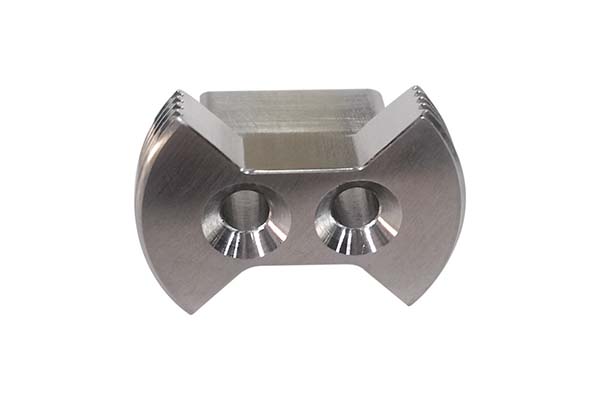
You have seen it happen. A batch of perfect aluminum parts comes out of the die casting machine—bright, clean, ready for assembly. A few weeks later, they are covered in dark spots or have turned completely black. Die casting aluminum alloy blackening is frustrating, expensive, and damaging to your reputation. It ruins appearance, reduces corrosion resistance, and shortens part life.
Key takeaways
- Manufacturing processes can leave residues or create structural weaknesses that lead to blackening.
- Surface treatments create a physical barrier between aluminum and the environment. These are the most effective long-term solutions.
- Die casting aluminum alloy blackening has multiple causes, but each has a solution:
What Production and Process Issues Cause Blackening?
Manufacturing processes can leave residues or create structural weaknesses that lead to blackening.
Contaminant Adhesion
The problem: Release agents, cutting fluids, and saponification fluids remain on the aluminum surface after casting. These contain corrosive components (fatty acids, sulfur compounds) that react with aluminum over time.
The impact: A smartphone middle frame with 0.1 mm of release agent residue may turn black in 7 days of storage. A clean part lasts 30+ days.
The fix:
- Use neutral detergents (pH 6–8) instead of corrosive cleaners
- Implement a 3-step cleaning process:
- Soak: 10 minutes in 50°C detergent
- Rinse: High-pressure water at 0.3 MPa
- Dry: Hot air at 80°C for 5 minutes
- Add ultrasonic cleaning for complex parts with internal cavities
Incomplete Cleaning
The problem: Gaps in cleaning—hard-to-reach internal cavities, insufficient rinsing, low detergent concentration—leave contaminants trapped. These become “hotspots” for localized blackening.
The impact: An automotive engine bracket with uncleaned bolt holes develops black spots around the holes within 2 weeks. The rest of the surface remains fine.
The fix:
- Design cleaning processes to reach all surfaces
- Use ultrasonic cleaning for blind holes and internal features
- Verify cleanliness by wiping with a white cloth—reject if residue visible
Poor Die Casting Parameters
The problem: Low injection pressure (under 50 MPa) or short holding time (under 10 seconds) creates porosity in the aluminum. Micro-pores trap moisture and contaminants, triggering internal oxidation.
The impact: A porous LED heat sink (porosity over 5%) turns uniformly black after 1 month in humid air. Moisture seeps into pores and reacts throughout the part.
The fix:
- Increase injection pressure to 80–120 MPa
- Extend holding time to 15–20 seconds
- Target porosity under 2%
- Use vacuum die casting for critical parts to eliminate micro-pores
What Material Properties Contribute to Blackening?
The alloy itself can make blackening more likely.
Excessive Impurities
The problem: High iron content (over 1.3% in ADC12) or impure scrap aluminum form brittle intermetallic compounds (Al₃Fe). These oxidize faster than pure aluminum.
The impact: An ADC12 part with 1.5% iron is 2–3× more likely to blacken than one with 0.8% iron.
The fix:
- Limit iron content to <1.0% for ADC12, <0.8% for A380
- Use high-purity raw materials (99.5%+ pure aluminum ingots) for critical parts
- Limit scrap content to ≤30% of total melt—and only clean scrap (no oil, paint, corrosion)
Grain Structure and Surface Roughness
The problem: Coarse grains (over 50 μm) and rough surfaces (Ra over 6.3 μm) have larger surface area exposed to oxygen. Fine grains and smooth surfaces form more uniform oxide films.
The impact: A rough gearbox housing (Ra 12.5 μm) shows blackening in 14 days. A polished one (Ra 0.8 μm) stays bright for 60+ days.
The fix:
- Use grain refiners (titanium boride) during smelting to keep grain size under 30 μm
- Add trace rare earth elements (0.1–0.3% cerium) to stabilize the oxide film
- Polish surfaces to Ra <1.6 μm after casting
What Environmental Factors Accelerate Blackening?
External conditions attack the aluminum’s protective oxide film.
Temperature and Humidity
The problem: High humidity (over 60% RH) provides moisture for electrochemical oxidation. In rainy seasons or coastal areas, blackening risk increases 40–60%.
The impact: An air conditioner compressor shell stored at 70% RH turns black in 20 days. At 40% RH, it lasts 45 days.
The fix:
- Maintain warehouse humidity at 40–50% RH
- Keep temperature at 20–25°C
- Use dehumidifiers in rainy seasons or coastal facilities
- Store parts on pallets ≥10 cm above ground—humidity is lower at height
Corrosive Media Contact
The problem: Strong acids, alkalis, or salt spray destroy the oxide film. Even a short exposure can trigger rapid oxidation.
The impact: A marine bracket exposed to salt spray (per ASTM B117) turns black within 48 hours.
The fix:
- Avoid storing aluminum near acid/alkali storage areas or industrial exhaust vents
- Wear gloves during handling—sweat contains salts that attack aluminum
- Use moisture-proof packaging for long-distance transport (sea shipping especially)
- Add desiccants: 5g per cubic meter of packaging volume
What Post-Processing Errors Cause Blackening?
Even well-made parts can blacken if post-processing goes wrong.
Improper Cleaning Agents
The problem: Highly corrosive cleaners (pH over 12) etch the aluminum surface, removing the natural oxide film and exposing fresh metal to oxidation.
The impact: A part cleaned with pH 13 detergent starts blackening in 3 days. One cleaned with neutral detergent (pH 6–8) lasts 25+ days.
The fix:
- Use only neutral detergents (pH 6–8)
- Test any new cleaning agent: immerse a sample part for 24 hours; reject if discoloration appears
Negligent Storage Management
The problem: Humidity varies with height. Ground-level storage (65% RH) is worse than elevated storage (50% RH at 2m). Parts on the floor blacken faster.
The impact: Parts stored on the ground without moisture-proof packaging blacken 2–3× faster than those on pallets with plastic covers.
The fix:
- Store all parts on pallets (minimum 10 cm height)
- Wrap pallets in moisture-proof plastic film
- Monitor humidity at part level—not just warehouse average
How Do You Strengthen Surface Protection?
Surface treatments create a physical barrier between aluminum and the environment. These are the most effective long-term solutions.
| Treatment | Process | Protection Effect | Best Applications |
|---|---|---|---|
| Anodizing | Electrolytic creation of 10–20 μm oxide layer. Type II (cosmetic) or Type III (hard) | Resists 48–72 hours salt spray (ASTM B117); delays blackening 6–12 months | Electronic device shells, automotive exterior trim |
| Spraying/powder coating | 50–100 μm polymer coating (epoxy, polyester) applied electrostatically | Isolates from moisture/oxygen; prevents blackening 1–2 years | Home appliance components (washing machine drums) |
| Passivation | Chemical treatment (chromate, trivalent chromium) enhances natural oxide film | Improves corrosion resistance 30–50%; extends blackening-free storage to 60+ days | Small precision parts where thick coatings impractical |
How Do You Implement Full-Process Quality Control?
Pre-Production
- Verify alloy composition via optical emission spectroscopy (OES) —ensure iron and impurities meet standards
- Test cleaning agents: immerse sample for 24 hours; reject any that discolor
In-Production
- Monitor die casting parameters in real time with sensors; alert if deviation exceeds 10%
- Inspect 100% of cleaned parts: wipe with white cloth—reject if residue visible
Post-Production
- Inspect 5% of stored parts weekly for early signs of blackening
- Adjust storage conditions if spots appear
- Use corrosion-resistant packaging with desiccants for transport
How to write a spec that gets priced correctly
A drawing is a contract. If it leaves a number open, the shop fills that number in with its own default. The default is rarely the one you had in mind. Put these five lines on every RFQ and most of the back-and-forth disappears before it starts.
- 3D model with the parting line marked
- Alloy grade and the standard it meets
- Wall thickness and draft on every face
- Machining allowance on the faces that will be cut
- Pressure tightness or porosity class
The point is not paperwork. Each line removes a decision the shop would otherwise make for you. A complete RFQ comes back priced. An incomplete one comes back guessed.
What actually drives the price
Buyers usually push on material because it is the line they can see. In practice the material is rarely the biggest number on a quote. These five lines decide most of it:
- die steel and cavity count
- part weight and wall section
- draft and slide count
- porosity requirement
- machining allowance
Ask for the quote split by line. A supplier who cannot break it down is guessing, and you will pay for the guess. The line you can usually renegotiate is the tolerance band, not the raw material.
Problems you will meet, and the fix
Every process has a failure mode it prefers. The same four show up again and again on this kind of work, and none of them are mysteries once you know what to look for.
- Cold shuts where two flow fronts meet
- Porosity that shows up only after machining
- Soldering on a hot spot in the die
- Shrinkage voids in a heavy section
Catch the fault on the first part, not the hundredth. A first-article check costs an hour. A bad batch costs the whole order. Write the check into the purchase order so nobody has to remember it.
What to check on the first article
The first article is the cheapest inspection you will ever buy. Use it properly and the rest of the run becomes boring, which is exactly what you want.
- Every dimension on the drawing, with the measured value written beside it.
- The material certificate, matched to the heat or lot number on the parts.
- The finish against the sample you approved, under the same light.
- Fit against the mating part, assembled rather than measured.
- Packaging, because parts that arrive damaged were never in tolerance.
Check in this order: datums, then mating features, then cosmetic faces. If the datums are wrong, every number after them is noise. Keep the report on file. When a problem shows up in month six, that document is the only thing that tells you what changed.
How to compare two quotes fairly
Two numbers are not comparable unless the scope matches. Line them up before you decide, because a low number with three gaps is not a low number.
Same drawing, same material, same finish, same inspection. Anything else is a different job wearing the same part number. Then look at what each quote leaves out. Freight, packaging, certificates and tooling are the usual gaps.
Ask each supplier to state their assumptions in writing. The one who does is usually the one who has run the process before.
Scaling from one part to a batch
The first part teaches you the process. The hundredth teaches you the process cost.
Watch three things as volume grows: setup amortisation, tool wear, and how much hand work the finish still needs. If the unit price barely moves between ten and a hundred, the cost sits in material or in hand work, not in setup. Ask which, because only one of them is negotiable.
Lead time behaves the same way. A one-off is scheduled around other jobs. A repeat order is scheduled around your forecast. Give the shop a forecast and the lead time gets shorter, not longer.
How to read a supplier's quote
A quote is a short document with a long shadow. Four things in it decide whether the job runs smoothly, and only one of them is the price.
- The scope line. It should name the process, the material and the finish, not just the part.
- The tolerance basis. General tolerance or the drawing, and which standard it follows.
- The exclusions. Tooling, freight, certificates and inspection are the usual omissions.
- The validity date. Material prices move, and an open-ended quote is a promise nobody can keep.
Read the exclusions before you read the total. A quote that leaves out tooling is not cheaper. It is a quote for a different job.
What to send with the first order
The first order sets the pattern for every order after it. Send a complete package once and the shop files it, and the second order takes a fraction of the time.
- A STEP or native model plus a PDF drawing carrying the same revision letter.
- The material callout by standard number, not by trade name.
- The finish and the exact faces it applies to.
- Any test the part must pass: fit, seal, drop, salt spray, dielectric.
- A contact who can answer a question inside one working day.
Then write down what was agreed. An email that confirms the material, the finish and the date is worth more than a longer purchase order that leaves them open.
FAQ About Die Casting Aluminum Alloy Blackening
Can already blackened parts be restored?
Yes, but it depends on severity:
Mild blackening (faint spots): Clean with neutral detergent (pH 6–8) and soft brush, then apply passivation.
Severe blackening (thick oxide layer): Use dilute acid (5% nitric acid) to remove oxide, then re-anodize or recoat. Warning: Severe restoration may reduce thickness by 0.01–0.02 mm—avoid for precision parts.
How long do properly treated parts stay blackening-free?
With good treatment and storage:
- Anodized (10–20 μm): 6–12 months at 40–50% RH
- Powder coated (50–100 μm): 1–2 years
- Passivated: 2–3 months—best for short-term components
Can I use scrap aluminum if blackening is a concern?
Yes, with strict controls:
- Limit scrap to ≤30% of total melt
- Use only clean scrap (no oil, paint, corrosion)—pre-treat with degreaser
- Add grain refiners (titanium boride) to offset impurity effects
- For critical parts (medical devices, aerospace), avoid scrap entirely
Does blackening affect mechanical properties or just appearance?
Both. Mild blackening is cosmetic. But severe blackening indicates oxidation that reduces wall thickness and can create stress concentration points. Parts with deep blackening may have lost 10–15% of tensile strength.
What is the single most effective prevention measure?
Surface treatment (anodizing or coating) combined with good storage (40–50% RH, elevated pallets). This addresses both the material vulnerability and environmental triggers.
Die casting aluminum alloy blackening has multiple causes, but each has a solution:
- Production residues → Neutral detergents, ultrasonic cleaning, verified cleanliness
- Poor casting parameters → Higher pressure (80–120 MPa), longer hold (15–20 s), porosity under 2%
- Material impurities → Limit iron (<1.0% ADC12), use high-purity raw materials, grain refiners
- Environmental factors → Control humidity (40–50% RH), store elevated, avoid corrosives
- Post-processing errors → Neutral cleaners, proper storage, protective packaging
- Surface vulnerability → Anodize, coat, or passivate for long-term protection
The numbers tell the story: a well-cleaned, properly alloyed, anodized part stored correctly stays bright for 12+ months. A neglected part blackens in 7 days. The difference is not luck—it is process control.
Prevention is not complicated, but it requires attention at every stage: material selection, casting parameters, cleaning, surface treatment, and storage. Get it right, and your parts will look as good as they perform.
Our solution for Causes Die Casting Aluminum Alloy
YiguProto runs die casting in house, from a single prototype to a production batch. We quote the process, the material and the finish as separate lines, so you can see where the money goes instead of arguing with one number.
Send a STEP file or a drawing and you get a DFM report in one to two business days. It flags the features that add cost and the features that will not hold tolerance on the process you picked.
Every order ships with an inspection report on the features you call out. If a part misses, we make it again. Ready to price a part? Start with a free quote and DFM review, or read more about our die casting. You can also talk to an engineer before you commit to a drawing.
FAQ about Causes Die Casting Aluminum Alloy
What material should I specify?
Specify by standard, not by trade name. A trade name can change under you between two orders; a standard number cannot. Then add the one property that actually decides the part, whether that is strength, heat resistance or chemical exposure.
How do I compare two quotes fairly?
Match the scope first: same drawing, same material, same finish, same inspection. Then read the exclusions. Freight, tooling and certificates are the usual gaps, and a low number with three gaps is not a low number.
What happens if a part is out of specification?
We measure it against the same drawing you approved and, if it misses, we make it again. What matters is that the report exists, because a disagreement without data is just an opinion.
What tolerance can you hold on Causes Die Casting Aluminum Alloy?
The working default is ±0.1 mm on cast features, ±0.05 mm after machining. Tighter than that the process changes and so does the price, because every step tighter adds inspection time. Call out only the faces that mate with something else and leave the rest on the general tolerance.
How long does a first article take?
Usually a few business days once the drawing is frozen, and longer if tooling is involved. The date we give you is the date we confirm in writing, not the date we hope for.
What is Causes Die Casting Aluminum Alloy used for?
Causes Die Casting Aluminum Alloy turns up wherever the part has to do a real job at a predictable cost: brackets, housings, fixtures, covers and the fittings that hold them together. The honest test is whether the properties match the load and the environment, not whether the material is fashionable.
The short version
Causes Die Casting Aluminum Alloy rewards the buyer who reads the data sheet and the drawing together. Pick the option for the property that matters, not for the price per kilo.
Tighten only what mates. Test a sample before the run. Then let the process do the rest.