
Die Casting
What Are Die Casting Aluminum Spoons and Why Choose Them?
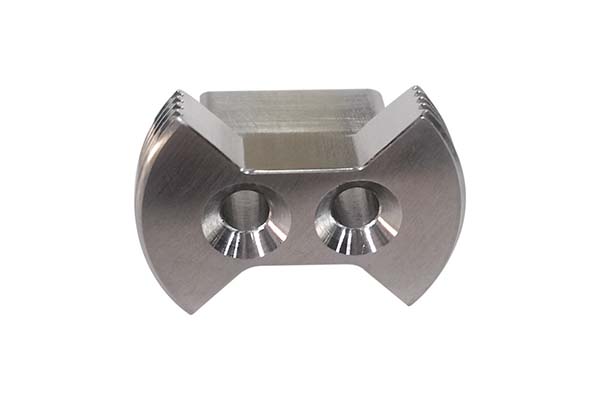
Die casting aluminum spoons have become popular in homes, airlines, and commercial spaces. They combine lightweight design, precision molding, and cost efficiency in ways traditional spoons cannot match. A standard aluminum spoon weighs 30-50g —about half that of stainless steel—while maintaining strength through dense grain structure. One-piece construction eliminates weak points from welded handles.
What Exactly Are Die Casting Aluminum Spoons?
Definition
A die casting aluminum spoon is a metal utensil made by forcing molten aluminum alloy into a precision mold under high pressure.
Raw material: Food-grade aluminum alloys complying with standards like GB 4806 or FDA. Common alloys include 3003 (good corrosion resistance) and 6061 (balanced strength and lightness). These avoid heavy metals like lead and cadmium.
Production principle: Molten aluminum heated to 720-750°C injects into a custom mold at 12-16 MPa pressure. After 8-12 seconds of pressure holding and cooling, the mold opens to reveal a spoon with intact details—embossed patterns, ergonomic curves, all in one piece.
Key differentiator: Unlike stamped stainless steel spoons that need handle welding, die casting creates one-piece spoons. No assembly, fewer weak points, better consistency for mass production.
Why Choose Die Casting Aluminum Spoons?
Lightweight and strong
Aluminum density at ~2.7 g/cm³ is one-third of stainless steel. A standard die cast spoon weighs 30-50g versus 60-80g for stainless. Adding silicon and magnesium boosts strength—flexural strength is 20-30% higher than stamped stainless spoons.
Ideal for: Long holding during kids’ meals, travel use where stainless causes hand fatigue, or any application where weight matters. Plastic spoons lack strength and bend easily.
Precision molding for complex designs
Molds replicate micro-details that stamping cannot achieve—0.1mm-deep embossed logos, 3D patterns. High-end gift spoons use this for intricate engravings.
Stamped spoons have flat, simple designs. Plastic spoons can’t match metal’s detail clarity.
Flexible surface finishes
Multiple post-treatments enhance functionality and aesthetics:
- Anodizing: Forms dense alumina film—wear-resistant, colorable in silver, gold, black
- Electroplating/spraying: Creates mirror or matte finishes
- Sandblasting: Increases friction to prevent slipping when wet
Stainless steel spoons are limited to polishing. Plastic spoons have prints that peel easily.
Cost-effective mass production
One die casting step replaces welding and assembly, cutting production time by 30%. For customized orders with corporate logos, unit costs are 15-20% lower than stamped stainless steel spoons.
Stamped spoons need extra assembly for handles. Plastic spoons have low durability, leading to higher replacement costs.
| Advantage | Die Cast Aluminum | Stainless Steel | Plastic |
|---|---|---|---|
| Weight (typical) | 30-50g | 60-80g | 10-20g |
| Strength | High (dense grain) | High | Low (bends) |
| Design complexity | High (embossing possible) | Low (flat designs) | Medium |
| Surface options | Anodizing, plating, sandblast | Polishing only | Prints peel |
| Production cost at volume | Low | Medium | Lowest |
| Durability | 3-5 years | 5+ years | Months to 1 year |
How Are Die Casting Aluminum Spoons Produced?
Step 1: Mold development
Use CNC machining to create high-precision electrodes. Then electrical discharge machining (EDM) carves complex mold cavities—spoon bowls, handles, embossed details.
Mold material: H13 hot work steel resists high temperatures and wear, ensuring 50,000+ production cycles without deformation.
Critical check: Test mold with sample run to verify detail replication—logo clarity—and ensure no draft angle issues that cause stuck parts.
Step 2: Melting and gating
Heat aluminum alloy ingots to 720-750°C in a crucible. Add refining agents like hexachloroethane to remove impurities (slag) and dissolved gases (hydrogen)—this prevents porosity in the final spoon.
Use automatic gating system to feed molten aluminum into the die-casting machine barrel—avoids manual errors like temperature loss from slow pouring.
Step 3: Die casting
Inject molten aluminum into mold cavity at high speed of 1-5 m/s and pressure of 12-16 MPa. Hold pressure for 8-12 seconds to ensure full cavity filling.
Control cooling rate with water-cooled mold channels to cool spoon evenly—prevents shrinkage defects like dents on bowl surface.
Step 4: Post-processing
Deburring: Use vibration grinding to remove burrs at mold parting lines—critical for safety, no sharp edges.
Deformation correction: Use hydraulic presses to fix minor handle bending common in thin-walled designs.
Surface treatment: Apply anodizing, electroplating, or sandblasting per customer needs. All treatments must comply with food-grade standards like FDA 21 CFR 175.300.
Quality inspection: Check for:
- Heavy metal migration via SGS testing
- Surface defects—scratches, porosity
- Dimensional accuracy—handle length ±0.5mm
| Step | Key Operations | Critical Parameters |
|---|---|---|
| Mold development | CNC, EDM carving | H13 steel, 50,000+ cycles |
| Melting | Heat, refine, gate | 720-750°C, degas |
| Die casting | Inject, hold, cool | 12-16 MPa, 8-12 sec hold |
| Post-processing | Deburr, treat, inspect | Food-grade finishes, ±0.5mm tolerance |
What Safety and Durability Precautions Matter?
Food safety: Non-negotiable material standards
Must-use alloys: Food-grade aluminum alloys—GB 4806.1-2016 in China, FDA-approved alloys in US. Avoid recycled aluminum with unknown impurities.
Certification check: Ask manufacturers for SGS test reports confirming heavy metal (lead, cadmium) migration below 0.01 mg/kg —the global safety limit for tableware.
Heat management: Avoid burns
Aluminum’s high thermal conductivity at 237 W/(m·K) means spoons heat up fast with hot food.
Solutions:
- Design fixes: Hollow handles reduce heat transfer. Thickened handles delay heat conduction—ideal for soup spoons
- Accessories: Add food-grade silicone sleeves heat-resistant to 200°C for handles—popular for kids’ tableware
Corrosion resistance: Protect against acids
Acidic foods like ketchup or lemon juice can erode aluminum surfaces.
Prevention:
- Use hard anodizing with film thickness ≥15μm —creates barrier against acid
- Clean spoons promptly after use—avoid leaving in acidic food overnight
| Concern | Risk | Solution |
|---|---|---|
| Food safety | Heavy metal leaching | Food-grade alloys, SGS testing |
| Heat | Burns from hot spoons | Hollow handles, silicone sleeves |
| Corrosion | Acid erosion | Hard anodizing ≥15μm, prompt cleaning |
How Do You Select the Right Spoon?
Home use
Balance durability and comfort. Matte handle prevents slipping.
Specifications: 1.5mm wall thickness, 40g weight, anodized silver finish.
Outdoor and camping
Shockproof, drop-resistant, portable.
Specifications: 2.0mm thickened bowl, folding handle, buckle for storage, sandblasted finish.
Kids’ tableware
Lightweight, rounded edges with no sharp points, non-toxic coating.
Specifications: Weight ≤50g, rounded bowl rim, food-grade clear coating, bright colors from anodizing.
Commercial and customized
Branding space, premium appearance.
Specifications: Double-sided engraved logo, mirror electroplated finish, gift box packaging.
| Use Case | Key Features | Example Specs |
|---|---|---|
| Home | Durable, comfortable | 1.5mm wall, 40g, anodized silver |
| Outdoor | Shockproof, portable | 2.0mm bowl, folding handle, sandblasted |
| Kids | Lightweight, safe | ≤50g, rounded edges, bright colors |
| Commercial | Branded, premium | Engraved logo, mirror finish, gift box |
How to write a spec that gets priced correctly
A drawing is a contract. If it leaves a number open, the shop fills that number in with its own default. The default is rarely the one you had in mind. Put these five lines on every RFQ and most of the back-and-forth disappears before it starts.
- 3D model with the parting line marked
- Alloy grade and the standard it meets
- Wall thickness and draft on every face
- Machining allowance on the faces that will be cut
- Pressure tightness or porosity class
The point is not paperwork. Each line removes a decision the shop would otherwise make for you. A complete RFQ comes back priced. An incomplete one comes back guessed.
What actually drives the price
Buyers usually push on material because it is the line they can see. In practice the material is rarely the biggest number on a quote. These five lines decide most of it:
- die steel and cavity count
- part weight and wall section
- draft and slide count
- porosity requirement
- machining allowance
Ask for the quote split by line. A supplier who cannot break it down is guessing, and you will pay for the guess. The line you can usually renegotiate is the tolerance band, not the raw material.
Problems you will meet, and the fix
Every process has a failure mode it prefers. The same four show up again and again on this kind of work, and none of them are mysteries once you know what to look for.
- Cold shuts where two flow fronts meet
- Porosity that shows up only after machining
- Soldering on a hot spot in the die
- Shrinkage voids in a heavy section
Catch the fault on the first part, not the hundredth. A first-article check costs an hour. A bad batch costs the whole order. Write the check into the purchase order so nobody has to remember it.
What to check on the first article
The first article is the cheapest inspection you will ever buy. Use it properly and the rest of the run becomes boring, which is exactly what you want.
- Every dimension on the drawing, with the measured value written beside it.
- The material certificate, matched to the heat or lot number on the parts.
- The finish against the sample you approved, under the same light.
- Fit against the mating part, assembled rather than measured.
- Packaging, because parts that arrive damaged were never in tolerance.
Check in this order: datums, then mating features, then cosmetic faces. If the datums are wrong, every number after them is noise. Keep the report on file. When a problem shows up in month six, that document is the only thing that tells you what changed.
How to compare two quotes fairly
Two numbers are not comparable unless the scope matches. Line them up before you decide, because a low number with three gaps is not a low number.
Same drawing, same material, same finish, same inspection. Anything else is a different job wearing the same part number. Then look at what each quote leaves out. Freight, packaging, certificates and tooling are the usual gaps.
Ask each supplier to state their assumptions in writing. The one who does is usually the one who has run the process before.
Scaling from one part to a batch
The first part teaches you the process. The hundredth teaches you the process cost.
Watch three things as volume grows: setup amortisation, tool wear, and how much hand work the finish still needs. If the unit price barely moves between ten and a hundred, the cost sits in material or in hand work, not in setup. Ask which, because only one of them is negotiable.
Lead time behaves the same way. A one-off is scheduled around other jobs. A repeat order is scheduled around your forecast. Give the shop a forecast and the lead time gets shorter, not longer.
How to read a supplier's quote
A quote is a short document with a long shadow. Four things in it decide whether the job runs smoothly, and only one of them is the price.
- The scope line. It should name the process, the material and the finish, not just the part.
- The tolerance basis. General tolerance or the drawing, and which standard it follows.
- The exclusions. Tooling, freight, certificates and inspection are the usual omissions.
- The validity date. Material prices move, and an open-ended quote is a promise nobody can keep.
Read the exclusions before you read the total. A quote that leaves out tooling is not cheaper. It is a quote for a different job.
What to send with the first order
The first order sets the pattern for every order after it. Send a complete package once and the shop files it, and the second order takes a fraction of the time.
- A STEP or native model plus a PDF drawing carrying the same revision letter.
- The material callout by standard number, not by trade name.
- The finish and the exact faces it applies to.
- Any test the part must pass: fit, seal, drop, salt spray, dielectric.
- A contact who can answer a question inside one working day.
Then write down what was agreed. An email that confirms the material, the finish and the date is worth more than a longer purchase order that leaves them open.
When this is the wrong choice
A good supplier tells you when the process does not fit. These are the cases where we say so.
- The volume is so low that setup costs more than the parts are worth.
- The tolerance is tighter than the process can hold without a second operation.
- The geometry cannot be made without a tool feature that will not pay back.
- The material you need is not available in the form the process requires.
- The schedule is shorter than the tooling or setup time, and nobody has said so yet.
None of these are refusals. They are reasons to look at a different route, and the earlier that conversation happens the cheaper it is. The most expensive mistake in manufacturing is a process chosen before the question was understood.
Industry Experience: Die Casting Aluminum Spoons in Action
An airline needed lightweight spoons for economy class to reduce fuel consumption. Stainless steel spoons at 65g added significant weight across millions of meals. Switching to die cast aluminum at 35g cut weight by 46%. Annual fuel savings exceeded expectations. Spoons survived 500+ wash cycles with anodized finish intact.
A kids’ tableware brand wanted spoons safe for toddlers—no sharp edges, non-toxic, colorful. Die casting with rounded bowl rims and bright anodized colors delivered. Silicone sleeves added heat protection. SGS testing confirmed heavy metals below detectable limits. Parents loved them.
A corporate gift company needed spoons with engraved logos for client gifts. Stamped stainless couldn’t achieve detailed engraving. Die cast aluminum with embossed logos and mirror electroplating produced premium results at 20% lower cost than custom stainless.
Die casting aluminum spoons offer unique advantages for homes, travel, kids, and commercial use. They are lightweight at 30-50g, strong with 20-30% higher flexural strength than stamped stainless, and precise with embossed details impossible in other processes. Surface treatments—anodizing, electroplating, sandblasting—add color, protection, and texture. Production requires food-grade alloys, strict process control, and SGS testing for safety. Selection depends on use—home needs durability, outdoor needs portability, kids need safety, commercial needs branding. With proper care—prompt cleaning, appropriate dishwasher cycles—die cast aluminum spoons last 3-5 years, comparable to stainless. For manufacturers and buyers seeking balance of weight, strength, design flexibility, and cost, die casting aluminum spoons deliver.
Our solution for Die Casting Aluminum Spoons
YiguProto runs die casting in house, from a single prototype to a production batch. We quote the process, the material and the finish as separate lines, so you can see where the money goes instead of arguing with one number.
Send a STEP file or a drawing and you get a DFM report in one to two business days. It flags the features that add cost and the features that will not hold tolerance on the process you picked.
Every order ships with an inspection report on the features you call out. If a part misses, we make it again. Ready to price a part? Start with a free quote and DFM review, or read more about our die casting. You can also talk to an engineer before you commit to a drawing.
FAQ about Die Casting Aluminum Spoons
How long does a first article take?
Usually a few business days once the drawing is frozen, and longer if tooling is involved. The date we give you is the date we confirm in writing, not the date we hope for.
Can Die Casting Aluminum Spoons be made in small quantities?
Yes, and small quantities are where a good supplier earns the next order. Setup dominates the price at low volume, so the cheapest route is usually the one with the fewest operations, not the cheapest material.
How much does Die Casting Aluminum Spoons cost?
Price comes from five lines: material, machine or tool time, setup, finishing and inspection. The material itself is usually the smallest of them. Send a drawing and we will split the quote so you can see which line is doing the damage.
What is Die Casting Aluminum Spoons used for?
Die Casting Aluminum Spoons turns up wherever the part has to do a real job at a predictable cost: brackets, housings, fixtures, covers and the fittings that hold them together. The honest test is whether the properties match the load and the environment, not whether the material is fashionable.
How do I compare two quotes fairly?
Match the scope first: same drawing, same material, same finish, same inspection. Then read the exclusions. Freight, tooling and certificates are the usual gaps, and a low number with three gaps is not a low number.
Does the process work for prototypes as well as production?
Yes, and that is usually the point. Running the prototype on the production process removes a whole class of surprises, because the part you test is made the same way as the part you sell.
The short version
Die Casting Aluminum Spoons rewards the buyer who reads the data sheet and the drawing together. Pick the option for the property that matters, not for the price per kilo.
Tighten only what mates. Test a sample before the run. Then let the process do the rest.