
Die Casting
What Does a Die Casting Factory Do and What Are Its Core Capabilities?
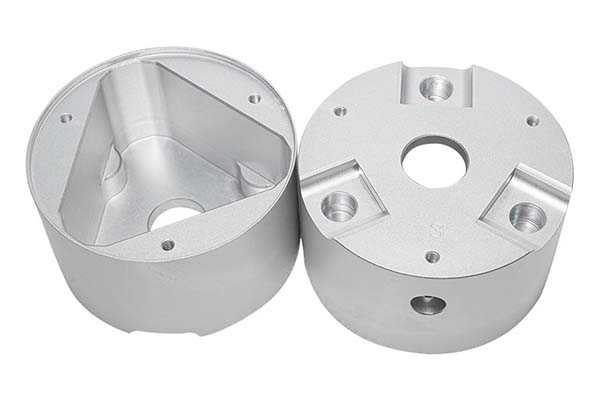
You see their products everywhere—the metal housing of your phone, the bracket holding your car’s engine, the handle on your kitchen faucet. But what actually happens inside a die casting factory? It is not a machine shop that cuts metal from solid blocks.
What Is the End-to-End Workflow in a Die Casting Factory?
A die casting factory manages every step from raw material to finished part—no external outsourcing required for key processes.
Step 1: Material Preparation and Refining
This stage ensures molten metal meets strict quality standards for fluidity and purity.
Raw material handling: Receive metal ingots (ADC12 aluminum, Zamak 5 zinc) and sort by alloy grade to avoid cross-contamination.
Melting and temperature control: Heat ingots in gas or electric furnaces to precise temperatures—680–720°C for aluminum, 380–420°C for zinc. Use digital thermocouples to maintain ±5°C tolerance—critical for consistent flow.
Refining and degassing: Remove impurities (oxide slag, foreign particles) via ceramic foam filters (20–30 PPI). For aluminum, use rotary degassing rods (400–600 rpm) to reduce hydrogen content to <0.2 cc/100g —prevents porosity in finished parts.
Step 2: Mold Management and Preparation
Molds are the “heart” of die casting—factories invest heavily in their design, maintenance, and optimization.
Mold design and manufacturing: In-house mold workshops use CNC machining centers (accuracy ±0.005 mm) and EDM to create molds from high-strength tool steel (H13 steel). Molds include cooling water channels spaced 15–20 mm apart to speed solidification.
Preheating and lubrication: Preheat molds to 180–250°C (depending on alloy) to avoid cold shuts. Spray thin layer of eco-friendly release agent (5–8 μm thick) to ensure easy part removal—prevents surface damage.
Mold maintenance: Inspect molds after every 5,000–10,000 shots for wear. Repair minor scratches with laser cladding; replace worn cores when dimensional deviation exceeds ±0.1 mm.
Step 3: Die Casting Molding
The core production stage—high pressure transforms molten metal into finished part shapes.
Machine selection:
- Hot chamber (50–200 tons) for zinc alloys—fast cycle time 15–30 seconds/part
- Cold chamber (200–1,200 tons) for aluminum/magnesium—handles high melting points
Injection and solidification: Inject molten metal at 5–150 MPa pressure and 2–5 m/s speed. Maintain pressure during solidification (holding time: 10–20 seconds) to compensate for shrinkage—ensures part density ≥99.5%.
Automated demolding: Use robotic arms (cycle time <5 seconds) to remove parts from molds. Reduces human error and prevents damage to delicate components (thin-walled electronic housings).
Step 4: Post-Processing and Quality Inspection
Finishing steps ensure parts meet customer specifications.
Trimming and deburring: Cut off gate residues and runner systems with hydraulic trimmers (aluminum) or laser cutters (precision zinc). Remove burrs with ultrasonic cleaning to Ra <1.6 μm surface roughness.
Surface treatment: Offer options like anodizing (corrosion resistance), powder coating (aesthetics), or plating (wear resistance). For medical parts, use passivation to meet biocompatibility standards (ISO 10993).
Quality testing: Three levels of inspection:
- Visual: Check for surface defects (scratches, pores) with 10× magnifying glasses
- Dimensional: CMM verifies tolerances ±0.1 mm for standard parts
- Internal: X-ray flaw detection checks hidden porosity (acceptance: ≤2% pore volume)
What Core Capabilities Set a Die Casting Factory Apart?
| Capability | Technical Details | Business Impact |
|---|---|---|
| High-precision molding | Tolerance ±0.1 mm; surface roughness Ra 1.6–3.2 μm; thin walls down to 0.5 mm; complex internal features | Meets tight assembly requirements; minimal post-machining needed |
| Mass production efficiency | Cycle times as short as 15 seconds (zinc); 100,000+ parts/month per machine; automated lines reduce labor 60% | Delivers large orders on time; per-part costs as low as $0.30–2 |
| Material versatility | Aluminum (60–70% of production), zinc (20–25%), magnesium (5–10%); custom alloy compositions | Serves diverse industries—automotive, electronics, aerospace |
| Rapid new product development | In-house mold design cuts NPD to 4–8 weeks (vs. 12–16 weeks externally); 3D-printed molds for prototypes | Faster product launches; prototype costs reduced 30% |
What Industries Do Die Casting Factories Serve?
Automotive Industry (40–50% of Revenue)
Products: Engine mounts, transmission housings, EV battery frames, steering gear casings.
Requirements: Lightweight (aluminum reduces vehicle weight 10–15%), high strength (≥280 MPa tensile), corrosion resistance.
Example: A factory produces 1 million aluminum battery frames annually for an EV manufacturer, meeting IP68 waterproof standards.
Consumer Electronics (20–25% of Revenue)
Products: Phone middle frames, laptop hinges, wireless headphone charging compartments, LED heat sinks.
Requirements: Precision (±0.05 mm tolerance), small size (10–500 g), good surface finish (anodized or plated).
Example: Supplies zinc alloy charging port housings to a smartphone brand—100,000 units/week with zero surface defects.
Household Appliances (10–15% of Revenue)
Products: Air conditioner compressor housings, washing machine drum bearing seats, refrigerator door hinges.
Requirements: Tightness (no water leakage), impact resistance, low cost.
Example: Produces aluminum compressor housings that pass 10,000-cycle vibration tests.
Communication Equipment (5–10% of Revenue)
Products: 5G base station cooling modules, router shells, fiber optic connector housings.
Requirements: Heat dissipation (high thermal conductivity), electromagnetic shielding, weather resistance.
Example: Manufactures magnesium alloy cooling modules for 5G towers that withstand -40°C to +85°C.
Medical Devices (3–5% of Revenue)
Products: CT machine rotating frames, surgical instrument handles, insulin pump casings.
Requirements: Biocompatibility (ISO 10993), high precision (±0.03 mm), easy sterilization.
Example: Supplies titanium-aluminum alloy surgical tool handles that pass autoclave sterilization (134°C, 20 minutes) 1,000+ times.
How Does Die Casting Compare to Other Manufacturing Processes?
| Process | Primary Material | Key Advantage | Key Limitation | Best For |
|---|---|---|---|---|
| Die casting | Metals (aluminum, zinc) | High precision; complex 3D shapes | High mold costs ($20k–200k) | Mass-produced complex metal parts |
| Sand casting | Metals (iron, steel) | Low mold costs; large parts | Low precision (±1 mm) | Heavy industrial parts (engine blocks) |
| Stamping | Metal sheets | Fast cycle time; low cost for flat parts | Limited to 2D/shallow 3D | Flat parts (car body panels, cans) |
| Injection molding | Plastics | Low cost; high volume | Low strength; not for high-temp | Plastic parts (toy casings, gears) |
How to write a spec that gets priced correctly
A drawing is a contract. If it leaves a number open, the shop fills that number in with its own default. The default is rarely the one you had in mind. Put these five lines on every RFQ and most of the back-and-forth disappears before it starts.
- 3D model with the parting line marked
- Alloy grade and the standard it meets
- Wall thickness and draft on every face
- Machining allowance on the faces that will be cut
- Pressure tightness or porosity class
The point is not paperwork. Each line removes a decision the shop would otherwise make for you. A complete RFQ comes back priced. An incomplete one comes back guessed.
What actually drives the price
Buyers usually push on material because it is the line they can see. In practice the material is rarely the biggest number on a quote. These five lines decide most of it:
- die steel and cavity count
- part weight and wall section
- draft and slide count
- porosity requirement
- machining allowance
Ask for the quote split by line. A supplier who cannot break it down is guessing, and you will pay for the guess. The line you can usually renegotiate is the tolerance band, not the raw material.
Problems you will meet, and the fix
Every process has a failure mode it prefers. The same four show up again and again on this kind of work, and none of them are mysteries once you know what to look for.
- Cold shuts where two flow fronts meet
- Porosity that shows up only after machining
- Soldering on a hot spot in the die
- Shrinkage voids in a heavy section
Catch the fault on the first part, not the hundredth. A first-article check costs an hour. A bad batch costs the whole order. Write the check into the purchase order so nobody has to remember it.
What to check on the first article
The first article is the cheapest inspection you will ever buy. Use it properly and the rest of the run becomes boring, which is exactly what you want.
- Every dimension on the drawing, with the measured value written beside it.
- The material certificate, matched to the heat or lot number on the parts.
- The finish against the sample you approved, under the same light.
- Fit against the mating part, assembled rather than measured.
- Packaging, because parts that arrive damaged were never in tolerance.
Check in this order: datums, then mating features, then cosmetic faces. If the datums are wrong, every number after them is noise. Keep the report on file. When a problem shows up in month six, that document is the only thing that tells you what changed.
How to compare two quotes fairly
Two numbers are not comparable unless the scope matches. Line them up before you decide, because a low number with three gaps is not a low number.
Same drawing, same material, same finish, same inspection. Anything else is a different job wearing the same part number. Then look at what each quote leaves out. Freight, packaging, certificates and tooling are the usual gaps.
Ask each supplier to state their assumptions in writing. The one who does is usually the one who has run the process before.
Scaling from one part to a batch
The first part teaches you the process. The hundredth teaches you the process cost.
Watch three things as volume grows: setup amortisation, tool wear, and how much hand work the finish still needs. If the unit price barely moves between ten and a hundred, the cost sits in material or in hand work, not in setup. Ask which, because only one of them is negotiable.
Lead time behaves the same way. A one-off is scheduled around other jobs. A repeat order is scheduled around your forecast. Give the shop a forecast and the lead time gets shorter, not longer.
How to read a supplier's quote
A quote is a short document with a long shadow. Four things in it decide whether the job runs smoothly, and only one of them is the price.
- The scope line. It should name the process, the material and the finish, not just the part.
- The tolerance basis. General tolerance or the drawing, and which standard it follows.
- The exclusions. Tooling, freight, certificates and inspection are the usual omissions.
- The validity date. Material prices move, and an open-ended quote is a promise nobody can keep.
Read the exclusions before you read the total. A quote that leaves out tooling is not cheaper. It is a quote for a different job.
What to send with the first order
The first order sets the pattern for every order after it. Send a complete package once and the shop files it, and the second order takes a fraction of the time.
- A STEP or native model plus a PDF drawing carrying the same revision letter.
- The material callout by standard number, not by trade name.
- The finish and the exact faces it applies to.
- Any test the part must pass: fit, seal, drop, salt spray, dielectric.
- A contact who can answer a question inside one working day.
Then write down what was agreed. An email that confirms the material, the finish and the date is worth more than a longer purchase order that leaves them open.
When this is the wrong choice
A good supplier tells you when the process does not fit. These are the cases where we say so.
- The volume is so low that setup costs more than the parts are worth.
- The tolerance is tighter than the process can hold without a second operation.
- The geometry cannot be made without a tool feature that will not pay back.
- The material you need is not available in the form the process requires.
- The schedule is shorter than the tooling or setup time, and nobody has said so yet.
None of these are refusals. They are reasons to look at a different route, and the earlier that conversation happens the cheaper it is. The most expensive mistake in manufacturing is a process chosen before the question was understood.
FAQ About Die Casting Factories
What is the minimum order quantity (MOQ) for a die casting factory?
MOQ depends on mold costs. For standard parts (generic brackets), MOQ is 10,000–50,000 units to offset mold expenses. For custom parts, flexible MOQ (1,000–5,000 units) using shared molds is possible, though per-part costs are slightly higher.
How long does it take to deliver a custom order?
For new custom parts: 4–8 weeks (includes 3–4 weeks mold design/manufacturing, 1–2 weeks sampling, 1–2 weeks mass production). For repeat orders: 1–2 weeks (no mold lead time).
Can a die casting factory handle post-processing like CNC machining?
Yes—most die casting factories (including our shop) integrate CNC machining into their workflow. This is critical for parts needing ultra-precise features (threaded holes with ±0.02 mm tolerance) that can’t be achieved via die casting alone. 5-axis CNC machines ensure accuracy and efficiency.
What surface finishes are available?
Common options:
- Anodizing (Type II/III): Protective colored layer for aluminum
- Powder coating: Durable matte finish, any color
- Plating (chrome/nickel): Bright, wear-resistant finish
- Passivation: For medical parts (biocompatibility)
- As-cast: Ra 1.6–6.3 μm, ready for many applications
How do die casting factories ensure quality?
Three-level inspection:
- Visual: 10× magnification for surface defects
- Dimensional: CMM verification to ±0.1 mm
- Internal: X-ray for porosity (≤2% acceptance)
Plus SPC tracking and first-article inspection for every new order.
A die casting factory is a specialized manufacturing hub that transforms molten metal into precision components through an integrated, end-to-end process:
- Material preparation: Refining and degassing to <0.2 cc/100g hydrogen
- Mold management: H13 steel molds with ±0.005 mm accuracy, cooled and lubricated
- Die casting: 5–150 MPa pressure, 15 second cycles for zinc, 30–60 seconds for aluminum
- Post-processing: Trimming, surface treatment, 3-level inspection
Core capabilities set it apart:
- Precision: ±0.1 mm tolerances, 0.5 mm walls
- Efficiency: 100,000+ parts/month, $0.30–2 per part
- Versatility: Aluminum, zinc, magnesium alloys
- Speed: 4–8 weeks from concept to production
From automotive to medical devices, die casting factories produce the critical components that power modern life. And with AI-driven process control, green manufacturing, and integrated CNC machining, they continue to evolve—delivering higher quality, lower cost, and faster turnaround.
Our solution for Die Casting Factory
YiguProto runs die casting in house, from a single prototype to a production batch. We quote the process, the material and the finish as separate lines, so you can see where the money goes instead of arguing with one number.
Send a STEP file or a drawing and you get a DFM report in one to two business days. It flags the features that add cost and the features that will not hold tolerance on the process you picked.
Every order ships with an inspection report on the features you call out. If a part misses, we make it again. Ready to price a part? Start with a free quote and DFM review, or read more about our die casting. You can also talk to an engineer before you commit to a drawing.
FAQ about Die Casting Factory
What material should I specify?
Specify by standard, not by trade name. A trade name can change under you between two orders; a standard number cannot. Then add the one property that actually decides the part, whether that is strength, heat resistance or chemical exposure.
Does the process work for prototypes as well as production?
Yes, and that is usually the point. Running the prototype on the production process removes a whole class of surprises, because the part you test is made the same way as the part you sell.
What files do you need in order to quote?
A STEP file plus a PDF drawing that carries the same revision letter. The model carries the geometry and the drawing carries the intent. When the two disagree, the shop picks one, and it is never the one you meant.
What tolerance can you hold on Die Casting Factory?
The working default is ±0.1 mm on cast features, ±0.05 mm after machining. Tighter than that the process changes and so does the price, because every step tighter adds inspection time. Call out only the faces that mate with something else and leave the rest on the general tolerance.
How long does a first article take?
Usually a few business days once the drawing is frozen, and longer if tooling is involved. The date we give you is the date we confirm in writing, not the date we hope for.
What is Die Casting Factory used for?
Die Casting Factory turns up wherever the part has to do a real job at a predictable cost: brackets, housings, fixtures, covers and the fittings that hold them together. The honest test is whether the properties match the load and the environment, not whether the material is fashionable.
The short version
Die Casting Factory rewards the buyer who reads the data sheet and the drawing together. Pick the option for the property that matters, not for the price per kilo.
Tighten only what mates. Test a sample before the run. Then let the process do the rest.