
Die Casting
What Are Key Differences Between Cast and Die Casting, and How to Choose?
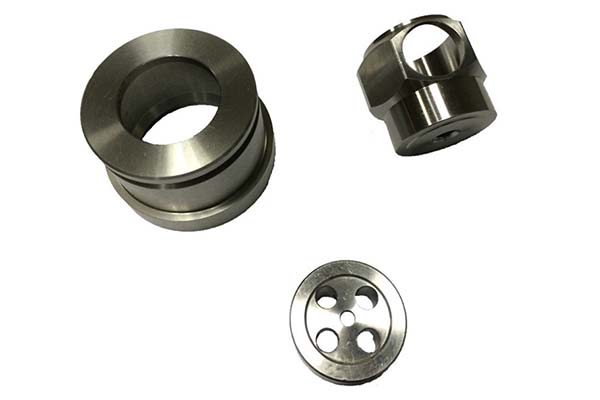
If you need metal parts made, you have two fundamental choices: traditional casting (often called “cast”) or die casting. They sound similar, but they are completely different processes. Cast uses gravity to fill molds—slow, flexible, good for low volumes. Die casting uses high pressure to inject metal—fast, precise, built for mass production.
What Is Traditional Casting?
Traditional casting (or simply “cast”) is a metal-forming process that relies on gravity to fill a mold with molten metal.
How It Works
- A mold is created with a cavity matching the part shape. Molds can be sand (disposable) or metal (reusable).
- Metal is heated until liquid—1,500°C for cast iron, 700°C for aluminum.
- Molten metal is poured into the mold. Gravity pulls it down into the cavity.
- The metal cools and solidifies. This takes minutes to hours, depending on part size.
- The mold is broken (sand) or opened (metal). The part is removed and cleaned.
Key Characteristics
Material flexibility: Works with any metal—ferrous (cast iron, steel), non-ferrous (aluminum, copper), even high-temperature superalloys.
Low upfront cost: Sand molds cost $500–5,000. Metal molds for casting run $10,000–50,000.
Slow production: Cycle times of 10–60 minutes per part. Mostly manual operation.
Moderate precision: Surface roughness Ra 6.3–12.5 μm. Tolerances ±0.5–1.0 mm. Almost always requires machining.
Best for: Low volumes (1–1,000 parts/year), large parts (1–10,000 kg), complex internal shapes, and any ferrous metal.
What Is Die Casting?
Die casting is a high-pressure process that injects molten metal into precision steel dies.
How It Works
- Two halves of a precision steel die (H13 tool steel) are clamped shut.
- Non-ferrous metal (aluminum, zinc, magnesium) is heated to liquid—600–700°C for aluminum.
- A hydraulic punch injects the metal into the die at 10–175 MPa pressure and 3–50 m/s speed.
- Pressure is held while metal solidifies quickly—5–30 seconds.
- The die opens, the part is ejected, and excess material (runners, flash) is trimmed.
Key Characteristics
Material limits: Only non-ferrous metals—aluminum (60% of parts), zinc (25%), magnesium (15%). Cannot handle steel or iron.
High upfront cost: Precision dies cost $50,000–500,000. But they last 100,000–1,000,000 shots.
Fast production: Cycle times 10–60 seconds. Fully automated. Ideal for 10,000+ parts/year.
High precision: Surface roughness Ra 1.6–3.2 μm. Tolerances ±0.05–0.2 mm. Often needs no machining.
Best for: High-volume small to medium parts (0.01–50 kg), thin walls (0.5–2 mm), and lightweight applications.
How Do Cast and Die Casting Compare?
| Comparison Factor | Traditional Casting | Die Casting |
|---|---|---|
| Filling mechanism | Gravity (0.1–0.5 m/s) | High-pressure injection (10–175 MPa, 3–50 m/s) |
| Material compatibility | All metals: ferrous, non-ferrous, high-temp alloys | Non-ferrous only: aluminum, zinc, magnesium |
| Surface roughness | Ra 6.3–12.5 μm (needs machining) | Ra 1.6–3.2 μm (near-finish) |
| Dimensional tolerance | ±0.5–1.0 mm | ±0.05–0.2 mm |
| Porosity | 2–5% (air entrained during pouring) | <1% (with vacuum assist; high pressure compresses gas) |
| Mold cost | Sand: $500–5,000 (disposable); Metal: $10,000–50,000 (reusable) | $50,000–500,000 (precision steel dies) |
| Mold life | Sand: 1 use; Metal: 10,000–50,000 shots | 100,000–1,000,000 shots |
| Cycle time | 10–60 minutes per part | 10–60 seconds per part |
| Production volume | 1–1,000 parts/year | 10,000+ parts/year |
| Part size/weight | 1–10,000 kg (large, heavy) | 0.01–50 kg (small to medium) |
| Per-part cost (high volume) | High ($10–100+) | Low ($0.50–10) |
When Should You Choose Traditional Casting?
Choose cast if your project meets any of these criteria:
You Need Ferrous Metals
Cast iron, steel, or any high-melting-point alloy (1,500°C+) cannot be die cast. The steel dies would degrade instantly. For industrial gearboxes, boiler components, or heavy machinery, cast is the only option.
Your Parts Are Large or Heavy
Parts over 50 kg—like ship engine blocks (5,000 kg) or wind turbine hubs (1,000 kg)—are too big for die casting machines. Cast handles these sizes easily.
Your Volume Is Low
For 1–1,000 parts per year, cast’s low mold cost makes sense. A $5,000 sand mold for 50 custom engine blocks adds only $100 per part. A $200,000 die for the same volume would add $4,000 per part—economic insanity.
You Need Complex Internal Cavities
Parts with intricate internal passages—like hydraulic valve bodies with curved oil channels—are easier to cast. Sand molds can form shapes that would require complex, expensive sliding cores in die casting.
Real-world example: A manufacturer needed 50 custom cast iron engine blocks (200 kg each). Sand casting cost: $5,000 mold + $2,500 per part = $130,000 total. Die casting: $250,000 die + $800 per part = $290,000 total. Cast saved $160,000.
When Should You Choose Die Casting?
Choose die casting if your project matches these needs:
You Need High Volume
For 10,000+ parts per year, die casting’s low per-part cost dominates. A smartphone frame at $1–2 per unit with 1 million units/year? Die casting all the way.
You Need Precision and Thin Walls
Parts requiring ±0.1mm tolerances or 0.5–2 mm walls—watch cases, laptop palm rests, LED heat sinks—are die casting’s specialty. High pressure fills thin sections before they freeze.
Lightweight Is Critical
Aluminum die castings are 30% lighter than cast iron. For EV battery brackets or aircraft seat frames, that weight savings matters. Die casting delivers it.
You Want to Minimize Post-Processing
Smooth surfaces (Ra 1.6 μm) straight from the mold eliminate grinding and polishing. LED heat sinks come out ready for use. Production time drops 50%.
Real-world example: A consumer electronics brand producing 5 million zinc phone chargers/year uses die casting. Cycle time: 30 seconds. Yield: 99.5%. Per-part cost: $0.80. Cast would cost $5+ per unit—impossible to compete.
What About the Middle Ground? Transitional Processes
For projects between the extremes, three processes bridge the gap.
Low-Pressure Casting
How it works: Uses low gas pressure (0.5–200 kPa) to push metal into the mold. Slower than die casting, faster than gravity.
Best for: Medium volumes (5,000–20,000 units/year), aluminum alloys. Example: automotive wheels.
Advantage: Balances precision and cost. Tolerances ±0.2mm at half the tooling cost of die casting.
Vacuum Die Casting
How it works: Adds a vacuum step (over 90% vacuum) to standard die casting. Removes air from the die before injection.
Best for: Pressure-bearing parts like hydraulic valve bodies or EV motor housings.
Advantage: Cuts porosity, boosts tensile strength 15%. Parts can be heat-treated (unlike standard die castings).
Squeeze Casting
How it works: Combines die casting (high pressure) with forging (compression during solidification).
Best for: High-stress parts: EV suspension brackets, aircraft landing gear components.
Advantage: Achieves forging-like strength (400–500 MPa) with die casting efficiency.
How Do You Choose? A Step-by-Step Framework
Step 1: List Your Non-Negotiables
Material: Ferrous? → Cast only. Non-ferrous? → Either.
Volume: Under 1,000 → Cast. 1,000–10,000 → Consider transitional. Over 10,000 → Die casting.
Precision: Need under ±0.2mm? → Die casting. ±0.5mm acceptable? → Cast works.
Upfront budget: Can’t spend $50,000+ on dies? → Cast. Have budget for long-term savings? → Die casting.
Step 2: Calculate Total Cost of Ownership
Do not just compare per-part prices. Include molds, production, and post-processing.
Cast example: 1,000 cast iron parts (10 kg each)
- Mold: $5,000
- Per-part: $50
- Post-processing: $10/part
- Total: $5,000 + (1,000 × $60) = $65,000
Die casting example: 10,000 aluminum parts (1 kg each)
- Die: $80,000
- Per-part: $3
- Post-processing: $1/part
- Total: $80,000 + (10,000 × $4) = $120,000
At 10,000 units, die casting costs more. But at 50,000 units:
- Cast: $3,203,000
- Die casting: $280,000
Break-even is typically 8,000–10,000 units for aluminum parts.
Step 3: Test Before Committing
For cast: Make 10–20 sand mold prototypes. Verify shape and material properties.
For die casting: Use 3D-printed molds or soft tooling for 50–100 samples before investing in production dies.
How to write a spec that gets priced correctly
A drawing is a contract. If it leaves a number open, the shop fills that number in with its own default. The default is rarely the one you had in mind. Put these five lines on every RFQ and most of the back-and-forth disappears before it starts.
- 3D model with the parting line marked
- Alloy grade and the standard it meets
- Wall thickness and draft on every face
- Machining allowance on the faces that will be cut
- Pressure tightness or porosity class
The point is not paperwork. Each line removes a decision the shop would otherwise make for you. A complete RFQ comes back priced. An incomplete one comes back guessed.
What actually drives the price
Buyers usually push on material because it is the line they can see. In practice the material is rarely the biggest number on a quote. These five lines decide most of it:
- die steel and cavity count
- part weight and wall section
- draft and slide count
- porosity requirement
- machining allowance
Ask for the quote split by line. A supplier who cannot break it down is guessing, and you will pay for the guess. The line you can usually renegotiate is the tolerance band, not the raw material.
Problems you will meet, and the fix
Every process has a failure mode it prefers. The same four show up again and again on this kind of work, and none of them are mysteries once you know what to look for.
- Cold shuts where two flow fronts meet
- Porosity that shows up only after machining
- Soldering on a hot spot in the die
- Shrinkage voids in a heavy section
Catch the fault on the first part, not the hundredth. A first-article check costs an hour. A bad batch costs the whole order. Write the check into the purchase order so nobody has to remember it.
What to check on the first article
The first article is the cheapest inspection you will ever buy. Use it properly and the rest of the run becomes boring, which is exactly what you want.
- Every dimension on the drawing, with the measured value written beside it.
- The material certificate, matched to the heat or lot number on the parts.
- The finish against the sample you approved, under the same light.
- Fit against the mating part, assembled rather than measured.
- Packaging, because parts that arrive damaged were never in tolerance.
Check in this order: datums, then mating features, then cosmetic faces. If the datums are wrong, every number after them is noise. Keep the report on file. When a problem shows up in month six, that document is the only thing that tells you what changed.
How to compare two quotes fairly
Two numbers are not comparable unless the scope matches. Line them up before you decide, because a low number with three gaps is not a low number.
Same drawing, same material, same finish, same inspection. Anything else is a different job wearing the same part number. Then look at what each quote leaves out. Freight, packaging, certificates and tooling are the usual gaps.
Ask each supplier to state their assumptions in writing. The one who does is usually the one who has run the process before.
Scaling from one part to a batch
The first part teaches you the process. The hundredth teaches you the process cost.
Watch three things as volume grows: setup amortisation, tool wear, and how much hand work the finish still needs. If the unit price barely moves between ten and a hundred, the cost sits in material or in hand work, not in setup. Ask which, because only one of them is negotiable.
Lead time behaves the same way. A one-off is scheduled around other jobs. A repeat order is scheduled around your forecast. Give the shop a forecast and the lead time gets shorter, not longer.
How to read a supplier's quote
A quote is a short document with a long shadow. Four things in it decide whether the job runs smoothly, and only one of them is the price.
- The scope line. It should name the process, the material and the finish, not just the part.
- The tolerance basis. General tolerance or the drawing, and which standard it follows.
- The exclusions. Tooling, freight, certificates and inspection are the usual omissions.
- The validity date. Material prices move, and an open-ended quote is a promise nobody can keep.
Read the exclusions before you read the total. A quote that leaves out tooling is not cheaper. It is a quote for a different job.
FAQ About Cast and Die Casting
Can die casting ever be used for steel parts?
No. Steel melts at 1,450–1,510°C. Die casting dies (H13 steel) deform at 600–700°C. For steel, use cast or forging. If you need steel’s strength with die casting efficiency, consider gravity casting steel then machining.
Is cast always cheaper than die casting?
No—only for small batches. At 500 parts, cast wins. At 50,000 parts, die casting wins by a huge margin. The break-even point for aluminum parts is typically 8,000–10,000 units.
How do you improve precision in cast parts?
Three ways:
- Use metal molds instead of sand—improves tolerance from ±1.0mm to ±0.3mm
- CNC machine critical features—holes, mating surfaces—to ±0.1mm
- Use automated pouring with flow meters—reduces dimensional variation 40%
Which process is better for prototyping?
Cast, specifically sand casting, is better for prototypes. You can make a sand mold in days for $500–2,000. Die casting requires months and $50,000+ for a production die. For die casting prototypes, use 3D-printed molds or low-volume soft tooling.
Can die-cast parts be heat treated?
Standard die castings—no. Internal porosity expands during heating, causing cracking. But vacuum die cast parts (porosity under 0.5%) can be heat treated. Specify this if heat treatment is required.
Cast and die casting serve completely different manufacturing worlds:
Cast (traditional casting) offers:
- Any metal, including ferrous
- Large parts (up to 10,000 kg)
- Low upfront cost
- Low volumes (1–1,000 parts)
- Complex internal shapes
Die casting delivers:
- Non-ferrous metals only
- Small to medium parts (under 50 kg)
- High precision (±0.05mm)
- High volumes (10,000+ parts)
- Fast production (seconds per part)
The choice comes down to your specific needs. Use the decision framework:
- Define material, volume, precision, and budget
- Calculate total cost, not just per-part price
- Test with prototypes before committing
For projects in between, consider transitional processes: low-pressure casting for medium volumes, vacuum die casting for pressure-tight parts, squeeze casting for high strength.
Get the match right, and you produce quality parts at optimal cost. Get it wrong, and you waste time and money.
Our solution for Key Differences Between Cast
YiguProto runs die casting in house, from a single prototype to a production batch. We quote the process, the material and the finish as separate lines, so you can see where the money goes instead of arguing with one number.
Send a STEP file or a drawing and you get a DFM report in one to two business days. It flags the features that add cost and the features that will not hold tolerance on the process you picked.
Every order ships with an inspection report on the features you call out. If a part misses, we make it again. Ready to price a part? Start with a free quote and DFM review, or read more about our die casting. You can also talk to an engineer before you commit to a drawing.
FAQ about Key Differences Between Cast
Does the process work for prototypes as well as production?
Yes, and that is usually the point. Running the prototype on the production process removes a whole class of surprises, because the part you test is made the same way as the part you sell.
How much does Key Differences Between Cast cost?
Price comes from five lines: material, machine or tool time, setup, finishing and inspection. The material itself is usually the smallest of them. Send a drawing and we will split the quote so you can see which line is doing the damage.
How do I compare two quotes fairly?
Match the scope first: same drawing, same material, same finish, same inspection. Then read the exclusions. Freight, tooling and certificates are the usual gaps, and a low number with three gaps is not a low number.
How long does a first article take?
Usually a few business days once the drawing is frozen, and longer if tooling is involved. The date we give you is the date we confirm in writing, not the date we hope for.
What tolerance can you hold on Key Differences Between Cast?
The working default is ±0.1 mm on cast features, ±0.05 mm after machining. Tighter than that the process changes and so does the price, because every step tighter adds inspection time. Call out only the faces that mate with something else and leave the rest on the general tolerance.
What should I check before approving the parts?
Datums first, then the features that mate, then the cosmetic faces. Ask for a dimensional report, a material certificate and a finish sample. A part can be inside every tolerance and still not fit, so assemble one before you sign.
The short version
Key Differences Between Cast rewards the buyer who reads the data sheet and the drawing together. Pick the option for the property that matters, not for the price per kilo.
Tighten only what mates. Test a sample before the run. Then let the process do the rest.