
Die Casting
Are Zinc or Aluminum Die Casting Better for Your Manufacturing Project?
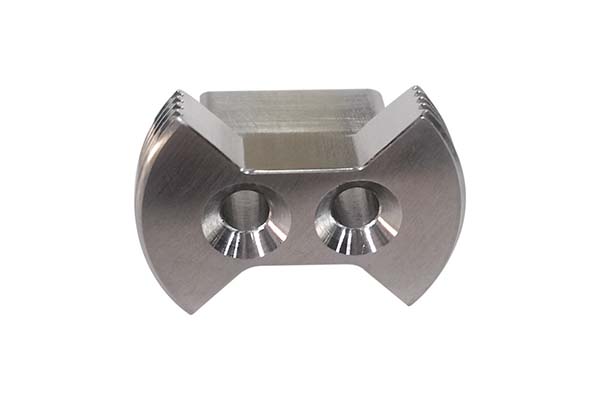
Choosing between zinc and aluminum die casting is a critical decision that shapes your product’s quality, cost, and performance. Both processes use high pressure to inject molten metal into steel molds, but they serve very different purposes. Zinc die casting excels at making small, precise parts with beautiful surface finishes.
What Makes Their Material Properties Different?
Chemical composition basics
Zinc alloys, like Zamak 3 and Zamak 5, contain small amounts of aluminum (3.5–4.3%), copper (0.75–1.25%), and magnesium. Aluminum alloys, such as ADC12 and A380, use silicon (9.5–12%) and copper as primary additives. These basic differences drive everything that follows.
Melting point and density contrast
Zinc melts at low temperatures—just 380–420°C. This makes it easy and energy-efficient to work with. Aluminum requires much higher heat, around 680–720°C, nearly double that of zinc. The density difference is equally dramatic. Zinc parts feel heavy at 6.6 g/cm³, while aluminum components are lightweight at 2.7 g/cm³—about one-third the weight.
Mechanical strength comparison
Aluminum alloys typically offer higher tensile strength, reaching 300–350 MPa after heat treatment. Zinc provides moderate strength at 280–320 MPa but shines in ductility. Zinc can stretch 10–15% before breaking, making it ideal for parts that must bend or absorb impact without cracking. Standard aluminum alloys manage only 2–5% elongation, though heat-treated versions can reach 10%.
Thermal and surface performance
Aluminum conducts heat much better, with 120–150 W/m·K thermal conductivity versus zinc’s 105–115 W/m·K. For heat-dissipating parts like LED housings, aluminum wins. But for surface finishing, zinc is unbeatable. It accepts electroplating, chrome plating, and high-gloss painting flawlessly. Aluminum faces challenges with porosity, making it better suited for anodizing or powder coating.
How Do Process Requirements Differ?
Hot chamber versus cold chamber machines
Zinc uses hot chamber machines where the injection mechanism sits immersed in molten metal. This setup eliminates separate metal feeding steps and speeds up production. Aluminum requires cold chamber machines because molten aluminum would dissolve the steel pump components. Workers must ladle aluminum into the injection chamber for each cycle, adding time and complexity.
Equipment and mold specifications
| Process Requirement | Zinc Die Casting | Aluminum Die Casting |
|---|---|---|
| Machine Type | Hot chamber | Cold chamber |
| Clamping Force | 50–200 tons | 200–1,200 tons |
| Mold Material | Standard H13 steel | H13 with nitriding |
| Mold Preheating | 150–200°C | 200–250°C |
Aluminum’s higher clamping force handles the pressure needed for large, complex parts. The elevated temperatures also demand more durable mold treatments to prevent thermal fatigue.
Production speed and efficiency
Zinc cycles incredibly fast—just 15–30 seconds per part. The low melting point means solidification happens almost immediately after injection. Aluminum takes 30–60 seconds per part because the metal must cool from much higher temperatures. For small parts, this difference dramatically impacts daily output.
Energy consumption patterns
Zinc’s low melting point keeps energy use down at 30–50 kWh per 100 parts. Aluminum requires 80–120 kWh per 100 parts—more than double the energy. Over high-volume production runs, this gap translates into significant cost differences.
Which Process Delivers Better Part Quality?
Dimensional precision and tolerances
Zinc achieves exceptional precision at ±0.05mm tolerance. This makes it perfect for components that must fit together perfectly, like watch gears, connector pins, and lock mechanisms. Aluminum offers good but looser precision at ±0.1mm, sufficient for most structural applications but not for ultra-tight fits.
Wall thickness capabilities
Zinc excels at producing ultra-thin walls from 0.5–2mm. The low melting point ensures the metal flows completely before solidifying, filling every detail. Aluminum needs 2–10mm wall thickness to flow properly. Parts requiring walls under 1mm often experience incomplete filling with aluminum.
Porosity and defect concerns
Aluminum’s higher cooling rate creates turbulence during filling, trapping air and creating porosity. This can reach 3–5% in standard casting, requiring vacuum systems to reduce defects. Zinc experiences minimal porosity thanks to slower, more controlled filling. However, zinc risks cold shuts if mold temperatures drop too low, creating visible lines where metal layers don’t fuse properly.
Real-world performance example
Consider a door lock mechanism for an automotive application. The zinc version withstands repeated slamming and vibration for years without cracking. An aluminum version might save 150 grams of weight but could fail after 10,000 cycles due to fatigue at stress points. For safety-critical moving parts, zinc’s ductility often outweighs aluminum’s weight advantage.
What Are Their Ideal Applications?
Electronics industry applications
Zinc dominates small electronic components. USB connector shells, phone button housings, and laptop hinge components all benefit from zinc’s precision and durability. Aluminum serves different needs—heat sinks, 5G router frames, and sensor casings where thermal management and weight matter most.
Automotive component breakdown
| Vehicle System | Zinc Die Casting | Aluminum Die Casting |
|---|---|---|
| Engine/Powertrain | Small sensors, connector pins | Engine blocks, cylinder heads |
| Body/Structure | Door lock mechanisms, latches | Transmission housings, battery frames |
| Interior | High-gloss trim, plated handles | Dashboard frames, seat brackets |
| Electrical | Wiper linkages, mirror mechanisms | Motor housings, control units |
Modern electric vehicles heavily favor aluminum for battery pack frames and structural components where every kilogram of weight savings extends driving range.
Consumer goods examples
Zinc brings elegance to visible products. Faucet handles, cabinet knobs, and cosmetic packaging achieve brilliant plated finishes that look like chrome or nickel. Aluminum suits functional items—blender bases, oven door frames, and outdoor furniture—where strength and weather resistance matter more than mirror finishes.
Aerospace and medical precision
Medical devices demand zinc’s precision. Surgical instrument handles, diagnostic equipment connectors, and monitoring device housings require tight tolerances and reliability. Aerospace applications split between both: instrument knobs and small fittings use zinc, while structural brackets and equipment frames specify aluminum for weight savings.
How to Choose Between Them for Your Project?
Step 1: Evaluate size and weight requirements
Parts under 500 grams typically favor zinc. The process economics work better for small components. Parts over 500 grams usually require aluminum for weight control. A zinc part this size would feel excessively heavy for most applications.
Step 2: Assess mechanical demands
Ask two questions. Does the part need to bend or absorb impact? Choose zinc for door handles, hinges, or snap-fit assemblies. Does it need to bear static loads without weight? Aluminum works better for brackets, frames, and housings.
Step 3: Consider surface finish needs
For decorative parts requiring mirror finishes, chrome plating, or high-gloss colors, zinc is the only practical choice. Aluminum’s surface porosity prevents achieving true Class A plated finishes. For painted, anodized, or textured finishes, aluminum performs well.
Step 4: Analyze production volume
| Volume Range | Recommended Process | Rationale |
|---|---|---|
| <10,000 parts | Either, based on part specs | Tooling cost similar |
| 10,000–100,000 | Zinc often preferred | Faster cycles, lower energy |
| >100,000 parts | Aluminum advantages | Per-part cost drops with scale |
| >500,000 parts | Aluminum strongly favored | Material cost savings add up |
Step 5: Calculate total cost, not piece price
Zinc offers lower upfront investment—machines cost less, molds last longer, and setup is simpler. But material costs run higher because zinc is dense and expensive per kilogram. Aluminum requires more investment but delivers lower material costs and better long-term efficiency for large volumes.
How to write a spec that gets priced correctly
A drawing is a contract. If it leaves a number open, the shop fills that number in with its own default. The default is rarely the one you had in mind. Put these five lines on every RFQ and most of the back-and-forth disappears before it starts.
- 3D model with the parting line marked
- Alloy grade and the standard it meets
- Wall thickness and draft on every face
- Machining allowance on the faces that will be cut
- Pressure tightness or porosity class
The point is not paperwork. Each line removes a decision the shop would otherwise make for you. A complete RFQ comes back priced. An incomplete one comes back guessed.
What actually drives the price
Buyers usually push on material because it is the line they can see. In practice the material is rarely the biggest number on a quote. These five lines decide most of it:
- die steel and cavity count
- part weight and wall section
- draft and slide count
- porosity requirement
- machining allowance
Ask for the quote split by line. A supplier who cannot break it down is guessing, and you will pay for the guess. The line you can usually renegotiate is the tolerance band, not the raw material.
Problems you will meet, and the fix
Every process has a failure mode it prefers. The same four show up again and again on this kind of work, and none of them are mysteries once you know what to look for.
- Cold shuts where two flow fronts meet
- Porosity that shows up only after machining
- Soldering on a hot spot in the die
- Shrinkage voids in a heavy section
Catch the fault on the first part, not the hundredth. A first-article check costs an hour. A bad batch costs the whole order. Write the check into the purchase order so nobody has to remember it.
What to check on the first article
The first article is the cheapest inspection you will ever buy. Use it properly and the rest of the run becomes boring, which is exactly what you want.
- Every dimension on the drawing, with the measured value written beside it.
- The material certificate, matched to the heat or lot number on the parts.
- The finish against the sample you approved, under the same light.
- Fit against the mating part, assembled rather than measured.
- Packaging, because parts that arrive damaged were never in tolerance.
Check in this order: datums, then mating features, then cosmetic faces. If the datums are wrong, every number after them is noise. Keep the report on file. When a problem shows up in month six, that document is the only thing that tells you what changed.
How to compare two quotes fairly
Two numbers are not comparable unless the scope matches. Line them up before you decide, because a low number with three gaps is not a low number.
Same drawing, same material, same finish, same inspection. Anything else is a different job wearing the same part number. Then look at what each quote leaves out. Freight, packaging, certificates and tooling are the usual gaps.
Ask each supplier to state their assumptions in writing. The one who does is usually the one who has run the process before.
Scaling from one part to a batch
The first part teaches you the process. The hundredth teaches you the process cost.
Watch three things as volume grows: setup amortisation, tool wear, and how much hand work the finish still needs. If the unit price barely moves between ten and a hundred, the cost sits in material or in hand work, not in setup. Ask which, because only one of them is negotiable.
Lead time behaves the same way. A one-off is scheduled around other jobs. A repeat order is scheduled around your forecast. Give the shop a forecast and the lead time gets shorter, not longer.
How to read a supplier's quote
A quote is a short document with a long shadow. Four things in it decide whether the job runs smoothly, and only one of them is the price.
- The scope line. It should name the process, the material and the finish, not just the part.
- The tolerance basis. General tolerance or the drawing, and which standard it follows.
- The exclusions. Tooling, freight, certificates and inspection are the usual omissions.
- The validity date. Material prices move, and an open-ended quote is a promise nobody can keep.
Read the exclusions before you read the total. A quote that leaves out tooling is not cheaper. It is a quote for a different job.
What to send with the first order
The first order sets the pattern for every order after it. Send a complete package once and the shop files it, and the second order takes a fraction of the time.
- A STEP or native model plus a PDF drawing carrying the same revision letter.
- The material callout by standard number, not by trade name.
- The finish and the exact faces it applies to.
- Any test the part must pass: fit, seal, drop, salt spray, dielectric.
- A contact who can answer a question inside one working day.
Then write down what was agreed. An email that confirms the material, the finish and the date is worth more than a longer purchase order that leaves them open.
Industry Expert Insights
After twenty years in die casting, I’ve seen engineers make the same mistake repeatedly: choosing aluminum simply because “it’s lighter” or zinc because “it’s cheaper.” Neither approach optimizes product performance.
Here’s what experience teaches. A telecommunications customer once insisted on aluminum housings for outdoor equipment, worried about weight. After struggling with porosity leaks and failed pressure tests, they switched to zinc. The weight difference was negligible for wall-mounted units, but the reliability improved dramatically.
Another automotive supplier needed a complex bracket with integrated heat dissipation. They tried designing for zinc, but thermal calculations showed failure within months. Aluminum casting with integrated cooling fins solved the problem, despite higher tooling costs.
The key lesson: match the process to the primary requirement. If precision and finish matter most, start with zinc. If weight and thermal performance drive the design, begin with aluminum. Trying to force either material outside its strengths always leads to compromises.
Zinc and aluminum die casting serve different but equally important roles in modern manufacturing. Zinc delivers precision, ductility, and beautiful surfaces for small to medium parts under 500 grams. Aluminum provides light weight, thermal conductivity, and structural strength for larger components. Your choice depends entirely on your part’s specific requirements—not on general preferences or habits. Start by defining what your part absolutely must do, then let those requirements guide you to the right process. When in doubt, consult with experienced die casting engineers who understand both technologies and can help you avoid costly mistakes.
How we can help
YiguProto runs die casting in house, from a single prototype to a production batch. We quote the process, the material and the finish as separate lines, so you can see where the money goes instead of arguing with one number.
Send a STEP file or a drawing and you get a DFM report in one to two business days. It flags the features that add cost and the features that will not hold tolerance on the process you picked.
Every order ships with an inspection report on the features you call out. If a part misses, we make it again. Ready to price a part? Start with a free quote and DFM review, or read more about our die casting. You can also talk to an engineer before you commit to a drawing.
Frequently asked questions
Does the process work for prototypes as well as production?
Yes, and that is usually the point. Running the prototype on the production process removes a whole class of surprises, because the part you test is made the same way as the part you sell.
What files do you need in order to quote?
A STEP file plus a PDF drawing that carries the same revision letter. The model carries the geometry and the drawing carries the intent. When the two disagree, the shop picks one, and it is never the one you meant.
What material should I specify?
Specify by standard, not by trade name. A trade name can change under you between two orders; a standard number cannot. Then add the one property that actually decides the part, whether that is strength, heat resistance or chemical exposure.
What should I check before approving the parts?
Datums first, then the features that mate, then the cosmetic faces. Ask for a dimensional report, a material certificate and a finish sample. A part can be inside every tolerance and still not fit, so assemble one before you sign.
What happens if a part is out of specification?
We measure it against the same drawing you approved and, if it misses, we make it again. What matters is that the report exists, because a disagreement without data is just an opinion.
Is there a minimum order quantity?
No hard minimum. One part is fine. What changes with volume is which costs dominate, so a single unit is priced mostly on setup and a thousand units are priced mostly on cycle time and material.
The short version
Good parts reward the buyer who reads the data sheet and the drawing together. Pick the option for the property that matters, not for the price per kilo.
Tighten only what mates. Test a sample before the run. Then let the process do the rest.