
Die Casting
What Is Gravity Die Casting and How to Leverage Its Advantages in Manufacturing?
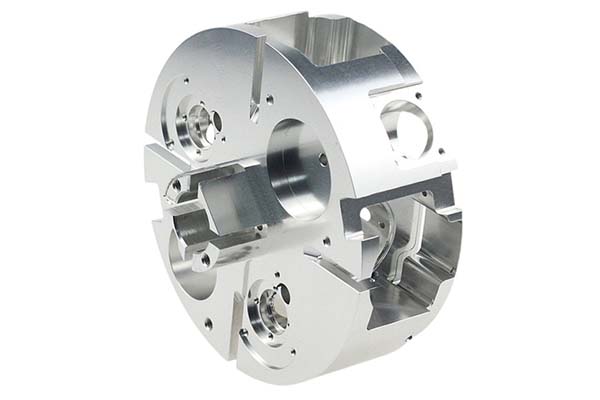
Gravity die casting fills a sweet spot in metal manufacturing. It is simpler than high-pressure die casting but more precise than sand casting. Molten metal flows into reusable steel molds using nothing but gravity—no high-pressure systems, no complex machinery. This makes it ideal for thick-walled parts that need heat treatment, like engine blocks, hydraulic valves, and aerospace components.
How Does Gravity Die Casting Work?
The basic principle
Gravity die casting relies on gravity alone to fill the mold. Molten metal pours into a reusable steel mold and flows naturally into every cavity. No external pressure is applied. The metal moves slowly and steadily, pushing air out through vents as it rises.
The molds are made from heat-resistant alloy steel like H13 or HT300. They are designed to open and close, lasting for thousands of cycles.
Step-by-step process
Step 1: Mold preparation—The mold preheats to 150-300°C depending on the metal. Aluminum needs 150-200°C. Cast iron needs 250-300°C. A thin layer of release agent (graphite or water-based) sprays onto the cavity surfaces. This prevents sticking and extends mold life by 20-30%.
Step 2: Metal melting—The alloy melts in a furnace. Aluminum heats to 670-720°C. Cast iron reaches 1400-1450°C. For aluminum, argon purging for 10-15 minutes removes hydrogen gas, keeping it below 0.15ml per 100g to prevent porosity.
Step 3: Controlled pouring—A ladle pours metal into the sprue at a steady 0.5-1.0 liters per minute. Fast pouring causes splashing and oxide inclusions. The metal fills from the bottom up, pushing air out through vent channels.
Step 4: Natural solidification—The metal cools and solidifies naturally. This takes 5-30 minutes depending on thickness. A 10mm wall solidifies in about 5 minutes. A 50mm wall needs 30 minutes. Slow cooling creates uniform grain structure.
Step 5: Mold opening—Temperature sensors confirm the part has cooled below 200°C for aluminum. The mold opens, and ejector pins spaced 50-80mm apart push the part out gently.
Step 6: Post-processing—Excess material like sprues and risers get trimmed. Machining brings critical dimensions to ±0.1mm tolerance. Heat treatment like T6 for aluminum (530°C solution treatment plus 120°C aging) boosts mechanical properties.
| Step | Key Action | Critical Parameter |
|---|---|---|
| Mold prep | Preheat and coat | 150-300°C, release agent 0.05mm |
| Melting | Heat and degas | 670-720°C Al, Ar purge 10-15 min |
| Pouring | Steady fill | 0.5-1.0 L/min |
| Solidification | Natural cooling | 5-30 min depending on thickness |
| Ejection | Gentle removal | Ejector pins 50-80mm apart |
| Finishing | Trim and heat treat | T6 for Al: 530°C + 120°C |
What Are the Key Advantages?
Superior quality for thick walls
High-pressure die casting traps air in sections over 8mm thick, creating porosity of 5-10%. These parts cannot hold pressure or be heat treated.
Gravity die casting’s slow, natural flow keeps porosity under 1%. A 20mm aluminum engine block from gravity casting leaks less than 1×10⁻⁶ mbar·L/s—tight enough for hydraulic systems. According to QYResearch, gravity die cast parts have 60% fewer defects than high-pressure castings for walls over 15mm.
Heat treatment works perfectly
High-pressure die cast parts contain hidden pores. Heat them for strengthening and the pores expand, causing cracks and blisters. You cannot heat treat them.
Gravity die cast parts have low porosity, so heat treatment works. For aluminum alloy A356:
- Tensile strength jumps from 220MPa as-cast to 320MPa after T6
- Elongation rises from 3% to 8%, making parts tougher
Volvo uses gravity die cast aluminum cylinder heads heat-treated to T7 in their heavy trucks. These heads handle 300°C+ temperatures and 10MPa combustion pressure without failure.
Cost-effective for medium batches
High-pressure die casting molds cost $50,000 to $500,000. That only makes sense for 10,000+ parts per year. For smaller runs, the tooling cost kills the economics.
Gravity die casting molds cost $1,000 to $50,000—70-90% less. They last 10,000 to 50,000 shots. For a 5,000-unit order of cast iron machine beds:
- Gravity die casting total cost: $80,000 ($15,000 mold + $13 per part)
- High-pressure die casting total cost: $250,000 ($200,000 mold + $10 per part)
Gravity die casting hits the sweet spot between low-cost sand casting and high-speed die casting.
Wide material compatibility
High-pressure die casting handles only low-melting-point non-ferrous metals—aluminum, zinc, magnesium. No ferrous metals. No high-temperature alloys.
Gravity die casting works with:
- Ferrous metals: Cast iron (HT200, HT300), carbon steel (Q235), alloy steel (40Cr)
- High-temperature alloys: Nickel-based superalloys like Inconel 625
GE uses gravity die casting to produce Inconel 625 turbine blades. These operate at 800°C and withstand 500MPa centrifugal force.
How Does It Compare to Other Processes?
| Dimension | Gravity Die Casting | High-Pressure Die Casting | Sand Casting |
|---|---|---|---|
| Filling force | Gravity only | 3,000-15,000 kPa | Gravity |
| Best wall thickness | >8mm (10-50mm ideal) | <8mm (0.5-5mm ideal) | Any (0.5-100mm) |
| Porosity level | Low (<1%) | High (5-10% in thick walls) | Medium (2-5%) |
| Heat treatable? | Yes—full range | No—porosity causes cracking | Yes—but rough surface |
| Mold cost | $1,000-$50,000 | $50,000-$500,000 | $500-$5,000 (disposable) |
| Cycle time | 5-30 minutes | 10-60 seconds | 1-24 hours |
| Best batch size | 1,000-10,000/year | >10,000/year | <1,000/year |
Where Is Gravity Die Casting Used?
Automotive—heavy duty and EVs
Engine blocks, cylinder heads, and EV battery frames need thick walls and pressure tightness. Gravity die casting delivers.
Daimler uses gravity die cast aluminum battery frames for eActros electric trucks. The 20mm-thick walls weigh 15% less than steel and withstand 200kN crash loads.
Heavy machinery
Hydraulic valve bodies and gearbox housings require heat treatment and low leakage. About 70% of excavator hydraulic valves come from gravity die casting. They achieve <1% porosity and ±0.15mm accuracy.
Aerospace—low volume, high performance
Nickel-based combustion chambers and titanium brackets need high-temperature resistance but only in small quantities (100-500 parts per year). Gravity die casting avoids the huge cost of forging for these low volumes.
What Innovations Are Improving the Process?
Automation upgrades
PLC-controlled pouring robots replace manual ladling. They cut pouring speed variation from ±20% to ±5%, reducing oxide inclusions by 40%.
Real-time temperature monitoring with embedded thermocouples holds cavity temperature at ±10°C. This ensures consistent solidification and cuts part-to-part variation by 30%.
New materials
Low-flow aluminum alloys like AlSi10MgMn perform well in gravity die casting. They reduce shrinkage by 25% compared to traditional ADC12, making them ideal for complex thick parts.
Composite integration embeds carbon fiber inserts in aluminum castings. This increases stiffness by 50% while keeping weight low—perfect for aerospace seat frames.
Market growth
QYResearch projects the global gravity die casting market to grow at 3.5% CAGR from 2024 to 2031, reaching $31.14 billion. Demand comes from lightweight, heat-treatable parts in automotive and aerospace.
What Defects Occur and How Do You Fix Them?
Shrinkage holes
Cavities inside thick sections mean insufficient riser volume or fast cooling. Risers feed metal as it shrinks.
Fix: Increase riser volume to 2× part volume. A 100cm³ part needs a 200cm³ riser. Add ceramic insulation sleeves to thick areas—they slow cooling by 50%.
Oxide inclusions
Dark streaks or flakes in the metal come from fast pouring or exposed molten metal. Fast pouring creates splashing. Splashing forms oxides.
Fix: Reduce pouring speed to 0.5-0.8 L/min. Use a pouring cup with a baffle to prevent splashing. Cover the molten metal with a flux layer (potassium aluminum fluoride) to isolate it from air.
Mold sticking
Parts that won’t release mean mold too cold or release agent too thick. Cold molds grab the metal. Thick release agent burns and sticks.
Fix: Raise mold temperature to 180-200°C for aluminum. Verify with infrared thermometer. Reduce release agent to 0.05mm using a spray gun with adjustable flow.
Cold shuts
Visible lines where metal didn’t fuse come from metal too cold or filling too slow. The metal solidifies before the cavity fills completely.
Fix: Increase metal temperature to 690-710°C for aluminum. Monitor with thermocouple. Widen the sprue from 10mm to 15mm to speed up filling.
| Defect | Cause | Solution |
|---|---|---|
| Shrinkage holes | Small risers, fast cooling | 2× riser volume, insulation sleeves |
| Oxide inclusions | Fast pouring, exposed metal | 0.5-0.8 L/min speed, flux cover |
| Mold sticking | Cold mold, thick release agent | 180-200°C, 0.05mm coating |
| Cold shuts | Low temp, slow fill | 690-710°C, widen sprue to 15mm |
How to write a spec that gets priced correctly
A drawing is a contract. If it leaves a number open, the shop fills that number in with its own default. The default is rarely the one you had in mind. Put these five lines on every RFQ and most of the back-and-forth disappears before it starts.
- 3D model with the parting line marked
- Alloy grade and the standard it meets
- Wall thickness and draft on every face
- Machining allowance on the faces that will be cut
- Pressure tightness or porosity class
The point is not paperwork. Each line removes a decision the shop would otherwise make for you. A complete RFQ comes back priced. An incomplete one comes back guessed.
What actually drives the price
Buyers usually push on material because it is the line they can see. In practice the material is rarely the biggest number on a quote. These five lines decide most of it:
- die steel and cavity count
- part weight and wall section
- draft and slide count
- porosity requirement
- machining allowance
Ask for the quote split by line. A supplier who cannot break it down is guessing, and you will pay for the guess. The line you can usually renegotiate is the tolerance band, not the raw material.
Problems you will meet, and the fix
Every process has a failure mode it prefers. The same four show up again and again on this kind of work, and none of them are mysteries once you know what to look for.
- Cold shuts where two flow fronts meet
- Porosity that shows up only after machining
- Soldering on a hot spot in the die
- Shrinkage voids in a heavy section
Catch the fault on the first part, not the hundredth. A first-article check costs an hour. A bad batch costs the whole order. Write the check into the purchase order so nobody has to remember it.
What to check on the first article
The first article is the cheapest inspection you will ever buy. Use it properly and the rest of the run becomes boring, which is exactly what you want.
- Every dimension on the drawing, with the measured value written beside it.
- The material certificate, matched to the heat or lot number on the parts.
- The finish against the sample you approved, under the same light.
- Fit against the mating part, assembled rather than measured.
- Packaging, because parts that arrive damaged were never in tolerance.
Check in this order: datums, then mating features, then cosmetic faces. If the datums are wrong, every number after them is noise. Keep the report on file. When a problem shows up in month six, that document is the only thing that tells you what changed.
How to compare two quotes fairly
Two numbers are not comparable unless the scope matches. Line them up before you decide, because a low number with three gaps is not a low number.
Same drawing, same material, same finish, same inspection. Anything else is a different job wearing the same part number. Then look at what each quote leaves out. Freight, packaging, certificates and tooling are the usual gaps.
Ask each supplier to state their assumptions in writing. The one who does is usually the one who has run the process before.
Scaling from one part to a batch
The first part teaches you the process. The hundredth teaches you the process cost.
Watch three things as volume grows: setup amortisation, tool wear, and how much hand work the finish still needs. If the unit price barely moves between ten and a hundred, the cost sits in material or in hand work, not in setup. Ask which, because only one of them is negotiable.
Lead time behaves the same way. A one-off is scheduled around other jobs. A repeat order is scheduled around your forecast. Give the shop a forecast and the lead time gets shorter, not longer.
How to read a supplier's quote
A quote is a short document with a long shadow. Four things in it decide whether the job runs smoothly, and only one of them is the price.
- The scope line. It should name the process, the material and the finish, not just the part.
- The tolerance basis. General tolerance or the drawing, and which standard it follows.
- The exclusions. Tooling, freight, certificates and inspection are the usual omissions.
- The validity date. Material prices move, and an open-ended quote is a promise nobody can keep.
Read the exclusions before you read the total. A quote that leaves out tooling is not cheaper. It is a quote for a different job.
Industry Experience: Getting It Right
A heavy machinery manufacturer produced hydraulic valve bodies by sand casting. Porosity caused 15% scrap. Switching to gravity die casting with AlSi10MgMn alloy and T6 heat treatment cut scrap to 2%. Valves passed 10MPa pressure tests consistently.
An EV startup needed battery frames that were light but could survive crashes. High-pressure die casting couldn’t achieve the 20mm wall thickness without porosity. Gravity die casting with A356 alloy and T6 treatment delivered 320MPa strength and 15% weight savings at 40% lower cost than high-pressure alternatives.
An aerospace contractor produced 200 Inconel turbine blades annually by investment casting at huge cost. Gravity die casting with automated pouring cut cost per blade by 60% while maintaining the required 800°C performance.
Gravity die casting excels where other processes fall short. It delivers low porosity for thick walls over 8mm. It enables full heat treatment that boosts strength and toughness. It is cost-effective for medium batches of 1,000-10,000 parts per year. It works with ferrous metals and high-temperature alloys that high-pressure die casting cannot touch. For automotive engine components, hydraulic valves, and aerospace parts, gravity die casting is often the best choice. With automation and new alloys, its capabilities keep expanding.
Our solution for Gravity Die Casting
YiguProto runs die casting in house, from a single prototype to a production batch. We quote the process, the material and the finish as separate lines, so you can see where the money goes instead of arguing with one number.
Send a STEP file or a drawing and you get a DFM report in one to two business days. It flags the features that add cost and the features that will not hold tolerance on the process you picked.
Every order ships with an inspection report on the features you call out. If a part misses, we make it again. Ready to price a part? Start with a free quote and DFM review, or read more about our die casting. You can also talk to an engineer before you commit to a drawing.
FAQ about Gravity Die Casting
What files do you need in order to quote?
A STEP file plus a PDF drawing that carries the same revision letter. The model carries the geometry and the drawing carries the intent. When the two disagree, the shop picks one, and it is never the one you meant.
What tolerance can you hold on Gravity Die Casting?
The working default is ±0.1 mm on cast features, ±0.05 mm after machining. Tighter than that the process changes and so does the price, because every step tighter adds inspection time. Call out only the faces that mate with something else and leave the rest on the general tolerance.
What should I check before approving the parts?
Datums first, then the features that mate, then the cosmetic faces. Ask for a dimensional report, a material certificate and a finish sample. A part can be inside every tolerance and still not fit, so assemble one before you sign.
Does the process work for prototypes as well as production?
Yes, and that is usually the point. Running the prototype on the production process removes a whole class of surprises, because the part you test is made the same way as the part you sell.
Is there a minimum order quantity?
No hard minimum. One part is fine. What changes with volume is which costs dominate, so a single unit is priced mostly on setup and a thousand units are priced mostly on cycle time and material.
Can Gravity Die Casting be made in small quantities?
Yes, and small quantities are where a good supplier earns the next order. Setup dominates the price at low volume, so the cheapest route is usually the one with the fewest operations, not the cheapest material.
The short version
Gravity Die Casting rewards the buyer who reads the data sheet and the drawing together. Pick the option for the property that matters, not for the price per kilo.
Tighten only what mates. Test a sample before the run. Then let the process do the rest.