
Die Casting
What Is Large-Scale Die Casting and How to Leverage Its Manufacturing Potential?
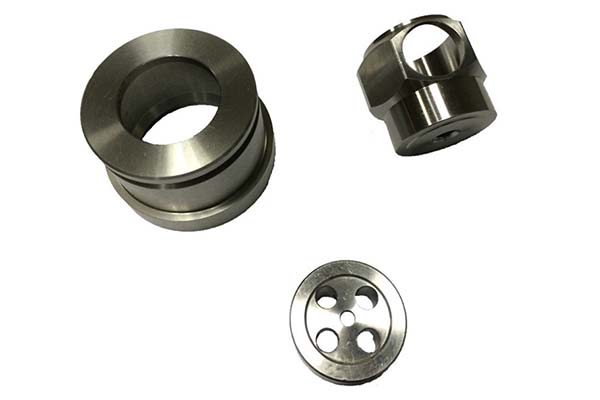
If you follow manufacturing trends, you have heard about large-scale die casting. Tesla calls it Giga-casting. Volvo calls it Mega-casting. The idea is simple but transformative: instead of stamping dozens of parts and welding them together, you cast the entire structure as one piece. A rear floor that once required 70 stamped parts and 130 welds now comes out of a machine in under two minutes.
Key takeaways
- Large-scale die casting is a manufacturing process that produces oversized, complex components as single pieces using machines with clamping force of 6,000 tons or more.
- The advantages are dramatic when you stack them against conventional stamping + welding.
- Before: 70 stamped steel parts. 130+ welds. 4+ hours assembly time. Multiple suppliers, multiple logistics steps.
- Large-scale die casting is transforming manufacturing. By replacing assemblies of 50–100 parts with single castings, it delivers:
What Is Large-Scale Die Casting?
Large-scale die casting is a manufacturing process that produces oversized, complex components as single pieces using machines with clamping force of 6,000 tons or more.
The Basic Definition
Traditional die casting makes small to medium parts—engine blocks, transmission housings, electronics frames. Large-scale die casting tackles parts that are:
- Heavy: 50–500 kg
- Large: Up to 5 meters in length
- Complex: Integrated cooling channels, ribbed structures, thin walls
Instead of assembling 50–100 individual pieces, you cast one component that does the job of all of them.
What Makes It Possible?
Three breakthrough technologies enable large-scale die casting:
Ultra-high pressure machines: Clamping force of 6,000–12,000 tons (compared to 500–2,000 tons for conventional machines). This keeps the mold closed against the enormous forces of injecting 500+ kg of metal.
Vacuum systems: Remove over 90% of air from the mold cavity before injection. This cuts porosity—the biggest enemy of large structural castings.
Dynamic thermal management: Spiral cooling channels and real-time sensors keep mold temperature uniform within ±5°C. This prevents warpage and shrinkage in large parts.
How Does Large-Scale Die Casting Compare to Traditional Methods?
The advantages are dramatic when you stack them against conventional stamping + welding.
| Metric | Large-Scale Die Casting | Traditional Stamping + Welding |
|---|---|---|
| Part count | 1 component | 50–100 parts |
| Assembly steps | None | Hours of welding, fastening |
| Cycle time | 60–90 seconds | 4+ hours |
| Weight | 20–40% lighter | Heavier (steel construction) |
| Joint points | 80–90% fewer | Hundreds of welds, each a potential failure |
| Material waste | Under 5% | 20–30% (stamping scrap) |
| Factory space | 60% less | Multiple assembly lines |
| Labor | 50% fewer workers | Labor-intensive assembly |
Breaking Down the Numbers
Performance: A large-scale die-cast EV battery frame has 3–5× higher fatigue strength than a welded frame. No weld joints means no stress concentration points where cracks start.
Weight: Through topology optimization (honeycomb internal structures), a 500 kg steel battery pack becomes a 300 kg aluminum casting. For an EV, that is 50–80 km more range from the same battery.
Efficiency: A single casting takes 60–90 seconds. The welded equivalent takes 4+ hours. That is 160× faster.
Cost: Tesla reports 40% lower manufacturing costs for parts made with large-scale die casting. Fewer machines, less labor, less space, faster production.
Where Is Large-Scale Die Casting Used Today?
New Energy Vehicles (The Largest Adopter)
Battery pack shells: NIO’s ET5 battery pack uses a 6,000-ton machine to cast what used to be 100+ parts (brackets, cooling pipes, crash beams). Weight drops 30%. Heat dissipation improves 25% —critical for battery safety.
Body frames: Tesla Model Y rear floor: one casting replaces 37 stamped parts and 130 welds. Production line length cut 60%. Body weight reduced 15 kg.
Electric drive housings: NIO’s NT2.0 platform uses large-scale die casting for motor housings. Achieves IP68 waterproofing and 100 dB EMI shielding with no extra coating.
High-End Equipment Manufacturing
Industrial robot bases: Fanuc’s collaborative robot base uses magnesium large-scale die casting. Weight reduced 45% vs. steel. Movement speed increases 20%. Energy consumption drops.
Semiconductor equipment: ASML’s lithography machine precision tables use AlSi10MnMg aluminum alloy castings. Flatness error: 3 μm—critical for nanoscale wafer alignment.
Aviation seat skeletons: Boeing 787 economy seats use honeycomb die-cast structures. Strength-to-weight ratio: 1:1.8 (industry benchmark for welded steel is 1:1.5).
Future Applications
Heavy-duty trucks: Daimler is developing 10,000-ton machines for truck cab frames. Will integrate 80+ parts, cut weight 30%, improve fuel efficiency 8%.
Aerospace: Airbus is testing large-scale die casting for wing ribs using titanium alloys. Could reduce part count 90% and cut costs 50% vs. forging.
What Are the Technical Challenges and How Do You Solve Them?
Challenge 1: High Mold Development Cost and Complexity
The problem: Molds for large-scale die casting cost $5–15 million and take 6–12 months to develop. Integrated cooling systems, exhaust channels, and shrinkage compensation are complex. One design error can scrap the entire mold.
The solutions:
Digital twin simulation: Use software like MAGMA or AnyCasting to build virtual mold models. Simulate filling, solidification, and defect formation before cutting steel. This cuts mold trials by 50%.
Modular mold design: Split large molds into interchangeable sections. If one section wears out, replace only that part. Repair costs drop 40%.
Mold material upgrade: Use H13 steel with nitriding treatment (surface hardness 50–55 HRC). Extends mold life from 50,000 to 150,000 shots.
Challenge 2: Strict Process Control Requirements
The problem: Small parameter deviations cause defects. A ±0.2 m/s change in injection speed can create porosity or cold shuts in large parts. Manual monitoring cannot keep up.
The solutions:
Closed-loop control systems: Install 50+ sensors in the mold and machine tracking temperature, pressure, speed in real time. The system automatically adjusts—increasing pressure by 5% if flow slows, for example.
AI quality inspection: Machine vision + X-ray scanning inspects 100% of parts. A 3-meter EV frame scans in 2 minutes, detecting 0.1 mm pores invisible to human inspectors.
Process standardization: Develop a “golden parameter library” for each part. For an aluminum battery pack:
- Metal temperature: 680–700°C
- Injection speed: 4–5 m/s
- Mold temperature: 220–240°C
Challenge 3: Difficult Post-Processing of High-Strength Alloys
The problem: Large-scale die cast parts use high-silicon aluminum alloys (like AlSi10MnMg) that wear out standard tools 3–5× faster. Machining a 500 kg frame can take 10+ hours with traditional methods.
The solutions:
PCD coated tools: Polycrystalline diamond tools last 10× longer than carbide and cut machining time by 30% (10 hours → 7 hours for a battery frame).
Low-temperature cutting: Cool the cutting area with liquid nitrogen (-196°C). Reduces tool wear and improves surface finish (Ra ≤ 0.8 μm).
Near-net forming optimization: Design parts to require minimal machining. Integrate mounting holes directly into the mold. Eliminate 80% of drilling work.
How Do You Know If Large-Scale Die Casting Is Right for You?
Use this checklist to evaluate your project.
| Condition | Good Fit Example | Poor Fit Example |
|---|---|---|
| Annual volume ≥ 50,000 parts | EV manufacturer: 100,000 battery packs/year | Custom shop: 500 one-off parts/year |
| Structural complexity | Semiconductor platform with integrated cooling | Simple steel plate, no features |
| Performance requirements | Aircraft seat skeleton: strength-to-weight ≥1:1.6 | Storage bin: no performance demands |
| Cost tolerance | Fortune 500 automaker with 5-year plan | Startup with limited capital |
The Volume Threshold
Large-scale die casting requires high volume to justify the investment:
- Machine: $10–20 million (6,000–12,000 ton)
- Mold: $5–15 million
- Total upfront: $15–35 million minimum
At 50,000 parts per year, this investment pays back in 2–3 years through labor savings, material savings, and faster production.
At 10,000 parts per year, it never pays back. Stick with traditional methods.
What Does a Large-Scale Die Casting Line Look Like?
A typical production cell includes:
The machine: 6,000–12,000 ton clamping force. Shot size up to 500 kg of aluminum. Cycle time 60–90 seconds.
The mold: 3–5 meters in size. Integrated cooling channels. Modular construction for maintenance.
The melt system: Central melting furnace. Automated ladles deliver precise amounts of metal at controlled temperatures.
The automation: Robots remove castings, quench them, trim excess material, and load them for inspection. No human hands touch the part.
The inspection: In-line X-ray scanning of every part. Machine vision for surface defects. Dimensional checks with laser scanners.
The numbers: A single line can produce 1,000+ large castings per day with under 10 operators.
Case Study: Tesla Model Y Rear Floor
Before: 70 stamped steel parts. 130+ welds. 4+ hours assembly time. Multiple suppliers, multiple logistics steps.
After: One aluminum casting. No welds. 90 seconds cycle time. One machine in one factory.
Results:
- Weight reduced 15 kg
- Production line length cut 60%
- Labor reduced 50%
- Manufacturing cost reduced 40%
This is why every major automaker is now investing in large-scale die casting.
How to write a spec that gets priced correctly
A drawing is a contract. If it leaves a number open, the shop fills that number in with its own default. The default is rarely the one you had in mind. Put these five lines on every RFQ and most of the back-and-forth disappears before it starts.
- 3D model with the parting line marked
- Alloy grade and the standard it meets
- Wall thickness and draft on every face
- Machining allowance on the faces that will be cut
- Pressure tightness or porosity class
The point is not paperwork. Each line removes a decision the shop would otherwise make for you. A complete RFQ comes back priced. An incomplete one comes back guessed.
What actually drives the price
Buyers usually push on material because it is the line they can see. In practice the material is rarely the biggest number on a quote. These five lines decide most of it:
- die steel and cavity count
- part weight and wall section
- draft and slide count
- porosity requirement
- machining allowance
Ask for the quote split by line. A supplier who cannot break it down is guessing, and you will pay for the guess. The line you can usually renegotiate is the tolerance band, not the raw material.
Problems you will meet, and the fix
Every process has a failure mode it prefers. The same four show up again and again on this kind of work, and none of them are mysteries once you know what to look for.
- Cold shuts where two flow fronts meet
- Porosity that shows up only after machining
- Soldering on a hot spot in the die
- Shrinkage voids in a heavy section
Catch the fault on the first part, not the hundredth. A first-article check costs an hour. A bad batch costs the whole order. Write the check into the purchase order so nobody has to remember it.
What to check on the first article
The first article is the cheapest inspection you will ever buy. Use it properly and the rest of the run becomes boring, which is exactly what you want.
- Every dimension on the drawing, with the measured value written beside it.
- The material certificate, matched to the heat or lot number on the parts.
- The finish against the sample you approved, under the same light.
- Fit against the mating part, assembled rather than measured.
- Packaging, because parts that arrive damaged were never in tolerance.
Check in this order: datums, then mating features, then cosmetic faces. If the datums are wrong, every number after them is noise. Keep the report on file. When a problem shows up in month six, that document is the only thing that tells you what changed.
How to compare two quotes fairly
Two numbers are not comparable unless the scope matches. Line them up before you decide, because a low number with three gaps is not a low number.
Same drawing, same material, same finish, same inspection. Anything else is a different job wearing the same part number. Then look at what each quote leaves out. Freight, packaging, certificates and tooling are the usual gaps.
Ask each supplier to state their assumptions in writing. The one who does is usually the one who has run the process before.
FAQ About Large-Scale Die Casting
What is the maximum part size possible today?
Current 12,000-ton machines can produce parts up to 5 meters long and 500 kg weight—a full EV body-in-white frame. R&D on 15,000-ton machines (expected 2026) will push this to 1,000 kg.
Can large-scale die casting use steel or titanium?
Steel is not feasible—its 1,500°C+ melting point destroys molds. Titanium is possible but expensive: a titanium EV frame would cost 5× more than aluminum. For now, titanium is limited to aerospace (low volume, high value). Magnesium works well (30% lighter than aluminum) but needs nitrogen protection against oxidation.
How do you maintain large-scale die casting molds?
Cleaning: After every 100 shots, high-pressure water (800 bar) removes release agent residue and oxide scales. Never use steel brushes—they scratch the surface.
Inspection: Laser scanning weekly checks wear (tolerance ≤ 0.05 mm). Endoscopes inspect cooling channels for blockages.
Repair: Small scratches get TIG welding with matching H13 filler. Large wear means replacing modular sections—costs 60% less than full mold replacement.
What is the payback period for large-scale die casting?
For high-volume production (100,000+ parts/year), payback is typically 2–3 years. This comes from:
- Labor savings (50% fewer workers)
- Material savings (20–30% less waste)
- Assembly elimination (hours per part → minutes)
- Factory space reduction (60% less)
Can I start with smaller machines and scale up?
Yes—this is the recommended approach. Start with 6,000-ton machines for medium parts (battery frames, motor housings). Master the process control. Then scale to 9,000+ tons for body frames. Learn on smaller, less expensive parts before tackling the biggest components.
Large-scale die casting is transforming manufacturing. By replacing assemblies of 50–100 parts with single castings, it delivers:
- 20–40% lighter parts
- 160× faster production
- 40% lower costs
- 80–90% fewer failure points
The technology relies on three breakthroughs:
- Ultra-high pressure machines (6,000–12,000 tons)
- Vacuum systems (remove 90%+ air)
- Dynamic thermal management (uniform mold temperature)
Challenges exist—high mold costs, strict process control, difficult post-processing—but proven solutions make them manageable:
- Digital twin simulation cuts mold trials 50%
- Closed-loop control maintains parameter stability
- PCD tools and near-net design reduce machining
Large-scale die casting is not for everyone. It requires high volume (50,000+ parts/year) and significant upfront investment ($15–35 million). But for products that meet these thresholds, it delivers advantages that traditional methods cannot match.
The question is not whether large-scale die casting will transform manufacturing. It already is. The question is whether you will be part of that transformation.
Our solution for Large-Scale Die Casting
YiguProto runs die casting in house, from a single prototype to a production batch. We quote the process, the material and the finish as separate lines, so you can see where the money goes instead of arguing with one number.
Send a STEP file or a drawing and you get a DFM report in one to two business days. It flags the features that add cost and the features that will not hold tolerance on the process you picked.
Every order ships with an inspection report on the features you call out. If a part misses, we make it again. Ready to price a part? Start with a free quote and DFM review, or read more about our die casting. You can also talk to an engineer before you commit to a drawing.
FAQ about Large-Scale Die Casting
What material should I specify?
Specify by standard, not by trade name. A trade name can change under you between two orders; a standard number cannot. Then add the one property that actually decides the part, whether that is strength, heat resistance or chemical exposure.
What is Large-Scale Die Casting used for?
Large-Scale Die Casting turns up wherever the part has to do a real job at a predictable cost: brackets, housings, fixtures, covers and the fittings that hold them together. The honest test is whether the properties match the load and the environment, not whether the material is fashionable.
Is there a minimum order quantity?
No hard minimum. One part is fine. What changes with volume is which costs dominate, so a single unit is priced mostly on setup and a thousand units are priced mostly on cycle time and material.
How do I compare two quotes fairly?
Match the scope first: same drawing, same material, same finish, same inspection. Then read the exclusions. Freight, tooling and certificates are the usual gaps, and a low number with three gaps is not a low number.
Does the process work for prototypes as well as production?
Yes, and that is usually the point. Running the prototype on the production process removes a whole class of surprises, because the part you test is made the same way as the part you sell.
What files do you need in order to quote?
A STEP file plus a PDF drawing that carries the same revision letter. The model carries the geometry and the drawing carries the intent. When the two disagree, the shop picks one, and it is never the one you meant.
The short version
Large-Scale Die Casting rewards the buyer who reads the data sheet and the drawing together. Pick the option for the property that matters, not for the price per kilo.
Tighten only what mates. Test a sample before the run. Then let the process do the rest.