
Die Casting
What Is Liquid Die Casting and How to Leverage Its Manufacturing Advantages?
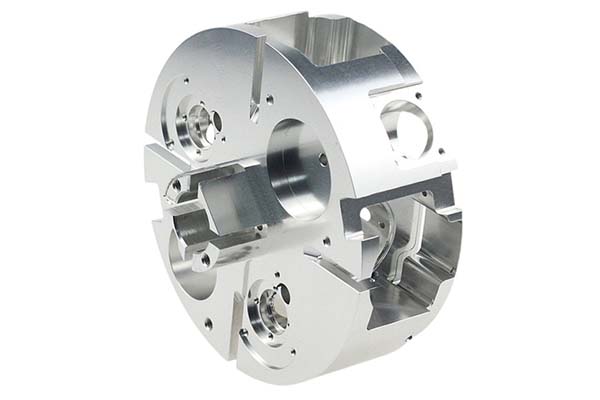
Liquid die casting bridges the gap between traditional casting and forging. It starts with molten metal like casting but applies continuous high pressure during solidification like forging. The result? Parts with over 99% density , tensile strength up to 400 MPa , and the ability to form complex shapes with thin walls and internal features.
What Exactly Is Liquid Die Casting?
Basic definition
Liquid die casting—also called squeeze casting or liquid die forging—injects molten metal into a precision mold, then applies continuous static pressure of 50-200 MPa through a hydraulic punch until solidification completes.
The defining feature is pressure-assisted solidification. That pressure squeezes out gas and closes shrinkage voids, creating components with density exceeding 99%. Traditional die casting typically achieves only 95-97%.
Unlike forging that starts with solid metal billets, liquid die casting begins with liquid metal. This preserves the ability to form complex features like integrated cooling channels and fine threads while achieving forging-level mechanical properties.
Step-by-step process
Step 1: Mold preparation—Preheat the mold to 180-250°C for aluminum. Apply a thin release agent layer at 0.05-0.1mm to prevent sticking. Uniform heat distribution is critical.
Step 2: Metal injection—Pour molten metal at controlled speed into the cavity. For aluminum A356, temperature runs 680-720°C. Injection speed stays at 0.5-2 m/s —slower than traditional die casting to avoid turbulence and gas entrainment.
Step 3: Pressure application—Activate the hydraulic punch within 2-3 seconds of injection. Apply 80-150 MPa pressure and maintain throughout solidification. This takes 10-30 seconds depending on part thickness.
The pressure does two things:
- Compresses gas bubbles to under 0.01mm —too small to affect strength
- Refills shrinkage gaps with molten metal from the sprue
This is why liquid die cast parts have 30-50% higher fatigue strength than traditional castings.
Step 4: Demolding and finishing—Open the mold, eject the part, trim excess material. Post-processing like T6 heat treatment for aluminum can boost tensile strength to 350-400 MPa.
| Step | Key Action | Critical Parameter |
|---|---|---|
| Mold prep | Preheat and coat | 180-250°C, release agent 0.05-0.1mm |
| Injection | Controlled pour | 680-720°C, 0.5-2 m/s |
| Pressure | Apply and hold | 80-150 MPa, 10-30 seconds |
| Finishing | Trim and treat | Optional T6 heat treatment |
What Are the Main Process Variants?
Direct extrusion liquid die casting
The punch applies pressure directly to the molten metal surface with no intermediate channels. The mold fills by gravity before pressure activates.
Pressure range: 100-200 MPa
Advantages: Highest density at >99.5%. No sprue-related waste—scrap 3-5% lower than indirect. Uniform pressure distribution ideal for thick walls.
Best for: High-criticality components—aerospace engine brackets, military transmission parts, hydraulic cylinder blocks requiring strict pressure tightness.
Indirect extrusion liquid die casting
Pressure transmits through a sprue or runner system. The punch pushes a metal plunger, which forces liquid into the cavity.
Pressure range: 50-120 MPa
Advantages: Lower mold complexity—tooling costs 20-30% less. Faster cycle times at 15-20 seconds per part versus 25-30 seconds for direct. Better for thin walls under 3mm.
Best for: General industrial parts—automotive wheels, motorcycle frames, home appliance pump bodies where cost and performance balance matters.
| Variant | Pressure | Cycle Time | Best Application |
|---|---|---|---|
| Direct extrusion | 100-200 MPa | 25-30 sec | Aerospace, military, hydraulic |
| Indirect extrusion | 50-120 MPa | 15-20 sec | Automotive wheels, general industrial |
How to choose
Part criticality: Dynamic load parts like suspension brackets need direct extrusion’s higher density for fatigue resistance.
Cost tolerance: For high-volume parts over 100,000 units, indirect extrusion’s cheaper tooling and faster cycles reduce per-part cost by 15-20%.
Wall thickness: Direct excels at thick walls over 5mm. Indirect is more efficient for thin features of 2-3mm due to better flow control.
How Does It Compare to Traditional Processes?
| Metric | Liquid Die Casting | Traditional Die Casting | Gravity Casting |
|---|---|---|---|
| Density | >99% | 95-97% | 92-95% |
| Tensile strength | 350-400 MPa | 280-320 MPa | 250-280 MPa |
| Fatigue strength | 150-180 MPa | 100-120 MPa | 80-100 MPa |
| Cycle time | 15-30 seconds | 10-20 seconds | 5-10 minutes |
| Material utilization | 90-95% | 85-90% | 75-80% |
Real-world example: Automotive wheels
A leading manufacturer switched from gravity casting to indirect extrusion liquid die casting for aluminum wheels:
Before: Gravity cast wheels had 8% porosity, required 2 hours machining per wheel, and failed fatigue tests at 100,000 cycles.
After: Liquid die cast wheels had <1% porosity, required 30 minutes machining, and passed fatigue tests at 180,000 cycles.
Cost impact: Per-wheel cost dropped $12 from less scrap and machining. Warranty claims related to wheel failure fell 75%.
Where Does Liquid Die Casting Shine?
Automotive: Lightweight and safety-critical
The automotive sector is the largest user, driven by lightweighting needs and crash safety requirements.
Structural components: Front subframes, suspension brackets, and brake calipers use liquid die cast aluminum alloys like A356 and AlSi10Mg. These parts must withstand 100,000+ km of road vibration. Liquid die casting’s high fatigue strength prevents cracking.
Tesla’s Model Y front subframe uses liquid die casting to integrate 12 components into one, reducing weight by 18kg versus a welded steel subframe.
EV-specific parts: Battery pack frames and motor housings rely on pressure tightness. A 5mm-thick liquid die cast battery frame withstands 1.2MPa internal pressure —versus 0.8MPa for traditional die casting—ensuring no coolant leakage.
Transmission parts: Gearbox housings and clutch carriers use liquid die cast magnesium alloys like AZ91D. Their strength-to-weight ratio of 1:1.8 reduces transmission weight by 25%, improving acceleration and handling.
Aerospace and defense: High-reliability components
Liquid die casting meets strict aerospace standards where failure is not an option.
Aerospace brackets: Titanium alloy Ti-6Al-4V brackets for aircraft wings use direct extrusion. The process achieves 99.8% density, meeting Aerospace Material Specification AMS 4999. These brackets withstand -50°C to 150°C temperature extremes without deformation.
Military equipment: Armored vehicle transmission casings use liquid die cast copper-chromium-zinc alloys. Tensile strength of 450MPa and impact resistance of 150J/cm² protect against battlefield vibrations and shrapnel.
Industrial machinery: Heavy-duty and pressure-bearing
Hydraulic components: Pump bodies, valve cores, and cylinder liners use liquid die cast aluminum alloys. A liquid die cast hydraulic pump body operates at 30MPa pressure for 10,000+ hours without leakage—versus 5,000 hours for traditional die cast versions.
Power generation: Wind turbine hub components use liquid die cast magnesium alloys. Their lightweight design at 30% lighter than steel reduces turbine rotational inertia, increasing energy efficiency by 5-8%.
What Parameters Need Optimization?
| Parameter | Optimal Range (Aluminum A356) | Deviation Impact |
|---|---|---|
| Injection temperature | 680-720°C | Below 680°C: underfilling; Above 720°C: oxides, 10-15% lower strength |
| Applied pressure | 80-150 MPa | Below 80 MPa: 3-5% porosity; Above 150 MPa: 20-30% shorter die life |
| Pressure holding time | 10-30 seconds | Below 10 sec: shrinkage holes; Above 30 sec: 15% slower production |
Simulation-driven optimization
Modern liquid die casting uses CAE software like MAGMA or AnyCasting to predict solidification behavior. The software maps temperature distribution and pressure transmission to identify hot spots causing shrinkage and low-pressure zones causing porosity.
For a 10mm-thick aluminum bracket, simulation revealed that increasing pressure holding time from 15 seconds to 22 seconds eliminated shrinkage in the bracket’s center. Defect rate dropped from 8% to 0.5%.
How to write a spec that gets priced correctly
A drawing is a contract. If it leaves a number open, the shop fills that number in with its own default. The default is rarely the one you had in mind. Put these five lines on every RFQ and most of the back-and-forth disappears before it starts.
- 3D model with the parting line marked
- Alloy grade and the standard it meets
- Wall thickness and draft on every face
- Machining allowance on the faces that will be cut
- Pressure tightness or porosity class
The point is not paperwork. Each line removes a decision the shop would otherwise make for you. A complete RFQ comes back priced. An incomplete one comes back guessed.
What actually drives the price
Buyers usually push on material because it is the line they can see. In practice the material is rarely the biggest number on a quote. These five lines decide most of it:
- die steel and cavity count
- part weight and wall section
- draft and slide count
- porosity requirement
- machining allowance
Ask for the quote split by line. A supplier who cannot break it down is guessing, and you will pay for the guess. The line you can usually renegotiate is the tolerance band, not the raw material.
Problems you will meet, and the fix
Every process has a failure mode it prefers. The same four show up again and again on this kind of work, and none of them are mysteries once you know what to look for.
- Cold shuts where two flow fronts meet
- Porosity that shows up only after machining
- Soldering on a hot spot in the die
- Shrinkage voids in a heavy section
Catch the fault on the first part, not the hundredth. A first-article check costs an hour. A bad batch costs the whole order. Write the check into the purchase order so nobody has to remember it.
What to check on the first article
The first article is the cheapest inspection you will ever buy. Use it properly and the rest of the run becomes boring, which is exactly what you want.
- Every dimension on the drawing, with the measured value written beside it.
- The material certificate, matched to the heat or lot number on the parts.
- The finish against the sample you approved, under the same light.
- Fit against the mating part, assembled rather than measured.
- Packaging, because parts that arrive damaged were never in tolerance.
Check in this order: datums, then mating features, then cosmetic faces. If the datums are wrong, every number after them is noise. Keep the report on file. When a problem shows up in month six, that document is the only thing that tells you what changed.
How to compare two quotes fairly
Two numbers are not comparable unless the scope matches. Line them up before you decide, because a low number with three gaps is not a low number.
Same drawing, same material, same finish, same inspection. Anything else is a different job wearing the same part number. Then look at what each quote leaves out. Freight, packaging, certificates and tooling are the usual gaps.
Ask each supplier to state their assumptions in writing. The one who does is usually the one who has run the process before.
Scaling from one part to a batch
The first part teaches you the process. The hundredth teaches you the process cost.
Watch three things as volume grows: setup amortisation, tool wear, and how much hand work the finish still needs. If the unit price barely moves between ten and a hundred, the cost sits in material or in hand work, not in setup. Ask which, because only one of them is negotiable.
Lead time behaves the same way. A one-off is scheduled around other jobs. A repeat order is scheduled around your forecast. Give the shop a forecast and the lead time gets shorter, not longer.
How to read a supplier's quote
A quote is a short document with a long shadow. Four things in it decide whether the job runs smoothly, and only one of them is the price.
- The scope line. It should name the process, the material and the finish, not just the part.
- The tolerance basis. General tolerance or the drawing, and which standard it follows.
- The exclusions. Tooling, freight, certificates and inspection are the usual omissions.
- The validity date. Material prices move, and an open-ended quote is a promise nobody can keep.
Read the exclusions before you read the total. A quote that leaves out tooling is not cheaper. It is a quote for a different job.
What to send with the first order
The first order sets the pattern for every order after it. Send a complete package once and the shop files it, and the second order takes a fraction of the time.
- A STEP or native model plus a PDF drawing carrying the same revision letter.
- The material callout by standard number, not by trade name.
- The finish and the exact faces it applies to.
- Any test the part must pass: fit, seal, drop, salt spray, dielectric.
- A contact who can answer a question inside one working day.
Then write down what was agreed. An email that confirms the material, the finish and the date is worth more than a longer purchase order that leaves them open.
Industry Experience: Liquid Die Casting in Action
An automotive supplier needed suspension brackets that could survive 200,000 cycles without cracking. Traditional die cast brackets failed at 120,000 cycles due to porosity. Switching to direct extrusion liquid die casting at 140 MPa with 18 seconds hold time eliminated porosity. Brackets passed 250,000 cycles. Cost per part increased 15%, but warranty claims dropped 80%.
An aerospace contractor produced titanium brackets by machining from solid billet— $800 each, with 80% material waste. Liquid die casting with direct extrusion produced near-net shapes at $220 each with 95% material utilization. Strength met all AMS specs.
A wind turbine manufacturer used steel hubs weighing 1200kg. Switching to liquid die cast magnesium reduced weight to 840kg —a 30% reduction. Lower rotational inertia increased energy capture by 6%. The higher cost of magnesium was offset by the energy gain in under two years.
Liquid die casting transforms what’s possible in metal forming. It delivers over 99% density, 350-400 MPa tensile strength, and the ability to form complex shapes with thin walls and internal features. Direct extrusion variants achieve the highest properties for critical components. Indirect extrusion balances cost and performance for high-volume parts. Automotive structural components, aerospace brackets, and industrial hydraulic parts all benefit from the combination of casting complexity and forging strength. With proper parameter control and simulation-driven optimization, liquid die casting consistently outperforms traditional methods in both quality and lifecycle cost.
Our solution for Liquid Die Casting
YiguProto runs die casting in house, from a single prototype to a production batch. We quote the process, the material and the finish as separate lines, so you can see where the money goes instead of arguing with one number.
Send a STEP file or a drawing and you get a DFM report in one to two business days. It flags the features that add cost and the features that will not hold tolerance on the process you picked.
Every order ships with an inspection report on the features you call out. If a part misses, we make it again. Ready to price a part? Start with a free quote and DFM review, or read more about our die casting. You can also talk to an engineer before you commit to a drawing.
FAQ about Liquid Die Casting
How long does a first article take?
Usually a few business days once the drawing is frozen, and longer if tooling is involved. The date we give you is the date we confirm in writing, not the date we hope for.
Can Liquid Die Casting be made in small quantities?
Yes, and small quantities are where a good supplier earns the next order. Setup dominates the price at low volume, so the cheapest route is usually the one with the fewest operations, not the cheapest material.
Is there a minimum order quantity?
No hard minimum. One part is fine. What changes with volume is which costs dominate, so a single unit is priced mostly on setup and a thousand units are priced mostly on cycle time and material.
What is Liquid Die Casting used for?
Liquid Die Casting turns up wherever the part has to do a real job at a predictable cost: brackets, housings, fixtures, covers and the fittings that hold them together. The honest test is whether the properties match the load and the environment, not whether the material is fashionable.
What should I check before approving the parts?
Datums first, then the features that mate, then the cosmetic faces. Ask for a dimensional report, a material certificate and a finish sample. A part can be inside every tolerance and still not fit, so assemble one before you sign.
What happens if a part is out of specification?
We measure it against the same drawing you approved and, if it misses, we make it again. What matters is that the report exists, because a disagreement without data is just an opinion.
The short version
Liquid Die Casting rewards the buyer who reads the data sheet and the drawing together. Pick the option for the property that matters, not for the price per kilo.
Tighten only what mates. Test a sample before the run. Then let the process do the rest.