
Die Casting
What Are Key Processes of Die Casting, and How to Choose Them?
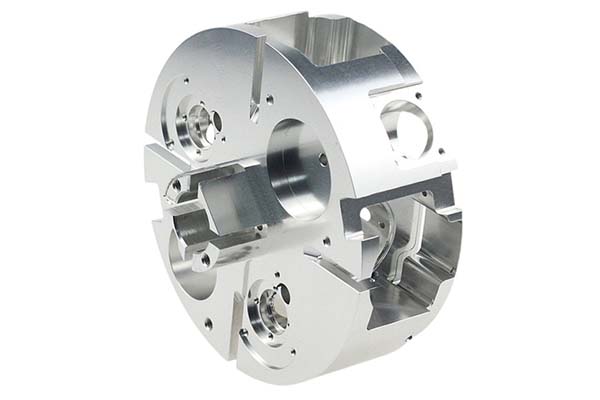
If you are involved in manufacturing, you know that die casting is not a single process. It is a family of processes, each with its own strengths and limitations. From basic high-pressure methods to advanced semi-solid technologies, the choice determines part quality, production speed, and cost. Use the wrong process for your material or application, and you will fight defects, high costs, and missed deadlines.
Key takeaways
- The foundation of die casting is high-pressure die casting (HPDC) . It comes in two main variants, divided by how the metal is handled.
- Basic HPDC has limitations—porosity, limited precision, material waste. Improved processes address these for higher-quality parts.
- Special processes address niche needs—multi-material parts, ultra-thin walls, or maximum strength.
- Process selection requires matching five factors. Skip one, and you pay the price.
What Are the Basic Die Casting Processes?
The foundation of die casting is high-pressure die casting (HPDC). It comes in two main variants, divided by how the metal is handled.
Cold Chamber Die Casting
How it works: Molten metal is poured into an unheated “cold chamber” by an external ladle. A hydraulic punch then pushes it into the mold.
Key parameters:
- Injection pressure: 50–120 MPa
- Mold temperature: 150–250°C
- Cycle time: 30–120 seconds per part
Suitable metals: High-melting-point alloys—aluminum (A380, A356), magnesium (AZ91D)
Advantages:
- Handles large, complex parts (up to 50 kg)
- Avoids mold overheating (mold life: 100,000+ cycles)
- Ideal for high-strength structural parts
Limitations:
- Slower cycle time than hot chamber
- Higher equipment cost
Typical applications: NEV battery brackets, automotive engine housings, aerospace structural parts
Hot Chamber Die Casting
How it works: The injection system is immersed in the molten metal. Metal is drawn directly into the chamber and injected.
Key parameters:
- Injection pressure: 30–80 MPa
- Mold temperature: 100–180°C
- Cycle time: 10–30 seconds per part
Suitable metals: Low-melting-point alloys—zinc (Zamak 5, ZA27), tin, lead
Advantages:
- Ultra-fast production (ideal for batches over 100,000 parts)
- Simple operation, low labor cost
- Low energy consumption (no reheating)
Limitations:
- Limited to small parts (under 5 kg)
- Mold corrosion (shorter life: 50,000–80,000 cycles)
Typical applications: Zinc alloy toys, electronic sensor housings, decorative trim
What Are the Improved Die Casting Processes?
Basic HPDC has limitations—porosity, limited precision, material waste. Improved processes address these for higher-quality parts.
Non-Porous Die Casting
The innovation: A vacuum system removes air from the mold cavity before injection.
Technical details:
- Vacuum degree: -0.095 to -0.098 MPa
- Gas removal rate: over 95%
- Works with both cold and hot chamber systems
What it solves: Reduces porosity by 80–90% —the main cause of leakage in basic HPDC. Eliminates internal voids.
Ideal applications: Zinc alloy hydraulic valve bodies, aluminum alloy fuel injector nozzles
Direct Injection Die Casting
The innovation: The furnace integrates with the injection chamber. No separate pouring step. A plunger pushes metal directly into the mold.
Technical details:
- Metal utilization: over 98% (vs. 85–90% for basic HPDC)
- No sprue waste (cuts material cost by 10–15%)
What it solves: Reduces material waste; shortens cycle time by 15–20%.
Ideal applications: High-volume aluminum parts (consumer electronics frames), zinc alloy hardware
Precision and Dense Die Casting
The innovation: Developed by General Dynamics. Combines ultra-precise mold machining with high-pressure compensation.
Technical details:
- Mold cavity tolerance: ±0.01 mm
- Injection pressure: 120–150 MPa
- Surface roughness: Ra ≤ 0.8 μm (no post-polishing needed)
- Dimensional accuracy: IT7–IT8 (basic HPDC is IT8–IT10)
- Part density: ≥ 99.5%
What it solves: Improves surface quality and precision. Parts meet strict assembly requirements without secondary operations.
Ideal applications: Aerospace aluminum components (cabin brackets), medical device casings (surgical tool handles)
What Are the Special Die Casting Processes?
Special processes address niche needs—multi-material parts, ultra-thin walls, or maximum strength.
Multi-Color and Multi-Material Die Casting
How it works: Two or more materials (or colors) are cast in one cycle.
The sequence:
- Inject base material (e.g., silver zinc alloy) into first cavity
- Rotate mold or move core to align with second cavity
- Inject second material (e.g., black zinc alloy) to bond with base
Advantages:
- Eliminates post-assembly (cuts labor cost 30–40%)
- Ensures tight material bonding (no gaps)
Applications: Automotive interior parts (two-tone dashboard frames), consumer electronics (multi-color phone cases)
High-Speed Die Casting
How it works: Ultra-fast injection and advanced cooling produce thin walls with high precision.
Key parameters:
- Injection speed: up to 200 m/s (vs. 0.5–120 m/s for basic HPDC)
- Filling time: under 0.05 seconds
- Mold cooling rate: 50–100°C/s
- Part tolerance: ±0.02 mm
Advantages:
- Produces complex thin-walled parts (minimum wall: 0.3–0.5 mm)
- Maintains dimensional stability (no warping)
Applications: Thin aluminum heat sinks (for 5G base stations), micro-zinc parts (watch gears)
Semi-Solid Die Casting
How it works: Metal is heated to a “solid-liquid” state (40–60% solid, 60–40% liquid). It flows laminarly, not turbulently.
Technical benefits:
- Microstructure: Fine spherical grains (5–50 μm) vs. coarse dendrites in basic HPDC
- Mechanical properties: Tensile strength +20–30%, elongation +50–80%
- Mold life: Extended 30–50% (lower thermal shock)
Applications: High-performance aluminum parts (NEV motor housings), magnesium aerospace components (small landing gear brackets)
How Do You Choose the Right Die Casting Process?
Process selection requires matching five factors. Skip one, and you pay the price.
Step 1: Match Process to Material
| Metal | Recommended Processes |
|---|---|
| Aluminum (high melting point) | Cold chamber HPDC (basic), Non-porous (improved), Semi-solid (special) |
| Magnesium (high melting point) | Cold chamber HPDC, Semi-solid |
| Zinc (low melting point) | Hot chamber HPDC (basic), Non-porous (improved), Multi-color (special) |
| Copper alloys | Cold chamber HPDC (specialized machines) |
Step 2: Consider Part Size and Complexity
| Part Characteristic | Recommended Process | Why |
|---|---|---|
| Small (<5 kg), simple shape | Hot chamber HPDC | Fast cycle, low cost |
| Large (>10 kg), complex structure | Cold chamber HPDC + precision mold | Handles size, ensures accuracy |
| Thin-walled (<1 mm), high precision | High-speed die casting | Ultra-fast filling avoids defects |
| Multi-material required | Multi-color/multi-material | Eliminates assembly |
Step 3: Align with Production Volume
Low volume (under 10,000 parts): Basic HPDC. Mold costs dominate; no need for advanced processes.
Medium volume (10,000–100,000 parts): Improved processes (non-porous, precision). Balance quality and cost.
High volume (over 100,000 parts): Hot chamber for zinc, direct injection for aluminum. Maximize efficiency.
Real data: For 50,000 aluminum parts per year:
- Basic HPDC: $8.50/unit
- Non-porous: $9.20/unit (better quality, 8% cost premium)
- Precision dense: $11.00/unit (best quality, 30% premium)
Step 4: Prioritize Quality Requirements
Pressure-bearing parts (no leakage allowed): Non-porous die casting. Reduces porosity to under 0.5%.
High-precision assembly (tolerance ±0.02 mm): Precision and dense die casting. Meets tight specs without machining.
High strength (tensile over 300 MPa): Semi-solid die casting. Delivers 20–30% stronger parts.
Cosmetic surfaces (no post-processing): Precision dense or high-speed. Surface finish Ra ≤ 0.8 μm as-cast.
Step 5: Evaluate Total Cost, Not Just Piece Price
Include in your calculation:
- Mold cost (basic HPDC molds cost less, but may need more maintenance)
- Secondary operations (machining, polishing, coating)
- Scrap rate (improved processes often pay for themselves in reduced scrap)
- Assembly savings (multi-material casting can eliminate assembly steps)
Example: A zinc medical device casing:
- Basic HPDC: $5,000 mold + $0.50/part post-polishing. Total for 100,000 parts: $55,000.
- Precision dense: $12,000 mold + $0 post-processing. Total for 100,000 parts: $62,000.
Precision dense costs more at 100k units. But at 200k units: $55,000 vs. $62,000—difference shrinks. At 500k units: precision dense becomes cheaper.
How Do You Match Processes to Applications?
Automotive: Large, Strong, Often Pressure-Tight
Typical parts: Engine blocks, transmission housings, EV battery frames, brake components
Recommended processes:
- Cold chamber HPDC: Baseline for most aluminum parts
- Non-porous: For pressure-tight components (valve bodies, fuel system parts)
- Semi-solid: For highest strength requirements (suspension components)
Case study: An EV manufacturer switched from basic HPDC to non-porous for battery cooling plates. Porosity dropped from 8% to 0.5%. Leak failures in the field went to zero.
Aerospace: High Strength, Zero Defects
Typical parts: Structural brackets, housings, small components
Recommended processes:
- Cold chamber HPDC with precision molds: For most structural parts
- Precision and dense: For components with tight assembly requirements
- Semi-solid: For weight-critical parts needing maximum strength
Case study: A supplier of magnesium brackets for aircraft interiors used semi-solid die casting. Parts were 25% stronger than HPDC versions and met all aerospace certification requirements.
Consumer Electronics: Thin, Precise, Cosmetically Perfect
Typical parts: Phone frames, laptop cases, heat sinks
Recommended processes:
- High-speed die casting: For ultra-thin walls (under 1 mm)
- Direct injection: For high-volume aluminum frames
- Multi-color: For two-tone cosmetic parts
Case study: A phone manufacturer needed 0.8 mm thick frames with complex cutouts. High-speed die casting (180 m/s injection) achieved 98% yield with no post-machining.
Medical Devices: Precision, Biocompatibility
Typical parts: Surgical instrument handles, imaging equipment components
Recommended processes:
- Precision and dense: For parts requiring tight tolerances and smooth surfaces
- Cold chamber HPDC: For larger components
What Are Common Process Selection Mistakes?
Mistake 1: Using Hot Chamber for Aluminum
Aluminum’s high melting point destroys hot chamber injection components. Yet some try it for “speed.” Result: rapid wear, contamination, high maintenance costs.
Fix: Aluminum always requires cold chamber.
Mistake 2: Over-Specifying Process
Using precision dense for a simple decorative part adds cost without benefit. Basic HPDC with light post-processing would work fine.
Fix: Match process to actual requirements, not “nice to have.”
Mistake 3: Ignoring Volume in Process Choice
Choosing a high-speed, high-automation process for low volumes guarantees high per-part costs. The equipment investment cannot be recovered.
Fix: Calculate break-even volumes before committing to advanced processes.
Mistake 4: Forgetting About Secondary Operations
A process that produces parts needing extensive machining, polishing, or coating may cost more overall than a “more expensive” process that delivers finished parts.
Fix: Compare total cost, not just casting cost.
How to write a spec that gets priced correctly
A drawing is a contract. If it leaves a number open, the shop fills that number in with its own default. The default is rarely the one you had in mind. Put these five lines on every RFQ and most of the back-and-forth disappears before it starts.
- 3D model with the parting line marked
- Alloy grade and the standard it meets
- Wall thickness and draft on every face
- Machining allowance on the faces that will be cut
- Pressure tightness or porosity class
The point is not paperwork. Each line removes a decision the shop would otherwise make for you. A complete RFQ comes back priced. An incomplete one comes back guessed.
What actually drives the price
Buyers usually push on material because it is the line they can see. In practice the material is rarely the biggest number on a quote. These five lines decide most of it:
- die steel and cavity count
- part weight and wall section
- draft and slide count
- porosity requirement
- machining allowance
Ask for the quote split by line. A supplier who cannot break it down is guessing, and you will pay for the guess. The line you can usually renegotiate is the tolerance band, not the raw material.
Problems you will meet, and the fix
Every process has a failure mode it prefers. The same four show up again and again on this kind of work, and none of them are mysteries once you know what to look for.
- Cold shuts where two flow fronts meet
- Porosity that shows up only after machining
- Soldering on a hot spot in the die
- Shrinkage voids in a heavy section
Catch the fault on the first part, not the hundredth. A first-article check costs an hour. A bad batch costs the whole order. Write the check into the purchase order so nobody has to remember it.
What to check on the first article
The first article is the cheapest inspection you will ever buy. Use it properly and the rest of the run becomes boring, which is exactly what you want.
- Every dimension on the drawing, with the measured value written beside it.
- The material certificate, matched to the heat or lot number on the parts.
- The finish against the sample you approved, under the same light.
- Fit against the mating part, assembled rather than measured.
- Packaging, because parts that arrive damaged were never in tolerance.
Check in this order: datums, then mating features, then cosmetic faces. If the datums are wrong, every number after them is noise. Keep the report on file. When a problem shows up in month six, that document is the only thing that tells you what changed.
FAQ About Processes of Die Casting
Can non-porous die casting be used for both aluminum and zinc?
Yes. It works with both cold chamber (aluminum) and hot chamber (zinc) systems. For aluminum, it reduces porosity to under 0.5%—critical for pressure parts. For zinc, it eliminates internal voids, improving corrosion resistance. Only mold temperature needs adjustment: 150–250°C for aluminum, 100–180°C for zinc.
What is the cost difference between precision dense and basic HPDC?
Precision dense molds cost 2–3× more due to ultra-precise machining. But they eliminate post-processing. Break-even depends on volume. For simple parts, break-even may be 200,000+ units. For complex parts requiring extensive post-processing, break-even can be under 50,000 units.
Is high-speed die casting suitable for thick walls (over 5 mm)?
No. High-speed die casting’s fast cooling (50–100°C/s) causes thick sections to solidify unevenly, creating shrinkage cavities. For thick-walled parts, use cold chamber HPDC with high-pressure compensation (120–150 MPa) to ensure uniform solidification.
Which process is best for magnesium?
Magnesium is reactive and oxidation-sensitive. Cold chamber HPDC with nitrogen protection is standard. For highest strength, semi-solid die casting works well (fine grain structure, 20–30% stronger). Avoid hot chamber—magnesium attacks immersed components.
Can multi-material casting combine aluminum and zinc?
Technically yes, but challenging. Their different melting points and shrinkage rates create bonding issues. Most multi-material applications use similar metals (zinc alloys with different colors or slightly different compositions).
The processes of die casting range from basic to advanced, each with a specific job:
- Basic HPDC (cold and hot chamber): The workhorses for most production
- Improved processes (non-porous, direct injection, precision dense): Solve specific quality issues
- Special processes (multi-material, high-speed, semi-solid): Address niche requirements
Choosing the right process requires matching five factors:
- Material (aluminum = cold chamber; zinc = hot chamber)
- Part size and complexity (large/complex = cold chamber with precision)
- Production volume (low = basic; high = improved/special as volume justifies)
- Quality requirements (pressure-tight = non-porous; high precision = precision dense)
- Total cost (include mold, production, secondary ops, scrap)
The right choice delivers parts that meet specifications, produced efficiently, at the lowest total cost. The wrong choice guarantees problems. Take the time to match process to need—it pays off in every production run.
Our solution for Key Processes
YiguProto runs die casting in house, from a single prototype to a production batch. We quote the process, the material and the finish as separate lines, so you can see where the money goes instead of arguing with one number.
Send a STEP file or a drawing and you get a DFM report in one to two business days. It flags the features that add cost and the features that will not hold tolerance on the process you picked.
Every order ships with an inspection report on the features you call out. If a part misses, we make it again. Ready to price a part? Start with a free quote and DFM review, or read more about our die casting. You can also talk to an engineer before you commit to a drawing.
FAQ about Key Processes
What is Key Processes used for?
Key Processes turns up wherever the part has to do a real job at a predictable cost: brackets, housings, fixtures, covers and the fittings that hold them together. The honest test is whether the properties match the load and the environment, not whether the material is fashionable.
What material should I specify?
Specify by standard, not by trade name. A trade name can change under you between two orders; a standard number cannot. Then add the one property that actually decides the part, whether that is strength, heat resistance or chemical exposure.
How long does a first article take?
Usually a few business days once the drawing is frozen, and longer if tooling is involved. The date we give you is the date we confirm in writing, not the date we hope for.
What is the lead time for Key Processes?
Expect 20 to 30 business days including die build. Tooling, material stock and the finishing queue all move that number, so we confirm the date in writing before the run starts rather than after.
What files do you need in order to quote?
A STEP file plus a PDF drawing that carries the same revision letter. The model carries the geometry and the drawing carries the intent. When the two disagree, the shop picks one, and it is never the one you meant.
What happens if a part is out of specification?
We measure it against the same drawing you approved and, if it misses, we make it again. What matters is that the report exists, because a disagreement without data is just an opinion.
The short version
Key Processes rewards the buyer who reads the data sheet and the drawing together. Pick the option for the property that matters, not for the price per kilo.
Tighten only what mates. Test a sample before the run. Then let the process do the rest.