
3D Printing
What You Need to Know About STL Printing Services
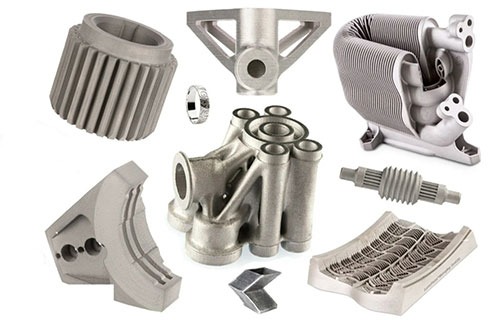
Everything we know about 3D Printing Stl, written the way we would explain it across a table: what it is good at, what it costs you, and the design rules that keep the part out of the scrap bin.
What 3D Printing Stl should deliver
3D Printing Stl is a buying decision, not a technical one. The technical part is easy. The hard part is knowing which supplier will still answer in month six.
A good partner gives you four things. A clear quote, a named engineer, a date you can plan on, and a report that proves the parts are right.
A weak partner gives you one thing. A low price, followed by silence.
This page sets out how to tell the two apart before money changes hands.
The six checks that matter
Most buyers ask about price first. Price is the easiest thing to fake and the last thing to matter.
Check capability before you check the number. A cheap quote for a part nobody can make is the most expensive quote you will get.
- Process range. Can they run the process your part needs, in the material you specified?
- Named contact. Do you get an engineer, or a shared inbox?
- DFM feedback. Do they flag problems before the run, or after the parts arrive?
- Inspection. What do they measure, with what, and do you get the data?
- Lead time. Ask for the current queue, not the best case.
- Tooling ownership. Who owns the mold, the fixture, the program? Get it in writing.
Six questions, one call. A supplier who answers all six without hedging is worth a second call.
What a fair quote looks like
A fair quote splits the work. Tooling, material, machine time, finishing and inspection each get a line.
A single number with no breakdown is a number you cannot check. It also hides the lever you could pull to cut cost.
Ask which line moves most if you loosen a tolerance or double the quantity. The answer shows whether the quote was built or copied.
| Feature | Typical | Best case | Notes |
|---|---|---|---|
| Layer height | 0.1 to 0.2 mm | 0.025 mm | Thinner costs time |
| Tolerance | ±0.3 mm | ±0.05 mm | Process dependent |
| Min feature | 0.4 mm | 0.2 mm | Below this, features vanish |
| Build speed | 10 to 50 cm3/h | 150 cm3/h | Depends on process |
| Post work | 1 to 3 hours | 20 minutes | Support removal dominates |
What drives the price
Price on 3D Printing Stl parts comes from five lines. Material, machine time, setup, finishing and inspection. Only one of them is the powder or resin itself.
Buyers usually push on material. The real money sits in setup and in the tolerance callouts. Loosen one tolerance and you can move the price more than a material swap.
- Build volume. A part that fills the chamber blocks every other job in the queue.
- Support removal. Every support touch point is a minute of hand finishing.
- Tolerance band. Each step tighter adds inspection time.
- Surface finish. A cosmetic face needs a separate pass and often hand work.
- Quantity. Setup spreads across the run, so ten parts cost far less each than one.
Ask for the quote broken down by line. A supplier who cannot split it is guessing, and you will pay for the guess.
Red flags worth walking away from
Some warnings show up in the first email. Others show up in the third batch. Both are cheaper to catch early.
- No questions. A supplier who quotes without asking about the drawing has not read it.
- A price far below the field. Something is missing, and it will be you.
- No inspection data. If they cannot show numbers, they are not measuring.
- Vague dates. "Soon" is not a date.
- No paper on tooling. If you do not own the tool, you do not own the part.
None of these mean fraud. Most mean a shop that is busy and disorganised. Either way, you carry the risk.
Where 3D Printing Stl earns its place
The right question is not what 3D Printing Stl can do. It is where it beats the alternatives by enough to matter.
In our work it shows up most in four places. Each one trades something to get something.
- Prototypes: form and fit checks before tooling money is spent
- Jigs and fixtures: custom shapes that would cost too much to machine
- Low volume parts: ten to a few hundred units with no tooling
- Complex geometry: internal channels and organic shapes that cannot be cut
If your part sits outside these four, that is not a no. It is a reason to test a sample before you commit to a run.
One prototype is cheaper than one wrong production order.
How it compares with the alternatives
No process wins on every line. The right choice depends on batch size and on which tolerance you cannot give up.
Read the table by column, not by row. The batch column usually settles the argument before the tolerance column gets a vote.
| Route | Tooling | Best batch | Tolerance | Surface |
|---|---|---|---|---|
| FDM | None | 1 to 50 | ±0.3 mm | Visible layers |
| SLA | None | 1 to 200 | ±0.1 mm | Smooth |
| SLS / MJF | None | 10 to 2,000 | ±0.3 mm | Grainy |
| CNC machining | Fixtures only | 1 to 10,000 | ±0.05 mm | Machined |
| Injection molding | Steel tool | 5,000+ | ±0.1 mm | As tooled |
If your volume sits between two rows, quote both. The crossover point moves with part size and with how much hand work the finish needs.
Ask the supplier where their own crossover sits. A shop that runs both routes will tell you honestly, because they win either way.
What to check before you accept the parts
Inspection is not a formality. It is the step that turns a shipment into a decision you can defend.
Check in this order. Datums, then mating features, then cosmetic faces. If the datums are wrong, every number after them is noise.
- Dimensional report. Every callout on the drawing, with the measured value beside it.
- Material certificate. Matched to the heat or lot number on the parts.
- Finish sample. Compared against the piece you approved, under the same light.
- Function check. Assembled, not just measured. A part can be in tolerance and still not fit.
- Packaging. Parts that arrive damaged were never in tolerance.
Keep the first-article report on file. When a problem shows up in month six, that document is the only thing that tells you what changed.
Lead time, and what moves it
Lead time has four parts. Material, queue, production and finishing. Only the queue is fully inside the supplier's control.
Ask which of the four is the constraint on your job. Then you know what a rush fee actually buys.
Material is the quiet one. A standard grade ships from stock. A special temper or a mill run adds two to four weeks, and nobody flags it unless you ask.
Finishing is the second. Anodizing, painting and laser marking often run in batches at a subcontractor, so a small order can wait for a big one.
Put the date you need in the RFQ, not the date you hope for. A supplier who cannot make it will tell you at quote stage, which is the cheapest moment to find out.
Our solution for 3D Printing Stl parts
YiguProto runs 3D printing in house, from one-off prototypes to production batches. We quote the process, the material and the finish as separate lines, so you can see where the money goes.
Send a STEP file or a drawing and you get a DFM report in one to two business days. It flags the features that add cost and the ones that will not hold tolerance.
Every order ships with an inspection report on the features you call out. If a part misses, we make it again.
Ready to price a part? Start with a free quote and DFM review, or read more about our 3D printing service. You can also talk to an engineer before you commit to a drawing.
FAQ about 3D Printing Stl
How do I compare quotes for 3D Printing Stl?
Ask for the same drawing, the same material and the same inspection. Then compare line by line. A quote that hides the breakdown cannot be compared with one that shows it.
What should a first order include?
One sample part, a first-article report, and the material certificate. That set tells you more than a factory tour.
How do I check quality without visiting?
Ask for dimensional data on the features you called out, plus photos of the actual parts. A supplier who measures will send numbers. One who does not will send adjectives.
What lead time is normal?
Prototypes in 3 to 7 business days. Production depends on tooling and material. Get the date in writing, and get the ship date, not the finish date.
Who owns the tooling?
You should. Put it in the purchase order. A tool you do not own is a hostage you pay for twice.
How do I start a project?
Send a STEP file and a drawing, plus the volume you expect. You will get a DFM note and a quote within 24 hours.
How to write the RFQ
A good RFQ is short and complete. It carries the file, the material, the finish, the quantity and the date you need it.
Missing any one of the five slows the quote down. Missing two usually gets you a guess.
- A STEP file and a PDF drawing with the revision letter.
- Material grade, with the standard number not the trade name.
- Finish and the faces it applies to.
- Quantity for the first order and for the year.
- Any test the part must pass: drop, seal, salt spray, dielectric.
What to check on the first article
The first article is the cheapest inspection you will ever buy. Use it.
Check the datums first, then the features that mate, then the cosmetic faces. In that order.
- Every dimension on the drawing, with the measured value written next to it.
- The material certificate, matched to the heat number on the parts.
- The finish against the sample you approved.
- Fit against the mating part, assembled, not just measured.
Mistakes that cost the most
Three mistakes show up again and again in quotes that go wrong.
None of them are technical. All of them are about the handover between design and shop.
- A drawing that contradicts the 3D file. The shop picks one, and it is never the one you meant.
- A tolerance with no datum. Two inspectors measure two different parts.
- A cosmetic callout with no sample. Everyone is right and nobody is happy.
How to compare two quotes fairly
Two numbers are not comparable unless the scope matches. Line them up before you decide.
Same drawing, same material, same finish, same inspection. Anything else is a different job.
Then look at what each quote leaves out. Freight, packaging, certificates and tooling are the usual gaps. A low number with three gaps is not a low number.
Scaling from one part to a batch
The first part teaches you the process. The hundredth teaches you the process cost.
Watch three things as volume grows. Setup amortisation, tool wear, and how much hand work the finish still needs.
If the part price barely drops between ten and a hundred, the cost is in material or in hand work, not in setup. Ask which, because only one of them is negotiable.
Where cheap goes wrong
A low price has to come from somewhere. Either less work, cheaper material, or a queue you have not seen yet.
Ask what the price excludes. The answer is usually freight, inspection or the finish you assumed was included.
Cheap is fine when you know the trade. It is expensive when you find out at the dock.
Documents worth keeping
Four documents protect you after the invoice is paid.
Keep them together, per project, and hand them to the next supplier when you re-source.
- The approved drawing, with the revision letter and the date.
- The first-article inspection report, signed.
- The material certificate, matched to the lot.
- The finish sample you approved, sealed and dated.
Lead time, honestly
Lead time has four parts. Material, machine queue, finishing and inspection. Only the queue is under the shop's control.
Ask which of the four is the constraint. Then you know what to negotiate.
Rush orders are possible and they cost. The cost is overtime and bumped queue slots, and it is fair to ask what it buys you.
The short version
3D Printing Stl rewards the buyer who reads the data sheet and the drawing together. Pick it for the property that matters, not for the price per kilo.
Tighten only what mates. Test a sample before the run. Then let the process do the rest.