
Blogs
Is VMC the Same as CNC? Clearing Up the Confusion
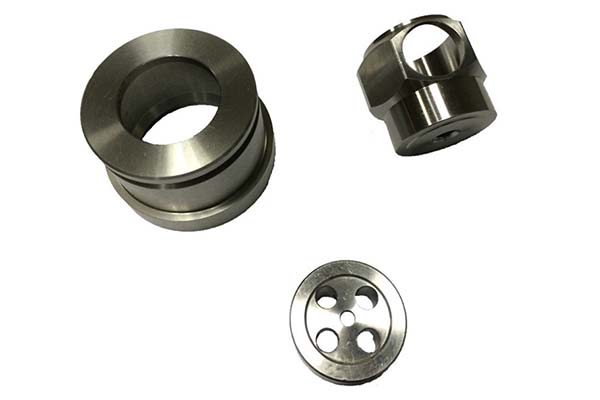
If you work in manufacturing or engineering, you hear the terms CNC and VMC constantly. People often use them as if they mean the same thing. But here is the truth: they are not identical. Mixing them up can lead to costly mistakes when you buy equipment, plan projects, or set up your workshop. This article will give you a clear, practical understanding of both terms.
What Exactly Is CNC?
The Brains Behind Modern Machining
CNC stands for Computer Numerical Control. It is a broad technology that uses computers to run machine tools. Instead of a person turning handles and pulling levers, a computer program tells the machine exactly what to do. This program, usually G-code, controls every movement, speed, and action.
Think of CNC as the “brain” behind the operation. It takes a digital design from CAD software and turns it into physical reality through automated precision. The system reads the code and sends signals to motors that move the machine’s parts along different paths.
How CNC Systems Actually Work
The process follows a simple but powerful sequence. First, you create a part design using CAD (Computer-Aided Design) software. This could be a 2D drawing or a 3D model. Next, CAM (Computer-Aided Manufacturing) software converts that design into machine code. This code contains all the instructions: where to move, how fast to go, when to start cutting, and when to stop.
Finally, the CNC controller reads this code and drives the machine. Motors move the cutting tool or the workpiece along precise paths, typically on X, Y, and Z axes. The result is consistent, accurate parts produced faster than manual methods could ever achieve.
The Wide World of CNC Machine Types
CNC is an umbrella term covering many different machines. Each type serves a specific purpose:
- CNC Lathes: These spin the workpiece while a cutting tool shapes it. They excel at making cylindrical parts like shafts, bolts, and bushings.
- CNC Milling Machines: These use rotating cutting tools to remove material from a stationary workpiece. They create flat surfaces, slots, gears, and complex 3D shapes.
- CNC Routers: Similar to milling machines but built for softer materials like wood, plastic, and aluminum. They are common in furniture making and sign production.
- CNC Plasma Cutters: These use super-heated plasma to cut through metal sheets. They work well for large-scale fabrication jobs.
- CNC Grinders: These achieve extremely fine finishes by using abrasive wheels to remove tiny amounts of material.
- Machining Centers: These advanced machines, including VMCs and HMCs, combine multiple capabilities in one unit with automatic tool changers.
Real Example: CNC in Action
A mid-sized automotive parts supplier struggled with quality issues. Their manual lathes produced engine components with a defect rate of 8% to 10%. Production moved slowly, and customer complaints piled up.
They invested in several CNC lathes and milling machines. Within six months, their defect rate dropped below 0.5%. Production speed increased by 40%. The same parts now come out identical every time, meeting tight specifications without constant operator attention. This is the power of CNC technology in real-world manufacturing.
What Makes a VMC Different?
Vertical Machining Centers Explained
A VMC, or Vertical Machining Center, is a specific type of CNC milling machine. The name tells you its defining feature: the spindle that holds the cutting tool sits vertically, pointing straight down at the workpiece.
In a VMC, the workpiece clamps onto a table that moves horizontally along the X and Y axes. The spindle moves up and down along the Z axis. This arrangement makes VMCs ideal for operations like face milling, pocketing, drilling, and tapping. The vertical design also helps chips fall away from the work area, keeping the cut clean.
Inside a VMC: Key Components
A typical VMC contains several essential parts working together:
| Component | What It Does |
|---|---|
| Vertical Spindle | Holds and spins the cutting tool at high speeds (often 8,000 to 15,000 RPM or more) |
| Worktable | Supports the workpiece and moves it side-to-side (X axis) and front-to-back (Y axis) |
| CNC Controller | Reads the program and coordinates all movements with precision |
| Automatic Tool Changer | Swaps tools in seconds during operation, allowing multiple operations in one setup |
| Coolant System | Sprays cutting fluid to reduce heat, flush away chips, and extend tool life |
| Machine Frame | Provides rigid support to maintain accuracy under heavy cutting forces |
How VMCs Actually Work
The process starts like any CNC operation. A programmer creates the part model in CAD software, then uses CAM software to generate the toolpaths and G-code. The operator loads the workpiece onto the table and sets up the required tools in the tool changer.
When the cycle starts, the VMC takes over automatically. The table positions the workpiece under the spinning tool. The spindle feeds down into the material, cutting precisely along the programmed path. When one operation finishes, the tool changer swaps tools, and the next operation begins. All without human hands touching the machine.
Real Example: VMC in Aerospace Manufacturing
An aerospace company needed to produce turbine blades from titanium alloy. This material is notoriously difficult to machine. It generates intense heat and wears out tools quickly. The parts require tolerances of ±0.001 inches and complex 3D contours.
They chose a 5-axis VMC with a high-speed spindle and advanced coolant delivery. The vertical orientation let them reach deep into the part features. Chips cleared easily, preventing re-cutting that could damage the surface. Today, they produce flawless blades consistently, meeting aerospace standards that leave no room for error.
CNC vs VMC: What’s the Real Difference?
Scope: One Is Broad, One Is Specific
This is the most important point to understand. CNC is the big category. VMC is one specific item inside that category.
Think of it like vehicles. CNC is “vehicles” — the whole group. VMC is “sedans” — one type of vehicle. All sedans are vehicles, but not all vehicles are sedans. Similarly, all VMCs are CNC machines, but not all CNC machines are VMCs.
Spindle Orientation: Fixed vs Variable
Look at a machine’s spindle, and you will see a clear difference.
CNC machines can have spindles in many positions. A CNC lathe holds the spindle horizontally. A CNC router might have a vertical spindle for cutting sheet goods. A CNC plasma cutter uses a torch head that moves in multiple directions. Orientation depends entirely on what the machine needs to do.
VMCs have one fixed orientation: vertical. The spindle points straight down at the table. This consistent design makes VMCs predictable and well-suited for certain jobs, especially those requiring good chip evacuation and access to the top of the workpiece.
Functionality: General Purpose vs Milling Specialist
CNC machines cover a huge range of functions. A CNC lathe turns cylindrical parts. A CNC grinder creates smooth finishes. A CNC EDM machine uses electrical sparks to erode metal. Each serves a different purpose.
VMCs focus on milling. They excel at removing material with rotating cutters to create flat surfaces, pockets, slots, and complex 3D shapes. While some VMCs can do light turning with special attachments, milling remains their primary strength.
Quick Comparison: Key Differences at a Glance
| Feature | CNC (General) | VMC (Specific) |
|---|---|---|
| Definition | Broad technology category | Specific machine type |
| Spindle orientation | Varies by machine type | Fixed vertical |
| Main function | Turning, milling, cutting, grinding, etc. | Vertical milling operations |
| Examples | Lathes, routers, plasma cutters, grinders | 3-axis, 4-axis, 5-axis VMCs |
| Typical parts | Anything from bolts to circuit boards | Mold bases, aerospace components, dies |
| Relationship | The parent category | The child (sub-type) |
Design and Structure: Standardized vs Varied
Walk through a machine shop, and you will see CNC machines of all shapes and sizes. Small CNC routers sit on benches. Massive CNC lathes stretch across the floor. CNC plasma tables dominate large fabrication bays. Each design matches its intended use.
VMCs follow a more standardized layout. A vertical column supports the spindle head. A large base holds the worktable. The table moves in X and Y while the spindle moves in Z. This design has proven effective for milling, so most manufacturers stick to this basic formula while adding their own improvements.
Applications: Where Each Machine Shines
CNC machines appear everywhere in manufacturing. Auto plants use CNC lathes for engine parts. Electronics factories rely on CNC routers for circuit boards. Furniture makers use CNC routers for decorative panels. Shipbuilders use CNC plasma cutters for steel plates. The applications are nearly endless.
VMCs concentrate in industries that demand precision milling:
- Aerospace: Turbine blades, structural components, landing gear parts
- Medical: Surgical instruments, implants, device housings
- Automotive: Engine blocks, transmission cases, cylinder heads
- Mold and die: Injection molds, die-casting dies, forging tools
- General engineering: Custom parts, prototypes, fixtures
Versatility: Swiss Army Knife vs Specialized Tool
A shop with multiple CNC machines can handle almost any job. Need a shaft? Use the CNC lathe. Need a bracket? Use the CNC mill. Need a sheet metal part? Use the CNC plasma cutter. Different machines cover different needs.
VMCs offer less versatility but deeper capability in their specialty. A 5-axis VMC can machine complex contours that would be impossible on simpler machines. But it cannot turn a shaft or cut sheet metal. It does one thing extremely well.
How to Choose: CNC or VMC for Your Work?
Questions to Ask Yourself
Choosing between a general CNC machine and a VMC depends entirely on what you make. Start with these questions:
What parts do you produce most often? If your work involves cylindrical parts like shafts or bushings, a CNC lathe makes more sense than a VMC. If you machine flat or box-shaped parts with features on multiple faces, a VMC is probably right.
What materials do you cut? Hard metals like titanium and tool steel demand the rigidity of a good VMC. Softer materials like wood and plastic might be fine on a simpler CNC router.
What tolerances do you need? High-precision work in aerospace or medical fields typically requires VMC capability. Looser tolerances might allow for less expensive machines.
What is your budget? A basic CNC router might cost $10,000. A production VMC starts around $50,000 and goes up to $500,000 or more. Know your numbers before shopping.
When a VMC Is the Right Choice
Choose a VMC when:
- Your parts require precise milling on the top face
- You need good chip evacuation during deep cuts
- You run jobs with multiple operations (drilling, tapping, contouring) in one setup
- Your materials are metals requiring rigid machine construction
- You want automatic tool changing for efficiency
When Another CNC Machine Makes Sense
Consider other CNC machines when:
- Your parts are cylindrical (choose a CNC lathe)
- You cut large sheets of material (choose a CNC router or plasma cutter)
- You need extremely fine surface finishes (choose a CNC grinder)
- Your parts are very large and heavy (consider a CNC boring mill)
- You mainly cut thin metal sheets (a CNC plasma or laser works better)
Real Example: Making the Right Choice
A small job shop needed new equipment. They made a mix of products: custom shafts for local machine builders, brackets for a furniture company, and prototypes for a medical device startup. The owner considered buying a VMC because everyone talked about them.
After analyzing their work, they realized that 60% of their jobs were cylindrical parts best suited to a CNC lathe. They bought a quality CNC lathe first, then added a VMC later for the remaining work. This sequence matched their actual needs and kept them profitable from day one.
Common Misconceptions About CNC and VMC
“VMC and CNC Are the Same Thing”
This is the most common mistake. People use the terms interchangeably, but they describe different concepts. CNC is the control method. VMC is a machine type that uses CNC control. You cannot have a VMC without CNC, but you can have plenty of CNC machines that are not VMCs.
“All Milling Machines Are VMCs”
Not true. Horizontal machining centers (HMCs) also mill, but their spindles point sideways. This changes how chips fall and how parts mount. HMCs excel at machining multiple faces of a part without re-fixturing. Both are milling machines, but orientation makes them different.
“VMCs Are Always Better Than Other CNC Machines”
Better depends entirely on the job. A VMC cannot turn a shaft. A CNC lathe cannot mill complex 3D surfaces efficiently. Each machine has strengths and weaknesses. The best choice matches the machine’s capabilities to the parts you need to make.
FAQ: Your Questions About CNC and VMC Answered
Is a VMC considered a CNC machine?
Yes, absolutely. A VMC is a specific type of CNC machine. It falls under the broader CNC category, just like lathes, routers, and plasma cutters.
What does VMC stand for in machining?
VMC stands for Vertical Machining Center. The name describes its vertical spindle orientation and its ability to perform multiple machining operations in one setup.
Which is more expensive: a CNC lathe or a VMC?
Prices vary widely based on size, accuracy, and features. Generally, comparable-quality VMCs and CNC lathes fall in similar price ranges. A basic production VMC might start around $50,000, while a basic CNC lathe might start around $40,000. High-end versions of either can exceed $500,000.
Can a VMC do turning operations?
Standard VMCs cannot turn parts effectively. Some advanced VMCs with rotary tables and live tooling can perform limited turning operations, but a CNC lathe remains the right choice for dedicated turning work.
Do I need to learn different programming for CNC and VMC?
The core G-code programming concepts remain the same. However, specific machines have different capabilities and requirements. A program written for a 3-axis VMC will not run on a CNC lathe without modification. Understanding your specific machine’s features is essential.
What is the difference between VMC and HMC?
Both are machining centers. VMC has a vertical spindle. HMC has a horizontal spindle. This orientation difference affects how parts mount, how chips clear, and what types of work each handles best.
Understanding the difference between CNC and VMC saves you from confusion and costly mistakes. Remember this simple relationship: CNC is the broad technology that controls machines through computer programs. VMC is one specific type of CNC machine designed for vertical milling operations. All VMCs are CNC machines, but not all CNC machines are VMCs.
When you choose equipment, let your actual parts guide the decision. Cylindrical parts point toward CNC lathes. Flat parts with features on top point toward VMCs. Sheet materials point toward CNC routers or plasma cutters. Matching the machine to the work keeps your shop productive and profitable.
The manufacturing world continues evolving, with CNC technology at its core. VMCs remain workhorses in countless shops, delivering precision milling day after day. By understanding both terms clearly, you communicate better with suppliers, make smarter equipment choices, and ultimately produce better parts for your customers.
How we can help
YiguProto runs custom manufacturing in house, from a single prototype to a production batch. We quote the process, the material and the finish as separate lines, so you can see where the money goes instead of arguing with one number.
Send a STEP file or a drawing and you get a DFM report in one to two business days. It flags the features that add cost and the features that will not hold tolerance on the process you picked.
Every order ships with an inspection report on the features you call out. If a part misses, we make it again. Ready to price a part? Start with a free quote and DFM review, or read more about our custom manufacturing. You can also talk to an engineer before you commit to a drawing.
Frequently asked questions
How do I compare two quotes fairly?
Match the scope first: same drawing, same material, same finish, same inspection. Then read the exclusions. Freight, tooling and certificates are the usual gaps, and a low number with three gaps is not a low number.
Does the process work for prototypes as well as production?
Yes, and that is usually the point. Running the prototype on the production process removes a whole class of surprises, because the part you test is made the same way as the part you sell.
What material should I specify?
Specify by standard, not by trade name. A trade name can change under you between two orders; a standard number cannot. Then add the one property that actually decides the part, whether that is strength, heat resistance or chemical exposure.
What files do you need in order to quote?
A STEP file plus a PDF drawing that carries the same revision letter. The model carries the geometry and the drawing carries the intent. When the two disagree, the shop picks one, and it is never the one you meant.
What should I check before approving the parts?
Datums first, then the features that mate, then the cosmetic faces. Ask for a dimensional report, a material certificate and a finish sample. A part can be inside every tolerance and still not fit, so assemble one before you sign.
How long does a first article take?
Usually a few business days once the drawing is frozen, and longer if tooling is involved. The date we give you is the date we confirm in writing, not the date we hope for.
The short version
Good parts reward the buyer who reads the data sheet and the drawing together. Pick the option for the property that matters, not for the price per kilo.
Tighten only what mates. Test a sample before the run. Then let the process do the rest.