
Die Casting
Why Is Aluminum Alloy Die Casting Heat Treatment Essential for High-Quality Parts?
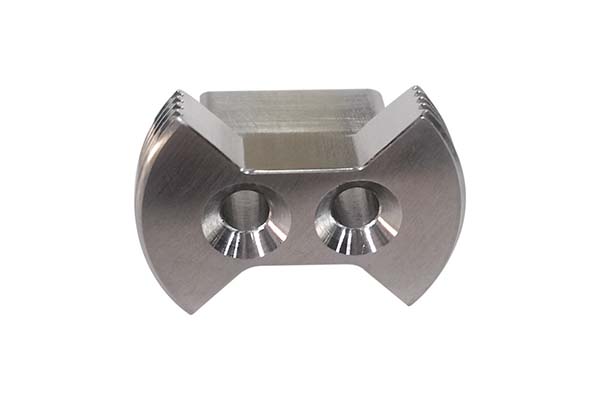
Raw aluminum die castings straight from the mold rarely meet demanding performance requirements. They contain internal stresses, inconsistent grain structures, and less-than-optimal mechanical properties. Heat treatment transforms them. It eliminates stress, boosts strength by 20-40% , stabilizes dimensions, and improves machinability.
What Does Heat Treatment Accomplish?
Eliminates internal stresses
Castings with uneven wall thickness—like engine brackets or transmission housings—develop internal stresses during cooling. These stresses can cause cracking during machining or, worse, during service. Heat treatment relieves them by allowing atoms to rearrange into lower-energy configurations.
Parts that skip stress relief may seem fine initially, then warp or crack days later. Stress relief heat treatment prevents this hidden failure mode.
Improves mechanical properties
Heat treatment can boost tensile strength by 20-40% while improving hardness and plasticity. For high-load components like suspension parts or gearbox housings, this strength increase separates success from failure.
The strengthening happens through controlled precipitation of alloying elements. Small particles form within the metal that block dislocation movement—the fundamental mechanism of strengthening.
Stabilizes structure and size
Aluminum alloys undergo phase transitions at elevated temperatures. Without stabilization, precision components like sensor housings can change dimensions over time or when exposed to operating heat.
Heat treatment completes these phase transitions in a controlled environment, producing a stable structure that won’t change later. Dimensional accuracy stays within ±0.01mm for critical features.
Optimizes machining performance
Untreated castings can be hard on cutting tools. Heat treatment lowers cutting resistance, extending tool life by 30% or more. For complex CNC-machined parts like valve bodies, this translates directly to lower production costs.
Better machinability also means faster cycle times and improved surface finish on machined features.
| Purpose | Benefit | Typical Application |
|---|---|---|
| Stress relief | Prevents cracking | Uneven-wall castings |
| Strength improvement | 20-40% increase | High-load components |
| Structure stabilization | ±0.01mm accuracy | Precision housings |
| Machinability | 30% longer tool life | Complex machined parts |
What Heat Treatment Methods Are Used?
Annealing
Annealing heats castings to 300-400°C at 50-100°C per hour, holds for 2-4 hours, then cools slowly in the furnace.
The slow cooling decomposes second-phase particles and softens the metal. This is ideal for pre-machining of hard aluminum-silicon alloys that would otherwise wear tools quickly.
Annealing reduces hardness but does not maximize strength. It is a preparation step, not a final treatment.
Solution treatment
Solution treatment heats castings near the eutectic melting point at 450-550°C, holds to dissolve alloying elements, then quenches rapidly—transfer time under 10 seconds.
The rapid quench traps dissolved elements in supersaturated solid solution. This creates the potential for subsequent strengthening. Without solution treatment, aging cannot achieve full strength.
The risk is overburning if temperature exceeds the melting point of low-temperature phases. Precise control is essential.
Aging treatment
Aging follows solution treatment. Castings heat to 120-200°C, hold for 4-12 hours, then cool in air or water.
During aging, strengthening phases precipitate from the supersaturated solution. These tiny particles block dislocation motion, dramatically increasing strength.
Aging balances strength and ductility. Different temperatures and times produce different property combinations.
T5 artificial aging (recommended)
T5 is a simplified treatment that skips solution treatment and goes directly to aging. Castings heat slowly at 30-50°C per hour to 150-180°C, hold 6-8 hours, then air cool.
Advantages: Avoids high-temperature deformation and pore expansion that plague solution-treated thin-walled parts. Costs 15-20% less than full T6 treatment.
Best for: Complex thin-walled components like smartphone middle frames, or castings with higher gas content that would blister during solution treatment.
Tensile strength is 5-10% lower than T6, but dimensional stability is much better.
Cold-hot cycle treatment
This specialized method runs 3-5 cycles of heating to 200-300°C followed by cooling to -20 to 0°C. Each cycle takes 2-3 hours with temperature held within ±5°C.
The repeated expansion and contraction stabilizes phase structure and relieves stress that single treatments miss.
Best for: Ultra-precision parts like medical device components requiring ±0.01mm dimensional stability over time.
| Method | Temperature | Hold Time | Best Application |
|---|---|---|---|
| Annealing | 300-400°C | 2-4 hours | Pre-machining hard alloys |
| Solution | 450-550°C | Variable | Precursor to aging |
| Aging | 120-200°C | 4-12 hours | Strength + ductility balance |
| T5 | 150-180°C | 6-8 hours | Thin-walled, complex parts |
| Cold-hot cycle | -20 to 300°C | 2-3h/cycle | Ultra-precision components |
What Critical Factors Must Be Controlled?
Temperature control
Too high: Overheating causes grain growth, reducing strength. At extreme, melting of low-temperature phases causes irreversible damage and up to 5% dimensional deviation.
Too low: Desired phase transformations don’t complete. Tensile strength may fall 30% short of target.
Solution: Use digital thermostats with ±2°C accuracy. Calibrate regularly. Never guess.
Time management
Holding time depends on:
- Alloy type: Al-Mg alloys need 2-3 hours. Al-Cu alloys need 4-6 hours.
- Part thickness: Add 1 hour for every 10mm of thickness beyond 10mm.
Too short: Incomplete phase transformation—properties don’t reach potential.
Too long: Oxidation and surface degradation—cosmetic and functional damage.
Humidity and atmosphere
Humidity limit: Keep under 40% relative humidity. Higher humidity causes surface oxidation and pitting.
Protective atmosphere: Use nitrogen or argon instead of air. This reduces surface defects by 80%. For critical parts, protective atmosphere is mandatory.
Cooling method
Quenching medium selection depends on part needs:
| Medium | Cooling Speed | Best For |
|---|---|---|
| Water | 100-150°C/s | High-strength parts like gears |
| Oil | 20-50°C/s | Stress-sensitive parts like thin plates |
| Air | 5-10°C/s | Low-deformation requirements, decorative parts |
Water gives highest strength but highest stress. Air gives lowest stress but lowest strength. Oil balances both.
Material adaptability
Different alloy families respond differently:
Al-Si alloys: Excellent for annealing—improves machinability significantly.
Al-Cu alloys: Require solution + aging for maximum strength. No shortcuts.
Al-Mg alloys: Avoid high-temperature solution treatment—risk of burning. Use lower-temperature methods.
What Are the Practical Applications?
Automotive structural parts
Engine brackets, suspension components, and transmission housings operate under high dynamic loads. They need maximum strength and fatigue resistance.
Typical treatment: Solution + aging (T6) for highest properties. For complex thin-walled designs, T5 may be chosen to avoid distortion.
Result: Tensile strength of 320-350 MPa, fatigue life suitable for 100,000+ km of road vibration.
Aerospace fittings
Aircraft components face extreme temperatures and stress while requiring minimum weight. Reliability is non-negotiable.
Typical treatment: Full T6 with protective atmosphere and precise quenching control. Cold-hot cycle treatment for ultra-critical dimensions.
Result: Tensile strength 350-400 MPa, dimensional stability at -50°C to 150°C, meeting AMS specifications.
Electronic housings
Smartphone frames and sensor casings need thin walls, tight tolerances, and stable dimensions. Surface appearance matters.
Typical treatment: T5 artificial aging—avoids deformation and pore expansion. Cold-hot cycle for precision sensors.
Result: Wall thickness 0.8mm held consistently, dimensions stable within ±0.01mm.
Valve bodies and hydraulic components
These parts require pressure tightness and machinability. Internal porosity must be minimized.
Typical treatment: Annealing to improve machinability, then T5 if strength needed. Vacuum heat treatment for critical pressure applications.
Result: 30% longer tool life in machining, zero leakage at 30MPa operating pressure.
How to write a spec that gets priced correctly
A drawing is a contract. If it leaves a number open, the shop fills that number in with its own default. The default is rarely the one you had in mind. Put these five lines on every RFQ and most of the back-and-forth disappears before it starts.
- 3D model with the parting line marked
- Alloy grade and the standard it meets
- Wall thickness and draft on every face
- Machining allowance on the faces that will be cut
- Pressure tightness or porosity class
The point is not paperwork. Each line removes a decision the shop would otherwise make for you. A complete RFQ comes back priced. An incomplete one comes back guessed.
What actually drives the price
Buyers usually push on material because it is the line they can see. In practice the material is rarely the biggest number on a quote. These five lines decide most of it:
- die steel and cavity count
- part weight and wall section
- draft and slide count
- porosity requirement
- machining allowance
Ask for the quote split by line. A supplier who cannot break it down is guessing, and you will pay for the guess. The line you can usually renegotiate is the tolerance band, not the raw material.
Problems you will meet, and the fix
Every process has a failure mode it prefers. The same four show up again and again on this kind of work, and none of them are mysteries once you know what to look for.
- Cold shuts where two flow fronts meet
- Porosity that shows up only after machining
- Soldering on a hot spot in the die
- Shrinkage voids in a heavy section
Catch the fault on the first part, not the hundredth. A first-article check costs an hour. A bad batch costs the whole order. Write the check into the purchase order so nobody has to remember it.
What to check on the first article
The first article is the cheapest inspection you will ever buy. Use it properly and the rest of the run becomes boring, which is exactly what you want.
- Every dimension on the drawing, with the measured value written beside it.
- The material certificate, matched to the heat or lot number on the parts.
- The finish against the sample you approved, under the same light.
- Fit against the mating part, assembled rather than measured.
- Packaging, because parts that arrive damaged were never in tolerance.
Check in this order: datums, then mating features, then cosmetic faces. If the datums are wrong, every number after them is noise. Keep the report on file. When a problem shows up in month six, that document is the only thing that tells you what changed.
How to compare two quotes fairly
Two numbers are not comparable unless the scope matches. Line them up before you decide, because a low number with three gaps is not a low number.
Same drawing, same material, same finish, same inspection. Anything else is a different job wearing the same part number. Then look at what each quote leaves out. Freight, packaging, certificates and tooling are the usual gaps.
Ask each supplier to state their assumptions in writing. The one who does is usually the one who has run the process before.
Scaling from one part to a batch
The first part teaches you the process. The hundredth teaches you the process cost.
Watch three things as volume grows: setup amortisation, tool wear, and how much hand work the finish still needs. If the unit price barely moves between ten and a hundred, the cost sits in material or in hand work, not in setup. Ask which, because only one of them is negotiable.
Lead time behaves the same way. A one-off is scheduled around other jobs. A repeat order is scheduled around your forecast. Give the shop a forecast and the lead time gets shorter, not longer.
How to read a supplier's quote
A quote is a short document with a long shadow. Four things in it decide whether the job runs smoothly, and only one of them is the price.
- The scope line. It should name the process, the material and the finish, not just the part.
- The tolerance basis. General tolerance or the drawing, and which standard it follows.
- The exclusions. Tooling, freight, certificates and inspection are the usual omissions.
- The validity date. Material prices move, and an open-ended quote is a promise nobody can keep.
Read the exclusions before you read the total. A quote that leaves out tooling is not cheaper. It is a quote for a different job.
What to send with the first order
The first order sets the pattern for every order after it. Send a complete package once and the shop files it, and the second order takes a fraction of the time.
- A STEP or native model plus a PDF drawing carrying the same revision letter.
- The material callout by standard number, not by trade name.
- The finish and the exact faces it applies to.
- Any test the part must pass: fit, seal, drop, salt spray, dielectric.
- A contact who can answer a question inside one working day.
Then write down what was agreed. An email that confirms the material, the finish and the date is worth more than a longer purchase order that leaves them open.
When this is the wrong choice
A good supplier tells you when the process does not fit. These are the cases where we say so.
- The volume is so low that setup costs more than the parts are worth.
- The tolerance is tighter than the process can hold without a second operation.
- The geometry cannot be made without a tool feature that will not pay back.
- The material you need is not available in the form the process requires.
- The schedule is shorter than the tooling or setup time, and nobody has said so yet.
None of these are refusals. They are reasons to look at a different route, and the earlier that conversation happens the cheaper it is. The most expensive mistake in manufacturing is a process chosen before the question was understood.
Industry Experience: Heat Treatment in Action
An automotive supplier produced suspension brackets that passed initial inspection but cracked after 10,000 km in field tests. Investigation showed internal stresses from uneven cooling weren’t relieved. Adding a stress relief anneal at 350°C for 3 hours eliminated all field failures.
An aerospace manufacturer needed titanium-level strength from aluminum fittings. Full T6 treatment with water quenching under 8 seconds transfer time achieved 380MPa tensile strength—matching requirements at half the weight of titanium.
An electronics company struggled with warped smartphone frames after T6 treatment. Switching to T5 artificial aging eliminated warping while maintaining 90% of the strength. Yield improved from 75% to 97%.
Aluminum alloy die casting heat treatment transforms raw castings into high-performance components. It eliminates internal stresses that cause cracking, boosts strength by 20-40%, stabilizes dimensions for precision applications, and improves machinability for complex parts. Different methods serve different needs—annealing for machinability, solution and aging for maximum strength, T5 for thin-walled complex parts, cold-hot cycling for ultra-precision. Success requires strict control of temperature, time, atmosphere, and cooling rate. With proper heat treatment, aluminum die castings meet the demands of automotive, aerospace, electronics, and hydraulic applications reliably and consistently.
Our solution for Aluminum Alloy Die Casting Heat
YiguProto runs die casting in house, from a single prototype to a production batch. We quote the process, the material and the finish as separate lines, so you can see where the money goes instead of arguing with one number.
Send a STEP file or a drawing and you get a DFM report in one to two business days. It flags the features that add cost and the features that will not hold tolerance on the process you picked.
Every order ships with an inspection report on the features you call out. If a part misses, we make it again. Ready to price a part? Start with a free quote and DFM review, or read more about our die casting. You can also talk to an engineer before you commit to a drawing.
FAQ about Aluminum Alloy Die Casting Heat
How much does Aluminum Alloy Die Casting Heat cost?
Price comes from five lines: material, machine or tool time, setup, finishing and inspection. The material itself is usually the smallest of them. Send a drawing and we will split the quote so you can see which line is doing the damage.
What material should I specify?
Specify by standard, not by trade name. A trade name can change under you between two orders; a standard number cannot. Then add the one property that actually decides the part, whether that is strength, heat resistance or chemical exposure.
What files do you need in order to quote?
A STEP file plus a PDF drawing that carries the same revision letter. The model carries the geometry and the drawing carries the intent. When the two disagree, the shop picks one, and it is never the one you meant.
How do I compare two quotes fairly?
Match the scope first: same drawing, same material, same finish, same inspection. Then read the exclusions. Freight, tooling and certificates are the usual gaps, and a low number with three gaps is not a low number.
Can Aluminum Alloy Die Casting Heat be made in small quantities?
Yes, and small quantities are where a good supplier earns the next order. Setup dominates the price at low volume, so the cheapest route is usually the one with the fewest operations, not the cheapest material.
What happens if a part is out of specification?
We measure it against the same drawing you approved and, if it misses, we make it again. What matters is that the report exists, because a disagreement without data is just an opinion.
The short version
Aluminum Alloy Die Casting Heat rewards the buyer who reads the data sheet and the drawing together. Pick the option for the property that matters, not for the price per kilo.
Tighten only what mates. Test a sample before the run. Then let the process do the rest.