
Die Casting
Why Is Die Casting for Auto Parts Critical to Modern Automotive Manufacturing?
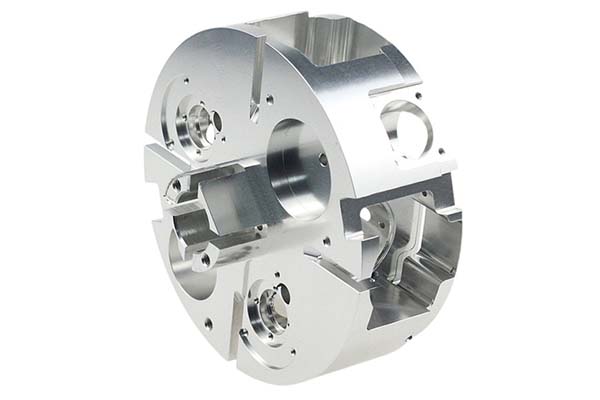
Die casting for auto parts shapes the vehicles we drive. From engine blocks under the hood to battery frames in electric vehicles, die cast components are everywhere. They deliver what automakers need most: light weight, high strength, complex shapes, and mass production economics. A single die cast part can replace 70+ stamped and welded pieces , cutting weight by 20% and assembly time by 60%.
What Is Die Casting for Auto Parts?
Core definition
Die casting for auto parts forces molten metal—typically aluminum, magnesium, or zinc—into precision steel molds at 30-120MPa pressure. The metal solidifies in 0.05-0.5 seconds, producing components with complex shapes and tight tolerances.
Unlike stamping that works only with sheet metal, or forging that consumes huge energy, die casting creates near-net-shape parts that need 50-70% less post-processing. A transmission housing comes out of the mold almost ready to install.
Material choices
Aluminum dominates, accounting for 85% of automotive die casting. Alloys like A380, A356, and ADC12 deliver the best balance of cost and performance. Density at 2.7 g/cm³ cuts weight by 30% versus steel. Heat dissipation is 2× better. And aluminum parts can be welded and heat treated.
Magnesium is growing fast in EVs, now at 10% share. At 1.8 g/cm³, it is 33% lighter than aluminum with a higher strength-to-weight ratio. Motor shells, steering wheels, and instrument panels use magnesium where every gram counts.
Zinc fills the remaining 5%, mainly for small parts. Door handles, sensor housings, and decorative trim benefit from zinc’s low 400-450°C melting point (energy-saving) and excellent surface finish down to Ra 0.8μm.
| Material | Density | Share | Best For |
|---|---|---|---|
| Aluminum | 2.7 | 85% | Engine parts, transmission, battery frames |
| Magnesium | 1.8 | 10% | Motor shells, instrument panels |
| Zinc | 6.4 | 5% | Small parts, handles, sensors |
Which Auto Parts Use Die Casting?
Traditional fuel vehicle parts
Engine and transmission rely heavily on die casting. Cylinder heads, oil pans, and transmission housings need complex internal channels for oil and coolant. Die casting forms these passages in one step—stamping and forging cannot. Dimensional accuracy of IT8-IT9 ensures no leaks.
Body and chassis components like shock absorber towers, front longitudinal beams, and A-pillar inner panels must bear collision forces. A single die cast shock absorber tower replaces 5+ stamped parts while maintaining tensile strength over 250MPa.
Steering and suspension parts—steering gear housings, suspension brackets—demand precision of ±0.05mm for stable steering and fatigue resistance for 100,000+ load cycles. Die casting delivers both.
NEV-specific parts: The integrated revolution
Electric vehicles have transformed die casting. Instead of making many small parts and welding them together, automakers now cast large integrated structures in one piece.
Integrated rear floors measure about 2m × 1.5m and weigh 30-50kg. They replace 70+ stamped and welded parts with a single die casting. Benefits: body weight down 15-20%, assembly time cut 60%, logistics costs reduced 40%. Tesla’s Model Y and NIO’s ET5 lead this trend.
Front nacelles at 1.8m × 1m and 25-40kg integrate motor mounts, battery connectors, and cooling brackets. They simplify powertrain layout and improve body torsion stiffness by 10%. Xpeng G9 and Li Auto L9 use them.
Battery case upper covers at 2.5m × 1.2m and 40-60kg seal battery cells to IP68 waterproof standards. Thick walls of 5-8mm resist impact. One-step forming eliminates welding seams that could leak. BYD Han EV and GAC AION S rely on them.
| NEV Part | Size | Weight | Parts Replaced | Benefits |
|---|---|---|---|---|
| Integrated rear floor | 2m × 1.5m | 30-50kg | 70+ | -20% weight, -60% assembly time |
| Front nacelle | 1.8m × 1m | 25-40kg | Motor mounts + brackets | +10% stiffness, simpler layout |
| Battery cover | 2.5m × 1.2m | 40-60kg | Welded assemblies | IP68 sealing, impact resistance |
What Does the Auto Die Casting Industrial Chain Look Like?
Upstream: Materials and equipment
Heat-free aluminum alloys are critical for large integrated parts—they avoid deformation during cooling. Only 5-10 companies globally master the patented formulas. Lizhong Group in China and Novelis in the US lead.
Large die-casting machines over 9000 tons clamping force are scarce. Global annual output is under 100 units. LK Technology (China) and Idra (Italy—Tesla’s supplier) dominate. Accuracy must hold within ±1% of rated force.
Super-large precision molds cost over $1 million and take 6-12 months to develop. Savida (China) and Schuler (Germany) are key players.
Midstream: Die casters
Companies like Wencan, Tuopu Group, and Guangdong Hongtu in China, plus Ryobi in Japan, produce custom parts. For NEV large integrated structures, they must control porosity under 0.5% and run 24/7 continuous production.
Downstream: Automakers
Traditional automakers—Toyota, Volkswagen, Ford—set technical standards and assemble parts. NEV leaders—Tesla, NIO, BYD, Xpeng—push innovation. They require 100% X-ray inspection for structural parts and pressure midstream suppliers to cut costs by 5-10% annually.
| Chain Segment | Key Players | Critical Factors |
|---|---|---|
| Upstream | Lizhong, Novelis, LK, Idra, Savida, Schuler | Heat-free alloys, large machine accuracy, mold cost |
| Midstream | Wencan, Tuopu, Hongtu, Ryobi | Porosity <0.5%, 24/7 production |
| Downstream | Tesla, Toyota, BYD, VW | 100% X-ray, 5-10% annual cost reduction |
What Technical Challenges Exist?
Equipment shortage
Large machines over 9000 tons are in short supply—fewer than 100 built annually. Tesla, BYD, and others face capacity bottlenecks for integrated parts. Waiting times stretch for years.
Material limitations
Heat-free aluminum alloys needed for large parts to avoid deformation are patented by few companies. They cost 20-30% more than ordinary alloys. Supply risks are real.
Process control difficulty
Large integrated parts have uneven wall thickness from 5-15mm. This leads to shrinkage and porosity. Defect rates can hit 5-8% versus 1-2% for small parts. Rework costs are high.
High initial investment
A 9000T die-casting machine costs around $15 million. A super-large mold adds $2 million. Small die casters cannot enter the NEV integrated parts market. Industry concentration increases.
| Challenge | Impact |
|---|---|
| Equipment shortage | Capacity bottlenecks, long waiting times |
| Material limits | 20-30% higher cost, supply risks |
| Process control | 5-8% defect rates, high rework cost |
| High investment | Small players locked out |
What Future Trends Will Shape Auto Die Casting?
Integration of body-in-white
Moving from “integrated rear floor” to full body-in-white integration —one die casting replacing 300+ stamped parts. By 2030, NEV body weight could drop 25-30% and assembly lines shorten 50%.
Material innovation
Aluminum-magnesium composite alloys will combine aluminum’s cost advantage with magnesium’s light weight. NEV battery cases could shed 10-15% more weight without cost increases.
Intelligent manufacturing
AI-based process monitoring will adjust injection speed and pressure in real time. Digital twins will predict mold life. Defect rates could fall below 1% and mold life extend 20-30%.
Green production
Recycled aluminum uses only 5% of the energy of primary aluminum. Wider use could cut auto die casting carbon emissions by 40-50%, aligning with global carbon neutrality goals.
| Trend | Expected Impact by 2030 |
|---|---|
| Full body integration | -25-30% weight, -50% assembly lines |
| Al-Mg composites | -10-15% more weight savings |
| Intelligent manufacturing | <1% defects, +20-30% mold life |
| Green production | -40-50% carbon emissions |
How to write a spec that gets priced correctly
A drawing is a contract. If it leaves a number open, the shop fills that number in with its own default. The default is rarely the one you had in mind. Put these five lines on every RFQ and most of the back-and-forth disappears before it starts.
- 3D model with the parting line marked
- Alloy grade and the standard it meets
- Wall thickness and draft on every face
- Machining allowance on the faces that will be cut
- Pressure tightness or porosity class
The point is not paperwork. Each line removes a decision the shop would otherwise make for you. A complete RFQ comes back priced. An incomplete one comes back guessed.
What actually drives the price
Buyers usually push on material because it is the line they can see. In practice the material is rarely the biggest number on a quote. These five lines decide most of it:
- die steel and cavity count
- part weight and wall section
- draft and slide count
- porosity requirement
- machining allowance
Ask for the quote split by line. A supplier who cannot break it down is guessing, and you will pay for the guess. The line you can usually renegotiate is the tolerance band, not the raw material.
Problems you will meet, and the fix
Every process has a failure mode it prefers. The same four show up again and again on this kind of work, and none of them are mysteries once you know what to look for.
- Cold shuts where two flow fronts meet
- Porosity that shows up only after machining
- Soldering on a hot spot in the die
- Shrinkage voids in a heavy section
Catch the fault on the first part, not the hundredth. A first-article check costs an hour. A bad batch costs the whole order. Write the check into the purchase order so nobody has to remember it.
What to check on the first article
The first article is the cheapest inspection you will ever buy. Use it properly and the rest of the run becomes boring, which is exactly what you want.
- Every dimension on the drawing, with the measured value written beside it.
- The material certificate, matched to the heat or lot number on the parts.
- The finish against the sample you approved, under the same light.
- Fit against the mating part, assembled rather than measured.
- Packaging, because parts that arrive damaged were never in tolerance.
Check in this order: datums, then mating features, then cosmetic faces. If the datums are wrong, every number after them is noise. Keep the report on file. When a problem shows up in month six, that document is the only thing that tells you what changed.
How to compare two quotes fairly
Two numbers are not comparable unless the scope matches. Line them up before you decide, because a low number with three gaps is not a low number.
Same drawing, same material, same finish, same inspection. Anything else is a different job wearing the same part number. Then look at what each quote leaves out. Freight, packaging, certificates and tooling are the usual gaps.
Ask each supplier to state their assumptions in writing. The one who does is usually the one who has run the process before.
Scaling from one part to a batch
The first part teaches you the process. The hundredth teaches you the process cost.
Watch three things as volume grows: setup amortisation, tool wear, and how much hand work the finish still needs. If the unit price barely moves between ten and a hundred, the cost sits in material or in hand work, not in setup. Ask which, because only one of them is negotiable.
Lead time behaves the same way. A one-off is scheduled around other jobs. A repeat order is scheduled around your forecast. Give the shop a forecast and the lead time gets shorter, not longer.
How to read a supplier's quote
A quote is a short document with a long shadow. Four things in it decide whether the job runs smoothly, and only one of them is the price.
- The scope line. It should name the process, the material and the finish, not just the part.
- The tolerance basis. General tolerance or the drawing, and which standard it follows.
- The exclusions. Tooling, freight, certificates and inspection are the usual omissions.
- The validity date. Material prices move, and an open-ended quote is a promise nobody can keep.
Read the exclusions before you read the total. A quote that leaves out tooling is not cheaper. It is a quote for a different job.
What to send with the first order
The first order sets the pattern for every order after it. Send a complete package once and the shop files it, and the second order takes a fraction of the time.
- A STEP or native model plus a PDF drawing carrying the same revision letter.
- The material callout by standard number, not by trade name.
- The finish and the exact faces it applies to.
- Any test the part must pass: fit, seal, drop, salt spray, dielectric.
- A contact who can answer a question inside one working day.
Then write down what was agreed. An email that confirms the material, the finish and the date is worth more than a longer purchase order that leaves them open.
When this is the wrong choice
A good supplier tells you when the process does not fit. These are the cases where we say so.
- The volume is so low that setup costs more than the parts are worth.
- The tolerance is tighter than the process can hold without a second operation.
- The geometry cannot be made without a tool feature that will not pay back.
- The material you need is not available in the form the process requires.
- The schedule is shorter than the tooling or setup time, and nobody has said so yet.
None of these are refusals. They are reasons to look at a different route, and the earlier that conversation happens the cheaper it is. The most expensive mistake in manufacturing is a process chosen before the question was understood.
Industry Experience: Die Casting in Action
A traditional automaker struggled with oil leaks in transmission housings. Machined passages had tight corners that machining couldn’t reach. Redesigning as a die casting with integrated oil channels eliminated machining and leaks. Weight dropped 4kg. Assembly time fell 15%.
An EV manufacturer needed a battery frame that was light but crash-resistant. A welded assembly of 70 parts weighed 80kg and had 120 weld points that could fail. Switching to a single die cast integrated frame weighing 65kg with no welds passed crash tests with margin. Production time per frame dropped from 8 hours to 2 minutes.
A luxury car maker wanted instrument panels that looked beautiful and saved weight. Magnesium die casting at 1.8 g/cm³ cut weight 50% versus steel. The cast parts accepted decorative finishes directly—no secondary plating needed.
Die casting for auto parts is critical because it delivers what modern vehicles demand. Aluminum at 85% share provides the best cost-performance balance for most components. Magnesium grows in EVs where every gram matters. Large integrated parts replace dozens of stamped assemblies, cutting weight 20% and assembly time 60%. The industrial chain spans material suppliers, machine builders, die casters, and automakers—each with specialized expertise. Challenges of equipment scarcity, material limits, process control, and high investment remain. But trends toward full body integration, advanced materials, intelligent manufacturing, and green production will drive the next decade of progress. For automakers chasing efficiency, range, and performance, die casting is indispensable.
Our solution for Die Casting
YiguProto runs die casting in house, from a single prototype to a production batch. We quote the process, the material and the finish as separate lines, so you can see where the money goes instead of arguing with one number.
Send a STEP file or a drawing and you get a DFM report in one to two business days. It flags the features that add cost and the features that will not hold tolerance on the process you picked.
Every order ships with an inspection report on the features you call out. If a part misses, we make it again. Ready to price a part? Start with a free quote and DFM review, or read more about our die casting. You can also talk to an engineer before you commit to a drawing.
FAQ about Die Casting
What should I check before approving the parts?
Datums first, then the features that mate, then the cosmetic faces. Ask for a dimensional report, a material certificate and a finish sample. A part can be inside every tolerance and still not fit, so assemble one before you sign.
What is the lead time for Die Casting?
Expect 20 to 30 business days including die build. Tooling, material stock and the finishing queue all move that number, so we confirm the date in writing before the run starts rather than after.
What material should I specify?
Specify by standard, not by trade name. A trade name can change under you between two orders; a standard number cannot. Then add the one property that actually decides the part, whether that is strength, heat resistance or chemical exposure.
What tolerance can you hold on Die Casting?
The working default is ±0.1 mm on cast features, ±0.05 mm after machining. Tighter than that the process changes and so does the price, because every step tighter adds inspection time. Call out only the faces that mate with something else and leave the rest on the general tolerance.
How do I compare two quotes fairly?
Match the scope first: same drawing, same material, same finish, same inspection. Then read the exclusions. Freight, tooling and certificates are the usual gaps, and a low number with three gaps is not a low number.
What happens if a part is out of specification?
We measure it against the same drawing you approved and, if it misses, we make it again. What matters is that the report exists, because a disagreement without data is just an opinion.
The short version
Die Casting rewards the buyer who reads the data sheet and the drawing together. Pick the option for the property that matters, not for the price per kilo.
Tighten only what mates. Test a sample before the run. Then let the process do the rest.