
Sheet Metal
Is 26 Gauge Sheet Metal Roll Right for Your Project?
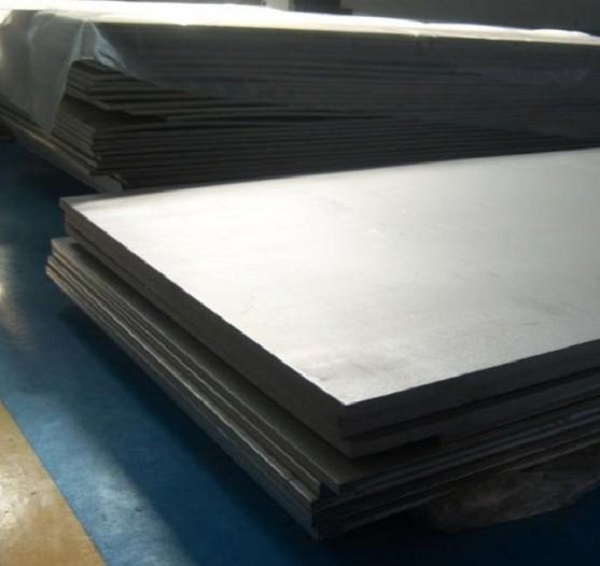
You’re planning a project. Maybe it’s a new metal roof, custom flashing around windows, or a workshop upgrade. You’ve come across 26 gauge sheet metal roll as an option. But what does that actually mean, and is it the right choice for your specific job? The gauge number tells you thickness—and 26 gauge hits a sweet spot between strength and workability.
What Does 26 Gauge Actually Mean?
The gauge system explained
The gauge system confuses many buyers because it works backwards. A higher gauge number means thinner metal. A 29-gauge sheet is thinner and more flexible than a 22-gauge sheet. This system originated in the wire industry, where thickness was determined by how many times wire passed through a die. More passes = thinner wire = higher number. Sheet metal inherited this reverse scale.
So 26 gauge sits in the middle—thicker than 29, thinner than 24. It offers good durability while remaining workable with standard tools.
Exact thickness by material
The exact thickness of 26 gauge varies slightly by material because different metals have different densities and manufacturing standards.
| Material | Thickness (inches) | Thickness (mm) |
|---|---|---|
| Standard steel | 0.0187 | 0.475 |
| Galvanized steel (G90) | 0.0217 | 0.551 |
| Aluminum | 0.0159 | 0.404 |
Note: Galvanized steel measures thicker because the dimension includes the base steel plus zinc coating on both sides. These are standard dimensions; slight manufacturing variations exist. Confirm with your supplier if absolute precision matters.
Visualizing the thickness
Think of a 26 gauge steel sheet as roughly the thickness of a credit card. It feels solid and resists bending under its own weight over short spans, yet you can bend it with hand tools or a small brake.
Comparison to other common gauges:
| Gauge | Standard Steel Thickness | Common Use |
|---|---|---|
| 22 | 0.0300 in / 0.762 mm | Heavy commercial roofing, structural |
| 24 | 0.0239 in / 0.607 mm | Premium residential roofing, durable siding |
| 26 | 0.0187 in / 0.475 mm | Standard roofing, siding, flashing, DIY |
| 29 | 0.0142 in / 0.361 mm | Agricultural buildings, light sheds |
This table shows 26 gauge as the versatile sweet spot—significantly more durable than 29 gauge without the added weight and cost of 24 gauge.
What Materials Are Available in 26 Gauge Rolls?
Galvanized steel (G90)
Galvanized steel is the workhorse of sheet metal. It starts as carbon steel, then receives a protective zinc coating. The “G90” designation means 0.90 ounces of zinc per square foot—a standard for good corrosion protection.
Pros: Most cost-effective, excellent strength and dent resistance, good rust protection in most environments
Cons: Heavier than aluminum, cut edges can rust over time if left untreated
Best for: Residential roofing, siding, general flashing, HVAC components, agricultural buildings—anywhere you need a balance of strength, cost, and durability
Galvalume steel
Galvalume uses an alloy coating instead of pure zinc: approximately 55% aluminum, 43.4% zinc, and 1.6% silicon. This combination offers enhanced performance.
Pros: Superior corrosion resistance compared to G90, especially in acidic environments; unique smooth appearance; aluminum in coating provides self-healing properties over minor scratches
Cons: More expensive than galvanized; cut edges more vulnerable than galvanized; not recommended for alkaline environments (direct contact with concrete)
Best for: High-end metal roofing, architectural siding, coastal areas, industrial or rural locations where long-term corrosion protection is top priority
Aluminum
Aluminum is the lightweight champion. It weighs about one-third of steel and is naturally rust-proof—it forms a protective oxide layer that prevents corrosion.
Pros: Lightweight (easier handling, transport, installation), naturally rust-proof, excellent for coastal environments, easy to cut and form
Cons: Less dent-resistant than steel (can dent from hail or impact), higher thermal expansion (must account for movement during installation), higher cost than steel
Best for: Trim, soffit, fascia, gutters, roofing in coastal environments, projects where weight minimization is critical
Copper
Copper is the premium choice, valued for unmatched beauty and longevity. It develops a distinctive blue-green patina over time.
Pros: Extremely durable (100+ year lifespan), naturally corrosion-resistant, 100% recyclable, unmatched aesthetic appeal
Cons: Very high cost (many times steel or aluminum), requires specialized installation skills and tools
Best for: High-end architectural projects, accent roofing, decorative domes, custom flashing, luxury design elements
Material comparison at a glance
| Attribute | Galvanized (G90) | Galvalume | Aluminum | Copper |
|---|---|---|---|---|
| Cost | Low | Moderate | High | Very High |
| Weight | Heavy | Heavy | Light | Heavy |
| Rust resistance | Good | Excellent | Excellent | Superior |
| Durability | Excellent | Excellent | Good | Excellent |
| Best use | General roofing | Premium/coastal | Trim/coastal | Architectural accents |
What Are Common Uses for 26 Gauge Sheet Metal?
Metal roofing and siding
This is the most common application. For residential and light commercial buildings, 26 gauge offers an optimal blend of performance and value. It withstands heavy rain, snow loads, and moderate hail while remaining affordable.
Common profiles made from 26 gauge rolls:
- Standing seam: Sleek modern look, concealed fasteners, superior weather-tightness
- Tuff-Rib / Ag-Panel: Exposed fastener system, cost-effective, quick to install
- Corrugated panels: Classic wavy profile, strong and traditional
Flashing, trim, and gutters
The workability of 26 gauge makes it perfect for custom-fit building components. It bends easily with standard sheet metal brakes.
Flashing: Seals joints at roof valleys, chimneys, skylights, window sills. 26 gauge bends precisely to fit complex intersections.
Trim: Finishes edges of roofing and siding at eaves, gables, corners. Provides clean, professional finish.
Gutters: Durable custom-fabricated gutter systems.
HVAC ductwork
In heating and ventilation, 26 gauge galvanized steel is common for branch lines, fittings, transitions, and plenums. Main trunk lines may need heavier gauge for long spans, but 26 gauge works well for smaller components.
Agricultural and utility buildings
Cost-effectiveness and durability make 26 gauge popular for barns, storage sheds, workshops, and animal shelters. It provides reliable weather protection without the expense of heavier architectural panels.
DIY projects and crafting
Beyond construction, 26 gauge sheet metal opens possibilities for creative projects:
- Wainscoting and accent walls: Corrugated or flat panels create rustic or industrial interior features
- Magnetic boards: A sheet makes an excellent durable message board
- Workshop enhancements: Backsplashes behind workbenches, tool drawer liners, custom enclosures
Roll vs. Sheet: Which Format Should You Buy?
The basic decision
You can buy 26 gauge metal as a large roll (coil) or as pre-cut sheets. This choice affects cost, efficiency, and final quality.
Pros and cons comparison
| Format | Pros | Cons |
|---|---|---|
| Rolls | Lower cost per square foot | Needs specialized equipment (decoiler, shear) |
| Custom-length cuts reduce waste | Difficult and dangerous to handle/transport | |
| Fewer seams = better weather-tightness | High initial investment for full coil | |
| Sheets | Easy to transport and handle | Higher cost per square foot |
| No special equipment needed | Fixed lengths create waste from off-cuts | |
| Ideal for small projects and repairs | More seams = more potential leak points |
Decision-making flowchart
Ask yourself these questions:
1. What is your total project size?
- Over 500 square feet? A roll becomes economically viable. Savings per square foot can be substantial.
- Under 500 square feet? Pre-cut sheets are almost always more practical.
2. Do you have the right equipment?
A full roll weighs 500 to 2,000+ pounds. You need a forklift to unload and a decoiler to unspool. You also need a shear for clean cuts.
- No equipment? Buy sheets, or find a supplier offering cut-to-length service.
3. Can you handle logistics and safety?
Transporting a large coil requires a flatbed truck or heavy trailer. Unsecured coils can roll; unexpected unspooling is dangerous.
- Working alone or with a small team? The safety of handling sheets outweighs potential roll savings.
4. How important are seams?
For long, continuous panels (like standing seam roofs), rolls are superior. You cut panels to exact slope length—one seamless piece from ridge to eave.
- For many short, standard pieces? Sheet waste may not matter.
What Affects the Price of 26 Gauge Rolls?
Key pricing factors
Material type is the biggest driver. From least to most expensive:
Galvanized → Galvalume → Aluminum → Copper (Copper can be 10× galvanized price)
Finish and coating add cost:
- SMP (silicone-modified polyester): Budget-friendly, good durability
- PVDF (Kynar 500®): Premium, better fade/chalk resistance, 30–40 year warranty
Roll width and length: Standard widths vary by profile (e.g., 40.875″ for Tuff-Rib, 24″ for standing seam coil). Price may be quoted per linear foot or by weight. Know which unit you’re getting.
Purchase quantity: Full master coils from manufacturers yield lowest per-unit price. Smaller rolls or cut sheets from retailers carry higher markup.
Supplier and location: Prices differ between manufacturers, distributors, and retailers. Your location affects shipping costs from the mill.
Price per linear foot vs. square foot
This confuses many buyers. If quoted “per linear foot,” you must know the coverage width of the finished panel.
Example: A 41-inch wide roll might produce a panel that covers only 36 inches (3 feet) after accounting for overlap. In this case, 1 linear foot = 3 square feet of coverage. Always clarify coverage width to calculate accurately.
Sample budget worksheet
Use this to organize costs and compare quotes:
| Item | Your Numbers |
|---|---|
| Project area (sq ft) | __ |
| Waste factor (5–15%) | __ |
| Total material needed | __ |
| Material type | __ |
| Finish type | __ |
| Price per sq ft (or converted) | $__________ |
| Estimated material cost | $__________ |
| Add-ons (fasteners, trim, sealant) | $__________ |
| Delivery/cut fees | $__________ |
| Total project cost | $__________ |
How to write a spec that gets priced correctly
A drawing is a contract. If it leaves a number open, the shop fills that number in with its own default. The default is rarely the one you had in mind. Put these five lines on every RFQ and most of the back-and-forth disappears before it starts.
- Flat pattern or STEP file plus a dimensioned drawing
- Material grade and thickness with the standard number
- Bend radii, K-factor and the direction of the grain
- Finish, masking and which faces stay bare
- Quantity and the assembly sequence
The point is not paperwork. Each line removes a decision the shop would otherwise make for you. A complete RFQ comes back priced. An incomplete one comes back guessed.
What actually drives the price
Buyers usually push on material because it is the line they can see. In practice the material is rarely the biggest number on a quote. These five lines decide most of it:
- blank size and nesting efficiency
- number of bends and weld joints
- material grade and thickness
- finish and masking
- batch quantity
Ask for the quote split by line. A supplier who cannot break it down is guessing, and you will pay for the guess. The line you can usually renegotiate is the tolerance band, not the raw material.
Problems you will meet, and the fix
Every process has a failure mode it prefers. The same four show up again and again on this kind of work, and none of them are mysteries once you know what to look for.
- Stretching at a bend that is tighter than the material allows
- Hole distortion when a hole sits too close to a bend line
- Weld draw on a visible face
- Springback that pulls a formed angle out of tolerance
Catch the fault on the first part, not the hundredth. A first-article check costs an hour. A bad batch costs the whole order. Write the check into the purchase order so nobody has to remember it.
What to check on the first article
The first article is the cheapest inspection you will ever buy. Use it properly and the rest of the run becomes boring, which is exactly what you want.
- Every dimension on the drawing, with the measured value written beside it.
- The material certificate, matched to the heat or lot number on the parts.
- The finish against the sample you approved, under the same light.
- Fit against the mating part, assembled rather than measured.
- Packaging, because parts that arrive damaged were never in tolerance.
Check in this order: datums, then mating features, then cosmetic faces. If the datums are wrong, every number after them is noise. Keep the report on file. When a problem shows up in month six, that document is the only thing that tells you what changed.
What Should You Ask Before Buying?
Pre-purchase checklist
Double-check measurements: Accurate take-off is critical. Account for roof pitch and complex angles when calculating square footage.
Specify exactly what you want: Don’t ask for “metal roofing.” Say: “I need pricing for 26 gauge, G90 galvanized steel panels with SMP paint finish.” Precision eliminates confusion.
Request a physical sample: Never trust colors on screens. Get a real sample to see true color, finish (gloss vs. matte), and texture in natural light.
Understand the warranty: Ask for printed warranty details—both for steel substrate (against perforation) and paint finish (against fading). Know what’s covered, for how long, and what voids it.
How to vet suppliers
Do they offer technical support? Can you call and ask about fastener selection or flashing details? Expert advice is invaluable.
What are lead times? Get realistic timelines from order to pickup/delivery.
What are cut-to-length capabilities? If you need rolls processed into panels, ask about minimum/maximum lengths and fees. In-house processing offers flexibility.
Check reviews and reputation: Look for feedback from local contractors and DIYers. Long-standing positive reputation among professionals is a good sign.
Inspect materials on delivery: This is critical. Before the driver leaves, check for:
- Dents or deep scratches
- Signs of water intrusion between layers (can cause “white rust”)
- Damage to edges or ends
If you find significant damage, refuse the shipment. Once you sign, the material is yours.
26 gauge sheet metal roll offers a versatile balance of strength and workability for roofing, siding, flashing, and countless other projects. The gauge system is backwards—higher number = thinner metal. Exact thickness varies by material: galvanized steel (0.0217″), aluminum (0.0159″). Choose galvanized for general use and cost-effectiveness, Galvalume for enhanced corrosion resistance, aluminum for light weight and natural rust-proofing, copper for premium architectural applications. Decide between rolls (better for large projects, lower cost, needs equipment) and sheets (easier handling, higher cost, ideal for small jobs). Price depends on material, finish, quantity, and supplier. Prepare with accurate measurements, specific requirements, and physical samples. Vet suppliers for technical support, lead times, and reputation. Inspect deliveries thoroughly. With this knowledge, you’re ready to buy with confidence.
Our solution for 26 Gauge Sheet Metal Roll
YiguProto runs sheet metal fabrication in house, from a single prototype to a production batch. We quote the process, the material and the finish as separate lines, so you can see where the money goes instead of arguing with one number.
Send a STEP file or a drawing and you get a DFM report in one to two business days. It flags the features that add cost and the features that will not hold tolerance on the process you picked.
Every order ships with an inspection report on the features you call out. If a part misses, we make it again. Ready to price a part? Start with a free quote and DFM review, or read more about our sheet metal fabrication. You can also talk to an engineer before you commit to a drawing.
FAQ about 26 Gauge Sheet Metal Roll
What material should I specify?
Specify by standard, not by trade name. A trade name can change under you between two orders; a standard number cannot. Then add the one property that actually decides the part, whether that is strength, heat resistance or chemical exposure.
How much does 26 Gauge Sheet Metal Roll cost?
Price comes from five lines: material, machine or tool time, setup, finishing and inspection. The material itself is usually the smallest of them. Send a drawing and we will split the quote so you can see which line is doing the damage.
Can 26 Gauge Sheet Metal Roll be made in small quantities?
Yes, and small quantities are where a good supplier earns the next order. Setup dominates the price at low volume, so the cheapest route is usually the one with the fewest operations, not the cheapest material.
Is there a minimum order quantity?
No hard minimum. One part is fine. What changes with volume is which costs dominate, so a single unit is priced mostly on setup and a thousand units are priced mostly on cycle time and material.
How long does a first article take?
Usually a few business days once the drawing is frozen, and longer if tooling is involved. The date we give you is the date we confirm in writing, not the date we hope for.
How do I compare two quotes fairly?
Match the scope first: same drawing, same material, same finish, same inspection. Then read the exclusions. Freight, tooling and certificates are the usual gaps, and a low number with three gaps is not a low number.
The short version
26 Gauge Sheet Metal Roll rewards the buyer who reads the data sheet and the drawing together. Pick the option for the property that matters, not for the price per kilo.
Tighten only what mates. Test a sample before the run. Then let the process do the rest.