
Metal Materials
303 Stainless Steel: The Guide to Composition, Machinability & Performance
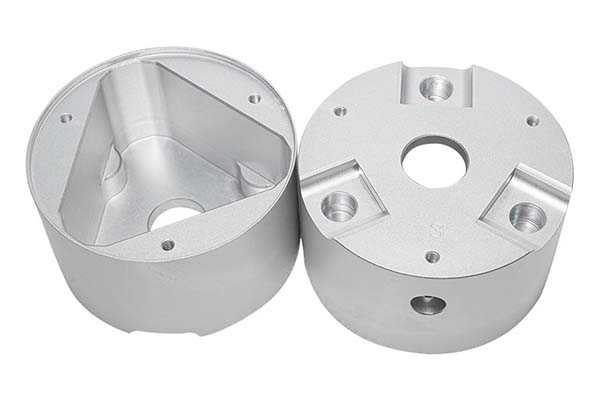
If you are involved in manufacturing or engineering, you know the challenge: you need a stainless steel that cuts quickly and cleanly without sacrificing too much corrosion resistance. Standard grades like 304 are tough on tools, driving up costs and slowing down production. 303 stainless steel is specifically designed to solve this problem.
What Makes 303 Stainless Steel Different?
To understand 303, you have to look at its recipe. It is an austenitic stainless steel, meaning it has a specific crystal structure. The key difference is a carefully controlled addition of sulfur.
| Element | Content Range | Its Role in 303 Stainless Steel |
|---|---|---|
| Chromium (Cr) | 17.0–19.0% | Forms a thin, protective layer on the surface to resist rust. |
| Nickel (Ni) | 8.0–10.0% | Stabilizes the structure, keeping the steel non-magnetic and ductile. |
| Sulfur (S) | 0.15–0.35% | Creates tiny, lubricating particles that let chips break away easily, reducing tool wear. |
| Carbon (C) | ≤0.15% | Kept low to maintain corrosion resistance and prevent brittleness. |
This chemistry is a deliberate trade-off. By adding sulfur, manufacturers gain excellent machinability but lose some of the corrosion resistance found in grades like 304. For example, a manufacturer producing high-volume fasteners switched from 304 to 303. The result was a 40% increase in tool life and a 25% reduction in production time per part. That is a significant impact on the bottom line.
What Are Its Mechanical and Physical Properties?
Knowing the numbers helps you select the right material for the job. Here is how 303 performs in its standard annealed (softened) condition.
| Property | Typical Value | What This Means for Your Part |
|---|---|---|
| Tensile Strength | 620 MPa (90,000 psi) | Strong enough for structural components like gears and brackets. |
| Yield Strength | 240 MPa (35,000 psi) | Resists permanent bending under normal loads. |
| Elongation | 35% | It has good ductility, meaning it can be bent or formed to a degree without cracking. |
| Hardness | 230 BHN | Soft enough for high-speed machining but tough enough for wear resistance. |
| Magnetic Permeability | 1.02 μr | Nearly non-magnetic, which is critical for electronics and sensitive equipment. |
Its performance in high heat is another consideration. 303 can handle temperatures up to about 870°C (1,600°F) for short periods. However, a furnace component manufacturer once tested 303 at 900°C and saw its tensile strength drop by 30%. They switched to a grade like 310S for that specific high-temperature application. This highlights the importance of matching material properties to your operating environment.
How Do You Machine and Form 303 Effectively?
This is where 303 truly shines. Its free-machining nature is its biggest asset. The sulfur inclusions act as built-in chip breakers and lubricants.
- Machinability Rating: 303 has a rating of 78%, compared to 304’s rating of around 30% (with 100% being a standard free-machining steel). This means it cuts significantly faster and with less tool wear.
- Tooling Recommendations: For high-volume work, carbide inserts with coatings like TiAlN are ideal. For smaller runs or prototyping, high-speed steel (HSS) tools are perfectly adequate.
- Cutting Parameters: Using the right parameters is crucial. Speed: 35–45 m/min (115–148 ft/min) Feed: 0.1–0.3 mm/rev (0.004–0.012 in/rev) Coolant is mandatory. Use a soluble oil or minimum quantity lubrication (MQL). Dry cutting often leads to galling, where material sticks to the cutting edge.
Forming Considerations
While machinable, 303 is less forgiving when it comes to forming. The sulfur that helps it cut also makes it more prone to cracking under stress.
- Bending: Use a bend radius of 1 to 2 times the material thickness. For 2mm thick sheet, use a 2-4mm radius to avoid failure.
- Cold Heading: It has limited cold-heading capability. Complex shapes are best achieved through machining, not forming.
A real-world example: a CNC shop machining medical device brackets from 303 used carbide tooling with MQL. They achieved a fine surface finish (Ra 0.8 µm) and, more importantly, reduced their tool changes from five times per shift to just two, dramatically increasing their output.
Where Does Its Corrosion Resistance Hold Up?
The sulfur that makes 303 so machinable is also its weakness. It creates sites where corrosion can initiate. Understanding its limitations is key to using it successfully.
| Environment | Performance | Real-World Implication |
|---|---|---|
| Indoor/Dry | Excellent | Perfect for office equipment, indoor hardware, and electronics. |
| Mild Moisture | Good | Suitable for kitchen components, but requires regular cleaning. |
| Marine/Saltwater | Poor | Not recommended. The sulfur will accelerate rust. Use 316 stainless steel. |
| Salt Spray Test | 48–96 hours | Standard 304 often lasts over 1000 hours, showing 303’s lower tolerance. |
Protecting Your Parts
You can maximize 303’s corrosion resistance with a few post-processing steps.
- Passivation: Use a citric acid passivation process (per ASTM A967) to remove free iron and strengthen the protective chromium layer. This is a standard step for food-contact parts.
- Electropolishing: This process removes a thin layer of material, creating a smoother, more uniform surface that is harder for corrosive elements to attack.
- Proper Storage: For parts in transit, use VCI (volatile corrosion inhibitor) packaging to prevent rust during shipping and storage.
A furniture maker used 303 for indoor chair legs. After two years, the parts showed no signs of rust. However, when they tested the same parts for an outdoor furniture line, rust appeared within six months. They wisely switched to 316 for their outdoor products.
Can You Weld 303 Stainless Steel?
This is a critical question with a straightforward answer: welding 303 is not recommended. The sulfur that makes it machine so well causes a problem called hot cracking during welding. The sulfur forms low-melting-point compounds that solidify last, creating cracks under stress.
Your Joining Options
- Mechanical Fasteners: This is the best approach. Use A2 (304) or A4 (316) bolts, screws, or rivets.
- Brazing: A viable alternative. Use a silver-copper-zinc filler metal at temperatures around 600–700°C to create a strong joint.
- Adhesive Bonding: For non-structural applications, high-strength epoxy adhesives can be very effective.
If welding is absolutely unavoidable, you must use a filler metal with a higher nickel content, such as 308L or 312, to dilute the sulfur at the weld joint. A manufacturer once attempted to TIG weld 303 gears without filler. The result was disastrous: 50% of the gears cracked during post-weld testing. Switching to a 308L filler metal solved the problem.
Can You Heat Treat or Harden 303?
Unlike martensitic grades like 17-4 PH, 303 is not hardenable by heat treatment. Heat is used for other purposes, such as relieving stress or preparing the material for machining.
| Process | Purpose |
|---|---|
| Solution Annealing | Softens the material after cold working and restores its ductility. |
| Stress-Relief Annealing | Low-temperature process to reduce internal stresses from heavy machining. |
| Surface Hardening | Not effective. Nitriding is blocked by sulfur, and laser hardening yields minimal results. |
For increased surface hardness, the only practical method is cold working. Processes like rolling or drawing can increase the hardness by 30-40%, but this comes at the cost of reduced ductility. This is useful for parts like bearing races that require a tougher surface but do not need to be formed further.
Conclusion
303 stainless steel occupies a unique and valuable niche. It is the go-to choice when machinability is the priority. By understanding its strengths—excellent cutting performance and good enough corrosion resistance for indoor and mild environments—and its weaknesses—poor weldability and limited corrosion resistance—you can leverage it effectively. For high-volume precision parts like fasteners, gears, and electronic components, 303 offers a clear path to lower production costs, extended tool life, and higher throughput. The key to success is matching the material to the application and using the correct machining and joining techniques.
FAQ
Can 303 stainless steel be used for food-contact parts?
Yes, but only after proper passivation. It is suitable for dry or mildly moist food environments. For acidic foods, wet processing, or commercial kitchen sinks, 304 is a better, more corrosion-resistant choice.
Why is 303 stainless steel harder to weld than 304?
The added sulfur in 303 is the culprit. While it improves machinability, it also forms compounds that melt at a lower temperature, leading to solidification cracking in and around the weld area.
What’s the difference between 303 and 303Se stainless steel?
303Se replaces sulfur with selenium to improve machinability. It offers slightly better corrosion resistance than standard 303 because selenium inclusions are less corrosive. However, it typically costs 10-15% more and is used for parts that need both easy machining and a bit more rust protection.
How to write a spec that gets priced correctly
A drawing is a contract. If it leaves a number open, the shop fills that number in with its own default. The default is rarely the one you had in mind. Put these five lines on every RFQ and most of the back-and-forth disappears before it starts.
- Alloy designation and the standard behind it
- Temper or heat treatment condition
- Mechanical properties you actually need
- Mill certificate and traceability requirement
- Finish and the faces it applies to
The point is not paperwork. Each line removes a decision the shop would otherwise make for you. A complete RFQ comes back priced. An incomplete one comes back guessed.
What actually drives the price
Buyers usually push on material because it is the line they can see. In practice the material is rarely the biggest number on a quote. These five lines decide most of it:
- alloy grade and mill availability
- stock size versus finished size
- heat treatment and testing
- machinability
- certification
Ask for the quote split by line. A supplier who cannot break it down is guessing, and you will pay for the guess. The line you can usually renegotiate is the tolerance band, not the raw material.
Problems you will meet, and the fix
Every process has a failure mode it prefers. The same four show up again and again on this kind of work, and none of them are mysteries once you know what to look for.
- Substituting a similar grade without telling anyone
- Hardness that varies across a single bar
- Corrosion in a weld heat-affected zone
- Distortion after heat treatment on a thin part
Catch the fault on the first part, not the hundredth. A first-article check costs an hour. A bad batch costs the whole order. Write the check into the purchase order so nobody has to remember it.
What to check on the first article
The first article is the cheapest inspection you will ever buy. Use it properly and the rest of the run becomes boring, which is exactly what you want.
- Every dimension on the drawing, with the measured value written beside it.
- The material certificate, matched to the heat or lot number on the parts.
- The finish against the sample you approved, under the same light.
- Fit against the mating part, assembled rather than measured.
- Packaging, because parts that arrive damaged were never in tolerance.
Check in this order: datums, then mating features, then cosmetic faces. If the datums are wrong, every number after them is noise. Keep the report on file. When a problem shows up in month six, that document is the only thing that tells you what changed.
How to compare two quotes fairly
Two numbers are not comparable unless the scope matches. Line them up before you decide, because a low number with three gaps is not a low number.
Same drawing, same material, same finish, same inspection. Anything else is a different job wearing the same part number. Then look at what each quote leaves out. Freight, packaging, certificates and tooling are the usual gaps.
Ask each supplier to state their assumptions in writing. The one who does is usually the one who has run the process before.
Scaling from one part to a batch
The first part teaches you the process. The hundredth teaches you the process cost.
Watch three things as volume grows: setup amortisation, tool wear, and how much hand work the finish still needs. If the unit price barely moves between ten and a hundred, the cost sits in material or in hand work, not in setup. Ask which, because only one of them is negotiable.
Lead time behaves the same way. A one-off is scheduled around other jobs. A repeat order is scheduled around your forecast. Give the shop a forecast and the lead time gets shorter, not longer.
How to read a supplier's quote
A quote is a short document with a long shadow. Four things in it decide whether the job runs smoothly, and only one of them is the price.
- The scope line. It should name the process, the material and the finish, not just the part.
- The tolerance basis. General tolerance or the drawing, and which standard it follows.
- The exclusions. Tooling, freight, certificates and inspection are the usual omissions.
- The validity date. Material prices move, and an open-ended quote is a promise nobody can keep.
Read the exclusions before you read the total. A quote that leaves out tooling is not cheaper. It is a quote for a different job.
What to send with the first order
The first order sets the pattern for every order after it. Send a complete package once and the shop files it, and the second order takes a fraction of the time.
- A STEP or native model plus a PDF drawing carrying the same revision letter.
- The material callout by standard number, not by trade name.
- The finish and the exact faces it applies to.
- Any test the part must pass: fit, seal, drop, salt spray, dielectric.
- A contact who can answer a question inside one working day.
Then write down what was agreed. An email that confirms the material, the finish and the date is worth more than a longer purchase order that leaves them open.
When this is the wrong choice
A good supplier tells you when the process does not fit. These are the cases where we say so.
- The volume is so low that setup costs more than the parts are worth.
- The tolerance is tighter than the process can hold without a second operation.
- The geometry cannot be made without a tool feature that will not pay back.
- The material you need is not available in the form the process requires.
- The schedule is shorter than the tooling or setup time, and nobody has said so yet.
None of these are refusals. They are reasons to look at a different route, and the earlier that conversation happens the cheaper it is. The most expensive mistake in manufacturing is a process chosen before the question was understood.
Our solution for 303 Stainless Steel
YiguProto runs metal sourcing and machining in house, from a single prototype to a production batch. We quote the process, the material and the finish as separate lines, so you can see where the money goes instead of arguing with one number.
Send a STEP file or a drawing and you get a DFM report in one to two business days. It flags the features that add cost and the features that will not hold tolerance on the process you picked.
Every order ships with an inspection report on the features you call out. If a part misses, we make it again. Ready to price a part? Start with a free quote and DFM review, or read more about our metal sourcing and machining. You can also talk to an engineer before you commit to a drawing.
FAQ about 303 Stainless Steel
What files do you need in order to quote?
A STEP file plus a PDF drawing that carries the same revision letter. The model carries the geometry and the drawing carries the intent. When the two disagree, the shop picks one, and it is never the one you meant.
How do I compare two quotes fairly?
Match the scope first: same drawing, same material, same finish, same inspection. Then read the exclusions. Freight, tooling and certificates are the usual gaps, and a low number with three gaps is not a low number.
What happens if a part is out of specification?
We measure it against the same drawing you approved and, if it misses, we make it again. What matters is that the report exists, because a disagreement without data is just an opinion.
What material should I specify?
Specify by standard, not by trade name. A trade name can change under you between two orders; a standard number cannot. Then add the one property that actually decides the part, whether that is strength, heat resistance or chemical exposure.
Can 303 Stainless Steel be made in small quantities?
Yes, and small quantities are where a good supplier earns the next order. Setup dominates the price at low volume, so the cheapest route is usually the one with the fewest operations, not the cheapest material.
Does the process work for prototypes as well as production?
Yes, and that is usually the point. Running the prototype on the production process removes a whole class of surprises, because the part you test is made the same way as the part you sell.
The short version
303 Stainless Steel rewards the buyer who reads the data sheet and the drawing together. Pick the option for the property that matters, not for the price per kilo.
Tighten only what mates. Test a sample before the run. Then let the process do the rest.