
Blogs
Our Phenolic Resin Bakelite injection molding Services
Our Phenolic Resin Bakelite injection molding Services, explained the way we would explain it across a table: what it is good at, what it costs you, and the details that keep the part out of the scrap bin.
Key takeaways
- Elevate your industrial components with our shop’s Phenolic Resin BakeliteInjection Molding services—the trusted solution for high-performance, heat-resistant thermoset parts.
- our shop’s Bakelite injection molding capacity is built to handle diverse industrial needs—from small-batch prototypes to high-volume production—while maintaining strict quality standards.
- Phenolic Resin Bakelite Injection Molding is a specialized manufacturing process that shapes phenol-formaldehyde (PF) resin—commonly known as Bakelite—into durable parts via high-pressure injection into precision molds.
- Thermoset phenolic molding requires careful control of heat, pressure, and curing time—mistakes here can ruin parts.
Our Phenolic Resin Bakelite injection molding Services
Elevate your industrial components with our shop’s Phenolic Resin BakeliteInjection Molding services—the trusted solution for high-performance, heat-resistant thermoset parts.
From UL-rated switchgear to food-safe cookware handles, we combine advanced multi-cavity tooling, clean-room production, and specialized phenolic formulations to deliver parts that excel in extreme conditions. Backed by ISO 9001/IATF 16949 certifications and 24/7 support, we turn your Bakelite molding challenges into reliable, cost-effective solutions.

Our Phenolic Resin Bakelite Injection Molding Capabilities: Power Meets Precision
our shop’s Bakelite injection molding capacity is built to handle diverse industrial needs—from small-batch prototypes to high-volume production—while maintaining strict quality standards. Our facility specializes in thermoset challenges, with a focus on tight tolerances and versatile molding techniques.
Core Capabilities Breakdown
| Capability | Specification | Ideal Applications |
| Tolerance Control | ±0.02 mm for standard parts; ±0.01 mm for precision components | Electrical connector housings, RF terminals |
| Multi-Cavity Phenolic Tooling | Up to 64-cavity molds (for small parts like knobs) | High-volume cookware handles, appliance controls |
| High-Volume Production | 5–8 million parts/year (via automated lines) | Automotive commutators, brake-pad backings |
| Clean-Room Phenolic Service | Class 8 (100,000) certified rooms | Food-contact cookware, medical device components |
| Insert & Over-Molding Bakelite | Compatible with metals (brass, steel) and plastics | Motor end-caps, clutch cylinders with metal inserts |
| Post-Mold Machining & Tapping | CNC drilling, threading (up to M12 size) | Industrial bobbins, switchgear mounting brackets |
What Is Phenolic Resin Bakelite Injection Molding?
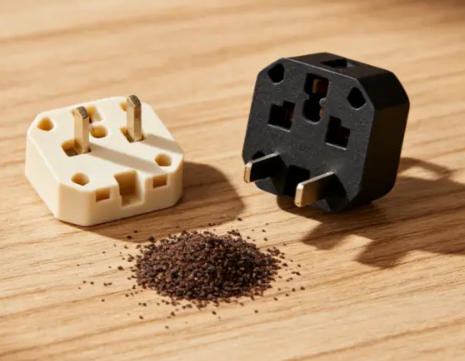
Phenolic Resin Bakelite Injection Molding is a specialized manufacturing process that shapes phenol-formaldehyde (PF) resin—commonly known as Bakelite—into durable parts via high-pressure injection into precision molds. Unlike thermoplastics that soften when heated, Bakelite is a thermoset phenolic; once cured, it retains its shape and properties even at extreme temperatures, making it ideal for applications needing long-term stability.
At its core, Bakelite plastic molding leverages the material’s unique cross-linked molecular structure. During molding, the phenolic resin cures (hardens permanently) under heat and pressure, creating parts with unbeatable heat resistance and electrical insulation. This is why PF (phenol-formaldehyde) molding is the go-to choice for industrial, automotive, and electrical components that face harsh conditions.
Key Traits of Phenolic Resin Molding
| Trait | Description | Relevance to Molding |
| Thermoset Behavior | Cures irreversibly; no re-melting after forming | Ensures parts retain shape in high-heat environments |
| Cross-Linked Structure | Molecular bonds form a rigid, 3D network during curing | Delivers exceptional dimensional stability and creep resistance |
| High Heat Tolerance | Typical continuous use temp: 150–200°C (up to 300°C short-term) | Ideal for cookware, automotive, and industrial heat-exposed parts |
| Electrical Insulation | Low dielectric constant (3.5–5.0) and high volume resistivity | Perfect for switchgear, connectors, and electrical housings |
The Phenolic Resin Bakelite Injection Molding Process: Step-by-Step Precision
Thermoset phenolic molding requires careful control of heat, pressure, and curing time—mistakes here can ruin parts. Our optimized process ensures consistent, high-quality Bakelite components every time.
Step 1: Resin Preparation
We start with dry phenolic resin pellets (moisture content <0.1% to avoid bubbles). For specialized parts, we blend additives: glass fibers (for strength), pigments (for color), or flame retardants. Glass-filled Bakelite compounds are mixed in a twin-screw extruder to ensure even distribution.
Step 2: Mold Setup & Temperature Control
The mold is preheated to the Bakelite cure temperature window (160–190°C) using cartridge heaters. We use cold-runner & hot-pot mold design—the hot pot keeps resin molten, while cold runners prevent premature curing, reducing waste by 25% vs. traditional designs.
Step 3: Injection & Curing
Resin is injected into the mold at 800–1,500 bar pressure. The key is thermoset cycle time optimization: we hold pressure for 30–90 seconds (depending on part thickness) to let the resin cure fully. Thicker parts (e.g., brake-pad backings) need longer hold times (60–90s) to avoid internal cracks.
Step 4: Demolding & Deflashing
After curing, parts are demolded gently (Bakelite is brittle when cool). We use automated degating & flash control—trim robots remove runners, and phenolic deflashing media (plastic pellets) smooth edges. For high-precision parts, we add Bakelite vibratory tumbling (10–15 minutes) to eliminate micro-flash.
Step 5: Post-Mold Finishing & Inspection
Parts go through post-mold machining & tapping if needed (e.g., threading for mounting holes). We then inspect 100% of parts: dimensional checks (via CMM), heat-resistance tests (200°C for 24 hours), and electrical insulation checks (per UL standards).
Phenolic Resin Bakelite Materials: Formulations for Every Need
The right phenolic formulation makes or breaks a part. We offer a range of phenolic resin grades tailored to industry-specific demands—from heat-resistant automotive parts to food-safe kitchen tools.
Popular Phenolic Formulations We Offer
| Formulation Type | Key Properties | Target Applications |
| General-Purpose Phenolic Resin | Good strength, cost-effective, temp resistance up to 150°C | Industrial bobbins, appliance knobs |
| Glass-Filled Bakelite Compounds | 30–50% higher tensile strength (50–70 MPa), impact resistance | Brake-pad backings, motor end-caps |
| Electrical-Grade Phenolic Molding | UL 94 V0 rated, low dielectric loss, high insulation resistance | Switchgear, electrical connector housings |
| Heat-Resistant Phenolic Resin | Continuous use temp up to 200°C, short-term up to 300°C | Toaster bases, steam-iron thermostats |
| Low-Emission PF Formulations | <0.1% formaldehyde emission, RoHS compliant | Indoor electrical components, consumer appliances |
| Food-Contact Approved Phenolic | FDA 21 CFR 177.2420 compliant, non-toxic | Cookware handles, food processor parts |
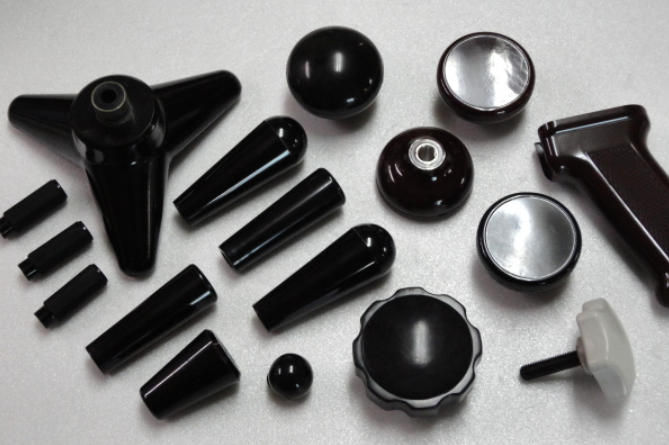
Advantages of Phenolic Resin Bakelite: Why It Outperforms Other Materials
Bakelite stands out among thermosets and thermoplastics for its unbeatable combination of durability, cost-effectiveness, and performance. Here’s why it’s the top choice for tough applications:
- Phenolic Heat Resistance Benefit: Handles 150–200°C continuous use (vs. 80–120°C for ABS plastic)—perfect for toasters, engine components, and industrial ovens.
- Bakelite Dimensional Stability: Shrinks only 0.5–1.5% during curing (vs. 2–5% for nylon), ensuring parts fit perfectly even after years of use.
- Phenolic Electrical Insulation: Acts as a reliable insulator in high-voltage environments (up to 10kV)—critical for switchgear and power connectors.
- Low-Smoke Bakelite Advantage: Emits minimal smoke when heated (per UL 94 standards), making it safe for enclosed spaces like aircraft cabins.
- Cost-Effective Thermoset Value: 20–30% cheaper than PEEK (a high-performance thermoplastic) while offering similar heat resistance.
- Phenolic Creep Resistance: Maintains shape under constant stress (e.g., brake-pad backings under pressure), outlasting rubber or plastic alternatives.
Bakelite Chemical Inertness: Resists oils, solvents, and most household chemicals—ideal for automotive and industrial settings.
Phenolic Resin Bakelite Applications: Across Key Industries
Bakelite’s versatility makes it indispensable in industries where reliability under stress is non-negotiable. Our clients trust our molding expertise to create parts that solve their toughest challenges.
Industry-by-Industry Applications & Solutions
| Industry | Key Applications | Our Molding Solution |
| Electrical | Phenolic molded switchgear, electrical connector housings, RF terminals | Electrical-grade resin, UL 94 V0 compliance, tight tolerances (±0.01 mm) |
| Appliances | Bakelite cookware handles, toaster bases, steam-iron thermostats | Food-contact approved resin, heat-resistant formulations (200°C) |
| Automotive | Phenolic automotive commutators, brake-pad backings, clutch cylinders | Glass-filled Bakelite, IATF 16949 certified production, insert molding |
| Industrial | Phenolic industrial bobbins, pump components, machine guards | High-strength formulations, post-mold machining, chemical-resistant sealants |
| Aerospace | Phenolic aerospace terminal blocks, avionics housings | Low-emission PF, flame-retardant grades, full traceability |
How to write a spec that gets priced correctly
A drawing is a contract. If it leaves a number open, the shop fills that number in with its own default. The default is rarely the one you had in mind. Put these five lines on every RFQ and most of the back-and-forth disappears before it starts.
- A model and a drawing that agree
- Material by standard number
- Tolerance only where it mates
- Finish and the faces it applies to
- Quantity and required date
The point is not paperwork. Each line removes a decision the shop would otherwise make for you. A complete RFQ comes back priced. An incomplete one comes back guessed.
What actually drives the price
Buyers usually push on material because it is the line they can see. In practice the material is rarely the biggest number on a quote. These five lines decide most of it:
- process choice
- material
- tolerance band
- finish
- volume
Ask for the quote split by line. A supplier who cannot break it down is guessing, and you will pay for the guess. The line you can usually renegotiate is the tolerance band, not the raw material.
Problems you will meet, and the fix
Every process has a failure mode it prefers. The same four show up again and again on this kind of work, and none of them are mysteries once you know what to look for.
- A drawing that contradicts the model
- A tolerance with no datum
- A cosmetic callout with no approved sample
- A quote compared against a different scope
Catch the fault on the first part, not the hundredth. A first-article check costs an hour. A bad batch costs the whole order. Write the check into the purchase order so nobody has to remember it.
What to check on the first article
The first article is the cheapest inspection you will ever buy. Use it properly and the rest of the run becomes boring, which is exactly what you want.
- Every dimension on the drawing, with the measured value written beside it.
- The material certificate, matched to the heat or lot number on the parts.
- The finish against the sample you approved, under the same light.
- Fit against the mating part, assembled rather than measured.
- Packaging, because parts that arrive damaged were never in tolerance.
Check in this order: datums, then mating features, then cosmetic faces. If the datums are wrong, every number after them is noise. Keep the report on file. When a problem shows up in month six, that document is the only thing that tells you what changed.
How to compare two quotes fairly
Two numbers are not comparable unless the scope matches. Line them up before you decide, because a low number with three gaps is not a low number.
Same drawing, same material, same finish, same inspection. Anything else is a different job wearing the same part number. Then look at what each quote leaves out. Freight, packaging, certificates and tooling are the usual gaps.
Ask each supplier to state their assumptions in writing. The one who does is usually the one who has run the process before.
Scaling from one part to a batch
The first part teaches you the process. The hundredth teaches you the process cost.
Watch three things as volume grows: setup amortisation, tool wear, and how much hand work the finish still needs. If the unit price barely moves between ten and a hundred, the cost sits in material or in hand work, not in setup. Ask which, because only one of them is negotiable.
Lead time behaves the same way. A one-off is scheduled around other jobs. A repeat order is scheduled around your forecast. Give the shop a forecast and the lead time gets shorter, not longer.
How to read a supplier's quote
A quote is a short document with a long shadow. Four things in it decide whether the job runs smoothly, and only one of them is the price.
- The scope line. It should name the process, the material and the finish, not just the part.
- The tolerance basis. General tolerance or the drawing, and which standard it follows.
- The exclusions. Tooling, freight, certificates and inspection are the usual omissions.
- The validity date. Material prices move, and an open-ended quote is a promise nobody can keep.
Read the exclusions before you read the total. A quote that leaves out tooling is not cheaper. It is a quote for a different job.
What to send with the first order
The first order sets the pattern for every order after it. Send a complete package once and the shop files it, and the second order takes a fraction of the time.
- A STEP or native model plus a PDF drawing carrying the same revision letter.
- The material callout by standard number, not by trade name.
- The finish and the exact faces it applies to.
- Any test the part must pass: fit, seal, drop, salt spray, dielectric.
- A contact who can answer a question inside one working day.
Then write down what was agreed. An email that confirms the material, the finish and the date is worth more than a longer purchase order that leaves them open.
When this is the wrong choice
A good supplier tells you when the process does not fit. These are the cases where we say so.
- The volume is so low that setup costs more than the parts are worth.
- The tolerance is tighter than the process can hold without a second operation.
- The geometry cannot be made without a tool feature that will not pay back.
- The material you need is not available in the form the process requires.
- The schedule is shorter than the tooling or setup time, and nobody has said so yet.
None of these are refusals. They are reasons to look at a different route, and the earlier that conversation happens the cheaper it is. The most expensive mistake in manufacturing is a process chosen before the question was understood.
Case Study: UL-Rated Circuit-Breaker Case for an Electrical Manufacturer
A leading electrical supplier needed a UL-rated circuit-breaker case that could withstand high voltage (600V), resist heat (180°C), and meet strict dimensional standards. Their previous plastic case (ABS) failed UL testing due to poor heat resistance.
Our Solution:
- Material Selection: Chose electrical-grade phenolic molding resin with UL 94 V0 flame rating and high dielectric strength (20 kV/mm).
- Mold Design: Used a 16-cavity cold-runner mold to reduce waste and ensure uniform curing. Added precision pins to meet the ±0.01 mm tolerance for mounting holes.
- Process Optimization: Set mold temperature to 180°C, injection pressure to 1,200 bar, and cure time to 45 seconds. Added post-mold tapping for terminal connections.
Results:
- The case passed UL 489 testing (600V, 10kA short-circuit rating) with no failures.
- Dimensional accuracy stayed within ±0.008 mm (exceeding the client’s ±0.01 mm requirement).
- Production cost was 25% lower than using PEEK (the client’s initial alternative).
The client scaled up to 50,000 units/year with our high-volume lines.
Our solution for Our Phenolic Resin Bakelite injection
YiguProto runs custom manufacturing in house, from a single prototype to a production batch. We quote the process, the material and the finish as separate lines, so you can see where the money goes instead of arguing with one number.
Send a STEP file or a drawing and you get a DFM report in one to two business days. It flags the features that add cost and the features that will not hold tolerance on the process you picked.
Every order ships with an inspection report on the features you call out. If a part misses, we make it again. Ready to price a part? Start with a free quote and DFM review, or read more about our custom manufacturing. You can also talk to an engineer before you commit to a drawing.
FAQ about Our Phenolic Resin Bakelite injection
What’s the typical lead time for phenolic resin Bakelite injection molding parts?
For standard parts (using existing tooling), lead time is 3–5 weeks. For custom parts needing new tooling, it’s 8–10 weeks (including tool design, prototyping, and production). We offer expedited prototyping (5–7 days) for urgent projects.
Can you produce Bakelite parts that meet food-contact and automotive standards?
Absolutely. We offer food-contact approved phenolic (FDA 21 CFR 177.2420 compliant) for cookware and kitchen appliances. For automotive, our glass-filled Bakelite meets IATF 16949 requirements and is used in commutators, brake parts, and clutch components—with full PPAP documentation.
How do you ensure consistency in high-volume phenolic molding?
We use three key strategies: (1) Automated process control (mold temperature, injection pressure, and cure time are monitored in real time via sensors), (2) Statistical Process Control (SPC) to track part dimensions and material properties (with 100% inspection for critical parts), (3) Cold-runner molds that reduce resin waste and ensure uniform curing across all cavities. This keeps our defect rate below 0.2% for high-volume runs.
Can Our Phenolic Resin Bakelite injection be made in small quantities?
Yes, and small quantities are where a good supplier earns the next order. Setup dominates the price at low volume, so the cheapest route is usually the one with the fewest operations, not the cheapest material.
What should I check before approving the parts?
Datums first, then the features that mate, then the cosmetic faces. Ask for a dimensional report, a material certificate and a finish sample. A part can be inside every tolerance and still not fit, so assemble one before you sign.
What tolerance can you hold on Our Phenolic Resin Bakelite injection?
The working default is ±0.1 mm as a working default. Tighter than that the process changes and so does the price, because every step tighter adds inspection time. Call out only the faces that mate with something else and leave the rest on the general tolerance.
The short version
Our Phenolic Resin Bakelite injection rewards the buyer who reads the data sheet and the drawing together. Pick the option for the property that matters, not for the price per kilo.
Tighten only what mates. Test a sample before the run. Then let the process do the rest.