
3D Printing
3D Printing vs. Laser Cladding: Which One Should You Use for Your Project?
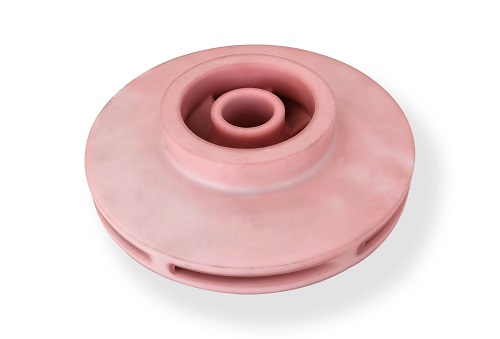
You need to create or repair a critical part. Should you use the design freedom of 3D printing (additive manufacturing) or the precision repair power of laser cladding (laser metal deposition)? While both technologies add material layer-by-layer, they serve fundamentally different masters.
Key takeaways
- Before diving into the battle, let’s define the contenders. Both are additive processes, but their intent, physics, and output diverge sharply.
- This side-by-side analysis highlights their divergent strengths. Don’t just look at “additive”; look at the purpose of the addition.
- Your project’s goal is the ultimate decider. Here’s where each technology dominates.
- In our work at the intersection of prototyping and production, the most common error isn’t technical—it’s strategic.
What Exactly Are We Comparing? Core Principles Explained
Before diving into the battle, let’s define the contenders. Both are additive processes, but their intent, physics, and output diverge sharply.
How Does 3D Printing (Additive Manufacturing) Build a Part from Scratch?
3D printing is a digital fabrication process that constructs a three-dimensional object by sequentially adding material based on a CAD model. The core idea is discrete layer formation.
Think of it as an ultra-precise, automated hot-glue gun or inkjet printer, but for physical objects. The “how” varies dramatically by technology:
- Fused Deposition Modeling (FDM): Thermoplastic filament is heated and extruded through a nozzle, tracing each layer.
- Stereolithography (SLA)/Digital Light Processing (DLP): A laser or projector selectively cures liquid photopolymer resin into solid plastic.
- Selective Laser Sintering/Melting (SLS/SLM): A high-power laser fuses (sinters or fully melts) fine particles of polymer, metal, or ceramic powder.
The unifying outcome is a net-shape or near-net-shape part that often requires post-processing but is fundamentally a new, standalone component.
How Does Laser Cladding (LMD) Repair and Enhance an Existing Component?
Laser cladding, also known as Laser Metal Deposition (LMD) or Direct Energy Deposition (DED), is a surface modification and repair technology. It uses a high-power laser as a heat source to create a metallurgically bonded coating on a substrate.
Here’s the process:
- A focused laser beam creates a small molten pool on the surface of the existing part (the substrate).
- Metal powder or wire is fed into this molten pool, where it melts.
- The laser beam moves, the molten material solidifies, and a new layer—with a strong, diffusion-bonded interface—is formed atop the original part.
The goal is not to create mass but to restore geometry, improve surface properties (hardness, corrosion resistance), or add features to an existing high-value part. It’s a surgical tool for metal parts.
How Do Their Key Characteristics Compare Head-to-Head?
This side-by-side analysis highlights their divergent strengths. Don’t just look at “additive”; look at the purpose of the addition.
| Characteristic | 3D Printing (e.g., SLM, FDM) | Laser Cladding (LMD) |
|---|---|---|
| Primary Objective | Create new, complex-geometry parts from digital files. | Repair, coat, or add material to existing parts. |
| Material Input | Filament, liquid resin, or powder bed. Broad range: polymers, metals, ceramics, composites. | Almost exclusively metal powder or wire. (Nickel, cobalt, iron-based alloys, Stellite, custom blends). |
| Bonding Mechanism | Layer adhesion via sintering, melting, or curing. | Metallurgical fusion with the substrate. |
| Part Relationships | Creates the entire part. | Modifies the surface or local geometry of a part. |
| Geometric Freedom | Extremely high. Can produce internal channels, lattices, and organic shapes impossible to machine. | Moderate. Limited to deposited tracks and layers; best for coatings or adding material to accessible surfaces. |
| Heat Affected Zone (HAZ) | Can be significant in metal 3D printing, affecting microstructure. | Precisely controlled but present. Focused energy minimizes HAZ compared to traditional welding. |
| Typical Build Volume | Machine-dependent. From desktop cm³ to industrial meters³. | Often larger or flexible. The “printer” head can be a robotic arm working on large, stationary parts (e.g., a turbine shaft). |
| Economic Driver | Cost-effective for low-volume, high-complexity parts. Eliminates tooling. | Cost-saving for repairing high-value components. Avoids replacement cost and downtime. |
What Are the Real-World Applications for Each Technology?
Your project’s goal is the ultimate decider. Here’s where each technology dominates.
When Is 3D Printing the Unbeatable Choice?
Choose 3D printing when you need complexity, customization, and consolidated assemblies.
- Prototyping & Rapid Tooling: Creating functional prototypes for form, fit, and function testing. Making conformal cooling channels inside injection molds to cut cycle time by up to 30%.
- Lightweight & Topologically Optimized Structures: Aerospace brackets where weight is directly tied to fuel cost. A notable case: Airbus reduced the weight of a cabin partition bracket by over 30% using metal 3D printing (SLM) compared to its milled predecessor.
- Medical & Dental Customization: Patient-specific implants (cranial plates, spinal cages) and surgical guides. The healthcare 3D printing market is projected to exceed $6 billion by 2027, driven by this personalization.
- Low-Volume, High-Mix Production: Spare parts for legacy systems (e.g., vintage cars, out-of-production machinery) where traditional tooling is lost or prohibitively expensive.
When Does Laser Cladding Offer Irreplaceable Value?
Choose laser cladding for life extension, performance enhancement, and precision repair.
- Wear & Corrosion Resistance Overlays: Applying a hardfacing alloy (e.g., tungsten carbide composite) to mining drill bits, extrusion screws, or pump impellers. This can extend service life by 200-400%.
- High-Value Component Repair: Rebuilding worn seal areas on turbine shafts, repairing mis-machined features on expensive aerospace castings, or fixing cracks in high-strength steel components. A real-world example: Repairing a single (50,000 turbine rotor with laser cladding can cost under )10,000, saving over 80% versus replacement.
- Functional Graded Materials & Bimetallic Parts: Creating a part with a tough, ductile core (like low-carbon steel) and a hard, wear-resistant surface in a single process.
- Rapid Manufacturing & Feature Addition: While not for full parts, it can add complex features to simple forgings or castings, or build up material in specific areas for later machining to final dimensions.
What Is the Step-by-Step Framework for Choosing?
Follow this decision logic to eliminate guesswork.
- Start with the Fundamental Question: Are you making a new part or saving an old one? New Part -> Lean towards 3D Printing. Existing Part -> Lean towards Laser Cladding.
- Evaluate Material and Performance Needs: If your material is plastic, ceramic, or a unique composite -> 3D Printing is likely your only viable path. If you need a superior metal surface property (extreme hardness, corrosion resistance) on a metal substrate -> Laser Cladding is optimal. It achieves densities over 99.5% and bonds stronger than thermal spray coatings.
- Analyze the Business Case: For 3D Printing: Calculate the cost and lead time for traditional manufacturing (machining, casting + tooling) vs. 3D printing. The break-even for complexity vs. volume is key. For Laser Cladding: Compare the cost of a new replacement part + downtime to the cost of repair + minimal downtime. Factor in the potential for an improved surface over the original.
- Consider the Hybrid “Best of Both Worlds” Approach: This is where cutting-edge manufacturing is headed. A common strategy: Step 1: 3D print a near-net-shape metal part (via SLM) with optimized topology. Step 2: Use laser cladding to apply a specialized, wear-resistant alloy only on the critical contact surfaces.
This combines design freedom with superior surface engineering.
How to write a spec that gets priced correctly
A drawing is a contract. If it leaves a number open, the shop fills that number in with its own default. The default is rarely the one you had in mind. Put these five lines on every RFQ and most of the back-and-forth disappears before it starts.
- File format and units, with the model exported in millimetres
- Process and material grade, not a trade name
- Critical features and the tolerance each one needs
- Surface finish and the faces it applies to
- Quantity for the pilot build and for the year
The point is not paperwork. Each line removes a decision the shop would otherwise make for you. A complete RFQ comes back priced. An incomplete one comes back guessed.
What actually drives the price
Buyers usually push on material because it is the line they can see. In practice the material is rarely the biggest number on a quote. These five lines decide most of it:
- build volume and orientation
- layer height and support structure
- material grade and colour
- post-processing and hand finishing
- quantity per build plate
Ask for the quote split by line. A supplier who cannot break it down is guessing, and you will pay for the guess. The line you can usually renegotiate is the tolerance band, not the raw material.
Problems you will meet, and the fix
Every process has a failure mode it prefers. The same four show up again and again on this kind of work, and none of them are mysteries once you know what to look for.
- Warping on long flat faces where the part lifts off the plate
- Layer lines showing through a cosmetic surface
- Support scars on a mating face nobody flagged
- Dimensional drift on thin walls after cooling
Catch the fault on the first part, not the hundredth. A first-article check costs an hour. A bad batch costs the whole order. Write the check into the purchase order so nobody has to remember it.
What to check on the first article
The first article is the cheapest inspection you will ever buy. Use it properly and the rest of the run becomes boring, which is exactly what you want.
- Every dimension on the drawing, with the measured value written beside it.
- The material certificate, matched to the heat or lot number on the parts.
- The finish against the sample you approved, under the same light.
- Fit against the mating part, assembled rather than measured.
- Packaging, because parts that arrive damaged were never in tolerance.
Check in this order: datums, then mating features, then cosmetic faces. If the datums are wrong, every number after them is noise. Keep the report on file. When a problem shows up in month six, that document is the only thing that tells you what changed.
How to compare two quotes fairly
Two numbers are not comparable unless the scope matches. Line them up before you decide, because a low number with three gaps is not a low number.
Same drawing, same material, same finish, same inspection. Anything else is a different job wearing the same part number. Then look at what each quote leaves out. Freight, packaging, certificates and tooling are the usual gaps.
Ask each supplier to state their assumptions in writing. The one who does is usually the one who has run the process before.
Scaling from one part to a batch
The first part teaches you the process. The hundredth teaches you the process cost.
Watch three things as volume grows: setup amortisation, tool wear, and how much hand work the finish still needs. If the unit price barely moves between ten and a hundred, the cost sits in material or in hand work, not in setup. Ask which, because only one of them is negotiable.
Lead time behaves the same way. A one-off is scheduled around other jobs. A repeat order is scheduled around your forecast. Give the shop a forecast and the lead time gets shorter, not longer.
How to read a supplier's quote
A quote is a short document with a long shadow. Four things in it decide whether the job runs smoothly, and only one of them is the price.
- The scope line. It should name the process, the material and the finish, not just the part.
- The tolerance basis. General tolerance or the drawing, and which standard it follows.
- The exclusions. Tooling, freight, certificates and inspection are the usual omissions.
- The validity date. Material prices move, and an open-ended quote is a promise nobody can keep.
Read the exclusions before you read the total. A quote that leaves out tooling is not cheaper. It is a quote for a different job.
What to send with the first order
The first order sets the pattern for every order after it. Send a complete package once and the shop files it, and the second order takes a fraction of the time.
- A STEP or native model plus a PDF drawing carrying the same revision letter.
- The material callout by standard number, not by trade name.
- The finish and the exact faces it applies to.
- Any test the part must pass: fit, seal, drop, salt spray, dielectric.
- A contact who can answer a question inside one working day.
Then write down what was agreed. An email that confirms the material, the finish and the date is worth more than a longer purchase order that leaves them open.
The Professional Insight: Why This Choice Matters Beyond the Spec Sheet
In our work at the intersection of prototyping and production, the most common error isn’t technical—it’s strategic. Companies often force-fit a familiar technology onto a problem better solved by the other.
- A Cautionary Tale: A heavy equipment manufacturer was 3D printing (SLM) entire new wear plates for their machines. The parts were excellent but costly. We audited their process and found 70% of the failed plates had wear localized to specific grooves. Our recommendation: Switch to casting the base plates and use laser cladding to rebuild only the worn grooves during maintenance. This hybrid approach cut their annual part cost by over 60%.
- The Data-Driven Trend: The integration of in-situ monitoring and closed-loop control is revolutionizing both fields. In laser cladding, coaxial melt-pool monitoring now allows for real-time adjustment of laser power and feed rate, ensuring perfect clad geometry and eliminating defects—a leap in reliability for critical repairs.
- The Bottom Line: View 3D printing as your digital parts factory. View laser cladding as your digital repair and upgrade clinic. Using the right tool for the job isn’t just about making a part; it’s about optimizing your entire asset lifecycle.
3D printing and laser cladding are complementary powers in the modern manufacturing arsenal, not competitors. 3D printing excels at creating new, complex designs with material flexibility, while laser cladding is unparalleled in restoring and enhancing the surface of existing metal components. The choice hinges on a clear-eyed assessment of your starting point (new design vs. existing part), material requirements, and the ultimate performance goal. By applying the structured decision framework outlined here, you can move beyond the hype and select the technology—or powerful combination of both—that delivers maximum value, durability, and innovation for your specific project.
Our solution for 3D Printing vs. Laser Cladding
YiguProto runs 3D printing in house, from a single prototype to a production batch. We quote the process, the material and the finish as separate lines, so you can see where the money goes instead of arguing with one number.
Send a STEP file or a drawing and you get a DFM report in one to two business days. It flags the features that add cost and the features that will not hold tolerance on the process you picked.
Every order ships with an inspection report on the features you call out. If a part misses, we make it again. Ready to price a part? Start with a free quote and DFM review, or read more about our 3D printing. You can also talk to an engineer before you commit to a drawing.
FAQ about 3D Printing vs. Laser Cladding
Can 3D Printing vs. Laser Cladding be made in small quantities?
Yes, and small quantities are where a good supplier earns the next order. Setup dominates the price at low volume, so the cheapest route is usually the one with the fewest operations, not the cheapest material.
How long does a first article take?
Usually a few business days once the drawing is frozen, and longer if tooling is involved. The date we give you is the date we confirm in writing, not the date we hope for.
What files do you need in order to quote?
A STEP file plus a PDF drawing that carries the same revision letter. The model carries the geometry and the drawing carries the intent. When the two disagree, the shop picks one, and it is never the one you meant.
How much does 3D Printing vs. Laser Cladding cost?
Price comes from five lines: material, machine or tool time, setup, finishing and inspection. The material itself is usually the smallest of them. Send a drawing and we will split the quote so you can see which line is doing the damage.
What should I check before approving the parts?
Datums first, then the features that mate, then the cosmetic faces. Ask for a dimensional report, a material certificate and a finish sample. A part can be inside every tolerance and still not fit, so assemble one before you sign.
What is the lead time for 3D Printing vs. Laser Cladding?
Expect 2 to 5 business days for a first batch. Tooling, material stock and the finishing queue all move that number, so we confirm the date in writing before the run starts rather than after.
The short version
3D Printing vs. Laser Cladding rewards the buyer who reads the data sheet and the drawing together. Pick the option for the property that matters, not for the price per kilo.
Tighten only what mates. Test a sample before the run. Then let the process do the rest.