
3D Printing
Can 3D Food Printing Deliver Real Value for Businesses?
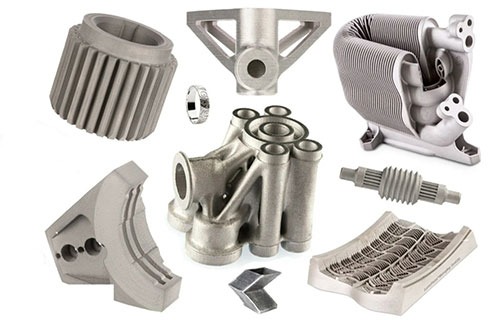
3D food printing is an emerging technology that uses digital design to deposit edible materials layer by layer. It goes beyond novelty, offering tangible business advantages in customization, nutritional precision, and complex design. However, its successful integration requires a clear-eyed view of technical limitations, cost structures, and market readiness.
Key takeaways
- The technology’s current sweet spot is in high-value, low-volume applications where customization justifies cost.
- Adoption is constrained by significant technical and economic barriers.
- For a business leader, the decision is strategic. Follow this evaluation framework.
- 3D food printing is a powerful enabling technology, not a universal replacement for traditional cooking.
How Does 3D Food Printing Actually Work?
At its core, 3D food printing is about material deposition. It transforms edible ingredients into a printable “ink” with precise rheology (flow properties) and then builds structures digitally.
- The “Ink” Formulation Challenge: Not all food is printable. Ingredients must be processed into a paste, gel, or powder with exact viscosity. Chocolate must be tempered perfectly; vegetable purees may need hydrocolloids (like xanthan gum) to hold shape. A Dutch research group successfully printed a “fake steak” by creating separate pastes from pea protein, fat, and beetroot juice for “blood,” each with different flow properties to mimic muscle and marbling.
- Extrusion-Based Printing (The Most Common): Similar to FDM 3D printing, a syringe or cartridge pushes material through a nozzle. It’s ideal for soft foods: cheesecake batter, hummus, mashed potatoes, and frostings. The NASA-backed BeeHex company developed a pizza printer for astronauts that extrudes dough, sauce, and “cheese” layer by layer.
- Binder Jetting & Selective Sintering: These methods use a dry powder bed (e.g., sugar, protein powder). A print head deposits a liquid binder or uses a laser to selectively fuse particles. This excels at creating intricate, delicate sugar sculptures or customized cereal clusters with embedded nutrients. The ChefJet by 3D Systems was an early commercial sugar printer.
- Bioprinting (The Frontier): This advanced branch focuses on printing living cells. Researchers are experimenting with printing cultivated meat by layering animal muscle and fat cells into 3D structures, aiming to create complex tissue textures beyond ground meat.
Where Does It Create Real Business Value Today?
The technology’s current sweet spot is in high-value, low-volume applications where customization justifies cost.
1. High-End Dining and Personalized Gifting
This is the most established market. The value proposition is experience and exclusivity.
- Customized Desserts and Chocolates: Restaurants like Food Ink and patisseries use 3D printers to create centerpiece desserts that are geometric masterpieces or personalized chocolate logos. A London hotel increased its afternoon tea package price by 40% by including a 3D printed sugar model of the guest’s initials.
- Special Diets with Dignity: For elderly care or medical patients on pureed diets, 3D printing can reshape nutrient-dense purees into recognizable, appealing forms like broccoli florets or chicken drumsticks. A Dutch nursing home project showed this improved patient meal intake by over 20% by boosting visual appeal.
2. Nutritional Precision and Functional Foods
Here, the value is scientific control.
- Athletic and Clinical Nutrition: Companies like Nourished (formerly Vitamins) create personalized gummy vitamins. Customers take an online quiz, and a 3D printer produces a daily stack of 7 unique nutrient layers tailored to their needs. In a hospital setting, printers could precisely dose medication into food for pediatric patients.
- Space and Extreme Environments: NASA and the European Space Agency fund food printing research for long-term missions. The goal is to use shelf-stable powders and oils to create varied, palatable meals on-demand, reducing waste and boosting astronaut morale.
3. Sustainable Food Innovation
This explores alternative ingredient sourcing.
- Utilizing “Ugly” Produce and Byproducts: Researchers are testing food inks made from imperfect vegetables (misshapen carrots, surplus peas) or food processing byproducts (okara from tofu, spent grain from beer). This could reduce waste by creating value-added products from streams that currently have low economic value.
What Are the Major Challenges and Limitations?
Adoption is constrained by significant technical and economic barriers.
Speed and Scale: This is the primary bottleneck. A complex chocolate sculpture might take 30-60 minutes to print. Contrast this with a chocolate molding line producing thousands of units per hour. It is inherently a batch production tool, not suited for high-volume commodity goods.
Cost Structure: The economics are challenging.
- Capital Expense: Professional food printers range from $5,000 to over $50,000.
- Material Cost: Specialized printing pastes and powders can cost 2-5 times more than their conventional equivalents due to R&D and small-batch production.
- Operational Complexity: Requires skilled personnel who understand both food science and digital design.
Taste and Texture: This is the ultimate test. Many printed foods prioritize shape over flavor. Achieving a pleasant mouthfeel and authentic taste—especially for meat or multi-ingredient dishes—remains a complex research challenge. A printed vegetable shape still tastes like a puree.
Regulatory Hurdles: For personalized nutrition or novel ingredients, navigating food safety regulations (FDA, EFSA) is complex. Each new “food ink” may require approval, especially if it involves new additives or processes.
How Should You Evaluate and Implement This Technology?
For a business leader, the decision is strategic. Follow this evaluation framework.
| Decision Factor | Key Questions to Ask | Green Light Indicators |
|---|---|---|
| Business Model Fit | Does it solve a problem we can’t solve cheaper/faster? Does it align with our brand (innovation, luxury, care)? | Niche, high-margin products; strong brand story of tech and personalization. |
| Target Customer | Will our customers value and pay a premium for this? What is their tech acceptance level? | Affluent, experience-seeking consumers (e.g., fine dining, special events); health-focused individuals. |
| Operational Capacity | Do we have staff to operate/maintain it? Can we manage ingredient prep and supply chain? | Existing tech-savvy kitchen staff; R&D budget for testing. |
| Financial Viability | What is the ROI timeline? Can we charge enough to cover costs? | Clear path to premium pricing; pilot project with defined budget. |
Implementation Roadmap:
- Start with a Pilot: Don’t overhaul your menu. Identify one signature application—custom wedding cake toppers, branded chocolate gifts for corporate clients, or a special pureed dish for a healthcare contract.
- Partner for Expertise: Consider collaborating with a food tech startup or university research department for initial projects to mitigate risk and gain knowledge.
- Focus on Marketing: The story is as important as the product. Market the customization, innovation, and personal care that the technology enables.
How to write a spec that gets priced correctly
A drawing is a contract. If it leaves a number open, the shop fills that number in with its own default. The default is rarely the one you had in mind. Put these five lines on every RFQ and most of the back-and-forth disappears before it starts.
- File format and units, with the model exported in millimetres
- Process and material grade, not a trade name
- Critical features and the tolerance each one needs
- Surface finish and the faces it applies to
- Quantity for the pilot build and for the year
The point is not paperwork. Each line removes a decision the shop would otherwise make for you. A complete RFQ comes back priced. An incomplete one comes back guessed.
What actually drives the price
Buyers usually push on material because it is the line they can see. In practice the material is rarely the biggest number on a quote. These five lines decide most of it:
- build volume and orientation
- layer height and support structure
- material grade and colour
- post-processing and hand finishing
- quantity per build plate
Ask for the quote split by line. A supplier who cannot break it down is guessing, and you will pay for the guess. The line you can usually renegotiate is the tolerance band, not the raw material.
Problems you will meet, and the fix
Every process has a failure mode it prefers. The same four show up again and again on this kind of work, and none of them are mysteries once you know what to look for.
- Warping on long flat faces where the part lifts off the plate
- Layer lines showing through a cosmetic surface
- Support scars on a mating face nobody flagged
- Dimensional drift on thin walls after cooling
Catch the fault on the first part, not the hundredth. A first-article check costs an hour. A bad batch costs the whole order. Write the check into the purchase order so nobody has to remember it.
What to check on the first article
The first article is the cheapest inspection you will ever buy. Use it properly and the rest of the run becomes boring, which is exactly what you want.
- Every dimension on the drawing, with the measured value written beside it.
- The material certificate, matched to the heat or lot number on the parts.
- The finish against the sample you approved, under the same light.
- Fit against the mating part, assembled rather than measured.
- Packaging, because parts that arrive damaged were never in tolerance.
Check in this order: datums, then mating features, then cosmetic faces. If the datums are wrong, every number after them is noise. Keep the report on file. When a problem shows up in month six, that document is the only thing that tells you what changed.
How to compare two quotes fairly
Two numbers are not comparable unless the scope matches. Line them up before you decide, because a low number with three gaps is not a low number.
Same drawing, same material, same finish, same inspection. Anything else is a different job wearing the same part number. Then look at what each quote leaves out. Freight, packaging, certificates and tooling are the usual gaps.
Ask each supplier to state their assumptions in writing. The one who does is usually the one who has run the process before.
Scaling from one part to a batch
The first part teaches you the process. The hundredth teaches you the process cost.
Watch three things as volume grows: setup amortisation, tool wear, and how much hand work the finish still needs. If the unit price barely moves between ten and a hundred, the cost sits in material or in hand work, not in setup. Ask which, because only one of them is negotiable.
Lead time behaves the same way. A one-off is scheduled around other jobs. A repeat order is scheduled around your forecast. Give the shop a forecast and the lead time gets shorter, not longer.
How to read a supplier's quote
A quote is a short document with a long shadow. Four things in it decide whether the job runs smoothly, and only one of them is the price.
- The scope line. It should name the process, the material and the finish, not just the part.
- The tolerance basis. General tolerance or the drawing, and which standard it follows.
- The exclusions. Tooling, freight, certificates and inspection are the usual omissions.
- The validity date. Material prices move, and an open-ended quote is a promise nobody can keep.
Read the exclusions before you read the total. A quote that leaves out tooling is not cheaper. It is a quote for a different job.
What to send with the first order
The first order sets the pattern for every order after it. Send a complete package once and the shop files it, and the second order takes a fraction of the time.
- A STEP or native model plus a PDF drawing carrying the same revision letter.
- The material callout by standard number, not by trade name.
- The finish and the exact faces it applies to.
- Any test the part must pass: fit, seal, drop, salt spray, dielectric.
- A contact who can answer a question inside one working day.
Then write down what was agreed. An email that confirms the material, the finish and the date is worth more than a longer purchase order that leaves them open.
When this is the wrong choice
A good supplier tells you when the process does not fit. These are the cases where we say so.
- The volume is so low that setup costs more than the parts are worth.
- The tolerance is tighter than the process can hold without a second operation.
- The geometry cannot be made without a tool feature that will not pay back.
- The material you need is not available in the form the process requires.
- The schedule is shorter than the tooling or setup time, and nobody has said so yet.
None of these are refusals. They are reasons to look at a different route, and the earlier that conversation happens the cheaper it is. The most expensive mistake in manufacturing is a process chosen before the question was understood.
Planning the ramp from prototype to production
The gap between one good part and a thousand identical ones is a plan, not a machine. Three decisions close it.
First, freeze the design. Every change after tooling starts is a re-cut, and re-cuts are where schedules go. Second, decide the inspection level. A prototype is checked by eye; a production part is checked against a report. Third, agree the change process in writing, including who pays for it.
Write the ramp down as dates and owners, not as intentions. A ramp plan with three names and three dates is worth more than a page of good intentions.
What Does the Future Hold?
The trajectory points towards greater integration and capability.
- Multi-Ingredient and Multi-Texture Printing: Future printers with multiple print heads will deposit different ingredients (protein, carbs, flavor) simultaneously, creating more complex dishes. Research into 4D printing explores foods that change shape or color after printing (e.g., pasta that curls when cooked).
- AI-Driven Personalization: Algorithms could design meals based on a person’s genetic data, gut microbiome, and daily activity, then print them at home or in a clinic.
- Mainstream Kitchen Appliances: As patents expire and technology simplifies, countertop food printers could become as common as stand mixers for dedicated home bakers and health enthusiasts.
3D food printing is a powerful enabling technology, not a universal replacement for traditional cooking. Its current value lies in specific domains where mass customization, nutritional precision, and extreme design complexity are paramount and can command a premium. For the forward-thinking restaurant, boutique manufacturer, or institutional food service provider, it offers a tool for differentiation and solving unique challenges. However, success demands a sober assessment of its limitations in speed, cost, and sensory quality. By strategically targeting high-value applications, leveraging its strengths for storytelling, and managing implementation through focused pilots, businesses can harness this innovation to create remarkable—and profitable—culinary experiences that were previously unimaginable.
Our solution for 3D Food Printing Deliver Real
YiguProto runs 3D printing in house, from a single prototype to a production batch. We quote the process, the material and the finish as separate lines, so you can see where the money goes instead of arguing with one number.
Send a STEP file or a drawing and you get a DFM report in one to two business days. It flags the features that add cost and the features that will not hold tolerance on the process you picked.
Every order ships with an inspection report on the features you call out. If a part misses, we make it again. Ready to price a part? Start with a free quote and DFM review, or read more about our 3D printing. You can also talk to an engineer before you commit to a drawing.
FAQ about 3D Food Printing Deliver Real
What files do you need in order to quote?
A STEP file plus a PDF drawing that carries the same revision letter. The model carries the geometry and the drawing carries the intent. When the two disagree, the shop picks one, and it is never the one you meant.
What is the lead time for 3D Food Printing Deliver Real?
Expect 2 to 5 business days for a first batch. Tooling, material stock and the finishing queue all move that number, so we confirm the date in writing before the run starts rather than after.
How much does 3D Food Printing Deliver Real cost?
Price comes from five lines: material, machine or tool time, setup, finishing and inspection. The material itself is usually the smallest of them. Send a drawing and we will split the quote so you can see which line is doing the damage.
How do I compare two quotes fairly?
Match the scope first: same drawing, same material, same finish, same inspection. Then read the exclusions. Freight, tooling and certificates are the usual gaps, and a low number with three gaps is not a low number.
What happens if a part is out of specification?
We measure it against the same drawing you approved and, if it misses, we make it again. What matters is that the report exists, because a disagreement without data is just an opinion.
How long does a first article take?
Usually a few business days once the drawing is frozen, and longer if tooling is involved. The date we give you is the date we confirm in writing, not the date we hope for.
The short version
3D Food Printing Deliver Real rewards the buyer who reads the data sheet and the drawing together. Pick the option for the property that matters, not for the price per kilo.
Tighten only what mates. Test a sample before the run. Then let the process do the rest.