
3D Printing
How Do New 3D Printing Materials Solve Extreme Engineering Challenges?
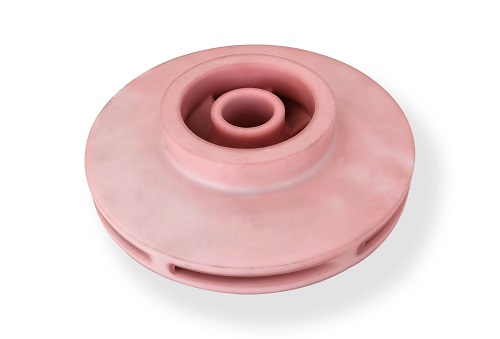
In today’s cutting-edge manufacturing, standard plastics hit a wall. Materials like PLA work for basic models. But they fail in harsh, real-world conditions. Think jet engine bays, inside the human body, or a racing electric car. These places demand more. They need materials that laugh at high heat, bear huge loads, and shrug off harsh chemicals. This is the realm of high-performance 3D printing materials.
Key takeaways
- To pick the right tool for the job, you must know your options. High-performance materials are defined by superior traits.
- These materials fall into distinct families. Each one solves a specific set of problems.
- Picking a material is a balance. You must weigh performance needs, print process, and cost. The table below compares key options to guide your choice.
- These materials prove their worth by solving tough problems. They enable designs that were once too hard or costly to make.
Key Material Types
To pick the right tool for the job, you must know your options. High-performance materials are defined by superior traits. These include extreme heat resistance, exceptional strength, and strong chemical stability.
What Are the Main Types?
These materials fall into distinct families. Each one solves a specific set of problems.
- High-Temp Polymers: These plastics go far beyond standard ABS. Key stars are PEEK and PEI (like ULTEM). They stand up to high heat and stress. For example, PEEK can work non-stop at temperatures over 500°F (260°C). It is also biocompatible. This makes it safe for medical implants.
- Metal Alloys: This group includes titanium, aluminum, and stainless steel. They are picked for top strength, light weight, or corrosion resistance. They are essential for critical parts.
- Advanced Ceramics: Materials like zirconia and alumina are incredibly hard. They can handle extreme heat, often over 1,800°F (1,000°C).
- Engineered Composites: These mix plastic with strong fibers. Carbon fiber-filled nylon is a common one. The fibers boost stiffness and strength. They also keep the part very light.
How to Choose Your Material?
Picking a material is a balance. You must weigh performance needs, print process, and cost. The table below compares key options to guide your choice.
| Material Category | Common Examples | Core Properties & Key Data | Best Uses | Printing Process |
|---|---|---|---|---|
| High-Temp Polymers | PEEK, PEI (ULTEM) | High heat resistance (HDT > 390°F), high strength, chemically inert. PEEK tensile strength ~110 MPa. | Aerospace ducts, medical implants, chemical tools. | High-temp FFF/FDM, SLS |
| Metal Alloys | Titanium (Ti-6Al-4V), Aluminum (AlSi10Mg) | Great strength-to-weight ratio. Ti-6Al-4V tensile strength can exceed 1000 MPa. Good thermal traits. | Aerospace parts, light auto parts, heat sinks. | SLM, DMLS |
| Engineered Composites | Carbon Fiber Nylon, Glass Fiber PETG | High stiffness, low weight, less warp. GFR nylon bending modulus up to 4400 MPa. | Functional prototypes, jigs, drone frames. | FFF/FDM (hardened nozzle) |
| Advanced Ceramics | Zirconia (ZrO₂), Alumina (Al₂O₃) | Extreme hardness, very high temp resistance (>1800°F), electrical insulator. | Dental crowns, high-temp insulators. | SLA (ceramic resin), Binder Jetting |
A key innovation is in high-conductivity aluminum alloys. New powders like TC200 aluminum are made for 3D printing. They offer thermal conductivity near pure aluminum. This is perfect for making complex, high-performance heat sinks.
Real-World Uses
These materials prove their worth by solving tough problems. They enable designs that were once too hard or costly to make.
How Does Aerospace Use Them?
Aerospace needs parts that are very light but very strong. They must also survive high heat. Old ways of making parts often fail at the complex shapes needed.
- The Problem: Parts near engines get very hot and stressed. Every pound saved means fuel saved.
- The Solution: Titanium alloys printed by DMLS make light, strong frames. For hot ducts, PEEK or PEKK polymers are used. They resist heat but weigh less than metal.
- The Result: Planes become lighter. This leads to better fuel use and performance.
Can It Make Better Medical Implants?
Medical work needs biocompatible materials. They must also be custom-fit for each patient.
- The Problem: Making a patient-specific implant, like a skull plate. It must be strong and accepted by the body.
- The Solution: PEEK is a top choice. It does not block X-rays. It is biocompatible. Its strength is like human bone. This allows for custom implants that help patients heal better.
- A Real Case: A hospital needed a custom spinal fusion cage. Using 3D-printed PEEK, they made a part that fit the patient perfectly. This promoted better bone growth.
Why Are They Key for Autos and Electronics?
The push for electric vehicles and smaller, faster electronics creates unique heat and weight issues.
- Auto Challenge: EVs need light parts for longer range. They also need systems to manage battery and motor heat.
- Auto Solution: Aluminum alloys make complex, light heat exchangers. Carbon fiber composites create strong, light brackets. This cuts vehicle weight.
- Electronics Challenge: Modern chips get very hot in tight spaces. Old heat sink designs are limited.
- Electronics Solution: DMLS printing with high-conductivity aluminum allows for radical new heat sink designs. One study showed a 3D-printed part with internal channels. It beat a standard heat sink’s performance by over 40% in passive cooling tests.
Challenges and Future Trends
Using these materials has its own hurdles. But new advances are making it easier and pointing to an exciting future.
What Are the Common Hurdles?
Printing with these materials often needs more than a basic machine.
- Special Gear: Printing PEEK needs a high-temp FFF printer (hotend >750°F, heated chamber). Metal printing needs costly industrial SLM/DMLS systems.
- Warp and Stick: High-performance polymers can warp from heat stress. A heated, sealed build chamber is a must. It prevents warping and ensures layers bond well.
- Material Care: Many materials, like nylon composites, suck up moisture. They must be dried before printing and kept in dry storage. Wet filament causes poor print quality.
How to write a spec that gets priced correctly
A drawing is a contract. If it leaves a number open, the shop fills that number in with its own default. The default is rarely the one you had in mind. Put these five lines on every RFQ and most of the back-and-forth disappears before it starts.
- File format and units, with the model exported in millimetres
- Process and material grade, not a trade name
- Critical features and the tolerance each one needs
- Surface finish and the faces it applies to
- Quantity for the pilot build and for the year
The point is not paperwork. Each line removes a decision the shop would otherwise make for you. A complete RFQ comes back priced. An incomplete one comes back guessed.
What actually drives the price
Buyers usually push on material because it is the line they can see. In practice the material is rarely the biggest number on a quote. These five lines decide most of it:
- build volume and orientation
- layer height and support structure
- material grade and colour
- post-processing and hand finishing
- quantity per build plate
Ask for the quote split by line. A supplier who cannot break it down is guessing, and you will pay for the guess. The line you can usually renegotiate is the tolerance band, not the raw material.
Problems you will meet, and the fix
Every process has a failure mode it prefers. The same four show up again and again on this kind of work, and none of them are mysteries once you know what to look for.
- Warping on long flat faces where the part lifts off the plate
- Layer lines showing through a cosmetic surface
- Support scars on a mating face nobody flagged
- Dimensional drift on thin walls after cooling
Catch the fault on the first part, not the hundredth. A first-article check costs an hour. A bad batch costs the whole order. Write the check into the purchase order so nobody has to remember it.
What to check on the first article
The first article is the cheapest inspection you will ever buy. Use it properly and the rest of the run becomes boring, which is exactly what you want.
- Every dimension on the drawing, with the measured value written beside it.
- The material certificate, matched to the heat or lot number on the parts.
- The finish against the sample you approved, under the same light.
- Fit against the mating part, assembled rather than measured.
- Packaging, because parts that arrive damaged were never in tolerance.
Check in this order: datums, then mating features, then cosmetic faces. If the datums are wrong, every number after them is noise. Keep the report on file. When a problem shows up in month six, that document is the only thing that tells you what changed.
How to compare two quotes fairly
Two numbers are not comparable unless the scope matches. Line them up before you decide, because a low number with three gaps is not a low number.
Same drawing, same material, same finish, same inspection. Anything else is a different job wearing the same part number. Then look at what each quote leaves out. Freight, packaging, certificates and tooling are the usual gaps.
Ask each supplier to state their assumptions in writing. The one who does is usually the one who has run the process before.
Scaling from one part to a batch
The first part teaches you the process. The hundredth teaches you the process cost.
Watch three things as volume grows: setup amortisation, tool wear, and how much hand work the finish still needs. If the unit price barely moves between ten and a hundred, the cost sits in material or in hand work, not in setup. Ask which, because only one of them is negotiable.
Lead time behaves the same way. A one-off is scheduled around other jobs. A repeat order is scheduled around your forecast. Give the shop a forecast and the lead time gets shorter, not longer.
How to read a supplier's quote
A quote is a short document with a long shadow. Four things in it decide whether the job runs smoothly, and only one of them is the price.
- The scope line. It should name the process, the material and the finish, not just the part.
- The tolerance basis. General tolerance or the drawing, and which standard it follows.
- The exclusions. Tooling, freight, certificates and inspection are the usual omissions.
- The validity date. Material prices move, and an open-ended quote is a promise nobody can keep.
Read the exclusions before you read the total. A quote that leaves out tooling is not cheaper. It is a quote for a different job.
What to send with the first order
The first order sets the pattern for every order after it. Send a complete package once and the shop files it, and the second order takes a fraction of the time.
- A STEP or native model plus a PDF drawing carrying the same revision letter.
- The material callout by standard number, not by trade name.
- The finish and the exact faces it applies to.
- Any test the part must pass: fit, seal, drop, salt spray, dielectric.
- A contact who can answer a question inside one working day.
Then write down what was agreed. An email that confirms the material, the finish and the date is worth more than a longer purchase order that leaves them open.
When this is the wrong choice
A good supplier tells you when the process does not fit. These are the cases where we say so.
- The volume is so low that setup costs more than the parts are worth.
- The tolerance is tighter than the process can hold without a second operation.
- The geometry cannot be made without a tool feature that will not pay back.
- The material you need is not available in the form the process requires.
- The schedule is shorter than the tooling or setup time, and nobody has said so yet.
None of these are refusals. They are reasons to look at a different route, and the earlier that conversation happens the cheaper it is. The most expensive mistake in manufacturing is a process chosen before the question was understood.
What’s Next for These Materials?
The future is about smarter, more versatile, and greener materials.
- Multi-Material and Smart Parts: Research lets us print parts with graded properties. Imagine a single part that is stiff in one area and flexible in another. Or a bracket with embedded sensors or circuits printed right inside.
- Green High-Performance Materials: New bio-based nylons (from castor oil) and recycled polymer powders are growing. They aim to cut environmental harm but keep high performance.
- AI-Driven Material Science: Machine learning now helps invent new materials fast. It can simulate how a new formula will act. It can also fine-tune it for a specific printer. This could slash development time from years to months.
High-performance 3D printing materials are changing the game in industrial making. They bridge the gap between a bold design and a part that can survive the real world. From lighter planes and life-saving implants to efficient electric cars and powerful electronics, these materials make the impossible possible. Yes, there are challenges like special gear and deep process know-how. But the constant evolution of both materials and machines is making this tech more reachable. The road ahead leads to smarter, more sustainable, and highly integrated materials. This will unlock even greater creative and functional power for engineers everywhere.
FAQ
What is a good first high-performance material to try?
For beginners, start with a glass fiber-reinforced (GFR) nylon or PETG. These composites offer much better strength and heat resistance than PLA. You can print them on many upgraded desktop FFF printers with a hardened steel nozzle.
Do I always need a special printer for these materials?
Mostly, yes. High-temp plastics like PEEK need printers with all-metal hot ends and heated chambers. Printing with metals requires industrial SLM or DMLS printers, which are a big investment.
Are 3D-printed metal parts as strong as cast parts?
Yes, when printed right and with post-processing like Hot Isostatic Pressing (HIP), 3D-printed metal parts can match or beat cast parts. HIP can raise density to over 99.8% and improve fatigue life.
How does carbon fiber make a plastic part better?
Adding carbon fiber to nylon or PLA greatly increases its stiffness and strength-to-weight ratio. It also cuts down on warping during the print. You get a part that is lighter and more rigid than the base plastic.
What is material informatics in 3D printing?
Material informatics uses AI and big data. It studies huge sets of data on material traits and print results. This helps scientists predict how new material mixes will perform. It speeds up the creation of next-gen printing materials.
Discuss Your Projects with our shop
Are you facing a tough design challenge that standard materials can’t solve? Do you see potential in high-performance 3D printing for your next product? At our shop, our team lives at the crossroads of advanced materials and smart engineering. We have the know-how to guide you through selecting the right polymer, composite, or metal for your needs. Let’s talk. Share your project ideas with us, and we’ll help you turn them into durable, high-functioning reality.
Our solution for New 3D Printing Materials Solve
YiguProto runs 3D printing in house, from a single prototype to a production batch. We quote the process, the material and the finish as separate lines, so you can see where the money goes instead of arguing with one number.
Send a STEP file or a drawing and you get a DFM report in one to two business days. It flags the features that add cost and the features that will not hold tolerance on the process you picked.
Every order ships with an inspection report on the features you call out. If a part misses, we make it again. Ready to price a part? Start with a free quote and DFM review, or read more about our 3D printing. You can also talk to an engineer before you commit to a drawing.
FAQ about New 3D Printing Materials Solve
What files do you need in order to quote?
A STEP file plus a PDF drawing that carries the same revision letter. The model carries the geometry and the drawing carries the intent. When the two disagree, the shop picks one, and it is never the one you meant.
What happens if a part is out of specification?
We measure it against the same drawing you approved and, if it misses, we make it again. What matters is that the report exists, because a disagreement without data is just an opinion.
What tolerance can you hold on New 3D Printing Materials Solve?
The working default is ±0.1 mm on small features, ±0.3% on long spans. Tighter than that the process changes and so does the price, because every step tighter adds inspection time. Call out only the faces that mate with something else and leave the rest on the general tolerance.
Is there a minimum order quantity?
No hard minimum. One part is fine. What changes with volume is which costs dominate, so a single unit is priced mostly on setup and a thousand units are priced mostly on cycle time and material.
What is New 3D Printing Materials Solve used for?
New 3D Printing Materials Solve turns up wherever the part has to do a real job at a predictable cost: brackets, housings, fixtures, covers and the fittings that hold them together. The honest test is whether the properties match the load and the environment, not whether the material is fashionable.
What should I check before approving the parts?
Datums first, then the features that mate, then the cosmetic faces. Ask for a dimensional report, a material certificate and a finish sample. A part can be inside every tolerance and still not fit, so assemble one before you sign.
The short version
New 3D Printing Materials Solve rewards the buyer who reads the data sheet and the drawing together. Pick the option for the property that matters, not for the price per kilo.
Tighten only what mates. Test a sample before the run. Then let the process do the rest.