
3D Printing
Can 3D Printing Revolutionize Your Industrial Manufacturing?
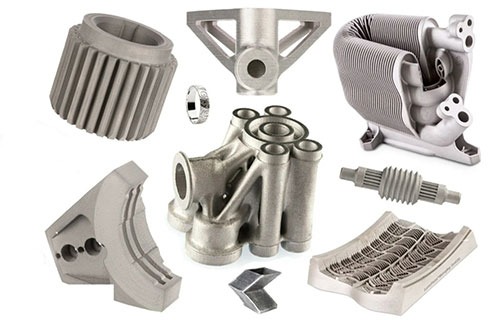
3D printing, or Additive Manufacturing (AM), is fundamentally transforming industrial production by enabling unprecedented design freedom, slashing lead times, and allowing for mass customization. It moves beyond prototyping to become a viable solution for end-use parts, complex tooling, and bridge production.
Key takeaways
- Understanding the core technologies is crucial for matching the right process to your part’s requirements.
- Not every part is economically or technically viable for AM. Use this framework to evaluate candidates:
- The strategic advantages of industrial AM are well-documented and measurable:
- Adoption isn’t without hurdles. Acknowledging and planning for these is critical.
Introduction: The Industrial Manufacturing Crossroads
Manufacturing is at an inflection point. Traditional methods like injection molding and CNC machining are excellent for mass-producing identical parts, but they falter when faced with demands for rapid iteration, cost-effective low-volume production, and geometric complexity. This is where industrial 3D printing steps in. It builds parts layer by layer from digital models, adding material only where needed. This shift from subtractive to additive thinking unlocks opportunities in aerospace, automotive, medical, and energy sectors. However, success hinges on selecting the right technology, material, and application. This guide serves as your comprehensive roadmap to navigate this transition and leverage 3D printing for tangible manufacturing advantages.
What Are the Foundational Industrial 3D Printing Technologies?
Understanding the core technologies is crucial for matching the right process to your part’s requirements. The landscape extends far beyond basic desktop FDM.
1. Material Extrusion: Fused Deposition Modeling (FDM) / Fused Filament Fabrication (FFF)
- How It Works: A thermoplastic filament is heated and extruded through a nozzle, tracing the part’s cross-section layer by layer.
- Industrial Role: While common in prototyping, its industrial strength comes from high-temperature, engineering-grade materials (like ULTEM™ 9085 or PEEK) printed on enclosed, heated chamber machines. It’s used for large-format tooling, jigs, fixtures, and low-volume end-use parts where cost is a primary driver.
- Key Consideration: Anisotropic strength (weaker in the Z-axis) and visible layer lines require design accommodation and post-processing for functional parts.
2. Powder Bed Fusion: The Powerhouse for Metals and Plastics
This category is central to industrial AM, encompassing several key processes:
- Selective Laser Sintering (SLS): Uses a laser to sinter powdered thermoplastic (typically Nylon PA11/PA12). Parts are isotropically strong, require no supports, and are ideal for complex, functional prototypes and end-use components like ducting and enclosures.
- Direct Metal Laser Sintering (DMLS) / Selective Laser Melting (SLM): These are the standard for metal AM. A high-power laser fully melts fine metal powder (stainless steel, aluminum, titanium, Inconel). They produce dense, high-strength parts with complex internal geometries (e.g., conformal cooling channels) for aerospace, medical implants, and high-performance automotive.
3. Vat Polymerization: Stereolithography (SLA) & Digital Light Processing (DLP)
- How It Works: An ultraviolet laser (SLA) or projector (DLP) cures liquid photopolymer resin layer by layer.
- Industrial Role: Unmatched for extreme surface finish, fine detail, and dimensional accuracy. It’s the go-to for investment casting patterns, detailed masters for silicone molding, and high-resolution prototypes. Advanced “engineering” and “castable” resins expand its functional applications.
4. Binder Jetting & Material Jetting: Speed and Multi-Material Potential
- Binder Jetting: A print head deposits a liquid binder onto a thin layer of powder (metal, sand, or ceramic). It’s exceptionally fast and allows for full-color printing (with gypsum) or the creation of sand molds for metal casting. Metal parts require secondary sintering and infiltration.
- Material Jetting: Operates like a 2D inkjet printer, jetting droplets of photopolymer material that are instantly cured by UV light. Its unique advantage is the ability to jet multiple materials simultaneously, creating parts with varied mechanical properties or colors in a single print.
How Do You Assess If a Part is Suitable for 3D Printing? (The Feasibility Checklist)
Not every part is economically or technically viable for AM. Use this framework to evaluate candidates:
- Complexity & Consolidation: Does the part have complex internal features, organic shapes, or undercuts that are difficult or impossible to machine? Can you consolidate an assembly of multiple components into a single printed part, eliminating fasteners and assembly time? This is where AM delivers its highest value.
- Volume & Customization: What is your production volume? AM excels at low-to-medium volume production (1 to 10,000 units) and is ideal for mass customization, where each unit is unique (e.g., patient-specific medical devices).
- Material Requirements: Does the application require a high-performance engineering plastic (PEEK, PEKK), a specific metal alloy (Ti-6Al-4V, AlSi10Mg), or a specialty ceramic? Ensure the chosen AM process can produce parts with the required mechanical properties, thermal stability, and certifications (e.g., biocompatibility, flightworthiness).
- Cost vs. Benefit Analysis: Move beyond simple per-part cost. Calculate the Total Cost of Ownership (TCO), factoring in reduced assembly, eliminated tooling costs, lighter weight (saving fuel in aerospace), and faster time-to-market.
What Are the Tangible Benefits That Drive Adoption?
The strategic advantages of industrial AM are well-documented and measurable:
- Unprecedented Design Freedom: Liberate engineers from the constraints of traditional manufacturing. Create topologically optimized structures that use minimal material for maximum strength, integrate conformal cooling channels in molds for faster cycle times, and design lattice structures for lightweight, energy-absorbing components.
- Radical Supply Chain Compression: Shift from physical inventory to digital inventory. Produce parts on-demand, on-location, reducing warehousing costs and lead times from weeks/months to hours/days. This enables distributed manufacturing and rapid response to breakdowns with printed spare parts.
- Material and Waste Efficiency: Additive processes, by nature, use only the material that becomes part of the final product. In powder-based processes, unused powder is typically recycled. This can result in up to 90% less waste compared to subtractive machining from a solid billet.
- Performance Enhancement: AM allows for part designs that outperform their traditionally made counterparts. A prime example is GE Aviation’s fuel nozzle for the LEAP engine: a single 3D-printed part that consolidated 20 separate components, is 25% lighter, and five times more durable.
How Is 3D Printing Applied Across Key Industries?
| Industry | Primary Technologies | Key Applications & Case Studies | Business Impact |
|---|---|---|---|
| Aerospace & Defense | DMLS/SLM, SLS, FDM (High-Temp) | Fuel nozzles, turbine blades, structural brackets, ducting. Airbus uses SLM to produce complex titanium brackets for the A350, reducing weight and raw material use by over 50%. | Weight reduction = fuel savings. Part consolidation = reliability. Digital spares = operational readiness. |
| Medical & Dental | DMLS (Ti/CoCr), SLA/DLP, SLS | Patient-specific implants (cranial, spinal), surgical guides, dental crowns & bridges, prosthetics. Surgeons use 3D-printed anatomical models for pre-operative planning, reducing surgery time by an average of 15-20%. | Improved patient outcomes. Perfect-fit devices. Faster surgical procedures. |
| Automotive | DMLS, SLS, SLA, FDM | Prototypes, custom tooling (jigs/fixtures), end-use parts (brackets, ducts), pre-production validation. BMW uses HP Multi Jet Fusion to produce customizable window guide rails for their i8 Roadster, allowing for last-stage customization. | Faster prototyping cycles. Customized low-volume production (e.g., racing, luxury). Lightweighting for electric vehicles. |
| Energy & Industrial | DMLS (Inconel), FDM (PEEK) | Turbine components, heat exchangers, drilling tools, corrosion-resistant parts. Siemens uses DMLS to produce gas turbine blades with integrated cooling circuits, enabling higher operating temperatures and efficiency. | Improved efficiency and durability of critical equipment. On-site manufacturing for remote locations. |
What Are the Key Challenges and How to Overcome Them?
Adoption isn’t without hurdles. Acknowledging and planning for these is critical.
- High Initial Capital Investment: Industrial metal and polymer systems can cost from $100,000 to over $1 million. Solution: Partner with a reputable service bureau like our shop for initial projects to validate ROI before committing to capital expenditure. Leverage leasing or subscription models.
- Skilled Labor Shortage: AM requires a new blend of skills in design (DfAM), machine operation, metallurgy, and post-processing. Solution: Invest in training and seek partners who provide comprehensive application engineering support.
- Post-Processing Requirements: Most AM parts require support removal, heat treatment (metals), surface finishing, and inspection. This can account for up to 60% of the total part cost. Solution: Factor post-processing into initial design and costing. Automate where possible (e.g., automated support removal systems).
- Qualification and Standardization: For regulated industries (aerospace, medical), qualifying AM processes and parts is rigorous. Solution: Work with machines and materials that have established material specifications (e.g., AMS for aerospace) and implement a rigorous Quality Management System (QMS) with in-process monitoring.
How to write a spec that gets priced correctly
A drawing is a contract. If it leaves a number open, the shop fills that number in with its own default. The default is rarely the one you had in mind. Put these five lines on every RFQ and most of the back-and-forth disappears before it starts.
- File format and units, with the model exported in millimetres
- Process and material grade, not a trade name
- Critical features and the tolerance each one needs
- Surface finish and the faces it applies to
- Quantity for the pilot build and for the year
The point is not paperwork. Each line removes a decision the shop would otherwise make for you. A complete RFQ comes back priced. An incomplete one comes back guessed.
What actually drives the price
Buyers usually push on material because it is the line they can see. In practice the material is rarely the biggest number on a quote. These five lines decide most of it:
- build volume and orientation
- layer height and support structure
- material grade and colour
- post-processing and hand finishing
- quantity per build plate
Ask for the quote split by line. A supplier who cannot break it down is guessing, and you will pay for the guess. The line you can usually renegotiate is the tolerance band, not the raw material.
Problems you will meet, and the fix
Every process has a failure mode it prefers. The same four show up again and again on this kind of work, and none of them are mysteries once you know what to look for.
- Warping on long flat faces where the part lifts off the plate
- Layer lines showing through a cosmetic surface
- Support scars on a mating face nobody flagged
- Dimensional drift on thin walls after cooling
Catch the fault on the first part, not the hundredth. A first-article check costs an hour. A bad batch costs the whole order. Write the check into the purchase order so nobody has to remember it.
What to check on the first article
The first article is the cheapest inspection you will ever buy. Use it properly and the rest of the run becomes boring, which is exactly what you want.
- Every dimension on the drawing, with the measured value written beside it.
- The material certificate, matched to the heat or lot number on the parts.
- The finish against the sample you approved, under the same light.
- Fit against the mating part, assembled rather than measured.
- Packaging, because parts that arrive damaged were never in tolerance.
Check in this order: datums, then mating features, then cosmetic faces. If the datums are wrong, every number after them is noise. Keep the report on file. When a problem shows up in month six, that document is the only thing that tells you what changed.
How to compare two quotes fairly
Two numbers are not comparable unless the scope matches. Line them up before you decide, because a low number with three gaps is not a low number.
Same drawing, same material, same finish, same inspection. Anything else is a different job wearing the same part number. Then look at what each quote leaves out. Freight, packaging, certificates and tooling are the usual gaps.
Ask each supplier to state their assumptions in writing. The one who does is usually the one who has run the process before.
Scaling from one part to a batch
The first part teaches you the process. The hundredth teaches you the process cost.
Watch three things as volume grows: setup amortisation, tool wear, and how much hand work the finish still needs. If the unit price barely moves between ten and a hundred, the cost sits in material or in hand work, not in setup. Ask which, because only one of them is negotiable.
Lead time behaves the same way. A one-off is scheduled around other jobs. A repeat order is scheduled around your forecast. Give the shop a forecast and the lead time gets shorter, not longer.
How to read a supplier's quote
A quote is a short document with a long shadow. Four things in it decide whether the job runs smoothly, and only one of them is the price.
- The scope line. It should name the process, the material and the finish, not just the part.
- The tolerance basis. General tolerance or the drawing, and which standard it follows.
- The exclusions. Tooling, freight, certificates and inspection are the usual omissions.
- The validity date. Material prices move, and an open-ended quote is a promise nobody can keep.
Read the exclusions before you read the total. A quote that leaves out tooling is not cheaper. It is a quote for a different job.
What to send with the first order
The first order sets the pattern for every order after it. Send a complete package once and the shop files it, and the second order takes a fraction of the time.
- A STEP or native model plus a PDF drawing carrying the same revision letter.
- The material callout by standard number, not by trade name.
- The finish and the exact faces it applies to.
- Any test the part must pass: fit, seal, drop, salt spray, dielectric.
- A contact who can answer a question inside one working day.
Then write down what was agreed. An email that confirms the material, the finish and the date is worth more than a longer purchase order that leaves them open.
Conclusion: Strategically Integrating Additive Manufacturing
Industrial 3D printing is not a one-for-one replacement for traditional methods; it’s a complementary technology that expands your manufacturing toolkit. Its value is maximized when applied to the right problems: complex, lightweight, customized, or low-volume parts. Success requires a strategic approach—beginning with pilot projects, developing in-house DfAM expertise, and rethinking supply chain logistics. By focusing on total value creation rather than just unit cost, forward-thinking manufacturers are using AM to drive innovation, agility, and resilience.
Our solution for 3D Printing Revolutionize
YiguProto runs 3D printing in house, from a single prototype to a production batch. We quote the process, the material and the finish as separate lines, so you can see where the money goes instead of arguing with one number.
Send a STEP file or a drawing and you get a DFM report in one to two business days. It flags the features that add cost and the features that will not hold tolerance on the process you picked.
Every order ships with an inspection report on the features you call out. If a part misses, we make it again. Ready to price a part? Start with a free quote and DFM review, or read more about our 3D printing. You can also talk to an engineer before you commit to a drawing.
FAQ about 3D Printing Revolutionize
Does the process work for prototypes as well as production?
Yes, and that is usually the point. Running the prototype on the production process removes a whole class of surprises, because the part you test is made the same way as the part you sell.
What is 3D Printing Revolutionize used for?
3D Printing Revolutionize turns up wherever the part has to do a real job at a predictable cost: brackets, housings, fixtures, covers and the fittings that hold them together. The honest test is whether the properties match the load and the environment, not whether the material is fashionable.
How much does 3D Printing Revolutionize cost?
Price comes from five lines: material, machine or tool time, setup, finishing and inspection. The material itself is usually the smallest of them. Send a drawing and we will split the quote so you can see which line is doing the damage.
What files do you need in order to quote?
A STEP file plus a PDF drawing that carries the same revision letter. The model carries the geometry and the drawing carries the intent. When the two disagree, the shop picks one, and it is never the one you meant.
What happens if a part is out of specification?
We measure it against the same drawing you approved and, if it misses, we make it again. What matters is that the report exists, because a disagreement without data is just an opinion.
How do I compare two quotes fairly?
Match the scope first: same drawing, same material, same finish, same inspection. Then read the exclusions. Freight, tooling and certificates are the usual gaps, and a low number with three gaps is not a low number.
The short version
3D Printing Revolutionize rewards the buyer who reads the data sheet and the drawing together. Pick the option for the property that matters, not for the price per kilo.
Tighten only what mates. Test a sample before the run. Then let the process do the rest.