
Metal Materials
AISI 440C Stainless Steel: Ultimate Guide to Hardness, Uses & Fabrication
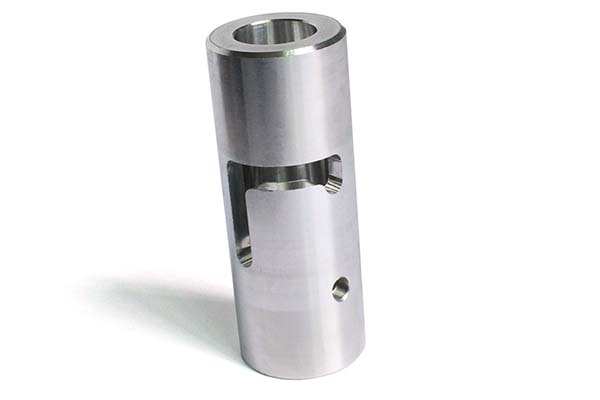
When your application demands a stainless steel that combines extreme hardness with decent corrosion resistance, AISI 440C is the material that stands above the rest. As a high-carbon martensitic grade, it is the preferred choice for components that must endure heavy wear, maintain sharp edges, and resist rust in mild environments.
What Defines AISI 440C Stainless Steel?
The identity of AISI 440C is defined by its chemical composition and the resulting microstructure. Understanding these fundamentals explains why this grade behaves so differently from other stainless steels.
Chemical Composition
The performance of AISI 440C is driven by a specific combination of elements that create its signature hardness and wear resistance. The table below breaks down the typical composition.
| Element | Content Range (%) | Functional Role |
|---|---|---|
| Carbon (C) | 0.95–1.20 | The highest carbon content among standard stainless steels. It enables extreme hardness and forms hard carbides for wear resistance. |
| Chromium (Cr) | 16.0–18.0 | Provides the base for corrosion resistance and forms chromium carbides that contribute to wear resistance. |
| Molybdenum (Mo) | 0.40–0.60 | Enhances hardness and high-temperature strength, and improves resistance to localized corrosion. |
| Manganese (Mn) | ≤ 1.00 | Aids in deoxidation during steelmaking and improves hardenability. |
| Silicon (Si) | ≤ 1.00 | Acts as a deoxidizer and contributes to high-temperature oxidation resistance. |
Physical and Mechanical Properties
The mechanical properties of AISI 440C are what make it a go-to material for high-wear components. The values below represent typical performance after proper heat treatment.
- Hardness: 58–60 HRC after quenching and tempering. In the annealed condition, it measures 270–285 HB for easier machining.
- Tensile Strength: 760–1030 MPa in the heat-treated condition, providing ample strength for load-bearing applications.
- Yield Strength: Approximately 450 MPa, indicating the stress level at which permanent deformation begins.
- Density: 7.75 g/cm³, slightly lower than standard carbon steel due to its alloy content.
- Microstructure: Martensitic, which is the hard, crystalline structure formed during quenching that gives the material its characteristic properties.
How Does It Resist Corrosion?
While AISI 440C is not as corrosion-resistant as austenitic grades like 304 or 316, it holds its own in many environments, especially when properly maintained.
Corrosion Performance in Different Environments
- Atmospheric Exposure: It performs well in dry or mildly humid air. Outdoor fixtures like gate hinges or architectural components can last for decades with minimal rust.
- Mild Chloride Exposure: It can tolerate low levels of chlorides, such as those found in indoor plumbing or tap water. However, it is not recommended for marine environments or direct saltwater contact.
- High-Temperature Oxidation: The material resists scaling and maintains its strength up to approximately 800°C, making it suitable for applications like valve seats and high-temperature bearings.
- Stress Corrosion Cracking: The risk is low in most typical applications, but prolonged exposure to a combination of high temperatures and chlorides should be avoided.
Enhancing Corrosion Resistance
Several methods can improve the corrosion performance of AISI 440C components:
- Passivation: Treating the surface with a nitric or citric acid solution removes free iron and thickens the natural chromium oxide layer. This can improve corrosion resistance by 40–60% and is essential for medical and food-contact applications.
- Regular Cleaning and Lubrication: For moving parts like bearings, routine cleaning and application of a light lubricant prevent moisture from sitting on the surface and initiating rust.
- Surface Finishing: A polished or mirror finish reduces surface roughness, leaving fewer places for moisture and contaminants to collect.
What Is the Heat Treatment Process?
Heat treatment is the key to unlocking the full potential of AISI 440C. Without proper processing, the material will not achieve its characteristic hardness.
The Core Heat Treatment Steps
| Process | Temperature Range | Purpose and Outcome |
|---|---|---|
| Annealing | 850–900°C, slow cool | Softens the steel to approximately 270–285 HB, making it machinable for initial shaping. |
| Austenitizing | 1010–1065°C | Transforms the microstructure to austenite, preparing the steel for the hardening step. |
| Quenching | Oil or air quench | Rapid cooling transforms the austenite into hard martensite, achieving hardness of 58–60 HRC. |
| Tempering | 150–370°C, air cool | Relieves internal stresses from quenching. Lower tempering temperatures preserve high hardness; higher temperatures increase toughness but reduce hardness. |
Advanced Considerations for Optimal Results
- Cryogenic Treatment: After quenching, a small amount of soft austenite may remain trapped in the microstructure. Subjecting the steel to temperatures between -80°C and -196°C converts this retained austenite to martensite, increasing hardness by 2–3 HRC and improving dimensional stability.
- Carbide Distribution: Proper austenitizing temperatures ensure that hard chromium carbides are evenly distributed throughout the matrix, preventing localized weak spots that could lead to premature wear.
- Grain Size Control: Maintaining a fine grain size (ASTM 6–9) through controlled heating cycles balances hardness with sufficient toughness to resist chipping.
How Do You Weld and Machine This Material?
Working with AISI 440C requires more care than with softer stainless steels. Its high hardness and carbon content introduce specific challenges during fabrication.
Welding Considerations
Welding AISI 440C is possible but requires strict controls to avoid cracking:
- Preheat: The material should be preheated to 250–300°C to slow the cooling rate after welding, reducing thermal stress.
- Post-Weld Heat Treatment: A tempering treatment at 650–700°C is essential to restore ductility and relieve residual stresses in the heat-affected zone.
- Filler Metal: Use a matching filler like ER410NiMo, which provides similar strength and corrosion resistance.
- Cracking Prevention: Use low-hydrogen welding processes and ensure the material is clean and dry to prevent hydrogen-induced cracking.
Machining and Fabrication Tips
- Machine in the Annealed Condition: All major machining operations should be performed while the steel is in its soft, annealed state (270–285 HB).
- Tooling: Use carbide tooling for roughing operations. For finishing hardened components, cubic boron nitride (CBN) or ceramic inserts last 5–10 times longer than conventional carbide.
- Speeds and Feeds: Use slow cutting speeds (50–150 m/min for turning) and light feeds (0.05–0.15 mm/rev) to avoid work hardening and excessive heat generation.
- Grinding: When grinding hardened 440C, use plenty of coolant and slow grinding speeds (15–20 m/s) to prevent grinding burn, which can weaken the surface layer.
- Formability: The material has poor formability in the hardened state. Any bending or shaping should be done before heat treatment.
What Forms Are Available and How Are They Sourced?
AISI 440C is available in a variety of product forms to suit different manufacturing needs. Knowing what is available helps in planning your project and supply chain.
| Product Form | Typical Dimensions | Common Applications |
|---|---|---|
| Round Bar Stock | 6–300 mm diameter | Bearings, shafts, cutlery, valve components |
| Flat Bar and Sheet | 0.5–10 mm thickness | Precision instruments, razor blades, molds |
| Plate | 10–200 mm thickness | Mold bases, large tooling components |
| Precision Ground Flat Stock | 1–50 mm thickness, ±0.01 mm tolerance | Tooling, dies, fixtures requiring tight tolerances |
| Foil | 0.01–0.1 mm thickness | Small precision parts, watch components, shims |
Supply Chain Considerations:
- For critical applications, source from suppliers with ISO 9001 certification to ensure material traceability and quality.
- Forged blanks are ideal for large components like valve bodies or large bearing races. Lead times for custom forgings are typically 3–4 weeks.
- Most global suppliers offer both metric and imperial sizes, allowing flexibility based on your design specifications.
Where Is AISI 440C Used?
The unique combination of hardness, wear resistance, and moderate corrosion resistance makes AISI 440C the material of choice for a wide range of demanding applications.
- Medical and Surgical: Scalpels, forceps, and surgical scissors that require sharp, durable edges and resistance to corrosion from bodily fluids and cleaning agents.
- Bearings and Races: Ball bearings, roller bearings, and bearing races in high-speed machinery, where hardness is essential for long life under rolling contact stress.
- Valve Components: Valve seats, balls, and stems in industrial engines and pumps, where high temperatures and wear resistance are required.
- Cutlery and Blades: High-end chef’s knives, hunting knives, and industrial blades that must hold a sharp edge through extended use.
- Plastic Processing: Injection molding screws and barrels that resist wear from abrasive glass-filled or mineral-filled plastic compounds.
- Firearm Components: Barrels, triggers, and other parts that require strength, impact resistance, and some corrosion protection.
Case Studies: AISI 440C in Real-World Applications
Case Study 1: Extending Bearing Life in High-Speed Machinery
A manufacturer of industrial pumps was experiencing premature failure of bearing races made from a lower-grade stainless steel. The races were failing after approximately 8,000 hours of operation due to surface fatigue and wear. Switching to AISI 440C stainless steel races, heat-treated to 59 HRC and finished with a precision grind, extended bearing life to over 25,000 hours. This reduced unplanned downtime by 70% and saved the company an estimated $45,000 annually in replacement parts and labor.
Case Study 2: Improving Surgical Scalpel Edge Retention
A medical device company was producing scalpels from 420 stainless steel, but surgeons reported that the blades dulled too quickly during long procedures. The company switched to AISI 440C blades treated with a full heat treatment cycle followed by passivation. The new blades maintained their sharpness for three times as many cuts, and the passivation ensured compliance with FDA biocompatibility standards. Customer satisfaction scores improved significantly, and the company gained a competitive advantage in a crowded market.
Case Study 3: Mold Components for Abrasive Plastics
An injection molding company was using 420 stainless steel for their mold cores and cavities. The parts were being molded from a 40% glass-filled nylon, which was rapidly wearing down the mold surfaces. After just 50,000 cycles, the molds showed significant wear, affecting part quality. They rebuilt the molds using AISI 440C inserts, heat-treated to 58 HRC. The new mold components lasted for over 250,000 cycles before showing any measurable wear, reducing mold maintenance costs by 80% and nearly eliminating scrap due to dimensional drift.
For applications where wear resistance and edge retention are the top priorities, AISI 440C stainless steel offers a compelling solution. Its high carbon content and martensitic structure allow it to achieve hardness levels up to 60 HRC, outperforming most other stainless grades in demanding wear environments. While its corrosion resistance does not match that of austenitic grades, it provides reliable protection in mild environments, especially when passivated or properly maintained. With careful attention to heat treatment, welding procedures, and machining practices, this versatile material can deliver exceptional service life in medical, industrial, and precision component applications.
FAQ About AISI 440C Stainless Steel
Is AISI 440C stainless steel magnetic?
Yes, it is strongly magnetic. Its martensitic microstructure makes it ferromagnetic, unlike the non-magnetic austenitic grades such as 304 or 316. This property is useful for applications like sensor components or where magnetic inspection methods are used.
Can AISI 440C be used in food processing equipment?
Yes, but with limitations. It works well for cutting blades and tools that are wiped clean after use. However, it is not recommended for continuous contact with acidic or salty foods, such as tomato sauce or brine. For tanks, piping, or surfaces that hold these materials for extended periods, an austenitic grade like 304 is a better choice.
What is the difference between AISI 440C, 440A, and 440B?
The primary difference is carbon content. 440C contains 0.95–1.20% carbon, achieving the highest hardness (up to 60 HRC). 440A contains 0.60–0.75% carbon and is softer but more corrosion-resistant and easier to machine. 440B falls in between, with 0.75–0.95% carbon. For maximum wear resistance and edge retention, 440C is the clear choice.
Does AISI 440C rust?
It can rust under certain conditions. While it offers good corrosion resistance in dry or mildly humid environments, it is susceptible to rust in marine environments, high-chloride settings, or if left wet for long periods. Proper passivation and regular cleaning significantly reduce the risk of rust formation.
How to write a spec that gets priced correctly
A drawing is a contract. If it leaves a number open, the shop fills that number in with its own default. The default is rarely the one you had in mind. Put these five lines on every RFQ and most of the back-and-forth disappears before it starts.
- Alloy designation and the standard behind it
- Temper or heat treatment condition
- Mechanical properties you actually need
- Mill certificate and traceability requirement
- Finish and the faces it applies to
The point is not paperwork. Each line removes a decision the shop would otherwise make for you. A complete RFQ comes back priced. An incomplete one comes back guessed.
What actually drives the price
Buyers usually push on material because it is the line they can see. In practice the material is rarely the biggest number on a quote. These five lines decide most of it:
- alloy grade and mill availability
- stock size versus finished size
- heat treatment and testing
- machinability
- certification
Ask for the quote split by line. A supplier who cannot break it down is guessing, and you will pay for the guess. The line you can usually renegotiate is the tolerance band, not the raw material.
Problems you will meet, and the fix
Every process has a failure mode it prefers. The same four show up again and again on this kind of work, and none of them are mysteries once you know what to look for.
- Substituting a similar grade without telling anyone
- Hardness that varies across a single bar
- Corrosion in a weld heat-affected zone
- Distortion after heat treatment on a thin part
Catch the fault on the first part, not the hundredth. A first-article check costs an hour. A bad batch costs the whole order. Write the check into the purchase order so nobody has to remember it.
What to check on the first article
The first article is the cheapest inspection you will ever buy. Use it properly and the rest of the run becomes boring, which is exactly what you want.
- Every dimension on the drawing, with the measured value written beside it.
- The material certificate, matched to the heat or lot number on the parts.
- The finish against the sample you approved, under the same light.
- Fit against the mating part, assembled rather than measured.
- Packaging, because parts that arrive damaged were never in tolerance.
Check in this order: datums, then mating features, then cosmetic faces. If the datums are wrong, every number after them is noise. Keep the report on file. When a problem shows up in month six, that document is the only thing that tells you what changed.
Our solution for AISI 440C Stainless Steel: Ultimate
YiguProto runs metal sourcing and machining in house, from a single prototype to a production batch. We quote the process, the material and the finish as separate lines, so you can see where the money goes instead of arguing with one number.
Send a STEP file or a drawing and you get a DFM report in one to two business days. It flags the features that add cost and the features that will not hold tolerance on the process you picked.
Every order ships with an inspection report on the features you call out. If a part misses, we make it again. Ready to price a part? Start with a free quote and DFM review, or read more about our metal sourcing and machining. You can also talk to an engineer before you commit to a drawing.
FAQ about AISI 440C Stainless Steel: Ultimate
What material should I specify?
Specify by standard, not by trade name. A trade name can change under you between two orders; a standard number cannot. Then add the one property that actually decides the part, whether that is strength, heat resistance or chemical exposure.
What is the lead time for AISI 440C Stainless Steel: Ultimate?
Expect 5 to 12 business days depending on mill stock. Tooling, material stock and the finishing queue all move that number, so we confirm the date in writing before the run starts rather than after.
Can AISI 440C Stainless Steel: Ultimate be made in small quantities?
Yes, and small quantities are where a good supplier earns the next order. Setup dominates the price at low volume, so the cheapest route is usually the one with the fewest operations, not the cheapest material.
How long does a first article take?
Usually a few business days once the drawing is frozen, and longer if tooling is involved. The date we give you is the date we confirm in writing, not the date we hope for.
How do I compare two quotes fairly?
Match the scope first: same drawing, same material, same finish, same inspection. Then read the exclusions. Freight, tooling and certificates are the usual gaps, and a low number with three gaps is not a low number.
What tolerance can you hold on AISI 440C Stainless Steel: Ultimate?
The working default is ±0.05 mm on machined features, ±0.1 mm on formed ones. Tighter than that the process changes and so does the price, because every step tighter adds inspection time. Call out only the faces that mate with something else and leave the rest on the general tolerance.
The short version
AISI 440C Stainless Steel: Ultimate rewards the buyer who reads the data sheet and the drawing together. Pick the option for the property that matters, not for the price per kilo.
Tighten only what mates. Test a sample before the run. Then let the process do the rest.