
3D Printing
Can 3D Printing Truly Scale to Mass Production?
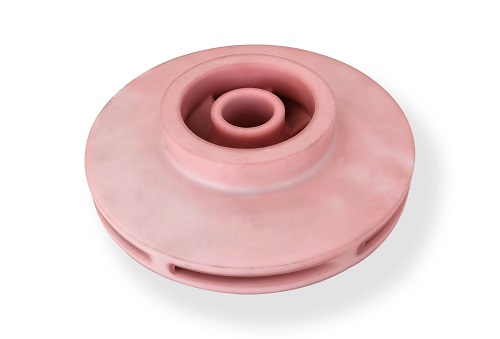
The vision is compelling: factories not with rows of injection molding machines, but with banks of 3D printers, humming away to produce everything from custom medical implants to on-demand car parts. This is the promise of 3D printing mass production.
Key takeaways
- To understand the solutions, we must first acknowledge the significant hurdles that have historically confined AM to prototyping and niche production.
- The industry isn’t standing still. Innovative approaches are making AM production a reality for specific applications.
- 3D printing for mass production is not a myth, but its domain is specific and strategically defined.
What Are the Fundamental Challenges of Scaling 3D Printing?
To understand the solutions, we must first acknowledge the significant hurdles that have historically confined AM to prototyping and niche production.
1. Throughput Speed: The Throughput Bottleneck
This is the most cited challenge. Most AM processes are serial, building parts layer-by-layer, often one at a time per machine.
- Comparison: An injection molding machine can produce a part in 15-60 seconds. A high-quality FDM or SLA print of the same part might take 2-8 hours.
- The Core Issue: Low Overall Equipment Effectiveness (OEE). Printers spend significant time on non-value-added activities: recoating resin vats, heating/cooling chambers, and executing slow, precise movements to ensure quality.
2. Cost Per Part: The Variable Cost Problem
In AM, the cost driver is machine time and material, not amortized tooling.
- Material Cost: Engineering-grade and metal powders/resins are 5-50x more expensive per kilogram than their raw pellet or billet counterparts for traditional methods.
- Labor & Post-Processing: Many AM processes require significant manual labor for support removal, surface finishing, and quality inspection. This labor cost scales linearly with part count, eroding economies of scale.
3. Consistency and Quality Assurance
Mass production demands statistical process control (SPC) and predictable outcomes.
- Process Variability: Factors like powder reuse cycles in SLS/SLM, resin batch variations in SLA, and ambient temperature/humidity in FDM can introduce subtle variations that are unacceptable in a production run of 10,000 parts.
- Metrology & Certification: Qualifying each build parameter and providing lot traceability for regulatory industries (medical, aerospace) adds overhead not present in a validated molding process.
4. Material Limitations and Performance
While material portfolios have exploded, gaps remain.
- Mechanical Properties: Although AM-specific materials often match or exceed traditional properties, some key commodity plastics (e.g., polypropylene, certain transparent polymers) are still difficult or expensive to process with comparable performance.
- Surface Finish and Anisotropy: As-printed surfaces often require finishing to achieve a cosmetic or functional grade. Some processes produce anisotropic parts (weaker in one direction), which must be accounted for in design.
What Are the Practical Solutions Enabling Production Today?
The industry isn’t standing still. Innovative approaches are making AM production a reality for specific applications.
Solution 1: High-Throughput Printing Technologies
New machine designs are attacking the speed problem head-on.
- Multi-Laser/Multi-Jet Systems: Industrial SLS and metal PBF systems now use 4, 8, or even 12 lasers simultaneously, drastically increasing build speed. Inkjet-based metal (Binder Jetting) and polymer (Material Jetting) systems have arrays of print heads for parallel deposition.
- Continuous Printing: Technologies like Continuous Liquid Interface Production (CLIP) and advanced belt-fed FDM systems remove the layer-wise stop-start cycle, enabling orders-of-magnitude faster print times for certain geometries.
- Printer Farms: The most straightforward scaling method. Using hundreds of standardized desktop or benchtop printers in parallel (as done by companies like Forecast 3D or Jabil) aggregates throughput. This is highly effective for producing many small, identical, or semi-custom parts (e.g., dental aligners, hearing aid shells).
Solution 2: Design for Additive Manufacturing (DfAM) at Scale
This goes beyond lightweighting. It’s about designing for manufacturability, assembly, and post-processing efficiency in a production context.
- Batch Optimization: Using AI-powered nesting software to pack the maximum number of parts into a single build volume, minimizing unused space and machine cycles.
- Self-Supporting & Easy-to-Clean Designs: Minimizing support structures not only saves material but drastically reduces the single biggest cost in post-processing: support removal.
- Part Consolidation: The classic AM advantage. Combining an assembly of 10 traditionally made parts into 1 printed assembly eliminates assembly labor, inventory, and potential failure points—justifying a higher per-part print cost.
Solution 3: Automated Post-Processing Workflows
The factory of the future isn’t just automated printers; it’s an automated end-to-end line.
- Integrated De-powdering & Support Removal: Systems that automatically blast, sieve, and recycle unfused powder (SLS) or use robotic arms with water jets or EDM to remove supports.
- In-Line Metrology: Machine vision and laser scanning integrated into the workflow to perform 100% inspection for critical dimensions, flagging defects in real-time and enabling closed-loop process control.
Solution 4: Strategic Material and Process Development
- High-Speed, Low-Cost Materials: Development of new pellet-based extrusion systems for FDM that use commodity plastic pellets instead of expensive filament, cutting material cost by ~70%.
- Binder Jetting for Metals: This process separates shaping (printing) from sintering. It allows for very fast printing of “green parts,” which are later sintered in batches. It’s emerging as a strong contender for medium-volume metal part production (thousands to tens of thousands of units).
When Does 3D Printing Mass Production Make Business Sense? The Decision Matrix
Use this framework to evaluate your project.
| Scenario / Driver | Favorable for 3D Printing Mass Production | Better for Traditional Methods |
|---|---|---|
| Annual Volume | Low-to-Medium (1 – 50,000 units) | High (>100,000 units) |
| Part Complexity | High (lattices, internal channels, organic shapes, part consolidation). | Low (simple, solid shapes). |
| Customization Level | High (mass customization – each unit is unique). | None (all parts identical). |
| Lead Time Requirement | Short (no tooling = faster to market). | Longer acceptable (amortize tooling over long production). |
| Supply Chain Strategy | Distributed/Digital (print on-demand, localize). | Centralized (economical to ship from one large factory). |
| Example Industries | Medical/Dental (patient-specific implants, guides), Aerospace (complex brackets, ducts), Consumer (personalized goods, spare parts). | Automotive (standard interior trim), Packaging, Consumer Electronics (casing). |
Case Study: Adidas Futurecraft 4D
- Challenge: Create a high-performance, customizable midsole with a complex lattice structure impossible to mold.
- Solution: Adidas partnered with Carbon to use its CLIP (DLS) technology for mass production. The digital process allows for regional lattice tuning (different cushioning in different zones) in a single print.
- Outcome: While not producing millions like a standard sneaker, Adidas has manufactured hundreds of thousands of these midsoles, demonstrating a viable path for high-value, design-driven mass production where AM provides unique functional benefits that justify its cost.
How to write a spec that gets priced correctly
A drawing is a contract. If it leaves a number open, the shop fills that number in with its own default. The default is rarely the one you had in mind. Put these five lines on every RFQ and most of the back-and-forth disappears before it starts.
- File format and units, with the model exported in millimetres
- Process and material grade, not a trade name
- Critical features and the tolerance each one needs
- Surface finish and the faces it applies to
- Quantity for the pilot build and for the year
The point is not paperwork. Each line removes a decision the shop would otherwise make for you. A complete RFQ comes back priced. An incomplete one comes back guessed.
What actually drives the price
Buyers usually push on material because it is the line they can see. In practice the material is rarely the biggest number on a quote. These five lines decide most of it:
- build volume and orientation
- layer height and support structure
- material grade and colour
- post-processing and hand finishing
- quantity per build plate
Ask for the quote split by line. A supplier who cannot break it down is guessing, and you will pay for the guess. The line you can usually renegotiate is the tolerance band, not the raw material.
Problems you will meet, and the fix
Every process has a failure mode it prefers. The same four show up again and again on this kind of work, and none of them are mysteries once you know what to look for.
- Warping on long flat faces where the part lifts off the plate
- Layer lines showing through a cosmetic surface
- Support scars on a mating face nobody flagged
- Dimensional drift on thin walls after cooling
Catch the fault on the first part, not the hundredth. A first-article check costs an hour. A bad batch costs the whole order. Write the check into the purchase order so nobody has to remember it.
What to check on the first article
The first article is the cheapest inspection you will ever buy. Use it properly and the rest of the run becomes boring, which is exactly what you want.
- Every dimension on the drawing, with the measured value written beside it.
- The material certificate, matched to the heat or lot number on the parts.
- The finish against the sample you approved, under the same light.
- Fit against the mating part, assembled rather than measured.
- Packaging, because parts that arrive damaged were never in tolerance.
Check in this order: datums, then mating features, then cosmetic faces. If the datums are wrong, every number after them is noise. Keep the report on file. When a problem shows up in month six, that document is the only thing that tells you what changed.
How to compare two quotes fairly
Two numbers are not comparable unless the scope matches. Line them up before you decide, because a low number with three gaps is not a low number.
Same drawing, same material, same finish, same inspection. Anything else is a different job wearing the same part number. Then look at what each quote leaves out. Freight, packaging, certificates and tooling are the usual gaps.
Ask each supplier to state their assumptions in writing. The one who does is usually the one who has run the process before.
Scaling from one part to a batch
The first part teaches you the process. The hundredth teaches you the process cost.
Watch three things as volume grows: setup amortisation, tool wear, and how much hand work the finish still needs. If the unit price barely moves between ten and a hundred, the cost sits in material or in hand work, not in setup. Ask which, because only one of them is negotiable.
Lead time behaves the same way. A one-off is scheduled around other jobs. A repeat order is scheduled around your forecast. Give the shop a forecast and the lead time gets shorter, not longer.
How to read a supplier's quote
A quote is a short document with a long shadow. Four things in it decide whether the job runs smoothly, and only one of them is the price.
- The scope line. It should name the process, the material and the finish, not just the part.
- The tolerance basis. General tolerance or the drawing, and which standard it follows.
- The exclusions. Tooling, freight, certificates and inspection are the usual omissions.
- The validity date. Material prices move, and an open-ended quote is a promise nobody can keep.
Read the exclusions before you read the total. A quote that leaves out tooling is not cheaper. It is a quote for a different job.
What to send with the first order
The first order sets the pattern for every order after it. Send a complete package once and the shop files it, and the second order takes a fraction of the time.
- A STEP or native model plus a PDF drawing carrying the same revision letter.
- The material callout by standard number, not by trade name.
- The finish and the exact faces it applies to.
- Any test the part must pass: fit, seal, drop, salt spray, dielectric.
- A contact who can answer a question inside one working day.
Then write down what was agreed. An email that confirms the material, the finish and the date is worth more than a longer purchase order that leaves them open.
When this is the wrong choice
A good supplier tells you when the process does not fit. These are the cases where we say so.
- The volume is so low that setup costs more than the parts are worth.
- The tolerance is tighter than the process can hold without a second operation.
- The geometry cannot be made without a tool feature that will not pay back.
- The material you need is not available in the form the process requires.
- The schedule is shorter than the tooling or setup time, and nobody has said so yet.
None of these are refusals. They are reasons to look at a different route, and the earlier that conversation happens the cheaper it is. The most expensive mistake in manufacturing is a process chosen before the question was understood.
Planning the ramp from prototype to production
The gap between one good part and a thousand identical ones is a plan, not a machine. Three decisions close it.
First, freeze the design. Every change after tooling starts is a re-cut, and re-cuts are where schedules go. Second, decide the inspection level. A prototype is checked by eye; a production part is checked against a report. Third, agree the change process in writing, including who pays for it.
Write the ramp down as dates and owners, not as intentions. A ramp plan with three names and three dates is worth more than a page of good intentions.
The Future: Hybrid Factories and Digital Inventories
The endpoint isn’t an “AM-only” factory. It’s the hybrid factory.
- Hybrid Manufacturing: Machines that combine additive and subtractive processes (e.g., 3D print a near-net shape, then mill precision features) in one setup, maximizing the strengths of both.
- Digital Inventory & Spare Parts: Perhaps the most imminent revolution. Instead of storing millions of dollars worth of physical spare parts, companies like BMW, Siemens, and the U.S. Military are storing digital part files. A broken part on a decades-old machine can be printed locally within days, eliminating obsolescence and slashing logistics costs.
3D printing for mass production is not a myth, but its domain is specific and strategically defined. It will not replace injection molding for making 10 million toothbrush handles. Instead, it is carving out a powerful and growing segment of the manufacturing landscape defined by complexity, customization, and supply chain agility. The barriers of speed, cost, and consistency are being systematically dismantled by technological innovation, smart design, and automated workflows. For businesses, the key is to identify where your product’s value is enhanced by the unique capabilities of AM—whether through superior performance, personalization, or risk reduction in the supply chain. In those scenarios, 3D printing isn’t just a viable production method; it’s a competitive imperative.
Our solution for 3D Printing Truly Scale
YiguProto runs 3D printing in house, from a single prototype to a production batch. We quote the process, the material and the finish as separate lines, so you can see where the money goes instead of arguing with one number.
Send a STEP file or a drawing and you get a DFM report in one to two business days. It flags the features that add cost and the features that will not hold tolerance on the process you picked.
Every order ships with an inspection report on the features you call out. If a part misses, we make it again. Ready to price a part? Start with a free quote and DFM review, or read more about our 3D printing. You can also talk to an engineer before you commit to a drawing.
FAQ about 3D Printing Truly Scale
What tolerance can you hold on 3D Printing Truly Scale?
The working default is ±0.1 mm on small features, ±0.3% on long spans. Tighter than that the process changes and so does the price, because every step tighter adds inspection time. Call out only the faces that mate with something else and leave the rest on the general tolerance.
What is the lead time for 3D Printing Truly Scale?
Expect 2 to 5 business days for a first batch. Tooling, material stock and the finishing queue all move that number, so we confirm the date in writing before the run starts rather than after.
What is 3D Printing Truly Scale used for?
3D Printing Truly Scale turns up wherever the part has to do a real job at a predictable cost: brackets, housings, fixtures, covers and the fittings that hold them together. The honest test is whether the properties match the load and the environment, not whether the material is fashionable.
What files do you need in order to quote?
A STEP file plus a PDF drawing that carries the same revision letter. The model carries the geometry and the drawing carries the intent. When the two disagree, the shop picks one, and it is never the one you meant.
How much does 3D Printing Truly Scale cost?
Price comes from five lines: material, machine or tool time, setup, finishing and inspection. The material itself is usually the smallest of them. Send a drawing and we will split the quote so you can see which line is doing the damage.
What should I check before approving the parts?
Datums first, then the features that mate, then the cosmetic faces. Ask for a dimensional report, a material certificate and a finish sample. A part can be inside every tolerance and still not fit, so assemble one before you sign.
The short version
3D Printing Truly Scale rewards the buyer who reads the data sheet and the drawing together. Pick the option for the property that matters, not for the price per kilo.
Tighten only what mates. Test a sample before the run. Then let the process do the rest.