
Die Casting
What Is Semi-Solid Die Casting and How Does It Revolutionize Metal Forming?
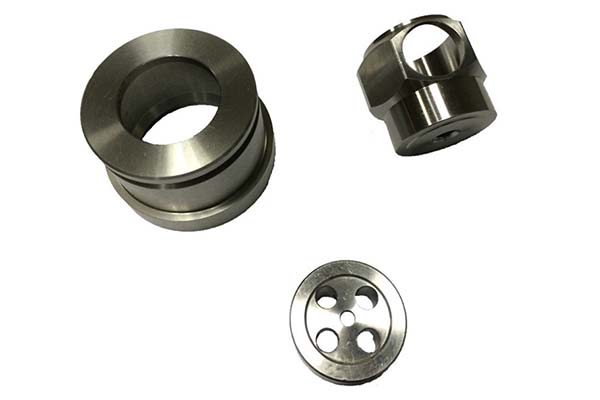
If you follow metal manufacturing, you have probably heard about semi-solid die casting. It sounds like a technical buzzword, but it represents a real breakthrough. This process sits between traditional casting and forging—taking the best from both. It uses metal in a semi-solid state (part liquid, part solid) to create parts that are stronger, denser, and more reliable than conventional castings.
Key takeaways
- Semi-solid die casting (SSDC) is a metal-forming process that works with metal in a mixed state—partially solid, partially liquid.
- SSDC splits into two primary methods: rheocasting and thixocasting. Each suits different production needs.
- The benefits of SSDC go far beyond the process itself. They show up in the final parts.
- SSDC is not experimental. It is in production right now across multiple industries.
What Exactly Is Semi-Solid Die Casting?
Semi-solid die casting (SSDC) is a metal-forming process that works with metal in a mixed state—partially solid, partially liquid. Unlike conventional die casting (which uses fully molten metal) or forging (which shapes solid metal), SSDC uses a slurry with 50–90% solid fraction.
The Basic Concept
Imagine a sponge filled with water. The sponge gives structure; the water provides flow. That is similar to what happens in SSDC. Solid metal particles (the sponge) float in liquid metal (the water). When you apply pressure, the whole mixture flows like a thick fluid but maintains structural stability.
The Key Scientific Principle
The magic of SSDC lies in microstructure. Conventional castings form dendritic structures—branched, tree-like crystals that grow as metal cools. These branches create weak points and trap gas.
SSDC creates spherical structures—round, uniform particles suspended in liquid. This difference changes everything.
| Microstructure Feature | Conventional Casting | Semi-Solid Die Casting |
|---|---|---|
| Grain shape | Dendritic (branched) | Spherical (round) |
| Flow behavior | Like water (turbulent) | Like toothpaste (smooth) |
| Shrinkage | High (2–3%) | Low (0.5–1%) |
| Gas entrapment | Common | Rare |
| Strength | Baseline | 15–30% higher |
How Do You Create the Semi-Solid State?
Three main methods produce the required spherical microstructure:
Mechanical stirring: A rotating mixer stirs the metal as it cools, breaking dendrites into spheres.
Electromagnetic stirring: Magnetic fields create currents in the molten metal, achieving the same result without contact.
Temperature control: Special cooling rates and alloy compositions can produce spherical structures naturally.
What Are the Two Main Types of Semi-Solid Die Casting?
SSDC splits into two primary methods: rheocasting and thixocasting. Each suits different production needs.
Rheocasting: Direct from Liquid
In rheocasting, you start with molten metal, cool it to the semi-solid range while stirring, then inject the slurry directly into the mold.
The workflow:
- Melt metal in a furnace
- Cool to semi-solid temperature while stirring
- Inject slurry into the die casting machine
- Form the part
- Eject and trim
Advantages:
- Continuous process (no stopping)
- Lower energy use (no reheating)
- Faster cycles (30–60 seconds per part)
Limitations:
- Slurry must be used within 30 minutes
- Requires equipment at the casting machine
- Less flexible for small batches
Best for: High-volume production of standard parts like automotive wheels or EV battery housings.
Thixocasting: Working from Billets
Thixocasting starts with pre-made billets—solid bars with the right spherical microstructure. You store them until needed, then reheat them to the semi-solid state and cast.
The workflow:
- Produce billets with spherical structure (can be done off-site)
- Store billets at room temperature
- Cut billet to required size
- Reheat to semi-solid state using induction
- Inject into mold
- Form the part
Advantages:
- Billets last 6–12 months in storage
- Quality can be inspected before use
- Flexible scheduling
- Ideal for complex parts
Limitations:
- Extra energy for reheating
- Longer cycles (45–90 seconds)
- Higher cost per kg for billets
Best for: Complex, high-value parts like aerospace brackets or medical device components.
Which Method Should You Choose?
| Factor | Choose Rheocasting | Choose Thixocasting |
|---|---|---|
| Volume | High (50,000+ parts/year) | Low to medium (1,000–50,000) |
| Part complexity | Moderate | High |
| Schedule flexibility | Less important | Critical |
| Budget for equipment | Can invest in slurry preparation | Prefer lower equipment cost |
How Does Semi-Solid Die Casting Improve Part Quality?
The benefits of SSDC go far beyond the process itself. They show up in the final parts.
Superior Density and Strength
Density reaches 99.5% or higher—virtually no porosity. Compare that to conventional casting at 97–98%. For pressure-tight components like hydraulic valves, this is the difference between working and leaking.
Strength jumps significantly. Aluminum parts that normally achieve 220MPa tensile strength reach 250–350MPa with SSDC. Elongation (the ability to stretch before breaking) improves by 50–100%.
Real-world data: A manufacturer of automotive control arms switched from conventional casting to SSDC. Tensile strength went from 210MPa to 285MPa (36% increase). Fatigue life doubled. And scrap dropped from 12% to 3%.
Dramatically Lower Defect Rates
Conventional die casting accepts 8–15% scrap as normal. Pores, cold shuts, shrinkage—these defects cost money.
SSDC cuts scrap to 2–5%. For a mid-sized run of 100,000 parts, that saves 6,000–10,000 good parts that would have been scrap. At $10 per part, that is $60,000–100,000 saved annually.
Longer Mold Life
SSDC uses lower temperatures. Aluminum casts at 600–650°C instead of 680–720°C. That means less thermal shock to the mold.
Molds last 30–50% longer—from 50,000 shots to 75,000+ shots. For a $100,000 mold, that is $30,000–50,000 in savings over its life.
Better Material Utilization
Conventional casting needs risers—extra metal to feed shrinkage. SSDC’s low shrinkage (0.5–1%) eliminates most risers.
Material utilization goes from 70–80% to 90–95%. For expensive alloys, that $2–5 per kg saving adds up fast.
Heat Treatment and Welding Work
Conventional castings often hide porosity. When you heat treat or weld them, those pores expand and cause cracking.
SSDC parts have no hidden defects. You can:
- Apply T6 heat treatment for maximum strength
- Weld components together
- Machine to tight tolerances without surprises
Case study: An aerospace supplier needed welded brackets. Conventional castings failed weld tests 30% of the time. SSDC parts passed 98% of the time—eliminating rework and delays.
Where Is Semi-Solid Die Casting Used Today?
SSDC is not experimental. It is in production right now across multiple industries.
Automotive: Lighter, Stronger, Safer
Automotive leads SSDC adoption, especially for electric vehicles.
Applications:
- EV battery housings: Thin walls (1.5–2mm) with cooling channels, pressure-tight, lightweight
- Steering knuckles: High strength, fatigue resistance, complex geometry
- Wheels: Lightweight, excellent surface finish, consistent quality
- Suspension components: Replace welded assemblies with single castings
Real example: Tesla uses SSDC for the rear subframe of the Model Y. The part replaces 70 stamped and welded components with just 2 castings. Weight drops by 18kg. Production time plummets. And the structure is stronger.
Aerospace: Where Failure Is Not an Option
Aerospace demands perfection. SSDC delivers.
Applications:
- Engine brackets: High-temperature alloys, complex shapes, zero defect tolerance
- Structural parts: Maximum strength-to-weight ratio
- Landing gear components: Fatigue resistance, reliability
Real example: Boeing uses SSDC magnesium brackets in the 787 Dreamliner. The weight savings reduce fuel consumption by 3%. The parts pass 10,000-cycle fatigue tests without failure.
Medical Devices: Precision and Biocompatibility
Medical applications need consistent quality and the right material properties.
Applications:
- Surgical instrument handles: Ergonomic shapes, sterile compatibility
- Imaging equipment frames: Precision fit, dimensional stability
- Prosthetic components: Lightweight, strong, biocompatible
Real example: Medtronic uses SSDC for surgical tool shafts. Tolerances hold at ±0.05mm. Every part performs identically—critical in sterile environments.
Consumer Electronics: Thin, Strong, Beautiful
Electronics manufacturers love SSDC for its ability to produce thin walls with good surfaces.
Applications:
- Laptop frames: 1–2mm walls, stiff, lightweight
- Smartphone middle frames: Complex cutouts, threads, thin sections
- Heat sinks: Maximum surface area, good thermal conductivity
Real example: Apple uses SSDC for MacBook frames. The parts are 12% lighter than conventional castings, yet stiffer. Surface finish hits Ra 1.6–3.2μm, reducing post-processing.
What Are the Limitations of Semi-Solid Die Casting?
No process is perfect. SSDC has constraints you should know.
Higher Equipment Costs
SSDC lines cost more. A rheocasting setup runs $200,000–500,000 versus $100,000–250,000 for conventional. Thixocasting needs billet production equipment or suppliers.
Payback: For high volume (50,000+ parts/year), scrap savings and material efficiency pay back the difference in 1–2 years. For lower volumes, thixocasting with purchased billets makes more sense.
Limited Material Range
SSDC works best with:
- Aluminum alloys (most common)
- Magnesium alloys (growing for lightweighting)
- Zinc alloys (small, high-volume parts)
- Copper alloys (specialty applications)
It does not work well with high-melting-point metals like steel or titanium. The temperatures needed to reach a semi-solid state are impractical.
Process Complexity
SSDC requires more expertise than conventional casting. Operators need to understand:
- Slurry preparation and quality
- Temperature control within narrow ranges
- Injection parameters for non-Newtonian fluids
This means more training and more skilled staff.
How Do You Know If SSDC Is Right for Your Part?
Use this framework to evaluate whether SSDC makes sense for your project.
Consider SSDC If:
Your part needs high strength: If conventional casting is marginal on strength, SSDC gives you a safety margin.
Porosity is unacceptable: For pressure-tight parts or components that will be heat treated or welded, SSDC is the answer.
You want to reduce weight: SSDC allows thinner walls and more efficient designs without sacrificing strength.
Scrap rates are too high: If you are scrapping 10%+ of parts, SSDC’s 2–5% scrap rate will pay for itself.
You are consolidating parts: Like the Tesla example, SSDC can replace multiple components with one casting.
Stick with Conventional Casting If:
Volume is low: Under 10,000 parts/year, the equipment cost is hard to justify.
Material is steel or titanium: SSDC won’t work.
Simple parts with low requirements: If your current process works fine, you may not need the upgrade.
Budget is tight: Conventional casting has lower upfront costs.
How to write a spec that gets priced correctly
A drawing is a contract. If it leaves a number open, the shop fills that number in with its own default. The default is rarely the one you had in mind. Put these five lines on every RFQ and most of the back-and-forth disappears before it starts.
- 3D model with the parting line marked
- Alloy grade and the standard it meets
- Wall thickness and draft on every face
- Machining allowance on the faces that will be cut
- Pressure tightness or porosity class
The point is not paperwork. Each line removes a decision the shop would otherwise make for you. A complete RFQ comes back priced. An incomplete one comes back guessed.
What actually drives the price
Buyers usually push on material because it is the line they can see. In practice the material is rarely the biggest number on a quote. These five lines decide most of it:
- die steel and cavity count
- part weight and wall section
- draft and slide count
- porosity requirement
- machining allowance
Ask for the quote split by line. A supplier who cannot break it down is guessing, and you will pay for the guess. The line you can usually renegotiate is the tolerance band, not the raw material.
Problems you will meet, and the fix
Every process has a failure mode it prefers. The same four show up again and again on this kind of work, and none of them are mysteries once you know what to look for.
- Cold shuts where two flow fronts meet
- Porosity that shows up only after machining
- Soldering on a hot spot in the die
- Shrinkage voids in a heavy section
Catch the fault on the first part, not the hundredth. A first-article check costs an hour. A bad batch costs the whole order. Write the check into the purchase order so nobody has to remember it.
What to check on the first article
The first article is the cheapest inspection you will ever buy. Use it properly and the rest of the run becomes boring, which is exactly what you want.
- Every dimension on the drawing, with the measured value written beside it.
- The material certificate, matched to the heat or lot number on the parts.
- The finish against the sample you approved, under the same light.
- Fit against the mating part, assembled rather than measured.
- Packaging, because parts that arrive damaged were never in tolerance.
Check in this order: datums, then mating features, then cosmetic faces. If the datums are wrong, every number after them is noise. Keep the report on file. When a problem shows up in month six, that document is the only thing that tells you what changed.
FAQ About Semi-Solid Die Casting
Is semi-solid die casting the same as thixomolding?
Similar but different. Thixomolding is a specific process for magnesium alloys that combines plastic injection molding principles with semi-solid metal forming. It is a type of SSDC but limited to magnesium. SSDC covers aluminum, zinc, and other alloys as well.
Can SSDC parts be anodized or plated?
Yes—better than conventional castings. The dense surface has no porosity to trap chemicals. Anodizing produces uniform colors. Plating adheres without blistering.
How thin can SSDC walls go?
With proper design, 1–2mm walls are achievable. Some applications reach 0.8mm in magnesium. The smooth flow of semi-solid slurry fills thin sections without the turbulence that causes defects in conventional casting.
Does SSDC eliminate all porosity?
It eliminates gas porosity almost completely (over 90% reduction). Shrinkage porosity is also greatly reduced but can still occur in poorly designed parts. Proper gating and feeding still matter.
What is the typical cycle time?
Rheocasting: 30–60 seconds per part. Thixocasting: 45–90 seconds. Compare to conventional casting at 30–90 seconds—SSDC is slightly slower but produces better quality.
Is SSDC environmentally better?
Yes, for several reasons:
- Lower scrap means less wasted material
- Higher material utilization (90–95% vs. 70–80%)
- Lower casting temperatures save energy
- Longer mold life means less tooling waste
- Lightweight parts reduce fuel consumption in vehicles
Semi-solid die casting represents a genuine advance in metal forming. By working with metal in a mixed solid-liquid state, it achieves what conventional casting cannot: near-perfect density, significantly higher strength, and minimal defects. The spherical microstructure that makes this possible eliminates porosity, improves mechanical properties, and enables heat treatment and welding that would ruin conventional castings.
Two main methods serve different needs: rheocasting for high-volume continuous production, and thixocasting for complex parts with flexible scheduling. Both deliver parts that outperform conventional castings in every measurable way.
Industries from automotive to aerospace to medical devices are already adopting SSDC for critical components. Tesla cuts 70 parts down to 2. Boeing saves fuel with lighter brackets. Medtronic ensures surgical tools perform identically every time.
Yes, SSDC costs more upfront and requires more expertise. But for parts that need to be stronger, lighter, and more reliable, it is worth the investment. The question is not whether SSDC works—it does. The question is whether your parts need what it offers.
Our solution for Semi-Solid Die Casting
YiguProto runs die casting in house, from a single prototype to a production batch. We quote the process, the material and the finish as separate lines, so you can see where the money goes instead of arguing with one number.
Send a STEP file or a drawing and you get a DFM report in one to two business days. It flags the features that add cost and the features that will not hold tolerance on the process you picked.
Every order ships with an inspection report on the features you call out. If a part misses, we make it again. Ready to price a part? Start with a free quote and DFM review, or read more about our die casting. You can also talk to an engineer before you commit to a drawing.
FAQ about Semi-Solid Die Casting
How long does a first article take?
Usually a few business days once the drawing is frozen, and longer if tooling is involved. The date we give you is the date we confirm in writing, not the date we hope for.
What files do you need in order to quote?
A STEP file plus a PDF drawing that carries the same revision letter. The model carries the geometry and the drawing carries the intent. When the two disagree, the shop picks one, and it is never the one you meant.
What happens if a part is out of specification?
We measure it against the same drawing you approved and, if it misses, we make it again. What matters is that the report exists, because a disagreement without data is just an opinion.
How do I compare two quotes fairly?
Match the scope first: same drawing, same material, same finish, same inspection. Then read the exclusions. Freight, tooling and certificates are the usual gaps, and a low number with three gaps is not a low number.
What is the lead time for Semi-Solid Die Casting?
Expect 20 to 30 business days including die build. Tooling, material stock and the finishing queue all move that number, so we confirm the date in writing before the run starts rather than after.
What material should I specify?
Specify by standard, not by trade name. A trade name can change under you between two orders; a standard number cannot. Then add the one property that actually decides the part, whether that is strength, heat resistance or chemical exposure.
The short version
Semi-Solid Die Casting rewards the buyer who reads the data sheet and the drawing together. Pick the option for the property that matters, not for the price per kilo.
Tighten only what mates. Test a sample before the run. Then let the process do the rest.