
3D Printing
Why Is 3D Printing PP a Game-Changer?
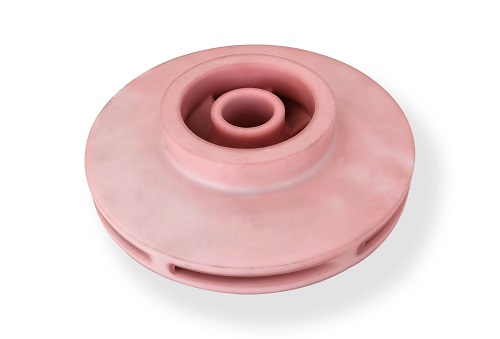
Polypropylene (PP) is transforming 3D printing. This guide shows you why. PP is a versatile thermoplastic known for its strength, chemical resistance, and flexibility. It’s perfect for making lightweight yet durable parts. We’ll explore its unique properties, compare it to other materials, and show its real-world uses. You’ll learn how PP enables complex designs, speeds up development, and cuts costs.
Key takeaways
- PP stands out due to a special mix of properties that other common 3D printing plastics lack.
- Choosing a material is about trade-offs. Here’s how PP stacks up against common alternatives.
- PP has a reputation for being tricky, but with the right setup, it prints well.
- 3D printing PP isn’t just about making old things in a new way. It enables designs that are impossible with injection molding.
What Makes PP Unique for 3D Printing?
PP stands out due to a special mix of properties that other common 3D printing plastics lack.
- Excellent Chemical Resistance: PP resists a wide range of acids, bases, and solvents. This makes it ideal for parts in labs, chemical handling, and automotive fluids.
- Outstanding Fatigue Resistance: PP can be bent back and forth thousands of times without breaking. This is called living hinge behavior. It’s perfect for parts with integrated clips, latches, or thin, flexible sections.
- Low Density and Good Strength: PP is very lightweight (density ~0.9 g/cm³) but still strong. It offers a great strength-to-weight ratio for parts where saving weight is key.
- Good Impact Strength: It stays tough and flexible even at low temperatures, resisting shattering on impact better than brittle plastics like PLA.
How Does PP Compare to Other Filaments?
Choosing a material is about trade-offs. Here’s how PP stacks up against common alternatives.
| Property | Polypropylene (PP) | PLA | ABS | PETG | Nylon (PA) |
|---|---|---|---|---|---|
| Strength | Good | Good | Very Good | Very Good | Excellent |
| Flexibility | Excellent | Poor (Brittle) | Fair | Fair | Good |
| Chemical Resistance | Excellent | Poor | Good | Good | Good |
| Heat Resistance | Moderate (~100°C) | Poor (~50°C) | Good (~100°C) | Good (~80°C) | Excellent |
| Print Difficulty | Moderate | Easy | Moderate | Easy | Difficult |
| Key Advantage | Fatigue life, chem. resist | Ease of use, look | Strength, post-process | Strength, ease | Strength, wear |
The Takeaway: PP doesn’t have the highest strength or heat resistance. But its combination of chemical resistance, flexibility, and fatigue life is unmatched. It’s the specialist you choose when those specific traits solve your problem.
Where is 3D Printed PP Used?
Solving Problems in Manufacturing
On the factory floor, PP is a star for custom jigs, fixtures, and tooling. Its low friction and wear resistance make it great for parts that guide other components.
Case Study: An auto parts assembler needed a custom guide to position wiring harnesses. They first used a 3D printed PLA guide, but it snapped after a week. They switched to PP. The new guide was slightly flexible, survived drops, and lasted for months of daily use. The low cost and speed of 3D printing meant they could make a new, improved design in a day.
Innovating in Medical and Consumer Goods
PP is biocompatible and used in many medical devices. 3D printing allows for customization. Think of personalized prosthetics liners or ergonomic tool handles. Its living hinge property is perfect for integrated closures on containers or cases.
Example: A company designs custom protective cases for field equipment. Using PP, they can print the case body and a thin, integrated hinge in one piece. This hinge can open and close thousands of times, creating a more reliable product than one with a separate metal hinge.
Creating Durable Functional Prototypes
When a prototype needs to act like the final product, PP is ideal. If the end product will be injection-molded PP, a 3D printed PP prototype gives the most accurate feel. You can test snap-fits, flexibility, and chemical exposure with confidence.
How Do You Successfully Print with PP?
PP has a reputation for being tricky, but with the right setup, it prints well.
- Printer Setup: You need a printer with a heated bed. PP warps as it cools. A bed temperature of 80-100°C is crucial to keep the first layer stuck and flat. An enclosure helps maintain a consistent, warm ambient temperature.
- Build Surface: PP sticks well to… more PP. The best surface is often a sheet of pure polypropylene or a PEI sheet with a layer of PP tape. Glue sticks or hairspray on glass usually fails.
- Print Settings: Nozzle Temperature: 220-250°C. Bed Temperature: 80-100°C (as high as your bed allows). Print Speed: Moderate, around 40-60 mm/s. Cooling Fan: Keep it off for at least the first few layers, and use very minimally after that. PP needs to cool slowly to prevent warping and ensure good layer adhesion.
- Filament Handling: PP absorbs little moisture, but storing it in a dry place is still good practice.
How Does PP Enable New Designs?
3D printing PP isn’t just about making old things in a new way. It enables designs that are impossible with injection molding.
- Complex Internal Geometries: You can print parts with internal channels, lattices, and voids that a mold could never form or eject. This is useful for lightweight structures or fluid flow parts.
- Part Consolidation: Multiple components can be designed and printed as a single, complex part. This reduces assembly time, cuts the number of parts, and can improve reliability.
- Mass Customization: The “digital mold” means every print can be different at no extra tooling cost. This is revolutionary for custom-fit medical aids, sports equipment, and consumer products.
What About Cost and Sustainability?
The Economic Case
For prototyping and low-volume production, 3D printing PP is almost always cheaper than injection molding. You avoid the high upfront cost of a steel mold (which can be tens of thousands of dollars). For production runs in the hundreds or low thousands, 3D printing can still be cost-competitive when you factor in design flexibility and zero inventory risk.
The Environmental Edge
PP is a recyclable thermoplastic (Resin ID Code 5). Failed prints and end-of-life parts can be ground and potentially reprocessed. 3D printing itself is an additive process, generating far less waste than subtractive methods like machining. When you print on-demand, you also eliminate the waste from overproduction and unsold inventory.
How to write a spec that gets priced correctly
A drawing is a contract. If it leaves a number open, the shop fills that number in with its own default. The default is rarely the one you had in mind. Put these five lines on every RFQ and most of the back-and-forth disappears before it starts.
- File format and units, with the model exported in millimetres
- Process and material grade, not a trade name
- Critical features and the tolerance each one needs
- Surface finish and the faces it applies to
- Quantity for the pilot build and for the year
The point is not paperwork. Each line removes a decision the shop would otherwise make for you. A complete RFQ comes back priced. An incomplete one comes back guessed.
What actually drives the price
Buyers usually push on material because it is the line they can see. In practice the material is rarely the biggest number on a quote. These five lines decide most of it:
- build volume and orientation
- layer height and support structure
- material grade and colour
- post-processing and hand finishing
- quantity per build plate
Ask for the quote split by line. A supplier who cannot break it down is guessing, and you will pay for the guess. The line you can usually renegotiate is the tolerance band, not the raw material.
Problems you will meet, and the fix
Every process has a failure mode it prefers. The same four show up again and again on this kind of work, and none of them are mysteries once you know what to look for.
- Warping on long flat faces where the part lifts off the plate
- Layer lines showing through a cosmetic surface
- Support scars on a mating face nobody flagged
- Dimensional drift on thin walls after cooling
Catch the fault on the first part, not the hundredth. A first-article check costs an hour. A bad batch costs the whole order. Write the check into the purchase order so nobody has to remember it.
What to check on the first article
The first article is the cheapest inspection you will ever buy. Use it properly and the rest of the run becomes boring, which is exactly what you want.
- Every dimension on the drawing, with the measured value written beside it.
- The material certificate, matched to the heat or lot number on the parts.
- The finish against the sample you approved, under the same light.
- Fit against the mating part, assembled rather than measured.
- Packaging, because parts that arrive damaged were never in tolerance.
Check in this order: datums, then mating features, then cosmetic faces. If the datums are wrong, every number after them is noise. Keep the report on file. When a problem shows up in month six, that document is the only thing that tells you what changed.
How to compare two quotes fairly
Two numbers are not comparable unless the scope matches. Line them up before you decide, because a low number with three gaps is not a low number.
Same drawing, same material, same finish, same inspection. Anything else is a different job wearing the same part number. Then look at what each quote leaves out. Freight, packaging, certificates and tooling are the usual gaps.
Ask each supplier to state their assumptions in writing. The one who does is usually the one who has run the process before.
Scaling from one part to a batch
The first part teaches you the process. The hundredth teaches you the process cost.
Watch three things as volume grows: setup amortisation, tool wear, and how much hand work the finish still needs. If the unit price barely moves between ten and a hundred, the cost sits in material or in hand work, not in setup. Ask which, because only one of them is negotiable.
Lead time behaves the same way. A one-off is scheduled around other jobs. A repeat order is scheduled around your forecast. Give the shop a forecast and the lead time gets shorter, not longer.
How to read a supplier's quote
A quote is a short document with a long shadow. Four things in it decide whether the job runs smoothly, and only one of them is the price.
- The scope line. It should name the process, the material and the finish, not just the part.
- The tolerance basis. General tolerance or the drawing, and which standard it follows.
- The exclusions. Tooling, freight, certificates and inspection are the usual omissions.
- The validity date. Material prices move, and an open-ended quote is a promise nobody can keep.
Read the exclusions before you read the total. A quote that leaves out tooling is not cheaper. It is a quote for a different job.
What to send with the first order
The first order sets the pattern for every order after it. Send a complete package once and the shop files it, and the second order takes a fraction of the time.
- A STEP or native model plus a PDF drawing carrying the same revision letter.
- The material callout by standard number, not by trade name.
- The finish and the exact faces it applies to.
- Any test the part must pass: fit, seal, drop, salt spray, dielectric.
- A contact who can answer a question inside one working day.
Then write down what was agreed. An email that confirms the material, the finish and the date is worth more than a longer purchase order that leaves them open.
When this is the wrong choice
A good supplier tells you when the process does not fit. These are the cases where we say so.
- The volume is so low that setup costs more than the parts are worth.
- The tolerance is tighter than the process can hold without a second operation.
- The geometry cannot be made without a tool feature that will not pay back.
- The material you need is not available in the form the process requires.
- The schedule is shorter than the tooling or setup time, and nobody has said so yet.
None of these are refusals. They are reasons to look at a different route, and the earlier that conversation happens the cheaper it is. The most expensive mistake in manufacturing is a process chosen before the question was understood.
Planning the ramp from prototype to production
The gap between one good part and a thousand identical ones is a plan, not a machine. Three decisions close it.
First, freeze the design. Every change after tooling starts is a re-cut, and re-cuts are where schedules go. Second, decide the inspection level. A prototype is checked by eye; a production part is checked against a report. Third, agree the change process in writing, including who pays for it.
Write the ramp down as dates and owners, not as intentions. A ramp plan with three names and three dates is worth more than a page of good intentions.
What Are the Current Limits?
PP is powerful, but not perfect.
- Heat Resistance: Its Heat Deflection Temperature (HDT) is lower than materials like ABS or Nylon. It’s not suitable for parts under continuous mechanical load in hot environments (e.g., inside a car on a summer day).
- UV Degradation: Like many plastics, PP can degrade in direct sunlight unless it contains UV stabilizers. Check your filament specs for outdoor use.
- Surface Finish: FDM-printed PP can have a waxy, semi-gloss finish and may show layer lines more than some materials. For a smooth look, post-processing like vapor smoothing (with specific solvents) may be needed.
3D printing with Polypropylene is more than a new material option. It’s a strategic enabler. It brings the proven performance of a major industrial plastic into the agile world of additive manufacturing. For engineers, it solves specific problems of chemical exposure, repeated flexing, and lightweight design. For businesses, it offers a path to faster innovation, lower upfront costs, and mass customization.
The key is to match PP’s unique strengths to the right applications. Don’t use it for high-temp engine parts. Do use it for chemical-resistant fixtures, living hinges, and durable prototypes. By doing so, you unlock a powerful tool that is genuinely changing how we design and make things.
Our solution for 3D Printing PP
YiguProto runs 3D printing in house, from a single prototype to a production batch. We quote the process, the material and the finish as separate lines, so you can see where the money goes instead of arguing with one number.
Send a STEP file or a drawing and you get a DFM report in one to two business days. It flags the features that add cost and the features that will not hold tolerance on the process you picked.
Every order ships with an inspection report on the features you call out. If a part misses, we make it again. Ready to price a part? Start with a free quote and DFM review, or read more about our 3D printing. You can also talk to an engineer before you commit to a drawing.
FAQ about 3D Printing PP
What material should I specify?
Specify by standard, not by trade name. A trade name can change under you between two orders; a standard number cannot. Then add the one property that actually decides the part, whether that is strength, heat resistance or chemical exposure.
How do I compare two quotes fairly?
Match the scope first: same drawing, same material, same finish, same inspection. Then read the exclusions. Freight, tooling and certificates are the usual gaps, and a low number with three gaps is not a low number.
Does the process work for prototypes as well as production?
Yes, and that is usually the point. Running the prototype on the production process removes a whole class of surprises, because the part you test is made the same way as the part you sell.
What files do you need in order to quote?
A STEP file plus a PDF drawing that carries the same revision letter. The model carries the geometry and the drawing carries the intent. When the two disagree, the shop picks one, and it is never the one you meant.
What is the lead time for 3D Printing PP?
Expect 2 to 5 business days for a first batch. Tooling, material stock and the finishing queue all move that number, so we confirm the date in writing before the run starts rather than after.
Is there a minimum order quantity?
No hard minimum. One part is fine. What changes with volume is which costs dominate, so a single unit is priced mostly on setup and a thousand units are priced mostly on cycle time and material.
The short version
3D Printing PP rewards the buyer who reads the data sheet and the drawing together. Pick the option for the property that matters, not for the price per kilo.
Tighten only what mates. Test a sample before the run. Then let the process do the rest.