
Metal Materials
AISI M2 High Speed Steel: A Guide to Properties, Uses & Performance
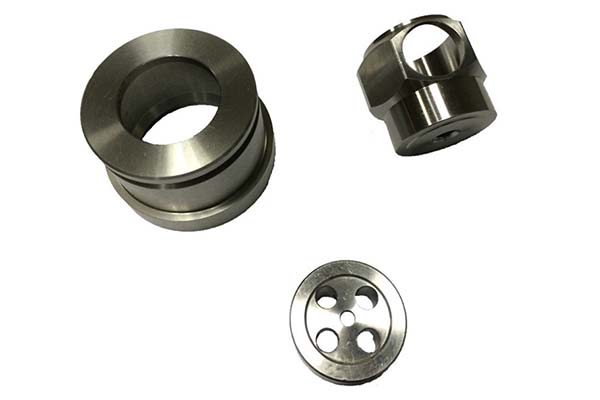
If you work with high-speed cutting tools—such as milling cutters, lathe tools, or aerospace machining tools—you need a material that can handle fast cutting speeds without dulling. AISI M2 high speed steel is the industry standard for these demanding applications.
What Makes AISI M2 the Standard for High-Speed Cutting?
AISI M2 is a molybdenum-tungsten high-speed steel. Its performance comes from a carefully balanced combination of alloying elements that, after proper heat treatment, create a material capable of withstanding the extreme heat and friction of high-speed metal cutting. It is often described as the “workhorse” of the high-speed steel family because of its versatility.
The Chemistry Behind Red Hardness
The alloying elements in AISI M2 work together to deliver red hardness, wear resistance, and toughness. The table below shows a typical composition and the role of each element.
| Element | Typical Content | Role in AISI M2 Performance |
|---|---|---|
| Carbon (C) | 0.80 – 0.90% | Forms hard carbides with tungsten and molybdenum to boost wear resistance. |
| Tungsten (W) | 5.50 – 6.75% | A key element for red hardness. Forms hard carbides that retain strength up to 600°C. |
| Molybdenum (Mo) | 4.50 – 5.50% | Works with tungsten to boost red hardness and wear resistance while reducing brittleness. |
| Vanadium (V) | 1.75 – 2.25% | Refines grain structure and forms hard vanadium carbides, enhancing wear resistance and toughness. |
| Chromium (Cr) | 3.80 – 4.50% | Enhances hardenability and oxidation resistance, preventing rust at high cutting temperatures. |
| Cobalt (Co) | ≤ 0.60% | Present in trace amounts in standard M2. Higher cobalt variants (like M35) offer more red hardness. |
Key Mechanical and Physical Properties
AISI M2’s mechanical traits are tailored for high-speed cutting. The values below are typical for the hardened and tempered condition.
| Property | Typical Value | Why It Matters |
|---|---|---|
| Hardness | 60 – 65 HRC | Hard enough to cut hard metals like steel and stainless steel without dulling. |
| Tensile Strength | ≥ 2,600 MPa | Withstands high cutting forces without breaking. |
| Red Hardness | Retains 90% hardness at 600°C | The key property. Tools stay sharp even when cutting at high speeds generates intense heat. |
| Wear Resistance | 3-4 times better than standard tool steels | Tools last significantly longer between sharpening. |
| Impact Toughness | 15 – 25 J | Moderate toughness—better than carbides but less than shock-resistant steels. |
| Thermal Conductivity | ~25 W/(m·K) | Lower than structural steels. Critical for managing heat during high-speed cutting. |
A real-world example: A U.S. CNC shop used standard high-speed steel milling cutters to machine steel automotive parts. The cutters dulled after 300 parts, requiring sharpening at $100 per sharpening, with 10 sharpenings per month. After switching to AISI M2 cutters coated with TiN, the cutters lasted 900 parts—3 times longer. Monthly sharpening costs dropped from $1,000 to $333, saving $8,004 per year. Machining time also fell by 15% due to fewer tool changes.
Where Is AISI M2 Used?
AISI M2’s red hardness and wear resistance make it the go-to material for high-speed cutting tools across multiple industries. It is particularly valued for applications where tools must maintain sharpness during long production runs.
Metalworking and General Machining
- Lathe Tools: Handles cutting speeds up to 150 m/min for steel. Stays sharp 2-3 times longer than standard tool steels.
- Milling Cutters: Used in high-speed CNC machines for automotive and aerospace parts. Maintains precision even during long production runs.
- Reamers and Broaches: Creates precise holes and slots in hard metals like titanium and stainless steel. Retains accuracy for hundreds of cuts.
Automotive Industry
- Stamping Dies: A European automotive supplier used AISI D2 dies for high-speed stamping of thin steel sheets. The dies wore out after 50,000 cycles, costing $5,000 per die and 2 days of downtime. Switching to AISI M2 dies extended life to 120,000 cycles—2.4 times longer. Annual die costs dropped from $50,000 to $20,833, saving $29,167 per year.
- Punches: High-speed punches for creating holes in engine brackets and other components stay sharp during high-volume production.
- Hot Forging Dies: For small automotive parts like bolts, M2 retains strength at high temperatures.
Aerospace and Precision Engineering
- High-Precision Cutting Tools: An aerospace manufacturer used carbide tools to machine titanium components. The tools were expensive ($500 each) and brittle, cracking after 150 parts. Switching to AISI M2 tools coated with DLC extended life to 400 parts—2.7 times longer—with no cracking. Annual tool costs dropped from $17,333 to $6,500, saving $10,833 per year.
- Specialized Machining Tools: Custom tools for complex aerospace parts like engine turbines maintain sharpness during high-speed, high-temperature cutting.
How Is AISI M2 Manufactured?
Producing AISI M2 requires precise control to preserve its red hardness and wear resistance. Heat treatment is the most critical step.
| Stage | Common Method | Why It Matters |
|---|---|---|
| Steelmaking | Electric Arc Furnace (EAF) | Allows precise addition of tungsten, molybdenum, chromium, and vanadium to meet M2’s exact composition. |
| Forming | Hot rolling (1100-1150°C) or forging | Hot rolling creates bars and rods. Forging aligns the grain structure for complex tools like broaches. |
| Annealing | Heat to 850-900°C, slow cool | Softens the steel to 200-250 HBW for easier machining before final hardening. |
| Austenitizing | Heat to 1190-1230°C | Converts the structure to austenite. Precise temperature control is critical for achieving red hardness. |
| Quenching | Oil or air quench | Creates a hard, martensitic structure. |
| Tempering | 540-580°C, done twice | Reduces brittleness and locks in red hardness. Double tempering is standard for M2. |
| Cryogenic Treatment | Optional, cool to -80°C to -196°C | Eliminates retained austenite, boosting hardness and wear resistance by 10-15%. |
| Coating | TiN, TiCN, or DLC coating | Adds a hard surface layer that can extend tool life by 30-50% in high-volume cutting applications. |
How Does AISI M2 Compare to Other Materials?
Choosing the right tool steel means balancing hardness, toughness, red hardness, and cost. This comparison helps clarify where AISI M2 fits.
vs. Other High-Speed Steels
| Property | AISI M2 | AISI T1 (Tungsten) | AISI M35 (Cobalt) | AISI M42 (High Cobalt) |
|---|---|---|---|---|
| Hardness (HRC) | 60 – 65 | 60 – 65 | 62 – 66 | 65 – 69 |
| Red Hardness | Excellent (600°C) | Very Good (580°C) | Very Excellent (620°C) | Excellent (630°C) |
| Wear Resistance | Excellent | Very Good | Very Excellent | Excellent |
| Impact Toughness | Moderate | Moderate | Low | Low |
| Relative Cost | Medium | Medium-High | High | Very High |
| Best For | General high-speed cutting | Traditional high-speed cutting | High-temperature cutting | Extreme wear cutting |
vs. Non-Steel Tool Materials
| Material | Hardness (HRC) | Wear Resistance | Impact Toughness | Relative Cost | Red Hardness |
|---|---|---|---|---|---|
| AISI M2 | 60 – 65 | Excellent | Moderate | Medium | Excellent |
| Tungsten Carbide | 70 – 75 | Very Excellent | Low | High | Very Good |
| Alumina Ceramic | 85 – 90 | Very Excellent | Very Low | High | Excellent |
| Polycrystalline Diamond | 90 – 95 | Excellent | Very Low | Very High | Good |
Key takeaways:
- vs. Carbide: AISI M2 is tougher and less expensive than carbide, making it better for applications where tools may experience shock or vibration. Carbide is harder but more brittle.
- vs. Cobalt High-Speed Steels (M35, M42): M2 is more affordable and has better toughness. Choose M35 or M42 only when cutting extremely hard materials at very high speeds where maximum red hardness is required.
- vs. T1 (Tungsten HSS): M2 offers better wear resistance and is generally less expensive. T1 is an older grade that is still used for some traditional applications.
AISI M2 high speed steel is the industry standard for good reason. Its exceptional red hardness (retaining 90% of hardness at 600°C) and outstanding wear resistance make it the go-to material for cutting tools that must perform at high speeds and over long production runs. While it requires precise heat treatment and is more expensive than standard tool steels, its ability to last 2 to 3 times longer in demanding applications makes it a cost-effective choice. For the vast majority of high-speed machining applications—from automotive stamping dies to aerospace cutting tools—AISI M2 offers the best balance of performance, toughness, and affordability.
FAQ About AISI M2 High Speed Steel
Can AISI M2 be used for cutting non-metallic materials like plastic or wood?
Yes, but it is generally overkill. M2’s red hardness and wear resistance are designed for cutting hard metals. For plastic, wood, or soft materials, less expensive tool steels like AISI O1 or even plain carbon steel are usually sufficient. Save M2 for metal cutting to maximize its value.
Do I need to coat AISI M2 tools?
Coatings are not strictly required, but they are highly recommended for high-volume cutting applications. Titanium nitride (TiN) or diamond-like carbon (DLC) coatings can boost wear resistance by 30-50%, significantly extending tool life and reducing the frequency of sharpening. For many shops, the coating pays for itself in weeks.
Is AISI M2 difficult to machine into custom tools?
In its annealed condition (softened state, 200-250 HBW), AISI M2 is relatively easy to machine using standard carbide tools. After heat treatment (hardened to 60-65 HRC), it becomes very difficult to machine. The standard practice is to machine the tool in the annealed state, then perform heat treatment to achieve final hardness.
What is the difference between AISI M2 and AISI M35?
The main difference is cobalt content. AISI M35 contains approximately 5% cobalt, which increases red hardness and wear resistance at higher temperatures. However, M35 is more expensive and has lower impact toughness than M2. Choose M2 for general high-speed cutting where a balance of performance and cost is needed. Choose M35 for cutting very hard materials or for applications where tools run at the highest speeds and temperatures.
How to write a spec that gets priced correctly
A drawing is a contract. If it leaves a number open, the shop fills that number in with its own default. The default is rarely the one you had in mind. Put these five lines on every RFQ and most of the back-and-forth disappears before it starts.
- Alloy designation and the standard behind it
- Temper or heat treatment condition
- Mechanical properties you actually need
- Mill certificate and traceability requirement
- Finish and the faces it applies to
The point is not paperwork. Each line removes a decision the shop would otherwise make for you. A complete RFQ comes back priced. An incomplete one comes back guessed.
What actually drives the price
Buyers usually push on material because it is the line they can see. In practice the material is rarely the biggest number on a quote. These five lines decide most of it:
- alloy grade and mill availability
- stock size versus finished size
- heat treatment and testing
- machinability
- certification
Ask for the quote split by line. A supplier who cannot break it down is guessing, and you will pay for the guess. The line you can usually renegotiate is the tolerance band, not the raw material.
Problems you will meet, and the fix
Every process has a failure mode it prefers. The same four show up again and again on this kind of work, and none of them are mysteries once you know what to look for.
- Substituting a similar grade without telling anyone
- Hardness that varies across a single bar
- Corrosion in a weld heat-affected zone
- Distortion after heat treatment on a thin part
Catch the fault on the first part, not the hundredth. A first-article check costs an hour. A bad batch costs the whole order. Write the check into the purchase order so nobody has to remember it.
What to check on the first article
The first article is the cheapest inspection you will ever buy. Use it properly and the rest of the run becomes boring, which is exactly what you want.
- Every dimension on the drawing, with the measured value written beside it.
- The material certificate, matched to the heat or lot number on the parts.
- The finish against the sample you approved, under the same light.
- Fit against the mating part, assembled rather than measured.
- Packaging, because parts that arrive damaged were never in tolerance.
Check in this order: datums, then mating features, then cosmetic faces. If the datums are wrong, every number after them is noise. Keep the report on file. When a problem shows up in month six, that document is the only thing that tells you what changed.
How to compare two quotes fairly
Two numbers are not comparable unless the scope matches. Line them up before you decide, because a low number with three gaps is not a low number.
Same drawing, same material, same finish, same inspection. Anything else is a different job wearing the same part number. Then look at what each quote leaves out. Freight, packaging, certificates and tooling are the usual gaps.
Ask each supplier to state their assumptions in writing. The one who does is usually the one who has run the process before.
Scaling from one part to a batch
The first part teaches you the process. The hundredth teaches you the process cost.
Watch three things as volume grows: setup amortisation, tool wear, and how much hand work the finish still needs. If the unit price barely moves between ten and a hundred, the cost sits in material or in hand work, not in setup. Ask which, because only one of them is negotiable.
Lead time behaves the same way. A one-off is scheduled around other jobs. A repeat order is scheduled around your forecast. Give the shop a forecast and the lead time gets shorter, not longer.
How to read a supplier's quote
A quote is a short document with a long shadow. Four things in it decide whether the job runs smoothly, and only one of them is the price.
- The scope line. It should name the process, the material and the finish, not just the part.
- The tolerance basis. General tolerance or the drawing, and which standard it follows.
- The exclusions. Tooling, freight, certificates and inspection are the usual omissions.
- The validity date. Material prices move, and an open-ended quote is a promise nobody can keep.
Read the exclusions before you read the total. A quote that leaves out tooling is not cheaper. It is a quote for a different job.
Our solution for AISI M2 High Speed Steel
YiguProto runs metal sourcing and machining in house, from a single prototype to a production batch. We quote the process, the material and the finish as separate lines, so you can see where the money goes instead of arguing with one number.
Send a STEP file or a drawing and you get a DFM report in one to two business days. It flags the features that add cost and the features that will not hold tolerance on the process you picked.
Every order ships with an inspection report on the features you call out. If a part misses, we make it again. Ready to price a part? Start with a free quote and DFM review, or read more about our metal sourcing and machining. You can also talk to an engineer before you commit to a drawing.
FAQ about AISI M2 High Speed Steel
Can AISI M2 High Speed Steel be made in small quantities?
Yes, and small quantities are where a good supplier earns the next order. Setup dominates the price at low volume, so the cheapest route is usually the one with the fewest operations, not the cheapest material.
How long does a first article take?
Usually a few business days once the drawing is frozen, and longer if tooling is involved. The date we give you is the date we confirm in writing, not the date we hope for.
How much does AISI M2 High Speed Steel cost?
Price comes from five lines: material, machine or tool time, setup, finishing and inspection. The material itself is usually the smallest of them. Send a drawing and we will split the quote so you can see which line is doing the damage.
Is there a minimum order quantity?
No hard minimum. One part is fine. What changes with volume is which costs dominate, so a single unit is priced mostly on setup and a thousand units are priced mostly on cycle time and material.
What is AISI M2 High Speed Steel used for?
AISI M2 High Speed Steel turns up wherever the part has to do a real job at a predictable cost: brackets, housings, fixtures, covers and the fittings that hold them together. The honest test is whether the properties match the load and the environment, not whether the material is fashionable.
What material should I specify?
Specify by standard, not by trade name. A trade name can change under you between two orders; a standard number cannot. Then add the one property that actually decides the part, whether that is strength, heat resistance or chemical exposure.
The short version
AISI M2 High Speed Steel rewards the buyer who reads the data sheet and the drawing together. Pick the option for the property that matters, not for the price per kilo.
Tighten only what mates. Test a sample before the run. Then let the process do the rest.