
Die Casting
What Are Key Differences Between Precision Casting and Die Casting, How to Choose?
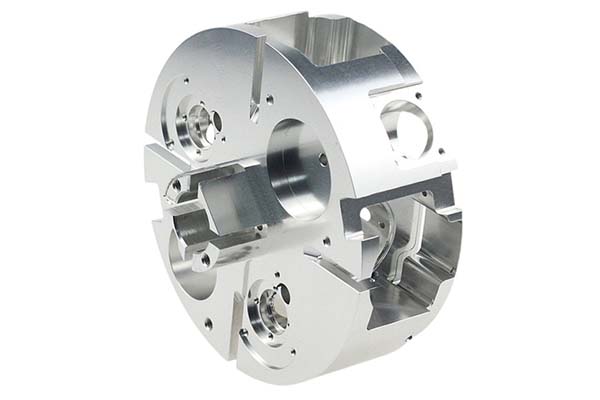
If you need metal parts made, you have likely encountered two common processes: precision casting and die casting. Both produce high-quality components, but they work in completely different ways. Choose the wrong one, and you could face 30–50% higher costs, delayed timelines, or parts that fail in service. So how do you decide?
Key takeaways
- Precision casting (often called investment casting or lost-wax casting) is a method for making complex metal parts with tight tolerances.
- Die casting forces molten metal into a steel mold under high pressure. It is the fastest way to make large numbers of metal parts.
- Precision casting and die casting serve different manufacturing worlds.
What Is Precision Casting?
Precision casting (often called investment casting or lost-wax casting) is a method for making complex metal parts with tight tolerances. It works with almost any metal and requires minimal machining after casting.
How Does Precision Casting Work?
The process follows several steps, each adding to the part’s accuracy:
- Wax pattern creation: Molten wax is injected into a metal die to create a wax copy of your part. For complex parts, multiple wax patterns are assembled onto a central wax “tree.”
- Shell building: The wax tree is dipped into ceramic slurry, then coated with fine sand. This step repeats 5–10 times until a thick ceramic shell forms around the wax.
- Wax removal: The shell goes into a steam autoclave at 120–150°C. The wax melts and drains out, leaving a hollow ceramic mold.
- Shell firing: The mold is fired at 800–1000°C to strengthen the ceramic and remove any wax residue.
- Metal pouring: Molten metal (up to 1600°C for steel) is poured into the hot mold. Gravity fills every detail.
- Shell removal: After cooling, the ceramic shell is broken away, revealing the metal part.
- Cutoff and finishing: Parts are cut from the tree. Gates and risers are removed. Final grinding or polishing completes the job.
What Are the Advantages of Precision Casting?
Exceptional accuracy: Tolerances of ±0.1mm are routine. Surface finish reaches Ra 1.6–3.2μm—often good enough to use as-cast.
Material flexibility: Works with any castable metal: stainless steel, tool steel, titanium, aluminum, bronze, and superalloys. This matters for high-temperature or corrosive applications.
Complex internal features: Can produce hollow parts, undercuts, and intricate passages impossible with other methods.
No size limits: Parts from a few grams to 50kg or more are possible.
Where Is Precision Casting Used?
- Aerospace: Turbine blades (complex cooling passages, high-temperature alloys)
- Medical: Surgical instruments, implant components (titanium, stainless steel)
- Industrial: Pump impellers, valve bodies (corrosion-resistant materials)
- Firearms: Receivers, triggers (complex shapes, tight tolerances)
Real-world example: A manufacturer of industrial pumps needed stainless steel impellers with complex internal flow passages. Precision casting delivered the parts as one piece, eliminating welding and machining. Each impeller cost 40% less than the machined version and lasted twice as long due to better material properties.
What Is Die Casting?
Die casting forces molten metal into a steel mold under high pressure. It is the fastest way to make large numbers of metal parts.
How Does Die Casting Work?
The die casting cycle repeats rapidly:
- Mold preparation: The two-part steel die is sprayed with release agent and heated to 180–250°C (for aluminum).
- Metal melting: Aluminum, zinc, or magnesium alloys are melted in a furnace. Typical temperatures: aluminum 650–720°C, zinc 380–420°C.
- Injection: A hydraulic plunger forces molten metal into the die at 30–150MPa pressure. Fill times are measured in milliseconds.
- Cooling and ejection: Pressure holds for 2–5 seconds while metal solidifies. The die opens, and ejector pins push out the part.
- Trimming: Excess material (flash, runners) is trimmed off in a separate press.
Cycle times run 30–90 seconds for most parts. A single machine can produce 500–2,000 parts per day.
What Are the Advantages of Die Casting?
Speed: No other metal casting process comes close. Simple parts cycle in under a minute.
Low per-part cost at high volume: Tooling is expensive, but when spread over 100,000+ parts, unit costs drop to pennies.
Thin walls possible: Aluminum die castings can have walls as thin as 0.8mm. Magnesium goes even thinner at 0.5mm.
Good surface finish: As-cast surfaces reach Ra 0.8–3.2μm, often ready for painting or plating.
Excellent dimensional consistency: Every part matches the next within ±0.05–0.1mm for small features.
Where Is Die Casting Used?
- Automotive: Engine blocks, transmission cases, EV battery housings
- Consumer electronics: Phone frames, laptop shells, camera bodies
- Appliances: Motor housings, compressor components
- Power tools: Gear cases, motor housings
Case study: An electric vehicle manufacturer needed lightweight battery enclosures for 200,000 cars per year. Die casting produced each housing in under 2 minutes with integrated cooling channels and mounting points. The stamped alternative would have required 12 parts welded together—slower, heavier, and more expensive.
Precision Casting vs. Die Casting: How Do They Compare?
| Comparison Factor | Precision Casting | Die Casting |
|---|---|---|
| Materials | Any castable metal (steel, titanium, superalloys, aluminum, copper) | Limited to low-melting-point non-ferrous alloys (aluminum, zinc, magnesium) |
| Part size range | Grams to 50kg+ | Grams to 30kg typical (larger possible with big machines) |
| Wall thickness | 0.5mm minimum typical | 0.8mm minimum (aluminum); 0.5mm (magnesium) |
| Tolerances | ±0.1–0.2mm typical | ±0.05–0.1mm typical |
| Surface finish | Ra 1.6–6.3μm | Ra 0.8–3.2μm |
| Production volume | Low to medium (100–10,000 parts/year ideal) | High (10,000–1,000,000+ parts/year) |
| Tooling cost | Lower ($5,000–50,000) | Higher ($20,000–200,000+) |
| Per-part cost | Higher ($10–100+ typical) | Lower ($0.50–10 typical) |
| Lead time (first parts) | 4–8 weeks for tooling | 6–12 weeks for complex tooling |
| Cycle time | Hours per batch (shell building, cooling) | Minutes per part |
| Typical defects | Shrinkage, wax pattern distortion | Porosity, cold shuts, flash |
Breaking Down the Key Differences
Materials drive the first decision. If your part needs to be steel, titanium, or any high-temperature alloy, die casting is not an option. It simply cannot handle those melting points. You must use precision casting or another process.
Volume determines economics. Die casting tooling costs 3–5× more than precision casting tooling. But at 50,000+ parts, die casting’s faster cycle time makes each part much cheaper. Below 10,000 parts, precision casting usually wins on total cost.
Complexity means different things to each process. Precision casting excels at internal complexity—hollow passages, deep cavities, undercuts. Die casting excels at external complexity—thin walls, fine details, integrated ribs and bosses.
How to Choose Between Precision Casting and Die Casting?
Use this four-factor framework to make your decision.
Factor 1: What Material Does Your Part Require?
Choose precision casting if:
- You need steel, stainless steel, or tool steel
- Your application requires titanium or superalloys
- Corrosion resistance demands specific high-alloy materials
- Operating temperatures exceed 200°C continuous
Choose die casting if:
- Aluminum, zinc, or magnesium alloys meet your requirements
- Weight reduction is critical (magnesium is 1/3 lighter than aluminum)
- Thermal or electrical conductivity favors aluminum
Factor 2: How Many Parts Do You Need?
| Annual Volume | Precision Casting | Die Casting |
|---|---|---|
| 100–1,000 | Best choice (low tooling cost) | Not economical (tooling too expensive) |
| 1,000–10,000 | Good option | Consider only if part complexity demands it |
| 10,000–50,000 | Possible for complex parts | Starting to make sense |
| 50,000–500,000 | Usually too expensive | Best choice |
| 500,000+ | Not practical | Ideal |
Factor 3: What Does Your Part Look Like?
Precision casting handles:
- Internal passages and hollow sections
- Undercuts and complex internal geometry
- Parts that would require multiple operations if machined
- Large variations in cross-section
Die casting handles:
- Thin, consistent walls
- Ribbed structures for stiffness
- External details like logos and textures
- Parts that need thousands of identical copies
Factor 4: What Are Your Performance Requirements?
Consider precision casting when:
- Mechanical properties must meet specific standards
- Pressure tightness is critical (valves, pumps)
- High temperatures are involved
- Corrosion resistance matters
- You cannot tolerate internal porosity
Consider die casting when:
- Lightweight is the priority
- You need consistent dimensions across thousands of parts
- Surface finish for painting or plating matters
- Cost per part drives the decision
Real-World Selection Examples
Example 1: Aerospace Brackets
Requirements: 5,000 parts per year, 17-4PH stainless steel, complex geometry with lightening holes, must withstand high vibration.
Decision: Precision casting. Steel cannot be die cast. Volume is too low for die casting tooling anyway. Precision casting delivers the complexity and material properties at acceptable cost.
Example 2: EV Battery Housing
Requirements: 200,000 parts per year, aluminum, large thin-walled box with integrated cooling channels and mounting points.
Decision: Die casting. Volume justifies the high tooling cost. Aluminum works perfectly. Thin walls and integrated features play to die casting’s strengths. The stamped alternative would require assembly of multiple parts.
Example 3: Surgical Forceps
Requirements: 2,000 parts per year, stainless steel, hollow handle, smooth surfaces, tight tolerances on gripping surfaces.
Decision: Precision casting. Stainless steel rules out die casting. Low volume cannot support expensive tooling. Precision casting produces the hollow handle in one piece with excellent surface finish.
Example 4: Smartphone Frame
Requirements: 2 million parts per year, aluminum alloy, thin profile (1.2mm), complex cutouts, cosmetic surface.
Decision: Die casting. Nothing else comes close on volume and cost. Aluminum die casting with CNC finishing is the standard for this application worldwide.
How to write a spec that gets priced correctly
A drawing is a contract. If it leaves a number open, the shop fills that number in with its own default. The default is rarely the one you had in mind. Put these five lines on every RFQ and most of the back-and-forth disappears before it starts.
- 3D model with the parting line marked
- Alloy grade and the standard it meets
- Wall thickness and draft on every face
- Machining allowance on the faces that will be cut
- Pressure tightness or porosity class
The point is not paperwork. Each line removes a decision the shop would otherwise make for you. A complete RFQ comes back priced. An incomplete one comes back guessed.
What actually drives the price
Buyers usually push on material because it is the line they can see. In practice the material is rarely the biggest number on a quote. These five lines decide most of it:
- die steel and cavity count
- part weight and wall section
- draft and slide count
- porosity requirement
- machining allowance
Ask for the quote split by line. A supplier who cannot break it down is guessing, and you will pay for the guess. The line you can usually renegotiate is the tolerance band, not the raw material.
Problems you will meet, and the fix
Every process has a failure mode it prefers. The same four show up again and again on this kind of work, and none of them are mysteries once you know what to look for.
- Cold shuts where two flow fronts meet
- Porosity that shows up only after machining
- Soldering on a hot spot in the die
- Shrinkage voids in a heavy section
Catch the fault on the first part, not the hundredth. A first-article check costs an hour. A bad batch costs the whole order. Write the check into the purchase order so nobody has to remember it.
What to check on the first article
The first article is the cheapest inspection you will ever buy. Use it properly and the rest of the run becomes boring, which is exactly what you want.
- Every dimension on the drawing, with the measured value written beside it.
- The material certificate, matched to the heat or lot number on the parts.
- The finish against the sample you approved, under the same light.
- Fit against the mating part, assembled rather than measured.
- Packaging, because parts that arrive damaged were never in tolerance.
Check in this order: datums, then mating features, then cosmetic faces. If the datums are wrong, every number after them is noise. Keep the report on file. When a problem shows up in month six, that document is the only thing that tells you what changed.
How to compare two quotes fairly
Two numbers are not comparable unless the scope matches. Line them up before you decide, because a low number with three gaps is not a low number.
Same drawing, same material, same finish, same inspection. Anything else is a different job wearing the same part number. Then look at what each quote leaves out. Freight, packaging, certificates and tooling are the usual gaps.
Ask each supplier to state their assumptions in writing. The one who does is usually the one who has run the process before.
FAQ About Precision Casting and Die Casting
Can die casting produce parts as strong as precision casting?
It depends on the material and design. Die-cast aluminum has lower strength than cast steel or titanium. But for aluminum components, die-cast parts can be designed with ribs that achieve high stiffness-to-weight ratios. Heat treatment can boost die-cast strength by 20–30%.
Is precision casting more expensive than die casting?
At high volumes, yes. At low volumes, no. The crossover point varies by part complexity but typically falls between 10,000 and 50,000 parts. Below that, precision casting’s lower tooling cost wins. Above that, die casting’s faster cycles dominate.
Can I switch from die casting to precision casting for an existing part?
Often yes, but expect design changes. Precision casting requires different draft angles, wall thickness rules, and feature limitations. Your existing die-cast part design may need modification for precision casting.
Which process produces better surface finish?
Die casting typically wins on surface finish for aluminum and zinc parts. As-cast surfaces can be as smooth as Ra 0.8μm with proper process control. Precision casting on steel or titanium usually runs Ra 1.6–3.2μm as-cast, though secondary polishing can improve this.
What about environmental impact?
Precision casting uses more energy per part due to longer heating cycles. However, it works with materials that recycle well (steel, aluminum). Die casting uses less energy per part at high volumes and aluminum die castings recycle at 95% efficiency. Both processes have recycling infrastructure available.
Precision casting and die casting serve different manufacturing worlds. Precision casting handles high-performance materials, complex internal features, and lower volumes with grace. Die casting delivers lightweight parts at blazing speeds when volumes justify the tooling investment.
The choice comes down to four questions:
- What material does your part require? (Steel/titanium = precision casting; aluminum/zinc/magnesium = either)
- How many parts do you need? (Under 10,000 = precision casting favored; over 50,000 = die casting favored)
- What is your geometry? (Internal complexity = precision casting; thin walls/external detail = die casting)
- What performance matters? (High temperature/corrosion = precision casting; light weight/cost = die casting)
Answer these honestly, and the right process becomes clear. Neither method is universally better—each excels in its own territory.
Our solution for Key Differences Between Precision Casting
YiguProto runs die casting in house, from a single prototype to a production batch. We quote the process, the material and the finish as separate lines, so you can see where the money goes instead of arguing with one number.
Send a STEP file or a drawing and you get a DFM report in one to two business days. It flags the features that add cost and the features that will not hold tolerance on the process you picked.
Every order ships with an inspection report on the features you call out. If a part misses, we make it again. Ready to price a part? Start with a free quote and DFM review, or read more about our die casting. You can also talk to an engineer before you commit to a drawing.
FAQ about Key Differences Between Precision Casting
Does the process work for prototypes as well as production?
Yes, and that is usually the point. Running the prototype on the production process removes a whole class of surprises, because the part you test is made the same way as the part you sell.
What is the lead time for Key Differences Between Precision Casting?
Expect 20 to 30 business days including die build. Tooling, material stock and the finishing queue all move that number, so we confirm the date in writing before the run starts rather than after.
What is Key Differences Between Precision Casting used for?
Key Differences Between Precision Casting turns up wherever the part has to do a real job at a predictable cost: brackets, housings, fixtures, covers and the fittings that hold them together. The honest test is whether the properties match the load and the environment, not whether the material is fashionable.
What files do you need in order to quote?
A STEP file plus a PDF drawing that carries the same revision letter. The model carries the geometry and the drawing carries the intent. When the two disagree, the shop picks one, and it is never the one you meant.
What tolerance can you hold on Key Differences Between Precision Casting?
The working default is ±0.1 mm on cast features, ±0.05 mm after machining. Tighter than that the process changes and so does the price, because every step tighter adds inspection time. Call out only the faces that mate with something else and leave the rest on the general tolerance.
How do I compare two quotes fairly?
Match the scope first: same drawing, same material, same finish, same inspection. Then read the exclusions. Freight, tooling and certificates are the usual gaps, and a low number with three gaps is not a low number.
The short version
Key Differences Between Precision Casting rewards the buyer who reads the data sheet and the drawing together. Pick the option for the property that matters, not for the price per kilo.
Tighten only what mates. Test a sample before the run. Then let the process do the rest.