
3D Printing
Where Industrial 3D Printing Truly Shines: A Real-World Guide
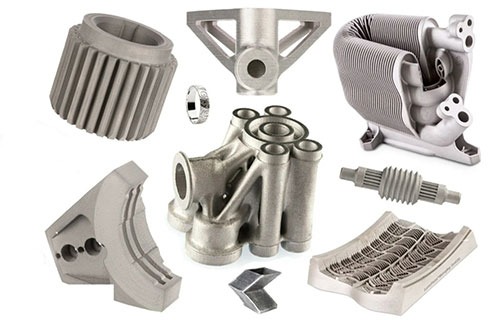
When you hear “3D printing,” you might picture hobbyists making little plastic trinkets. But behind the scenes, there’s a whole other world—one where industrial-grade 3D printing is quietly revolutionizing how we build everything from jet engines to custom knee implants.
Key takeaways
- Before we dive into applications, it’s crucial to understand what separates a professional tool from a desktop toy.
- The manufacturing floor was the first to adopt this technology, and its use has matured far beyond simple mock-ups.
- This is perhaps the most profound application. Industrial 3D printing is moving medicine from “one-size-fits-most” to patient-specific solutions.
- The race for faster development and mass customization is fueling adoption here.
What Exactly Makes a 3D Printer “Industrial-Grade”?
Before we dive into applications, it’s crucial to understand what separates a professional tool from a desktop toy. It’s not just about size or price—it’s about capability, consistency, and material science.
Think of it this way: a consumer printer is for exploration, while an industrial 3D printer is for production. The key differentiators are:
- Precision & Repeatability: Industrial systems offer tolerances within ±0.1% or ±0.1 mm, part after part. This is non-negotiable for functional components.
- Advanced Materials: Beyond basic PLA, these machines work with engineering-grade thermoplastics (like Nylon, ULTEM), metals (Stainless Steel, Titanium, Inconel), and specialized resins that meet strict flame-retardant, biocompatible, or high-strength standards.
- Build Volume & Throughput: They can produce larger parts (often exceeding 500mm in multiple axes) or batch many smaller parts efficiently, making them viable for low-to-medium volume production.
- Integrated Quality Assurance: Features like in-situ monitoring, controlled chamber environments (for temperature and gases), and automated post-processing ensure reliable, certified results.
In short, industrial 3D printing has evolved from a rapid prototyping method into a full-fledged digital manufacturing technology, often referred to as Additive Manufacturing (AM). It enables geometries that are un-machinable, un-moldable, and un-weldable, opening doors across every sector.
How Is It Reshaping Core Manufacturing & Product Development?
The manufacturing floor was the first to adopt this technology, and its use has matured far beyond simple mock-ups. Here’s how it integrates into the modern product lifecycle.
From Prototype to Production: A Seamless Workflow
Industrial 3D printing provides a continuous thread from idea to end-use part:
- Concept Validation: Create touchable, geometric proof-of-concept models in days, not weeks. I’ve seen automotive teams use large-format 3D prints of full-scale dashboards to evaluate ergonomics and styling long before costly clay modeling.
- Functional Prototyping: Test form, fit, and function with materials that mimic final production properties. For instance, printing a drone housing in Nylon 12 lets you test its aerodynamic performance and component assembly under real stress.
- Tooling, Jigs, and Fixtures: This is a silent revolution. Manufacturing custom assembly guides, lightweight composite layup tools, or injection molds with conformal cooling channels directly on the print bed. A client in aerospace reduced their fixture production time by 70% and weight by 40% by switching to 3D printed carbon-fiber-reinforced tools.
- Bridge and Small-Batch Production: When traditional tooling is too expensive or lead times are too long for a initial market run, 3D printing becomes the production method. It’s perfect for limited editions, pilot runs, or spare parts for legacy equipment.
Why Are Complex, Consolidated Parts a Game-Changer?
This is where the magic happens. Traditional design is constrained by how parts can be made and assembled. Additive design asks: “What is the optimal shape for this part’s function?”
| Traditional Manufacturing | Industrial 3D Printing Advantage | Real-World Impact |
|---|---|---|
| An assembly of 10+ parts (fastened/welded). | Consolidated into a single, monolithic component. | Reduced assembly time, weight, and potential failure points. |
| Simple straight drilling for cooling channels. | Optimized, winding conformal cooling paths that follow the part’s contour. | Up to 30% faster cooling cycles in injection molding, boosting production line output. |
| Solid, heavy brackets. | Lightweight, organic lattice structures that maintain strength. | Weight savings of 50% or more in aerospace brackets, directly improving fuel efficiency. |
Why Are Aerospace and Defense Industries All-In?
No sector has embraced industrial 3D printing more aggressively. The drive for lightweighting, performance optimization, and supply chain resilience makes it a perfect fit.
What Specific Problems Does It Solve for Flight?
The calculus is simple: less weight means less fuel, longer range, and lower costs. Industrial AM allows engineers to redesign components with topology optimization software, creating shapes that look like bones or roots—incredibly strong for their weight. For example, GE Aviation’s famous fuel nozzle for the LEAP engine was consolidated from 20 separately manufactured parts into one 3D printed unit. It’s 25% lighter and five times more durable.
Beyond weight, it enables:
- Rapid Iteration: Prototyping turbine blades or drone components in days to test new aerodynamic profiles.
- On-Demand Spares: Printing certified replacement parts for aircraft on remote deployments, slashing logistics tail and downtime. The U.S. military has deployed mobile 3D printing labs to forward bases for this exact purpose.
- Complex Internal Geometries: Creating serpentine cooling channels inside turbine blades that are impossible to cast, allowing engines to run hotter and more efficiently.
How Is It Personalizing and Advancing Medical Care?
This is perhaps the most profound application. Industrial 3D printing is moving medicine from “one-size-fits-most” to patient-specific solutions.
From Surgical Planning to Permanent Implants
- Anatomical Models: Surgeons now routinely operate on a full-color, multi-material 3D print of a patient’s specific organ (like a heart with a tumor) before the actual surgery. Studies show this can reduce operating time by up to 20% and improve outcomes.
- Patient-Specific Instruments (PSIs): These are sterilizable, 3D printed surgical guides that fit directly onto a patient’s bone, telling the surgeon exactly where to cut or place an implant. This turns complex joint replacement surgeries into highly precise procedures.
- Bio-Compatible Implants: The true frontier. Using Titanium or PEEK, companies create cranial plates, spinal cages, and dental implants that perfectly match the patient’s CT scan data. The implants can even feature porous surface structures that encourage bone ingrowth, locking them into the body naturally.
The result? Faster recovery times, reduced risk of revision surgery, and truly personalized healthcare. The global market for 3D printed medical devices is projected to exceed $6 billion by 2027, underscoring its rapid adoption.
How to write a spec that gets priced correctly
A drawing is a contract. If it leaves a number open, the shop fills that number in with its own default. The default is rarely the one you had in mind. Put these five lines on every RFQ and most of the back-and-forth disappears before it starts.
- File format and units, with the model exported in millimetres
- Process and material grade, not a trade name
- Critical features and the tolerance each one needs
- Surface finish and the faces it applies to
- Quantity for the pilot build and for the year
The point is not paperwork. Each line removes a decision the shop would otherwise make for you. A complete RFQ comes back priced. An incomplete one comes back guessed.
What actually drives the price
Buyers usually push on material because it is the line they can see. In practice the material is rarely the biggest number on a quote. These five lines decide most of it:
- build volume and orientation
- layer height and support structure
- material grade and colour
- post-processing and hand finishing
- quantity per build plate
Ask for the quote split by line. A supplier who cannot break it down is guessing, and you will pay for the guess. The line you can usually renegotiate is the tolerance band, not the raw material.
Problems you will meet, and the fix
Every process has a failure mode it prefers. The same four show up again and again on this kind of work, and none of them are mysteries once you know what to look for.
- Warping on long flat faces where the part lifts off the plate
- Layer lines showing through a cosmetic surface
- Support scars on a mating face nobody flagged
- Dimensional drift on thin walls after cooling
Catch the fault on the first part, not the hundredth. A first-article check costs an hour. A bad batch costs the whole order. Write the check into the purchase order so nobody has to remember it.
What to check on the first article
The first article is the cheapest inspection you will ever buy. Use it properly and the rest of the run becomes boring, which is exactly what you want.
- Every dimension on the drawing, with the measured value written beside it.
- The material certificate, matched to the heat or lot number on the parts.
- The finish against the sample you approved, under the same light.
- Fit against the mating part, assembled rather than measured.
- Packaging, because parts that arrive damaged were never in tolerance.
Check in this order: datums, then mating features, then cosmetic faces. If the datums are wrong, every number after them is noise. Keep the report on file. When a problem shows up in month six, that document is the only thing that tells you what changed.
How to compare two quotes fairly
Two numbers are not comparable unless the scope matches. Line them up before you decide, because a low number with three gaps is not a low number.
Same drawing, same material, same finish, same inspection. Anything else is a different job wearing the same part number. Then look at what each quote leaves out. Freight, packaging, certificates and tooling are the usual gaps.
Ask each supplier to state their assumptions in writing. The one who does is usually the one who has run the process before.
Scaling from one part to a batch
The first part teaches you the process. The hundredth teaches you the process cost.
Watch three things as volume grows: setup amortisation, tool wear, and how much hand work the finish still needs. If the unit price barely moves between ten and a hundred, the cost sits in material or in hand work, not in setup. Ask which, because only one of them is negotiable.
Lead time behaves the same way. A one-off is scheduled around other jobs. A repeat order is scheduled around your forecast. Give the shop a forecast and the lead time gets shorter, not longer.
How to read a supplier's quote
A quote is a short document with a long shadow. Four things in it decide whether the job runs smoothly, and only one of them is the price.
- The scope line. It should name the process, the material and the finish, not just the part.
- The tolerance basis. General tolerance or the drawing, and which standard it follows.
- The exclusions. Tooling, freight, certificates and inspection are the usual omissions.
- The validity date. Material prices move, and an open-ended quote is a promise nobody can keep.
Read the exclusions before you read the total. A quote that leaves out tooling is not cheaper. It is a quote for a different job.
Where Is It Driving Innovation in Automotive and Consumer Goods?
The race for faster development and mass customization is fueling adoption here.
Is It Used for More Than Just Concept Cars?
Absolutely. While stunning concept car interiors showcase the technology’s aesthetic potential, its real value is under the hood and in the production line:
- Performance Parts: From customizable, lightweight dashboard components to thermally efficient intake manifolds for high-performance vehicles. Motorsports teams use metal 3D printing for cooling ducts and optimized suspension parts that give them a competitive edge.
- Tooling and End-of-Run Parts: As in aerospace, producing low-volume brackets, jigs, and even replacement parts for classic cars where original tooling no longer exists is a major application.
How Does It Enable Mass Customization?
This is the consumer goods revolution. Industrial 3D printing allows for economical production runs of one.
- Footwear: Companies like Adidas and Nike use it to create mid-soles with gradient lattices, offering customized cushioning and energy return based on an athlete’s gait.
- Eyewear: The frame can be digitally tailored to the wearer’s exact facial measurements and 3D printed as a single piece, combining perfect fit with unique design.
- Hearing Aids: Nearly 99% of all in-the-ear hearing aids are now 3D printed from a scan of the patient’s ear canal. This became the standard because it’s faster, more comfortable, and more effective than traditional methods.
Industrial 3D printing is no longer a technology of the future—it’s a transformative tool of the present. Its power lies not in replacing all traditional manufacturing, but in complementing it where it falls short: in complexity, customization, and speed to market for low-volume, high-value parts. From lightweighting aircraft and personalizing medical care to enabling on-demand spare parts and creating custom consumer products, it’s providing engineers and designers with an unprecedented freedom to innovate. The question for businesses is no longer “Can we use 3D printing?” but “Where in our workflow can it deliver the most strategic advantage?” Identifying those opportunities is the first step toward building a more agile, efficient, and innovative operation.
FAQ: Demystifying Industrial 3D Printing
Q: The price tag on industrial machines is high. What’s the real ROI?
A: The ROI isn’t just in the part cost. It’s calculated from dramatically reduced time-to-market, elimination of expensive tooling for small batches, massive weight savings in transportation/aerospace, and the ability to create optimized parts that perform better and last longer. For many companies, the ability to innovate faster and create IP-protected, on-demand parts outweighs the capital expenditure.
Q: Can 3D printed parts be as strong as traditionally machined parts?
A: Yes, and in some cases, stronger—but it depends on the material and process. For metals, properly printed and post-processed Titanium or Inconel parts can meet or exceed the mechanical properties of their cast or forged counterparts. For polymers, materials like ULTEM or PEKK offer exceptional strength and thermal stability. The key is designing for the additive process to align print layers with stress directions and using qualified production workflows.
Q: We have an old machine with discontinued parts. Can 3D printing help?
A: This is one of its most powerful use cases—digital inventory and legacy part reproduction. Instead of storing physical spare parts for decades, companies can now store digital CAD files. When a part breaks, they can print it on-demand in a suitable material. This is revolutionizing maintenance, repair, and operations (MRO) in industries like marine, energy, and defense.
Q: What are the main limitations holding back wider adoption for mass production?
A: Throughput speed and cost-per-part at very high volumes are still barriers. While it excels at low-to-medium volume complexity, traditional methods like injection molding are still far faster and cheaper for making 10 million identical, simple plastic parts. The frontier is in hybrid manufacturing (combining 3D printing with machining) and developing faster print technologies like Area-Wide Additive Manufacturing.
Our solution for Industrial 3D Printing Truly Shines
YiguProto runs 3D printing in house, from a single prototype to a production batch. We quote the process, the material and the finish as separate lines, so you can see where the money goes instead of arguing with one number.
Send a STEP file or a drawing and you get a DFM report in one to two business days. It flags the features that add cost and the features that will not hold tolerance on the process you picked.
Every order ships with an inspection report on the features you call out. If a part misses, we make it again. Ready to price a part? Start with a free quote and DFM review, or read more about our 3D printing. You can also talk to an engineer before you commit to a drawing.
FAQ about Industrial 3D Printing Truly Shines
What should I check before approving the parts?
Datums first, then the features that mate, then the cosmetic faces. Ask for a dimensional report, a material certificate and a finish sample. A part can be inside every tolerance and still not fit, so assemble one before you sign.
Is there a minimum order quantity?
No hard minimum. One part is fine. What changes with volume is which costs dominate, so a single unit is priced mostly on setup and a thousand units are priced mostly on cycle time and material.
How long does a first article take?
Usually a few business days once the drawing is frozen, and longer if tooling is involved. The date we give you is the date we confirm in writing, not the date we hope for.
Can Industrial 3D Printing Truly Shines be made in small quantities?
Yes, and small quantities are where a good supplier earns the next order. Setup dominates the price at low volume, so the cheapest route is usually the one with the fewest operations, not the cheapest material.
What happens if a part is out of specification?
We measure it against the same drawing you approved and, if it misses, we make it again. What matters is that the report exists, because a disagreement without data is just an opinion.
What is the lead time for Industrial 3D Printing Truly Shines?
Expect 2 to 5 business days for a first batch. Tooling, material stock and the finishing queue all move that number, so we confirm the date in writing before the run starts rather than after.
The short version
Industrial 3D Printing Truly Shines rewards the buyer who reads the data sheet and the drawing together. Pick the option for the property that matters, not for the price per kilo.
Tighten only what mates. Test a sample before the run. Then let the process do the rest.