
3D Printing
How is 3D Printing Used in Different Industries?
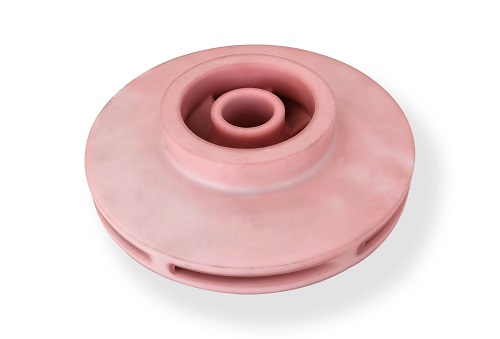
3D printing applications are transforming how we design, make, and repair things. This guide explores its major uses across key fields. In industrial manufacturing, it creates lighter, stronger parts. In healthcare, it enables personalized medicine. For construction, it builds houses faster. It also powers innovation in education, food, and fashion.
Key takeaways
- For aerospace, automotive, and heavy industry, 3D printing delivers weight reduction, part consolidation, and supply chain resilience.
- Healthcare is perhaps the most life-changing application. It enables patient-specific care.
- The future points toward more integration, new materials, and smarter processes. We’ll see:
How is 3D Printing Revolutionizing Industrial Manufacturing?
For aerospace, automotive, and heavy industry, 3D printing delivers weight reduction, part consolidation, and supply chain resilience.
Transforming Aerospace and Defense
Weight is money in aerospace. Every pound saved reduces fuel burn. 3D printing creates complex, lightweight structures that are impossible to machine.
- Part Consolidation: GE Aviation’s LEAP engine fuel nozzle is a landmark example. It was once an assembly of 20 separate parts. Now, it’s a single 3D printed piece. This makes it 25% lighter and five times more durable.
- On-Demand Spare Parts: Airlines like Airbus use 3D printing to make obsolete parts for older aircraft. They keep digital files instead of physical inventory, printing parts as needed. This slashes warehousing costs and gets planes back in the air faster.
Accelerating Automotive Innovation
The auto industry uses 3D printing from rapid prototyping to final production parts.
- Prototyping: Car makers can print a prototype part in hours, test it, and redesign it the same day. This compresses development cycles from months to weeks.
- Customization & Low-Volume Production: For luxury or racing cars, 3D printing makes customized components economically. Porsche Classic uses it to produce rare, out-of-stock parts for vintage models, bypassing the need for costly, low-use tooling.
- Tools and Jigs: Factories print custom assembly aids, fixtures, and ergonomic tools. These are lighter, cheaper, and can be made overnight.
How is 3D Printing Advancing Healthcare?
Healthcare is perhaps the most life-changing application. It enables patient-specific care.
Surgical Planning and Medical Models
Surgeons use 3D printed anatomical models from patient CT or MRI scans. Holding a exact replica of a patient’s heart, bone, or tumor allows for pre-surgical rehearsal. This leads to shorter operation times, less anesthesia, and better outcomes.
Case Study: At Boston Children’s Hospital, surgeons used a 3D printed model of conjoined twins’ shared organs to plan a successful separation surgery. The model was critical for visualizing complex blood vessel structures.
Custom Implants and Prosthetics
This is mass customization at its best.
- Implants: Cranial plates, spinal cages, and joint replacements can be 3D printed to perfectly match a patient’s anatomy. This improves fit, reduces surgery time, and speeds healing. Materials like titanium and PEEK are commonly used.
- Prosthetics: Traditional prosthetic limbs are expensive and slow to make. 3D scanning and printing allow for fast, affordable, custom-fit prosthetic sockets. Organizations like e-NABLE provide open-source designs for 3D printed mechanical hands, bringing functionality to people worldwide at low cost.
Bioprinting and Future Applications
Researchers are pushing boundaries with bioprinting—printing with living cells to create tissue-like structures. While still experimental, it holds promise for drug testing, tissue repair, and eventually organ printing.
Can We Really 3D Print Buildings?
Yes, construction 3D printing is a rapidly growing field. Large gantry systems or robotic arms extrude a special concrete or mortar mix layer by layer to form walls.
- Benefits: Speed (a house shell in days), design freedom (complex curves), reduced labor, and less material waste.
- Applications: Affordable housing, disaster relief shelters, custom architectural elements, and infrastructure like bridges.
- Example: In Dubai, a government office was 3D printed, reportedly reducing labor costs by 50% and waste by 30%.
How is 3D Printing Used in Education?
3D printing makes abstract concepts tangible and engaging.
- STEM Learning: Students print molecules, historical artifacts, engineering models, and robotics parts. They learn by doing—designing, iterating, and problem-solving.
- Research: Universities use 3D printing for custom lab equipment, wind tunnel models, and archaeological replication.
- Accessibility: It allows for the creation of customized learning aids for students with disabilities.
What About the Food and Consumer Industries?
Food 3D Printing
While niche, food printing offers unique possibilities:
- Custom Shapes: Intricate chocolate decorations or personalized cake toppers for chefs.
- Nutritional Personalization: Research into printing meals with precise nutrient blends, useful for elderly care or clinical nutrition.
- Novel Textures: Creating food structures that can’t be achieved by hand.
Fashion and Consumer Goods
- Customized Wearables: 3D printed eyewear frames that fit the wearer’s face perfectly, or custom-fit shoe insoles from a foot scan.
- High-Fashion and Jewelry: Designers use 3D printing to create impossible geometries in clothing, accessories, and intricate jewelry pieces, often using lost-wax casting.
- On-Demand Manufacturing: Brands can offer personalized products (like phone cases with a customer’s name integrated) without holding inventory.
What Are Other Innovative Applications?
- Art and Sculpture: Artists create works with complex, algorithmically-generated forms.
- Film and Theater: Rapid production of detailed props, costumes, and set pieces.
- Marine and Maritime: Printing custom parts for boats and researching printed hulls.
- Energy: Printing complex components for turbines and oil/gas equipment.
What Are the Key Drivers and Considerations?
Why Adopt 3D Printing?
- Complexity for Free: Intricate designs cost no more to print than simple ones.
- Mass Customization: Economically produce one-of-a-kind or small batches.
- Supply Chain Agility: Produce parts on-site, on-demand, reducing lead times and inventory.
- Sustainability: Reduces waste (additive vs. subtractive) and can enable lightweighting for energy savings.
What Challenges Remain?
- Cost at Scale: For making millions of identical simple parts, traditional methods are still cheaper.
- Material Limitations: The range of printable materials, while growing, is still smaller than traditional manufacturing.
- Speed: Print times can be long for large, solid objects.
- Skill Gap: Requires expertise in design for additive manufacturing (DfAM), which differs from traditional design.
How to write a spec that gets priced correctly
A drawing is a contract. If it leaves a number open, the shop fills that number in with its own default. The default is rarely the one you had in mind. Put these five lines on every RFQ and most of the back-and-forth disappears before it starts.
- File format and units, with the model exported in millimetres
- Process and material grade, not a trade name
- Critical features and the tolerance each one needs
- Surface finish and the faces it applies to
- Quantity for the pilot build and for the year
The point is not paperwork. Each line removes a decision the shop would otherwise make for you. A complete RFQ comes back priced. An incomplete one comes back guessed.
What actually drives the price
Buyers usually push on material because it is the line they can see. In practice the material is rarely the biggest number on a quote. These five lines decide most of it:
- build volume and orientation
- layer height and support structure
- material grade and colour
- post-processing and hand finishing
- quantity per build plate
Ask for the quote split by line. A supplier who cannot break it down is guessing, and you will pay for the guess. The line you can usually renegotiate is the tolerance band, not the raw material.
Problems you will meet, and the fix
Every process has a failure mode it prefers. The same four show up again and again on this kind of work, and none of them are mysteries once you know what to look for.
- Warping on long flat faces where the part lifts off the plate
- Layer lines showing through a cosmetic surface
- Support scars on a mating face nobody flagged
- Dimensional drift on thin walls after cooling
Catch the fault on the first part, not the hundredth. A first-article check costs an hour. A bad batch costs the whole order. Write the check into the purchase order so nobody has to remember it.
What to check on the first article
The first article is the cheapest inspection you will ever buy. Use it properly and the rest of the run becomes boring, which is exactly what you want.
- Every dimension on the drawing, with the measured value written beside it.
- The material certificate, matched to the heat or lot number on the parts.
- The finish against the sample you approved, under the same light.
- Fit against the mating part, assembled rather than measured.
- Packaging, because parts that arrive damaged were never in tolerance.
Check in this order: datums, then mating features, then cosmetic faces. If the datums are wrong, every number after them is noise. Keep the report on file. When a problem shows up in month six, that document is the only thing that tells you what changed.
How to compare two quotes fairly
Two numbers are not comparable unless the scope matches. Line them up before you decide, because a low number with three gaps is not a low number.
Same drawing, same material, same finish, same inspection. Anything else is a different job wearing the same part number. Then look at what each quote leaves out. Freight, packaging, certificates and tooling are the usual gaps.
Ask each supplier to state their assumptions in writing. The one who does is usually the one who has run the process before.
Scaling from one part to a batch
The first part teaches you the process. The hundredth teaches you the process cost.
Watch three things as volume grows: setup amortisation, tool wear, and how much hand work the finish still needs. If the unit price barely moves between ten and a hundred, the cost sits in material or in hand work, not in setup. Ask which, because only one of them is negotiable.
Lead time behaves the same way. A one-off is scheduled around other jobs. A repeat order is scheduled around your forecast. Give the shop a forecast and the lead time gets shorter, not longer.
How to read a supplier's quote
A quote is a short document with a long shadow. Four things in it decide whether the job runs smoothly, and only one of them is the price.
- The scope line. It should name the process, the material and the finish, not just the part.
- The tolerance basis. General tolerance or the drawing, and which standard it follows.
- The exclusions. Tooling, freight, certificates and inspection are the usual omissions.
- The validity date. Material prices move, and an open-ended quote is a promise nobody can keep.
Read the exclusions before you read the total. A quote that leaves out tooling is not cheaper. It is a quote for a different job.
What to send with the first order
The first order sets the pattern for every order after it. Send a complete package once and the shop files it, and the second order takes a fraction of the time.
- A STEP or native model plus a PDF drawing carrying the same revision letter.
- The material callout by standard number, not by trade name.
- The finish and the exact faces it applies to.
- Any test the part must pass: fit, seal, drop, salt spray, dielectric.
- A contact who can answer a question inside one working day.
Then write down what was agreed. An email that confirms the material, the finish and the date is worth more than a longer purchase order that leaves them open.
When this is the wrong choice
A good supplier tells you when the process does not fit. These are the cases where we say so.
- The volume is so low that setup costs more than the parts are worth.
- The tolerance is tighter than the process can hold without a second operation.
- The geometry cannot be made without a tool feature that will not pay back.
- The material you need is not available in the form the process requires.
- The schedule is shorter than the tooling or setup time, and nobody has said so yet.
None of these are refusals. They are reasons to look at a different route, and the earlier that conversation happens the cheaper it is. The most expensive mistake in manufacturing is a process chosen before the question was understood.
Planning the ramp from prototype to production
The gap between one good part and a thousand identical ones is a plan, not a machine. Three decisions close it.
First, freeze the design. Every change after tooling starts is a re-cut, and re-cuts are where schedules go. Second, decide the inspection level. A prototype is checked by eye; a production part is checked against a report. Third, agree the change process in writing, including who pays for it.
Write the ramp down as dates and owners, not as intentions. A ramp plan with three names and three dates is worth more than a page of good intentions.
What documentation to expect
Paperwork is not bureaucracy when a part fails at the customer. It is the only record of what was agreed. A normal shipment should carry four documents.
- A dimensional report covering every callout on the drawing.
- A material certificate traceable to the heat or lot number.
- A finish or coating certificate where the specification requires one.
- A packing list that matches the carton labels.
If a supplier cannot produce these on request, they are not running a controlled process. Ask for one sample set before you place the first order and you will know exactly what you are buying.
What is the Future Outlook?
The future points toward more integration, new materials, and smarter processes. We’ll see:
- Hybrid Manufacturing: Machines that 3D print and then machine a part in one setup.
- Sustainable Materials: Wider use of recycled and bio-based feedstocks.
- Digital Inventories: Companies holding digital part files instead of physical spare parts.
- AI-Optimized Designs: Software that automatically generates the most efficient, printable structure for a given load.
The applications of 3D printing are as diverse as industry itself. Its value is not in replacing all traditional manufacturing, but in solving specific problems that traditional methods cannot. It excels where complexity, customization, and speed to market are critical.
For engineers and business leaders, the question is no longer if 3D printing is useful, but where in your workflow it can deliver the most value. Start by identifying a pain point: Is it prototype lead time, the cost of custom tooling, or the need for a patient-specific fit? Then, explore how the additive approach can provide a better solution. By strategically applying this technology, you can drive innovation, efficiency, and growth in your field.
Our solution for 3D Printing
YiguProto runs 3D printing in house, from a single prototype to a production batch. We quote the process, the material and the finish as separate lines, so you can see where the money goes instead of arguing with one number.
Send a STEP file or a drawing and you get a DFM report in one to two business days. It flags the features that add cost and the features that will not hold tolerance on the process you picked.
Every order ships with an inspection report on the features you call out. If a part misses, we make it again. Ready to price a part? Start with a free quote and DFM review, or read more about our 3D printing. You can also talk to an engineer before you commit to a drawing.
FAQ about 3D Printing
What files do you need in order to quote?
A STEP file plus a PDF drawing that carries the same revision letter. The model carries the geometry and the drawing carries the intent. When the two disagree, the shop picks one, and it is never the one you meant.
Can 3D Printing be made in small quantities?
Yes, and small quantities are where a good supplier earns the next order. Setup dominates the price at low volume, so the cheapest route is usually the one with the fewest operations, not the cheapest material.
What happens if a part is out of specification?
We measure it against the same drawing you approved and, if it misses, we make it again. What matters is that the report exists, because a disagreement without data is just an opinion.
What tolerance can you hold on 3D Printing?
The working default is ±0.1 mm on small features, ±0.3% on long spans. Tighter than that the process changes and so does the price, because every step tighter adds inspection time. Call out only the faces that mate with something else and leave the rest on the general tolerance.
Is there a minimum order quantity?
No hard minimum. One part is fine. What changes with volume is which costs dominate, so a single unit is priced mostly on setup and a thousand units are priced mostly on cycle time and material.
What is 3D Printing used for?
3D Printing turns up wherever the part has to do a real job at a predictable cost: brackets, housings, fixtures, covers and the fittings that hold them together. The honest test is whether the properties match the load and the environment, not whether the material is fashionable.
The short version
3D Printing rewards the buyer who reads the data sheet and the drawing together. Pick the option for the property that matters, not for the price per kilo.
Tighten only what mates. Test a sample before the run. Then let the process do the rest.