
Metal Materials
ASTM A36 Carbon Steel: Properties, Uses & Expert Comparison Guide
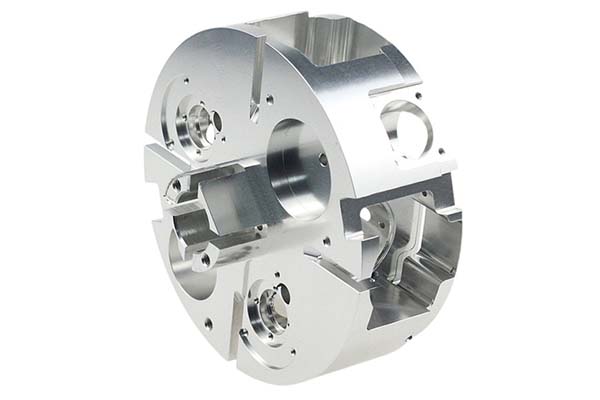
If your project involves structural frameworks, industrial equipment, or custom fabrications where reliability and budget are equally important, choosing the right material is critical. ASTM A36 carbon steel is the most common low-carbon steel in the world. This guide explains its key properties, where it performs best, and how to work with it.
What Are the Core Properties of ASTM A36?
The value of ASTM A36 lies in its well-balanced material characteristics. It is designed for applications that require good strength but do not face extreme forces or harsh environments.
Chemical Composition
The steel’s performance comes from a controlled mix of elements. The carbon content stays between 0.25% and 0.29%, which is low enough to keep the steel easy to weld and machine but high enough to provide basic strength. Manganese, at 0.80% to 1.20%, adds toughness and tensile strength. Impurities like phosphorus and sulfur are kept below 0.040% and 0.050% respectively to prevent brittleness. No expensive microalloys are added, which keeps the material affordable.
Mechanical and Physical Data
The table below summarizes the key numbers that define this steel’s capability.
| Property | Typical Value | Significance |
|---|---|---|
| Yield Strength | ≥250 MPa (36 ksi) | The stress level where permanent deformation begins. |
| Tensile Strength | 400-550 MPa (58-80 ksi) | The maximum stress the steel can withstand before breaking. |
| Elongation | ≥20% (in 200mm) | A measure of ductility; it shows how much the steel can stretch. |
| Hardness | ≤167 HB | Relatively soft, making it easy to cut and form. |
| Density | 7.85 g/cm³ | Standard density for carbon steel. |
| Magnetic Properties | Ferromagnetic | Attracts magnets, which is common for this type of steel. |
A practical example shows how these numbers work in the real world. A fabrication shop in Ohio was contracted to build steel staircases for a mixed-use development. They chose ASTM A36 for the stringers and handrails. The steel’s yield strength of 250 MPa easily supported the live loads of hundreds of daily users. More importantly, its 20% elongation allowed the fabricators to cold-bend the handrails on-site to match the architect’s curved design. A higher-strength steel, like S355, would have cracked under the same bending process.
Where Is ASTM A36 Commonly Used?
This steel grade is a workhorse for projects where cost-effectiveness and ease of fabrication are top priorities. Its applications span multiple industries.
Construction and Structural Frames
For building frames, small bridge beams, and support columns, ASTM A36 is a standard choice. It is particularly well-suited for spans under 20 meters and buildings up to a few stories tall. A contractor in Austin, Texas, used ASTM A36 for the entire frame of a 4-story apartment complex. The team reported that the steel’s weldability allowed for fast on-site assembly, reducing labor hours by 15% compared to using a less forgiving material.
Machinery and Industrial Equipment
This steel is common in machine bases, gear housings, and conveyor systems. A manufacturer in Illinois produces heavy-duty agricultural augers. They use ASTM A36 for the main housing because its machinability allows them to drill and cut hundreds of precise holes per day without frequent tool changes. The material’s inherent toughness also absorbs the vibration from the rotating auger, ensuring a longer service life for the equipment.
Automotive and Transportation
For light-duty truck frames, trailer hitches, and non-critical structural parts, ASTM A36 offers a good balance. A company in Detroit that builds custom utility trailers selects this grade for the main frame rails. The low carbon content makes MIG welding fast and reliable, and the steel’s strength is more than adequate for the typical loads of landscaping equipment or recreational vehicles.
General Fabrication
From custom railings to storage tanks and workbenches, the steel’s versatility shines. A metal art studio in Oregon uses ASTM A36 for large-scale sculptures. They appreciate its predictable behavior under heat and its ability to accept a variety of finishes, from powder coating to rust patinas.
How Is ASTM A36 Manufactured and Fabricated?
The manufacturing process for ASTM A36 is designed for efficiency, which directly contributes to its low cost.
Production Steps
The steel begins in a basic oxygen furnace (BOF), where molten iron is refined. The alloy composition is carefully adjusted to meet the A36 standard. Next, the molten steel undergoes continuous casting to form slabs or blooms. These are then reheated to over 1100°C and passed through rolling mills to create final shapes like plates, beams, and bars. This hot rolling process is the primary method for shaping the steel, giving it a characteristic mill scale surface.
Fabrication Characteristics
- Machining: The low hardness (≤167 HB) allows for the use of standard high-speed steel (HSS) tools. A job shop in Houston machines ASTM A36 for hydraulic manifold blocks. They use HSS end mills at standard speeds, avoiding the need for expensive carbide tooling, which keeps their operational costs low.
- Welding: This steel is exceptionally easy to weld. For material under 25mm thick, no pre-heating is required. Common methods like MIG, TIG, and stick welding all produce strong, reliable joints. A pipeline contractor in Wyoming uses ASTM A36 for above-ground piping supports. They rely on simple E6013 electrodes with stick welding, creating durable welds without complex procedures.
- Forming: The steel’s ductility makes it suitable for bending, rolling, and forming. However, for tight radii, a simple annealing process can further enhance its formability.
How Does ASTM A36 Compare to Other Steels?
Choosing the right material often comes down to balancing strength against cost. The table below provides a clear comparison.
| Material | Yield Strength (MPa) | Relative Cost | Best Application |
|---|---|---|---|
| ASTM A36 | ≥250 | 100% (Baseline) | Small buildings, machinery, light trailers |
| EN S235JR | ≥235 | ~105% | European construction projects, general fabrication |
| EN S275JR | ≥275 | ~120% | Medium-duty machinery, multi-story buildings (up to 4 stories) |
| EN S355JR | ≥355 | ~150% | Heavy structures, 5-10 story buildings, large bridges |
| EN S420 | ≥420 | ~180% | High-rise buildings, offshore platforms |
A scenario to guide your choice: If you are building a single-story workshop, ASTM A36 is the economical choice. It provides all the strength you need at the lowest cost. If you are designing a 10-story office building in a seismic zone, a higher-strength grade like S355 is necessary to meet the structural demands, even though it costs more.
What Standards Ensure You Get Genuine ASTM A36?
Verifying the material is crucial to avoid project failures. Always request the proper documentation.
- ASTM A36/A36M: This is the core American standard that defines the chemical, mechanical, and manufacturing requirements for the steel.
- Mill Test Report (MTR): This is the most critical document. It certifies that the specific batch of steel meets the required yield strength (≥250 MPa) and tensile strength (400-550 MPa) standards.
- Supplementary Standards: Other relevant norms include ASTM A6/A6M for general requirements for structural steel shapes.
A quality control lesson comes from a warehouse project in Nevada. A supplier provided steel beams labeled as ASTM A36, but the material failed under a test load. A review of the mill test report revealed a yield strength of only 210 MPa. The non-compliant beams were rejected, and the project was delayed by weeks. Always verify the Mill Test Report to confirm the steel’s actual properties.
ASTM A36 carbon steel remains a top choice for a vast range of projects because it successfully balances strength, workability, and cost. Its predictable mechanical properties make it easy to design with, while its excellent weldability and machinability keep fabrication simple and affordable. While it is not the right material for extreme loads or highly corrosive environments, it is the ideal solution for the majority of everyday structural, machinery, and fabrication needs. By understanding its capabilities and limitations, you can confidently select it for your next project, ensuring both reliability and budget efficiency.
FAQ
Can ASTM A36 be used outdoors?
Yes, but it requires a protective coating. The steel will rust if left exposed to moisture. For outdoor applications like bridge beams or signposts, we recommend a paint system or hot-dip galvanizing to provide long-term corrosion protection.
Is ASTM A36 difficult to weld?
No, it is one of the easiest steels to weld. Its low carbon content eliminates the need for pre-heating on most material thicknesses. Standard MIG, TIG, or stick welding processes with common filler metals like ER70S-6 or E6013 electrodes produce strong, defect-free welds.
When should I choose a different steel instead of ASTM A36?
You should avoid ASTM A36 for projects involving extreme loads, such as high-rise buildings over five stories or cranes with heavy lift capacities. It is also not ideal for extremely cold environments where low-temperature toughness is critical. In these cases, consider higher-strength grades like S355 or S460.
Discuss Your Projects with our shop
Choosing the right material is the first step toward a successful project. At our shop we combine deep material expertise with advanced manufacturing capabilities. Whether you need custom-fabricated structural components, machined parts, or guidance on material selection for your next build, our team is ready to help. We provide full documentation, including mill test reports, to ensure every component meets your specifications. Contact us today to discuss your project requirements and see how we can bring your design to life with efficiency and precision.
How to write a spec that gets priced correctly
A drawing is a contract. If it leaves a number open, the shop fills that number in with its own default. The default is rarely the one you had in mind. Put these five lines on every RFQ and most of the back-and-forth disappears before it starts.
- Alloy designation and the standard behind it
- Temper or heat treatment condition
- Mechanical properties you actually need
- Mill certificate and traceability requirement
- Finish and the faces it applies to
The point is not paperwork. Each line removes a decision the shop would otherwise make for you. A complete RFQ comes back priced. An incomplete one comes back guessed.
What actually drives the price
Buyers usually push on material because it is the line they can see. In practice the material is rarely the biggest number on a quote. These five lines decide most of it:
- alloy grade and mill availability
- stock size versus finished size
- heat treatment and testing
- machinability
- certification
Ask for the quote split by line. A supplier who cannot break it down is guessing, and you will pay for the guess. The line you can usually renegotiate is the tolerance band, not the raw material.
Problems you will meet, and the fix
Every process has a failure mode it prefers. The same four show up again and again on this kind of work, and none of them are mysteries once you know what to look for.
- Substituting a similar grade without telling anyone
- Hardness that varies across a single bar
- Corrosion in a weld heat-affected zone
- Distortion after heat treatment on a thin part
Catch the fault on the first part, not the hundredth. A first-article check costs an hour. A bad batch costs the whole order. Write the check into the purchase order so nobody has to remember it.
What to check on the first article
The first article is the cheapest inspection you will ever buy. Use it properly and the rest of the run becomes boring, which is exactly what you want.
- Every dimension on the drawing, with the measured value written beside it.
- The material certificate, matched to the heat or lot number on the parts.
- The finish against the sample you approved, under the same light.
- Fit against the mating part, assembled rather than measured.
- Packaging, because parts that arrive damaged were never in tolerance.
Check in this order: datums, then mating features, then cosmetic faces. If the datums are wrong, every number after them is noise. Keep the report on file. When a problem shows up in month six, that document is the only thing that tells you what changed.
How to compare two quotes fairly
Two numbers are not comparable unless the scope matches. Line them up before you decide, because a low number with three gaps is not a low number.
Same drawing, same material, same finish, same inspection. Anything else is a different job wearing the same part number. Then look at what each quote leaves out. Freight, packaging, certificates and tooling are the usual gaps.
Ask each supplier to state their assumptions in writing. The one who does is usually the one who has run the process before.
Scaling from one part to a batch
The first part teaches you the process. The hundredth teaches you the process cost.
Watch three things as volume grows: setup amortisation, tool wear, and how much hand work the finish still needs. If the unit price barely moves between ten and a hundred, the cost sits in material or in hand work, not in setup. Ask which, because only one of them is negotiable.
Lead time behaves the same way. A one-off is scheduled around other jobs. A repeat order is scheduled around your forecast. Give the shop a forecast and the lead time gets shorter, not longer.
How to read a supplier's quote
A quote is a short document with a long shadow. Four things in it decide whether the job runs smoothly, and only one of them is the price.
- The scope line. It should name the process, the material and the finish, not just the part.
- The tolerance basis. General tolerance or the drawing, and which standard it follows.
- The exclusions. Tooling, freight, certificates and inspection are the usual omissions.
- The validity date. Material prices move, and an open-ended quote is a promise nobody can keep.
Read the exclusions before you read the total. A quote that leaves out tooling is not cheaper. It is a quote for a different job.
What to send with the first order
The first order sets the pattern for every order after it. Send a complete package once and the shop files it, and the second order takes a fraction of the time.
- A STEP or native model plus a PDF drawing carrying the same revision letter.
- The material callout by standard number, not by trade name.
- The finish and the exact faces it applies to.
- Any test the part must pass: fit, seal, drop, salt spray, dielectric.
- A contact who can answer a question inside one working day.
Then write down what was agreed. An email that confirms the material, the finish and the date is worth more than a longer purchase order that leaves them open.
Our solution for ASTM A36 Carbon Steel: Properties
YiguProto runs metal sourcing and machining in house, from a single prototype to a production batch. We quote the process, the material and the finish as separate lines, so you can see where the money goes instead of arguing with one number.
Send a STEP file or a drawing and you get a DFM report in one to two business days. It flags the features that add cost and the features that will not hold tolerance on the process you picked.
Every order ships with an inspection report on the features you call out. If a part misses, we make it again. Ready to price a part? Start with a free quote and DFM review, or read more about our metal sourcing and machining. You can also talk to an engineer before you commit to a drawing.
FAQ about ASTM A36 Carbon Steel: Properties
How long does a first article take?
Usually a few business days once the drawing is frozen, and longer if tooling is involved. The date we give you is the date we confirm in writing, not the date we hope for.
What is the lead time for ASTM A36 Carbon Steel: Properties?
Expect 5 to 12 business days depending on mill stock. Tooling, material stock and the finishing queue all move that number, so we confirm the date in writing before the run starts rather than after.
What files do you need in order to quote?
A STEP file plus a PDF drawing that carries the same revision letter. The model carries the geometry and the drawing carries the intent. When the two disagree, the shop picks one, and it is never the one you meant.
What is ASTM A36 Carbon Steel: Properties used for?
ASTM A36 Carbon Steel: Properties turns up wherever the part has to do a real job at a predictable cost: brackets, housings, fixtures, covers and the fittings that hold them together. The honest test is whether the properties match the load and the environment, not whether the material is fashionable.
How much does ASTM A36 Carbon Steel: Properties cost?
Price comes from five lines: material, machine or tool time, setup, finishing and inspection. The material itself is usually the smallest of them. Send a drawing and we will split the quote so you can see which line is doing the damage.
Can ASTM A36 Carbon Steel: Properties be made in small quantities?
Yes, and small quantities are where a good supplier earns the next order. Setup dominates the price at low volume, so the cheapest route is usually the one with the fewest operations, not the cheapest material.
The short version
ASTM A36 Carbon Steel: Properties rewards the buyer who reads the data sheet and the drawing together. Pick the option for the property that matters, not for the price per kilo.
Tighten only what mates. Test a sample before the run. Then let the process do the rest.