
Plastic Materials
How to Find Top Custom Plastic Products Manufacturers for Your Project?
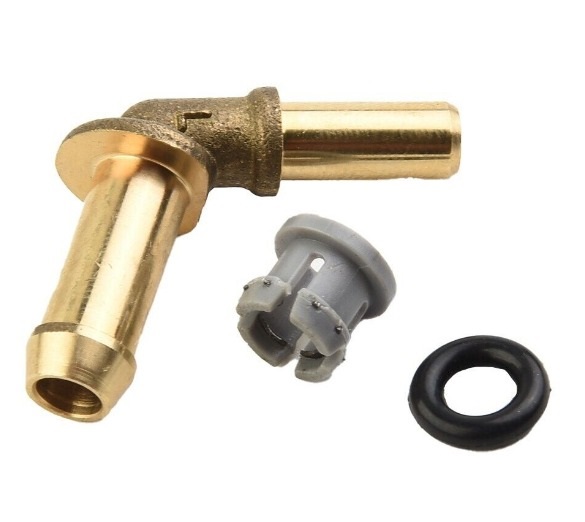
Finding the right manufacturing partner can make or break your product development. Custom plastic products manufacturers bridge the gap between your design concepts and physical parts that work exactly as intended. This guide walks through what these specialists do, how they work, and what you need to know before choosing one.
Key takeaways
- Custom plastic products manufacturers create plastic components built to your exact specifications.
- Top manufacturers offer multiple production methods. Each serves different volumes, complexities, and budget requirements.
- Material selection determines how your part performs in real-world use. Each plastic offers different properties. Here’s how common materials compare:
- Custom manufacturing costs more upfront than buying standard parts. Why do companies choose it anyway?
What Do Custom Plastic Products Manufacturers Actually Do?
Custom plastic products manufacturers create plastic components built to your exact specifications. Unlike buying standard parts off a shelf, custom manufacturing gives you parts designed specifically for your application. You don’t have to redesign your product around available components.
These manufacturers handle the entire journey from concept to finished part. They start with design consultation, move through material selection, create prototypes, build molds if needed, handle production, and finish with quality inspection. Each step ensures the final parts meet your functional, aesthetic, and performance needs.
The best manufacturers combine advanced technology with years of practical experience. They’ve seen what works and what fails across thousands of projects. This knowledge saves you from costly mistakes.
Core Manufacturing Processes: Which One Fits Your Needs?
Top manufacturers offer multiple production methods. Each serves different volumes, complexities, and budget requirements.
Plastic Injection Molding
Injection molding dominates high-volume production. The process forces molten plastic into a precision steel or aluminum mold. Once cooled, the part ejects and repeats. Cycle times run from seconds to minutes depending on part size.
When to use it: Production runs above 10,000 parts
Key advantages: Fast cycles, tight tolerances (down to 0.005 inches), complex geometries possible
Best applications: Automotive components, consumer electronics housings, medical device parts
Cost consideration: High initial tooling cost, very low per-part price at volume
Blow Molding
Blow molding creates hollow parts. Think plastic bottles and containers. The process heats a plastic tube, seals one end, and blows air inside to expand it against the mold walls.
When to use it: Hollow parts in medium to high volumes
Best applications: Bottles, fuel tanks, fluid reservoirs, ductwork
Why choose it: Cost-effective for hollow shapes, good wall thickness control
Plastic Extrusion
Extrusion produces continuous profiles with consistent cross-sections. Plastic melts and pushes through a die, then cools into its final shape. The process runs continuously, creating long lengths cut to size later.
When to use it: Long parts with uniform cross-sections
Best applications: Pipes, tubing, window frames, edge trim, custom seals
Key benefit: Low tooling cost, unlimited length capability
Plastic Machining
Machining removes material from solid plastic blocks or rods. CNC mills and lathes cut away excess material to leave the finished part. This subtractive approach differs from molding’s additive-in-the-mold method.
When to use it: Low volumes, prototypes, or parts too large for molding
Best applications: Precision components, custom one-offs, replacement parts
Advantage: No mold cost, fast turnaround, excellent accuracy
Trade-off: Higher per-part cost, more material waste
Precision Molding
Precision molding takes standard injection molding further. It targets applications needing extreme accuracy and consistency. Aerospace and medical industries rely on this capability.
What makes it different: Tighter tolerances, superior surface finishes, specialized process control
When required: Parts where tiny variations affect performance or safety
Typical industries: Medical devices, aerospace components, optical parts
Plastic Prototyping Services
Smart product development starts with prototyping. Manufacturers offer prototyping through 3D printing, urethane casting, or low-volume machining. This step catches design issues before expensive mold cutting begins.
Benefits of prototyping: Test fit and function early, identify problems cheaply, validate design choices
Methods used: SLA and SLS 3D printing, CNC machining, silicone mold casting
Timeline: Days to weeks instead of months
How to Choose the Right Plastic Material?
Material selection determines how your part performs in real-world use. Each plastic offers different properties. Here’s how common materials compare:
| Material | Key Strengths | Best Applications | Cost Level |
|---|---|---|---|
| ABS | Impact resistance, toughness, good finish | Automotive interiors, electronics housings, toys | Moderate |
| Polypropylene (PP) | Chemical resistance, food safe, fatigue resistance | Containers, medical syringes, automotive parts | Low |
| Polycarbonate (PC) | Optical clarity, extreme impact strength | Safety glasses, medical devices, bullet-resistant glazing | High |
| Nylon 6/6 | Tensile strength, heat resistance, wear resistance | Gears, bushings, industrial components | Moderate |
| Acetal (POM) | Low friction, stiffness, dimensional stability | Precision gears, bearings, valve parts | Moderate |
| HDPE | Strength-to-weight ratio, chemical resistance | Pipes, cutting boards, fuel tanks | Low |
| PVC | Chemical resistance, flame retardance, low cost | Plumbing pipes, electrical insulation, construction | Low |
| PBT | Electrical properties, heat resistance, moisture resistance | Electrical connectors, automotive underhood parts | Moderate |
Real-world example: A medical device company needed syringe components that wouldn’t react with drugs. Polypropylene became the clear choice. It offers FDA-compliant grades, chemical resistance to medications, and can sterilize repeatedly. The manufacturer guided them to medical-grade PP with full documentation for regulatory approval.
What Are the Real Benefits of Going Custom?
Custom manufacturing costs more upfront than buying standard parts. Why do companies choose it anyway?
Bespoke Solutions Fit Perfectly
Standard parts force compromises. You adjust your design to fit available components. Custom parts flip this relationship. The part adapts to your design, not the other way around. This freedom enables better products and genuine innovation.
Cost Effectiveness at Scale
Yes, custom tooling costs real money. A production mold runs from $5,000 for simple parts to $100,000+ for complex multi-cavity tools. But spread that cost across 100,000 parts, and it becomes pennies per part. Injection molding produces parts so cheaply that custom becomes economical at sufficient volume.
Assembly Complexity Drops
Custom parts often combine multiple functions into single components. A molded part might include snap fits, bosses for screws, reinforcing ribs, and living hinges all in one piece. This replaces assemblies of multiple standard parts. Fewer parts mean simpler assembly, lower inventory, and fewer supply chain headaches.
Wear Resistance by Design
Manufacturers formulate materials with specific additives for your application. Need UV resistance for outdoor use? Add stabilizers. Require lubricity for moving parts? Incorporate PTFE or silicone. Standard materials can’t match this targeted optimization.
Accuracy and Repeatability
CNC machining holds tolerances within thousandths of an inch. Injection molding replicates parts identically across millions of cycles. This reliability matters when parts must interchange or assemblies require consistent fit.
Design Freedom
Custom manufacturing supports shapes impossible with standard parts. Complex curves, internal features, undercuts, and variable wall thickness become achievable. Colors, textures, and finishes match your brand requirements exactly.
What Challenges Should You Expect?
Honest conversations about challenges prevent surprises later.
Initial Investment Stings
Tooling costs hit hard at project start. A $50,000 mold feels expensive when you haven’t sold any products yet. Budget accordingly and understand this as capital investment, not operating expense.
Lead Times Test Patience
Mold making takes time. Complex tools need 8-12 weeks from design approval to first parts. Prototyping helps, but production readiness follows its own schedule. Plan your product launches around these realities.
Changes Become Expensive
Modifying steel molds costs serious money. A design change requiring mold alteration might run $5,000-20,000 depending on complexity. This is why thorough prototyping matters. Catch issues before steel gets cut.
Some Designs Push Limits
Not every design works in manufacturing. Sharp internal corners create stress points. Undercuts complicate mold release. Very thin walls may not fill properly. Experienced manufacturers flag these issues during design review and suggest alternatives that maintain function while improving manufacturability.
Which Industries Rely on Custom Plastic Parts?
Custom plastic manufacturing touches nearly every industry sector.
Automotive Industry
Modern cars contain hundreds of plastic components. Interior trim, dashboard assemblies, underhood parts, lighting components, and fluid systems all use custom plastics. Manufacturers balance durability, weight savings, and cost efficiency.
Case example: An electric vehicle startup needed lightweight battery enclosure components. The custom manufacturer developed a glass-filled nylon formulation that provided structural strength, electrical insulation, and flame retardance while saving 40% weight over metal alternatives.
Medical Industry
Medical devices demand precision, biocompatibility, and sterility. Custom manufacturers serve this sector with controlled processes and cleanroom capabilities. Surgical instruments, diagnostic equipment, drug delivery devices, and implantable components all require custom plastic parts.
Key requirements: ISO 13485 certification, material traceability, cleanroom manufacturing, validation documentation
Aerospace Industry
Aircraft interiors use custom plastics extensively. Seat components, galley equipment, overhead bin latches, and air ducting all need lightweight, flame-retardant materials. Aerospace applications demand AS9100 certification and rigorous testing.
Consumer Electronics
Smartphones, laptops, headphones, and smart home devices rely on custom plastic housings and internal components. Manufacturers deliver tight tolerances, cosmetic surfaces, and complex geometries at massive volumes.
Industrial Equipment
Manufacturing machinery, robotics, and processing equipment use custom plastic parts for bearings, wear strips, enclosures, and fluid handling components. These applications prioritize durability and chemical resistance.
Additional Sectors
- Telecommunications: Antenna housings, cable management, equipment enclosures
- Defense: Military-grade components meeting specific specifications
- Packaging: Custom containers, closures, dispensing systems
- Construction: Fittings, profiles, specialty building components
How Do Quality Standards Ensure Reliability?
Reputable manufacturers maintain certifications that prove their quality systems.
ISO 9001:2015
The baseline quality management standard. It ensures consistent processes, documentation, and continuous improvement. Most serious manufacturers hold this certification.
ISO 13485
Medical device quality management. This certification requires stricter controls, risk management, and traceability. Required for medical component manufacturing.
AS9100D
Aerospace quality standard. Adds requirements for safety, traceability, and risk management specific to aviation and space applications.
IATF 16949
Automotive industry quality standard. Focuses on defect prevention and waste reduction throughout the supply chain.
Testing Protocols
Quality extends beyond certifications. Manufacturers implement testing at multiple stages:
- Material verification: Confirm incoming materials meet specifications
- First article inspection: Validate initial production parts against drawings
- In-process checks: Monitor critical dimensions during production
- Final inspection: Verify finished parts before shipment
- Functional testing: Confirm parts perform as designed
How to write a spec that gets priced correctly
A drawing is a contract. If it leaves a number open, the shop fills that number in with its own default. The default is rarely the one you had in mind. Put these five lines on every RFQ and most of the back-and-forth disappears before it starts.
- Resin grade with the standard number
- The property that actually decides the part
- Colour, texture and the face they apply to
- Environmental exposure: UV, chemical, temperature
- Any flame, food or medical rating required
The point is not paperwork. Each line removes a decision the shop would otherwise make for you. A complete RFQ comes back priced. An incomplete one comes back guessed.
What actually drives the price
Buyers usually push on material because it is the line they can see. In practice the material is rarely the biggest number on a quote. These five lines decide most of it:
- resin grade and additive package
- part weight
- tooling
- colour and texture
- certification and testing
Ask for the quote split by line. A supplier who cannot break it down is guessing, and you will pay for the guess. The line you can usually renegotiate is the tolerance band, not the raw material.
Problems you will meet, and the fix
Every process has a failure mode it prefers. The same four show up again and again on this kind of work, and none of them are mysteries once you know what to look for.
- Stress cracking at a moulded-in insert
- UV yellowing on an outdoor part
- Creep under a sustained load at temperature
- Warp on a glass-filled grade with the wrong gate
Catch the fault on the first part, not the hundredth. A first-article check costs an hour. A bad batch costs the whole order. Write the check into the purchase order so nobody has to remember it.
What to check on the first article
The first article is the cheapest inspection you will ever buy. Use it properly and the rest of the run becomes boring, which is exactly what you want.
- Every dimension on the drawing, with the measured value written beside it.
- The material certificate, matched to the heat or lot number on the parts.
- The finish against the sample you approved, under the same light.
- Fit against the mating part, assembled rather than measured.
- Packaging, because parts that arrive damaged were never in tolerance.
Check in this order: datums, then mating features, then cosmetic faces. If the datums are wrong, every number after them is noise. Keep the report on file. When a problem shows up in month six, that document is the only thing that tells you what changed.
How to compare two quotes fairly
Two numbers are not comparable unless the scope matches. Line them up before you decide, because a low number with three gaps is not a low number.
Same drawing, same material, same finish, same inspection. Anything else is a different job wearing the same part number. Then look at what each quote leaves out. Freight, packaging, certificates and tooling are the usual gaps.
Ask each supplier to state their assumptions in writing. The one who does is usually the one who has run the process before.
What Makes an Established Manufacturer Different?
Experience shows in results. Established manufacturers bring capabilities that newer shops can’t match.
Process range: They offer multiple manufacturing methods under one roof. You don’t shop around for different processes.
Material expertise: Their engineers know which materials work for specific applications. They’ve seen successes and failures across decades.
Design guidance: They catch potential problems early. Their DFM feedback saves clients from expensive mistakes.
Scalability: They move seamlessly from prototype to low-volume to mass production. You don’t change suppliers as volumes grow.
Industry knowledge: They understand regulatory requirements, industry standards, and market expectations for your sector.
Reliable timelines: Established processes and experienced teams deliver consistent lead times.
Finding top custom plastic products manufacturers requires understanding what they do, how they work, and what you need from them. The right partner brings technical expertise, manufacturing capabilities, and practical experience to your project. They guide material selection, optimize designs for production, and deliver quality parts that meet your specifications. While challenges like initial costs and lead times exist, the benefits of custom manufacturing—perfect fit, cost efficiency at scale, reduced assembly complexity, and design freedom—make it the right choice for countless applications across every industry sector.
Our solution for Find Top Custom Plastic Products
YiguProto runs plastic part production in house, from a single prototype to a production batch. We quote the process, the material and the finish as separate lines, so you can see where the money goes instead of arguing with one number.
Send a STEP file or a drawing and you get a DFM report in one to two business days. It flags the features that add cost and the features that will not hold tolerance on the process you picked.
Every order ships with an inspection report on the features you call out. If a part misses, we make it again. Ready to price a part? Start with a free quote and DFM review, or read more about our plastic part production. You can also talk to an engineer before you commit to a drawing.
FAQ about Find Top Custom Plastic Products
What material should I specify?
Specify by standard, not by trade name. A trade name can change under you between two orders; a standard number cannot. Then add the one property that actually decides the part, whether that is strength, heat resistance or chemical exposure.
How much does Find Top Custom Plastic Products cost?
Price comes from five lines: material, machine or tool time, setup, finishing and inspection. The material itself is usually the smallest of them. Send a drawing and we will split the quote so you can see which line is doing the damage.
Is there a minimum order quantity?
No hard minimum. One part is fine. What changes with volume is which costs dominate, so a single unit is priced mostly on setup and a thousand units are priced mostly on cycle time and material.
What tolerance can you hold on Find Top Custom Plastic Products?
The working default is ±0.1 mm on molded features, ±0.05 mm after machining. Tighter than that the process changes and so does the price, because every step tighter adds inspection time. Call out only the faces that mate with something else and leave the rest on the general tolerance.
How do I compare two quotes fairly?
Match the scope first: same drawing, same material, same finish, same inspection. Then read the exclusions. Freight, tooling and certificates are the usual gaps, and a low number with three gaps is not a low number.
Can Find Top Custom Plastic Products be made in small quantities?
Yes, and small quantities are where a good supplier earns the next order. Setup dominates the price at low volume, so the cheapest route is usually the one with the fewest operations, not the cheapest material.
The short version
Find Top Custom Plastic Products rewards the buyer who reads the data sheet and the drawing together. Pick the option for the property that matters, not for the price per kilo.
Tighten only what mates. Test a sample before the run. Then let the process do the rest.