
3D Printing
Are Biodegradable 3D Printing Materials Right for You?
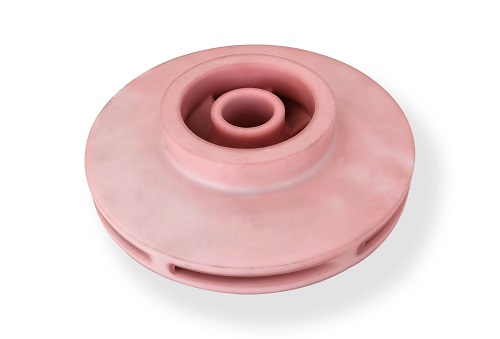
The rise of 3D printing brings a pressing question: how do we reconcile its power with its environmental footprint? Traditional plastics like ABS and PETG offer performance but linger for centuries. The answer lies in a new wave of biodegradable 3D printing materials.
Key takeaways
- The market offers a tiered system of materials, from established workhorses to emerging innovations. Each has a unique profile.
- Switching to biodegradable materials requires adjustments in design, printing, and post-processing.
- These materials are moving beyond prototypes into functional, sustainable products.
- The path isn’t without obstacles. Awareness is the first step to mitigation.
What Does “Biodegradable” Really Mean?
Before choosing a material, you must understand the term. In 3D printing, biodegradable means a material can be broken down by microorganisms like bacteria and fungi into water, carbon dioxide, and biomass. However, two critical factors define its real-world impact:
- Conditions for Breakdown: Most materials need specific industrial composting facilities with controlled high heat (55-70°C) and humidity. They will not degrade in a backyard compost pile or a landfill. The ASTM D6400 standard certifies compostability under these conditions.
- Source Material: True sustainability considers the entire lifecycle. This includes the raw material source (e.g., corn for PLA), the energy used in production, and the end-of-life options available locally.
The goal is a circular economy, where materials are derived from renewable resources and can re-enter the biological cycle, reducing reliance on finite petroleum and cutting plastic waste.
What Are the Leading Material Options?
The market offers a tiered system of materials, from established workhorses to emerging innovations. Each has a unique profile.
Is PLA Still the Best Starting Point?
Polylactic Acid (PLA) is the undisputed gateway to biodegradable 3D printing. Made from fermented plant starch (usually corn or sugarcane), it’s popular for good reason.
- Pros: It is easy to print on almost any desktop FDM printer, has low warping, and comes in many colors. It is also generally considered food-safe for single-use items.
- Cons: It is brittle and has poor heat resistance, softening around 60°C (140°F). Critically, it only decomposes in industrial composters, not in home compost or nature.
A Real-World Case: A university cafeteria switched to 3D-printed PLA utensils for events. They chose PLA for its safe food contact and compostable claim. After use, they partnered with a local industrial composter. The utensils broke down within 90 days, diverting waste from landfills. This case highlights the need for a verified disposal pathway to realize PLA’s environmental benefit.
Can PHA Overcome PLA’s Limits?
Polyhydroxyalkanoates (PHA) represent a significant evolution. These polyesters are produced by microorganisms feeding on plant sugars. Their key advantage is broader biodegradability in soil, marine environments, and home compost, not just industrial facilities.
- Pros: Offers better ductility (less brittle than PLA) and improved moisture resistance. Its broader biodegradation profile makes it a more robust eco-choice.
- Cons: It is currently more expensive (2-3x the cost of PLA) and can be trickier to print, often requiring precise temperature control.
How Do Composite Materials Enhance Performance?
Pure biodegradable polymers often lack the mechanical strength for functional parts. The solution is biodegradable composites, where a base polymer is reinforced with natural fibers.
| Composite Type | Base Material + Filler | Key Properties | Best For |
|---|---|---|---|
| Wood-Filled PLA | PLA + Wood Dust/Fiber | Wood-like finish, sandable, slightly more rigid. | Decorative models, furniture prototypes, consumer goods. |
| Flax/Hemp-Filled PLA | PLA + Natural Plant Fibers | Improved stiffness, unique textured finish. | Lightweight panels, non-structural interior components. |
| Algae-Based Blends | PLA or PHA + Algae Biomass | Unique colors from algae, reduces reliance on crop-based feedstocks. | Artistic installations, packaging prototypes. |
These composites bridge the gap between eco-friendliness and utility. For instance, a design firm used wood-filled PLA to create prototype speaker enclosures. The material provided a realistic wood look for client presentations and could be sanded and finished, while remaining compostable.
What Are the Key Technical Considerations?
Switching to biodegradable materials requires adjustments in design, printing, and post-processing.
How Do You Design for Biodegradability?
Design principles must align with the material’s limits. This is called Design for the Environment (DfE).
- Avoid Over-Engineering: Use material only where needed. Design with hollow sections and optimal infill (often 10-20% is sufficient for visual prototypes) to minimize material use.
- Account for Material Properties: Understand that these materials are generally less strong and less heat-tolerant. Avoid designing load-bearing or high-temperature parts unless you have verified the specific composite’s performance data.
- Plan for End-of-Life: If the part is meant to be composted, avoid bonding it with non-biodegradable adhesives or inserts. Design for easy disassembly.
What Are the Optimal Printing Settings?
Successful printing hinges on fine-tuning your process.
- Temperature Management: Biodegradable materials can be sensitive. PLA typically prints at 190-220°C. PHA may require a narrower, hotter range. Always run temperature towers to find the sweet spot.
- Bed Adhesion and Warping: While PLA sticks well to a cool bed, composites like wood-filled PLA may need a heated bed at 50-60°C. Using a raft or brim can prevent warping, especially with fiber-filled filaments.
- Hardware Considerations: Abrasive composites (wood, hemp) will wear down a standard brass nozzle. Use a hardened steel nozzle for extended printing with these materials to maintain print quality.
What Post-Processing Works Best?
- Support Removal: Supports can be tricky. For PLA, they often snap away cleanly. For tougher composites, careful cutting and sanding are needed.
- Sanding and Finishing: Natural fiber composites sand beautifully to a smooth, organic finish. Pure PLA can be polished with gentle sanding and a flame polish (briefly and carefully) for a glossy look.
- Safety Note: Sanding any composite generates fine dust. Always wear a particulate respirator and work in a well-ventilated area.
What Are the Real-World Applications?
These materials are moving beyond prototypes into functional, sustainable products.
- Consumer Goods & Packaging: Companies are using PLA and PHA for custom packaging inserts, limited-run product casings, and disposable retail displays. These items can be composted after their short lifecycle.
- Medical & Dental Fields: The biocompatibility of some biodegradable polymers is key. PLA and PCL are used to create custom surgical guides, anatomical models for planning, and even temporary implants that dissolve in the body.
- Sustainable Prototyping & Tooling: In product development, biodegradable composites are perfect for concept models, form-and-fit checks, and even short-run soft tooling like jigs and fixtures. They provide the needed function without creating permanent plastic waste.
Case Study: A Green Tooling Solution
An automotive supplier needed a custom alignment jig for a new assembly line. Instead of machining it from aluminum or printing in ABS, they used a high-temp, fiber-reinforced PLA composite. The jig performed flawlessly for the 500-unit pilot production run. Afterward, instead of storing or discarding it, the company shredded and sent it to an industrial composter. This closed the loop on the tool’s lifecycle.
How to write a spec that gets priced correctly
A drawing is a contract. If it leaves a number open, the shop fills that number in with its own default. The default is rarely the one you had in mind. Put these five lines on every RFQ and most of the back-and-forth disappears before it starts.
- File format and units, with the model exported in millimetres
- Process and material grade, not a trade name
- Critical features and the tolerance each one needs
- Surface finish and the faces it applies to
- Quantity for the pilot build and for the year
The point is not paperwork. Each line removes a decision the shop would otherwise make for you. A complete RFQ comes back priced. An incomplete one comes back guessed.
What actually drives the price
Buyers usually push on material because it is the line they can see. In practice the material is rarely the biggest number on a quote. These five lines decide most of it:
- build volume and orientation
- layer height and support structure
- material grade and colour
- post-processing and hand finishing
- quantity per build plate
Ask for the quote split by line. A supplier who cannot break it down is guessing, and you will pay for the guess. The line you can usually renegotiate is the tolerance band, not the raw material.
Problems you will meet, and the fix
Every process has a failure mode it prefers. The same four show up again and again on this kind of work, and none of them are mysteries once you know what to look for.
- Warping on long flat faces where the part lifts off the plate
- Layer lines showing through a cosmetic surface
- Support scars on a mating face nobody flagged
- Dimensional drift on thin walls after cooling
Catch the fault on the first part, not the hundredth. A first-article check costs an hour. A bad batch costs the whole order. Write the check into the purchase order so nobody has to remember it.
What to check on the first article
The first article is the cheapest inspection you will ever buy. Use it properly and the rest of the run becomes boring, which is exactly what you want.
- Every dimension on the drawing, with the measured value written beside it.
- The material certificate, matched to the heat or lot number on the parts.
- The finish against the sample you approved, under the same light.
- Fit against the mating part, assembled rather than measured.
- Packaging, because parts that arrive damaged were never in tolerance.
Check in this order: datums, then mating features, then cosmetic faces. If the datums are wrong, every number after them is noise. Keep the report on file. When a problem shows up in month six, that document is the only thing that tells you what changed.
How to compare two quotes fairly
Two numbers are not comparable unless the scope matches. Line them up before you decide, because a low number with three gaps is not a low number.
Same drawing, same material, same finish, same inspection. Anything else is a different job wearing the same part number. Then look at what each quote leaves out. Freight, packaging, certificates and tooling are the usual gaps.
Ask each supplier to state their assumptions in writing. The one who does is usually the one who has run the process before.
Scaling from one part to a batch
The first part teaches you the process. The hundredth teaches you the process cost.
Watch three things as volume grows: setup amortisation, tool wear, and how much hand work the finish still needs. If the unit price barely moves between ten and a hundred, the cost sits in material or in hand work, not in setup. Ask which, because only one of them is negotiable.
Lead time behaves the same way. A one-off is scheduled around other jobs. A repeat order is scheduled around your forecast. Give the shop a forecast and the lead time gets shorter, not longer.
How to read a supplier's quote
A quote is a short document with a long shadow. Four things in it decide whether the job runs smoothly, and only one of them is the price.
- The scope line. It should name the process, the material and the finish, not just the part.
- The tolerance basis. General tolerance or the drawing, and which standard it follows.
- The exclusions. Tooling, freight, certificates and inspection are the usual omissions.
- The validity date. Material prices move, and an open-ended quote is a promise nobody can keep.
Read the exclusions before you read the total. A quote that leaves out tooling is not cheaper. It is a quote for a different job.
What to send with the first order
The first order sets the pattern for every order after it. Send a complete package once and the shop files it, and the second order takes a fraction of the time.
- A STEP or native model plus a PDF drawing carrying the same revision letter.
- The material callout by standard number, not by trade name.
- The finish and the exact faces it applies to.
- Any test the part must pass: fit, seal, drop, salt spray, dielectric.
- A contact who can answer a question inside one working day.
Then write down what was agreed. An email that confirms the material, the finish and the date is worth more than a longer purchase order that leaves them open.
When this is the wrong choice
A good supplier tells you when the process does not fit. These are the cases where we say so.
- The volume is so low that setup costs more than the parts are worth.
- The tolerance is tighter than the process can hold without a second operation.
- The geometry cannot be made without a tool feature that will not pay back.
- The material you need is not available in the form the process requires.
- The schedule is shorter than the tooling or setup time, and nobody has said so yet.
None of these are refusals. They are reasons to look at a different route, and the earlier that conversation happens the cheaper it is. The most expensive mistake in manufacturing is a process chosen before the question was understood.
How Do You Navigate the Challenges?
The path isn’t without obstacles. Awareness is the first step to mitigation.
- Performance Gaps: Biodegradable materials generally have lower strength, stiffness, and thermal stability than engineering plastics like ABS, Nylon, or PETG. They are not direct drop-in replacements for all applications.
- Cost Premium: Specialized biodegradable filaments, especially PHA and high-quality composites, carry a significant cost premium over standard PLA and certainly over commodity plastics.
- Infrastructure Dependency: The core environmental promise hinges on proper disposal. The lack of widespread access to industrial composting facilities is a major systemic barrier. Always check local availability before committing to a biodegradable strategy.
- Storage and Shelf-Life: These materials can absorb moisture from the air (hygroscopic), which ruins print quality. Store filament in sealed bags with desiccant, and consider using a dry box during printing.
Biodegradable 3D printing materials are a powerful tool for responsible innovation. They are not a perfect, one-size-fits-all solution, but a growing portfolio of options that make sustainable manufacturing more accessible. The choice to use them involves a holistic analysis: matching the material’s properties to the part’s function, understanding the true environmental lifecycle, and ensuring a viable end-of-life pathway. By starting with PLA for non-critical applications, experimenting with composites for enhanced performance, and keeping a close eye on emerging materials like PHA, engineers and designers can significantly reduce the environmental impact of their work. The future of making things is not just about what we create, but what we leave behind.
Our solution for Biodegradable 3D Printing Materials
YiguProto runs 3D printing in house, from a single prototype to a production batch. We quote the process, the material and the finish as separate lines, so you can see where the money goes instead of arguing with one number.
Send a STEP file or a drawing and you get a DFM report in one to two business days. It flags the features that add cost and the features that will not hold tolerance on the process you picked.
Every order ships with an inspection report on the features you call out. If a part misses, we make it again. Ready to price a part? Start with a free quote and DFM review, or read more about our 3D printing. You can also talk to an engineer before you commit to a drawing.
FAQ about Biodegradable 3D Printing Materials
What files do you need in order to quote?
A STEP file plus a PDF drawing that carries the same revision letter. The model carries the geometry and the drawing carries the intent. When the two disagree, the shop picks one, and it is never the one you meant.
Does the process work for prototypes as well as production?
Yes, and that is usually the point. Running the prototype on the production process removes a whole class of surprises, because the part you test is made the same way as the part you sell.
Is there a minimum order quantity?
No hard minimum. One part is fine. What changes with volume is which costs dominate, so a single unit is priced mostly on setup and a thousand units are priced mostly on cycle time and material.
What is the lead time for Biodegradable 3D Printing Materials?
Expect 2 to 5 business days for a first batch. Tooling, material stock and the finishing queue all move that number, so we confirm the date in writing before the run starts rather than after.
What material should I specify?
Specify by standard, not by trade name. A trade name can change under you between two orders; a standard number cannot. Then add the one property that actually decides the part, whether that is strength, heat resistance or chemical exposure.
Can Biodegradable 3D Printing Materials be made in small quantities?
Yes, and small quantities are where a good supplier earns the next order. Setup dominates the price at low volume, so the cheapest route is usually the one with the fewest operations, not the cheapest material.
The short version
Biodegradable 3D Printing Materials rewards the buyer who reads the data sheet and the drawing together. Pick the option for the property that matters, not for the price per kilo.
Tighten only what mates. Test a sample before the run. Then let the process do the rest.