
Industry Applications
How Is CNC Automation Reshaping Modern Manufacturing?
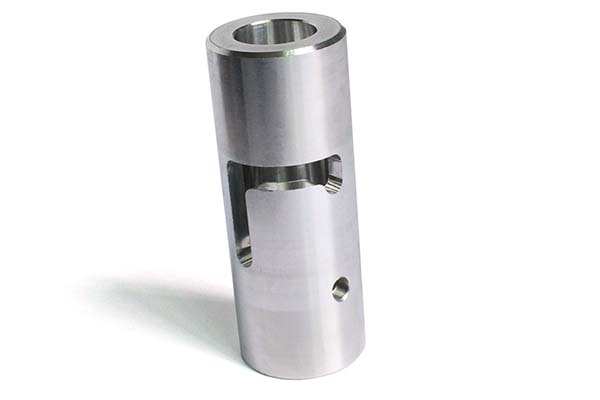
In today’s world where labor costs continue to rise and market demands become increasingly personalized, traditional CNC machining models are facing the dual challenges of “efficiency bottlenecks” and “precision fluctuations”.
Key takeaways
- To understand CNC automation, we first need to break down its core components—these technologies work together like precision cogs, driving the automation system to run efficiently.
- Only through scientific system integration—hardware, software, material flow, and information flow working as one organic whole—can you achieve a true closed loop of automated production.
- The core goal is achieving cost reduction, efficiency improvement, and quality gains. Let’s look at the numbers.
- CNC automation isn’t an overnight project—it’s systematic engineering requiring scientific planning and step-by-step implementation.
What Are the Core Technologies and Components of CNC Automation?
To understand CNC automation, we first need to break down its core components—these technologies work together like precision cogs, driving the automation system to run efficiently.
Core Hardware: The “Skeleton” of Automated Production
| Component | Function | Real-World Impact |
|---|---|---|
| CNC machine tools | Core processing unit | 12,000 RPM spindle, ±0.002mm repeat positioning accuracy enables long-term unattended operation |
| Robot loading/unloading | Bridge connecting machines and materials | 6-axis articulated robot covers 2-3 machine tools, eliminating manual intervention |
| Automatic feeders | Material supply for mass production | Vibratory feeder: 30-50 parts/minute with ±0.01mm accuracy |
| Pallet exchange systems | Continuous workpiece turnover | 16-station system enables unmanned roughing-to-finishing with 8 processes in single clamping |
| In-line measurement | Accuracy assurance | Contact probes detect dimensions real-time, compensating for tool wear—99.5% qualification rate |
| Sensor technology | Equipment status monitoring | Vibration sensors predict failures, reducing unplanned downtime |
Real example: An aviation parts company integrated online probes on CNC machines, automatically compensating for tool wear during processing. Result: dimensional qualification rate increased to 99.5%.
Core Software: The “Brain” of Automated Production
- CNC control systems (FANUC, Siemens SINUMERIK): Support complex path programming, multi-axis linkage, remote monitoring, and fault self-diagnosis
- Automated programming software (Mastercam, HyperMill): Automatic toolpath generation and simulation—reduces programming time and errors
- CAD/CAM integration: Design files convert directly to machining code. A new energy company used this to reduce new product time-to-market by 30%
How to Create a Seamless Automated Production System?
Only through scientific system integration—hardware, software, material flow, and information flow working as one organic whole—can you achieve a true closed loop of automated production.
From Unit Automation to Whole-Line Automation
| System | Composition | Best For | Result |
|---|---|---|---|
| Flexible Manufacturing Unit (FMC) | 1-3 CNC machines + robots + pallet warehouse | Multi-variety, small-to-medium batches | A medical device company reduced changeover time from 2 hours to 15 minutes for 8 different implant sizes |
| Automated Production Line (FML) | Multiple machines + material handling + testing equipment | High-volume, standardized products | A phone case plant: 100,000 units/day with only 3 operators—from die-casting to anodizing |
Key Integration Technologies
Machine tool networking: Connect multiple machines via DNC/MES for centralized management. A machine shop increased production plan completion from 75% to 92%, equipment utilization up 28%.
Material handling systems: AGV carts, conveyors, truss manipulators automate workpiece flow. A 3C factory reduced material distribution error rate to 0.1%, efficiency up 50%.
Industrial IoT platforms (Alibaba Cloud IoT, Siemens MindSphere): Connect devices, data, and people. A heavy industry company monitored 200 CNC machines real-time, increasing overall equipment effectiveness (OEE) by 18%.
Data collection and monitoring: SCADA systems generate visual reports. An electronics company detected abnormal tool wear early, avoiding batch scrap and saving ¥200,000 in one month.
Common Solution Types
| Solution | Best For | Core Strength | Typical Case |
|---|---|---|---|
| Stand-alone automation | Upgrading existing equipment, small batches | Low cost, short implementation | 3 old CNC machines + robot loading/unloading: ¥500,000 investment, 6-month payback |
| Flexible manufacturing unit | Multi-variety, medium batches | Flexible changeover, high utilization | Auto parts plant: 12 types of transmission parts mixed production |
| Turnkey line solution | New factories, mass production | Full automation, stable capacity | New energy battery plant: 200,000 electrodes/day |
What Real Value Can CNC Automation Bring?
The core goal is achieving cost reduction, efficiency improvement, and quality gains. Let’s look at the numbers.
Data-Driven Value Enhancement
Production efficiency: Automation enables 24/7 unmanned production—no fatigue, no breaks. A mold factory extended effective processing time from 8 to 20 hours daily, capacity up 150%.
Labor costs: One robot replaces 2-4 operators. At ¥80,000 annual salary per worker, one robot saves ¥160,000–320,000 per year.
Machining consistency: Eliminates manual uncertainty. A precision machinery company reduced tolerance fluctuation from ±0.02mm to ±0.005mm, customer complaints down 80%.
Human error reduction: Manual error rates: 1-2%; automated systems: <0.1%. An electronics factory reduced human-error scrap from 1.8% to 0.05%, saving ¥300,000 annually in raw materials.
Lead time reduction: Continuous operations cut lead times 30-50% on average. A mechanical parts company shortened delivery from 15 to 7 days, customer satisfaction up to 95%.
How to Calculate Return on Investment
ROI = (Annual Cost Savings + Annual New Revenue) ÷ Total Investment × 100%
Payback period = Total Investment ÷ Net Annual Gains
Case calculation: A parts company invested ¥2 million in CNC automation:
- Annual labor savings: ¥800,000
- New order revenue: ¥400,000
- Annual maintenance: ¥100,000
Annual net income = 80 + 40 – 10 = ¥1.1 million
ROI = 110 ÷ 200 × 100% = 55%
Payback period = 200 ÷ 110 ≈ 1.8 years
Key influencing factors:
- Production batch: Larger batches = lower per-product cost allocation = shorter payback
- Labor cost: Higher labor costs make automation more cost-effective
- Product complexity: Simple standardized products easier to automate
- Equipment utilization: Over 70% utilization makes automation investment more promising
Also consider Total Cost of Ownership (TCO) —initial investment, installation, maintenance, training, consumables—not just upfront costs.
How Can Businesses Implement CNC Automation Smoothly?
CNC automation isn’t an overnight project—it’s systematic engineering requiring scientific planning and step-by-step implementation. Many companies fail due to lack of clear strategy.
Preliminary Preparation: Prerequisites for Success
Automation assessment: Evaluate production process, product characteristics, capacity needs, cost structure. A furniture company found their high customization, small batches unsuitable for full-line automation—chose single-machine transformation instead, reducing investment by 60%.
Process optimization: Automation requires process standardization first. Optimize existing processes, eliminate redundant steps. A machining plant optimized clamping—from 3 setups to 1—increasing automation efficiency by 40%.
Clear goals and budget: Set quantitative targets (e.g., 30% capacity increase, 50% manpower reduction). Budget realistically—reserve 10-15% contingency funds for unexpected issues.
Phased Implementation Strategy
| Phase | Core Mission | Timeline | Expected Effect |
|---|---|---|---|
| Pilot | Transform 1-2 mature production lines to verify feasibility | 3-6 months | Gain experience, validate ROI, identify problems |
| Promotion | Replicate successful pilots to other lines | 6-12 months | Gradual capacity increase, costs decrease |
| Optimization | Introduce data analytics, AI for intelligent upgrades | Long-term | Further improve utilization and efficiency |
Common Challenges and Solutions
High initial investment:
- Choose cost-effective solutions, prioritize bottleneck processes
- Use financial leasing or installment payments to ease pressure
Employee skills mismatch:
- Systematic training: equipment operation, programming, maintenance
- Recruit technical specialists; build automation teams. An appliance company trained 15 automation technicians in 6 months through internal training + external hiring
System maintenance and reliability:
- Establish preventive maintenance systems
- Choose suppliers with strong after-sales service and spare parts availability
- Implement predictive maintenance technologies
Safety concerns:
- Follow ISO 10218 standards: safety guardrails, emergency stops, light curtains
- Develop safety procedures and conduct regular drills
Change management resistance:
- Communicate automation benefits clearly (reducing repetitive labor, skill upgrades)
- Establish incentives for employees participating in automation projects
Where Is CNC Automation Headed Next?
With AI, IoT, digital twins, and other technologies, CNC automation is transforming from “automated” to “intelligent and green.” Six major trends are emerging:
Deep Integration of AI and Machine Learning
AI optimizes machining parameters automatically, predicts tool life, and diagnoses faults intelligently. An aero engine company uses AI to adjust cutting parameters based on material characteristics—efficiency up 25%, tool life extended 30%.
Digital Twin Technology Goes Mainstream
Digital twins create virtual replicas of physical equipment to simulate, monitor, and optimize production. An auto factory used digital twins to detect potential problems early, shortening production line commissioning by 40%, first-pass success rate up to 98%.
Predictive Maintenance Becomes Standard
Sensors collect equipment data; AI predicts failures—replacing “reactive” with “preventive” maintenance. Data shows predictive maintenance reduces downtime by 30% and maintenance costs by 25%.
Adaptive Machining Breakthroughs
Adaptive systems sense real-time changes (material hardness fluctuations, tool wear) and automatically adjust parameters. A precision mold factory using adaptive technology achieved 99.2% part qualification rate despite uneven material hardness.
Cloud Collaborative Manufacturing Rises
5G and edge computing enable cloud collaboration, resource sharing, and capacity scheduling across multiple factories. A machinery group connected factories in three cities via cloud platform—order response speed up 50%, capacity utilization up 20%.
Sustainable and Green Manufacturing
CNC automation increasingly focuses on energy conservation: energy-efficient motors, optimized cutting paths to reduce consumption, cutting fluid recycling. A parts company’s green automation transformation reduced energy consumption per unit by 28%, saving ¥1.2 million annually in electricity.
CNC automation has transformed from “optional” to “essential” in modern manufacturing. But its core value isn’t simply “replacing manual labor”—it’s about reconstructing production models through technological innovation to achieve comprehensive optimization of efficiency, quality, and cost.
Key takeaways:
- Core components: CNC machines, robots, feeders, pallet systems, sensors, and software form the foundation
- System integration: FMCs for flexibility, FMLs for volume, with IoT and data platforms enabling seamless operation
- Measurable benefits: 40%+ efficiency gains, 80%+ defect reduction, 1-3 year payback periods
- Implementation strategy: Assess, standardize, pilot, promote, optimize—in that order
- Future trends: AI, digital twins, predictive maintenance, adaptive machining, cloud collaboration, green manufacturing
When promoting automation, avoid the trap of “focusing on technology over planning” or “focusing on hardware over software.” Choose solutions based on your actual production needs. The deep integration of automation, intelligence, and green manufacturing will continue creating innovative applications—and only enterprises that embrace technological change while building core capabilities will thrive in an increasingly competitive market.
How to write a spec that gets priced correctly
A drawing is a contract. If it leaves a number open, the shop fills that number in with its own default. The default is rarely the one you had in mind. Put these five lines on every RFQ and most of the back-and-forth disappears before it starts.
- The application and the environment it runs in
- The standard the part must meet
- Process and material that can meet it
- Inspection and documentation package
- Volume and ramp schedule
The point is not paperwork. Each line removes a decision the shop would otherwise make for you. A complete RFQ comes back priced. An incomplete one comes back guessed.
What actually drives the price
Buyers usually push on material because it is the line they can see. In practice the material is rarely the biggest number on a quote. These five lines decide most of it:
- process selection
- material and certification
- tolerance band
- inspection and documentation
- volume
Ask for the quote split by line. A supplier who cannot break it down is guessing, and you will pay for the guess. The line you can usually renegotiate is the tolerance band, not the raw material.
Problems you will meet, and the fix
Every process has a failure mode it prefers. The same four show up again and again on this kind of work, and none of them are mysteries once you know what to look for.
- A consumer-grade process chosen for an industrial duty
- Documentation that arrives after the parts
- A tolerance tighter than the application needs
- No plan for the second source
Catch the fault on the first part, not the hundredth. A first-article check costs an hour. A bad batch costs the whole order. Write the check into the purchase order so nobody has to remember it.
What to check on the first article
The first article is the cheapest inspection you will ever buy. Use it properly and the rest of the run becomes boring, which is exactly what you want.
- Every dimension on the drawing, with the measured value written beside it.
- The material certificate, matched to the heat or lot number on the parts.
- The finish against the sample you approved, under the same light.
- Fit against the mating part, assembled rather than measured.
- Packaging, because parts that arrive damaged were never in tolerance.
Check in this order: datums, then mating features, then cosmetic faces. If the datums are wrong, every number after them is noise. Keep the report on file. When a problem shows up in month six, that document is the only thing that tells you what changed.
How to compare two quotes fairly
Two numbers are not comparable unless the scope matches. Line them up before you decide, because a low number with three gaps is not a low number.
Same drawing, same material, same finish, same inspection. Anything else is a different job wearing the same part number. Then look at what each quote leaves out. Freight, packaging, certificates and tooling are the usual gaps.
Ask each supplier to state their assumptions in writing. The one who does is usually the one who has run the process before.
FAQ About CNC Automation
What kind of businesses are suitable for introducing CNC automation?
Enterprises with mass production, highly standardized products, high labor costs, and demanding precision requirements. Small-batch, customized products can choose flexible manufacturing units or stand-alone automation.
What’s the typical payback cycle for CNC automation?
Usually 1-3 years, depending on industry, product, and solution. Mass production industries (3C, auto parts) have shorter cycles; small-batch, complex products take longer.
Can existing old CNC machines be automated?
Yes. Old machines with acceptable accuracy and stability can be retrofitted with robot loading/unloading, automatic feeders, in-line measurement, etc. Investment cost: only 30-50% of new equipment—very cost-effective.
Will employees lose jobs after automation?
No. Automation replaces repetitive, heavy manual labor. Employees can transition to technical roles: equipment operation, programming, maintenance, quality monitoring—achieving career upgrades through skill development.
How do I choose a reliable CNC automation supplier?
Prioritize suppliers with industry case studies, strong technical capabilities, and excellent after-sales service. Visit their successful installations in person to understand solution maturity and maintenance response speed. Avoid low-price, low-quality options.
What’s the first step in automation implementation?
Start with a comprehensive automation assessment—evaluate your production processes, product characteristics, capacity needs, and cost structure. This prevents investing in solutions that don’t fit your actual requirements.
How long does automation implementation take?
Pilot phase: 3-6 months. Full-line implementation for new factories: 12-18 months. Timeline depends on project scale, complexity, and your team’s readiness.
Our solution for CNC Automation Reshaping Modern Manufacturing
YiguProto runs contract manufacturing in house, from a single prototype to a production batch. We quote the process, the material and the finish as separate lines, so you can see where the money goes instead of arguing with one number.
Send a STEP file or a drawing and you get a DFM report in one to two business days. It flags the features that add cost and the features that will not hold tolerance on the process you picked.
Every order ships with an inspection report on the features you call out. If a part misses, we make it again. Ready to price a part? Start with a free quote and DFM review, or read more about our contract manufacturing. You can also talk to an engineer before you commit to a drawing.
FAQ about CNC Automation Reshaping Modern Manufacturing
Is there a minimum order quantity?
No hard minimum. One part is fine. What changes with volume is which costs dominate, so a single unit is priced mostly on setup and a thousand units are priced mostly on cycle time and material.
How long does a first article take?
Usually a few business days once the drawing is frozen, and longer if tooling is involved. The date we give you is the date we confirm in writing, not the date we hope for.
Can CNC Automation Reshaping Modern Manufacturing be made in small quantities?
Yes, and small quantities are where a good supplier earns the next order. Setup dominates the price at low volume, so the cheapest route is usually the one with the fewest operations, not the cheapest material.
What material should I specify?
Specify by standard, not by trade name. A trade name can change under you between two orders; a standard number cannot. Then add the one property that actually decides the part, whether that is strength, heat resistance or chemical exposure.
What is the lead time for CNC Automation Reshaping Modern Manufacturing?
Expect 5 to 20 business days depending on process and volume. Tooling, material stock and the finishing queue all move that number, so we confirm the date in writing before the run starts rather than after.
How much does CNC Automation Reshaping Modern Manufacturing cost?
Price comes from five lines: material, machine or tool time, setup, finishing and inspection. The material itself is usually the smallest of them. Send a drawing and we will split the quote so you can see which line is doing the damage.
The short version
CNC Automation Reshaping Modern Manufacturing rewards the buyer who reads the data sheet and the drawing together. Pick the option for the property that matters, not for the price per kilo.
Tighten only what mates. Test a sample before the run. Then let the process do the rest.