
Industry Applications
Is CNC Machining in China Right for Your Global Sourcing Strategy?
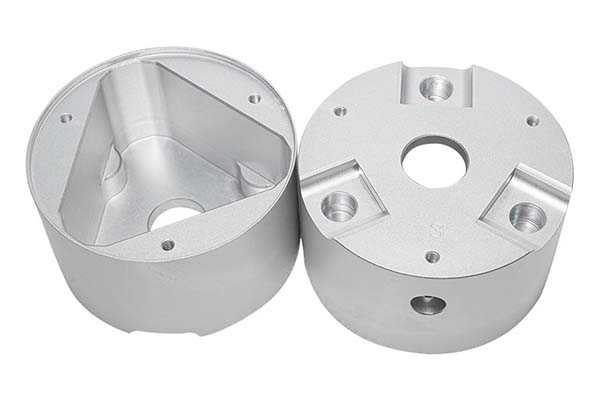
If you are a global buyer searching for dependable and cost-effective manufacturing solutions, China’s CNC machining industry likely appears on your radar. Over the past two decades, this sector has transformed from a basic, low-cost option into a sophisticated ecosystem that serves industries like aerospace, medical devices, and automotive.
Key takeaways
- China’s position at the top of the CNC machining world isn’t accidental.
- Finding a trustworthy partner is the most critical step. A systematic evaluation process can prevent costly mistakes and ensure a smooth relationship.
- Even with careful selection, challenges can arise. Proactive planning is your best defense.
- To help you quickly assess the landscape, here is a summary of key industry data points.
Why Is China a Global Leader in CNC Machining?
China’s position at the top of the CNC machining world isn’t accidental. It is built on a foundation of cost efficiency, massive scale, and continuous technological upgrades. Understanding these advantages helps you make informed sourcing decisions.
What Makes CNC Machining in China So Cost-Effective?
The most obvious advantage is cost, but the reason for it has evolved. While labor rates have risen, China maintains its edge through a mature and deeply integrated supply chain. Raw materials—from standard aluminum 6061 to specialty engineering plastics like PEEK—are produced locally in massive quantities. This proximity reduces material costs and lead times.
Furthermore, the sheer number of machining facilities creates intense competition, which keeps prices fair. A 2024 report by the China Machine Tool & Tool Builders’ Association (CMTBA) indicated that global buyers typically save between 30% to 50% on machined parts compared to sourcing from North America or Western Europe. This cost saving is achieved without an automatic sacrifice in quality, as many factories now use global-standard equipment.
How Does China’s Production Capacity Benefit You?
Scale is perhaps China’s most significant advantage. With over 150,000 CNC machining facilities (CMTBA, 2025), the country offers unparalleled flexibility. You are not locked into a single type of supplier.
This vast network means you can start with a 10-part prototype and later scale to a 100,000-unit production run, often with the same partner. For instance, a medical startup from Germany needed 20 complex titanium prototypes for testing. After validation, they required 20,000 units. Their Chinese partner, located in the Jiangsu province, simply shifted the parts from their prototype cell to their high-volume production line, maintaining the same ISO 13485 quality standards throughout.
Are Chinese CNC Shops Technologically Advanced?
Yes, the technological gap has closed significantly. Top-tier Chinese manufacturers invest heavily in equipment from global leaders like Fanuc, Siemens, and Haas. Many also use advanced domestic brands that meet international precision standards.
The integration of CAD/CAM software (such as SolidWorks and Mastercam) is now standard practice. Additionally, a 2024 survey by the China Association of Automobile Manufacturers noted that over 65% of large CNC plants have adopted some form of automation. This includes robotic part loading and in-line inspection, which reduces lead times by 20-25%. This means your parts are not just cut faster; they are checked for accuracy automatically during the process.
Which Regions in China Are Best for Your Parts?
China is not a monolithic manufacturing bloc. Different regions have developed unique specializations based on their industrial history and infrastructure. Choosing a partner from the right region can give you a head start.
Guangdong: The Precision and Electronics Hub
Cities like Shenzhen and Dongguan form the heart of the world’s electronics industry. If your project involves small, high-precision parts—such as connector housings, camera modules, or heat sinks—this is the place to look.
Suppliers here excel at micro-machining and maintaining tight tolerances, often down to ±0.005mm. They are accustomed to the fast-paced iteration cycles of consumer electronics. An IoT company from Sweden, for example, sourced precision-machined aluminum cases for their sensors here. They achieved a defect rate of less than 0.8%, a significant improvement over their previous European supplier’s 5% rate.
Jiangsu: Heavy Industry and Large-Scale Production
Centered around cities like Suzhou and Wuxi, Jiangsu province is known for its heavy machinery and automotive parts manufacturing. Factories here often specialize in large-part machining. They operate massive 5-axis gantry mills and horizontal lathes capable of handling components several meters long.
If you need large steel or iron parts, such as machine bases, engine blocks, or construction equipment components, Jiangsu offers the expertise and equipment. The workforce here is experienced in managing the challenges of heavy cutting, ensuring structural integrity and surface finish on large workpieces.
Zhejiang: Versatility and Rapid Prototyping
Zhejiang, particularly around Ningbo, is a hub for general manufacturing and rapid prototyping. This region is ideal for buyers who need a mix of custom plastic and metal parts quickly.
Shops in Zhejiang are often more flexible with low minimum order quantities (MOQs). They cater to a wide range of industries, from consumer goods to medical devices. A Canadian robotics firm we know used a Zhejiang-based supplier to produce a series of complex, multi-material prototypes. The supplier was able to switch between machining aluminum and ABS plastic on the same day, allowing for rapid design validation.
How to Select the Right CNC Partner in China
Finding a trustworthy partner is the most critical step. A systematic evaluation process can prevent costly mistakes and ensure a smooth relationship.
Step 1: Verify Certifications and Quality Systems
Do not just accept a PDF certificate at face value. You need to understand how quality is implemented on the shop floor. Look for ISO 9001:2015 as a baseline. For medical parts, ISO 13485 is non-negotiable. For automotive, demand IATF 16949.
Ask to see their quality control checklists. Request examples of First Article Inspection Reports (FAIR) from recent jobs. A reliable supplier will be proud to show you how they track quality. For instance, a U.K. aerospace company we advised required their Chinese partner to submit CMM (Coordinate Measuring Machine) data for the first five parts of every batch, a practice that eliminated assembly line stoppages.
Step 2: Audit Their Technical Capabilities
Match the supplier’s equipment to your project’s specific demands. Create a checklist that includes:
- Machine Types: Do they have the right mix of 3-axis, 4-axis, or 5-axis CNC mills? Do they have Swiss-type lathes for small, complex parts?
- Material Expertise: Do they commonly machine your required material, such as titanium grade 5, stainless steel 316, or Delrin?
- Tolerance Capability: Can they consistently hold ±0.01mm where your design requires it?
- Secondary Services: Do they offer in-house finishing like anodizing, powder coating, or heat treatment? This simplifies your supply chain.
A robotics startup from California learned this lesson the hard way. They sent a titanium part design to a shop that mostly worked with aluminum. The shop lacked the rigid tooling and specific coolants needed, resulting in poor surface finish and scrapped parts.
Step 3: Assess Capacity and Lead Time Realism
Be upfront about your volumes and deadlines. Ask these specific questions:
- What is your typical lead time for a prototype run (1-50 pcs)?
- What is your lead time for full production (1,000+ pcs)?
- How do you handle rush orders or unexpected capacity spikes?
- What is your economic order quantity (EOQ) for a part like mine?
A furniture brand from Australia needed 5,000 machined aluminum legs in five weeks. They chose a supplier in Guangdong who had 15 identical CNC routers. This dedicated setup allowed them to run the job 24/7 and meet the tight deadline, which a smaller shop could not have done.
Step 4: Demand Samples and Check References
This step is non-negotiable. Before placing a large order, pay for a sample run. This tests the supplier’s understanding of your drawings, their quality output, and their shipping process.
Simultaneously, ask for and contact at least three references, preferably from companies in your industry or your region. Ask those references about on-time delivery, communication responsiveness, and how the supplier handled a quality issue. A French medical device company we work with always does a video call with the reference’s project manager to get an unfiltered opinion.
Step 5: Evaluate Communication and Logistics
Poor communication is a major source of friction. Your primary contact should be an English-speaking project manager who understands technical terms and responds promptly. Set expectations for response time—ideally within 24 hours.
Also, clarify logistics early. Does the supplier handle export documentation? Can they arrange shipping (air or sea)? Do they have experience with your country’s customs requirements? A Mexican industrial parts importer saved weeks of hassle by choosing a supplier that offered a DDP (Delivered Duty Paid) shipping option, handling everything from factory to delivery.
What Are the Common Risks and How Can You Avoid Them?
Even with careful selection, challenges can arise. Proactive planning is your best defense.
Quality Inconsistency: How to Ensure Uniformity
Even certified shops might have variations between prototype and mass production runs.
Solution: Implement a robust quality plan. Require a pre-production sample approval. Use a process approval checklist. For high-value orders, consider hiring a third-party inspection (TPI) agency in China. They can conduct random in-process inspections or final random inspections before shipment. One European automotive supplier reduced its defect rate from 5% to under 0.5% by using a TPI to check 15% of every batch.
Intellectual Property: How to Protect Your Designs
IP concerns are valid, especially with unique products.
Solution: Layer your protection. First, always sign a bilateral Non-Disclosure Agreement (NDA) before sharing sensitive files. Second, consider sharing simplified or watermarked 2D drawings for initial quoting. Only provide the full 3D CAD model and critical tolerance data after the NDA is signed and you have committed to the supplier. A U.S. startup that invented a new valve design used this method, only releasing full STEP files after the NDA was in place and a deposit was paid.
Communication Gaps: How to Bridge the Distance
Language barriers and the time difference can lead to misunderstandings.
Solution: Use clear, annotated technical drawings with metric units. Avoid vague notes; specify everything. Establish a regular communication cadence, such as a weekly video call using Zoom or Teams. Use a shared project management tool like Asana or Trello where tasks and updates are visible to both teams. A German engineering firm we know uses a bilingual project log, with critical updates entered in both English and Mandarin to ensure clarity.
How to write a spec that gets priced correctly
A drawing is a contract. If it leaves a number open, the shop fills that number in with its own default. The default is rarely the one you had in mind. Put these five lines on every RFQ and most of the back-and-forth disappears before it starts.
- The application and the environment it runs in
- The standard the part must meet
- Process and material that can meet it
- Inspection and documentation package
- Volume and ramp schedule
The point is not paperwork. Each line removes a decision the shop would otherwise make for you. A complete RFQ comes back priced. An incomplete one comes back guessed.
What actually drives the price
Buyers usually push on material because it is the line they can see. In practice the material is rarely the biggest number on a quote. These five lines decide most of it:
- process selection
- material and certification
- tolerance band
- inspection and documentation
- volume
Ask for the quote split by line. A supplier who cannot break it down is guessing, and you will pay for the guess. The line you can usually renegotiate is the tolerance band, not the raw material.
Problems you will meet, and the fix
Every process has a failure mode it prefers. The same four show up again and again on this kind of work, and none of them are mysteries once you know what to look for.
- A consumer-grade process chosen for an industrial duty
- Documentation that arrives after the parts
- A tolerance tighter than the application needs
- No plan for the second source
Catch the fault on the first part, not the hundredth. A first-article check costs an hour. A bad batch costs the whole order. Write the check into the purchase order so nobody has to remember it.
What to check on the first article
The first article is the cheapest inspection you will ever buy. Use it properly and the rest of the run becomes boring, which is exactly what you want.
- Every dimension on the drawing, with the measured value written beside it.
- The material certificate, matched to the heat or lot number on the parts.
- The finish against the sample you approved, under the same light.
- Fit against the mating part, assembled rather than measured.
- Packaging, because parts that arrive damaged were never in tolerance.
Check in this order: datums, then mating features, then cosmetic faces. If the datums are wrong, every number after them is noise. Keep the report on file. When a problem shows up in month six, that document is the only thing that tells you what changed.
How to compare two quotes fairly
Two numbers are not comparable unless the scope matches. Line them up before you decide, because a low number with three gaps is not a low number.
Same drawing, same material, same finish, same inspection. Anything else is a different job wearing the same part number. Then look at what each quote leaves out. Freight, packaging, certificates and tooling are the usual gaps.
Ask each supplier to state their assumptions in writing. The one who does is usually the one who has run the process before.
CNC Machining in China: Key Data at a Glance
To help you quickly assess the landscape, here is a summary of key industry data points.
| Factor | Typical Metric / Statistic | Source / Note |
|---|---|---|
| Cost Savings | 30-50% vs. North America/Western Europe | CMTBA Report, 2024 |
| Number of Facilities | Over 150,000 | CMTBA Estimate, 2025 |
| Automation Rate | >65% in large plants | CAAM Survey, 2024 |
| Typical Lead Time (Proto) | 1-2 weeks | For 1-100 simple parts |
| Typical Lead Time (Prod.) | 4-6 weeks | For 10,000+ parts |
| Common Tolerances | ±0.05mm to ±0.01mm | Depends on machine and part geometry |
| Key Certifications | ISO 9001, ISO 13485, IATF 16949 | Ask for evidence, not just certificates |
| Top Materials | Aluminum 6061/7075, SS 304/316, PEEK, ABS | Readily available with local supply chains |
CNC machining in China offers a powerful combination of cost savings, advanced technology, and immense production flexibility that is hard to find elsewhere. The key to success lies not in treating it as a simple transaction, but as a strategic partnership. By understanding regional specializations, rigorously vetting potential suppliers, and proactively managing risks around quality, IP, and communication, you can unlock significant value for your projects. The industry has matured; it now rewards buyers who are informed, organized, and engaged.
Our solution for CNC Machining
YiguProto runs contract manufacturing in house, from a single prototype to a production batch. We quote the process, the material and the finish as separate lines, so you can see where the money goes instead of arguing with one number.
Send a STEP file or a drawing and you get a DFM report in one to two business days. It flags the features that add cost and the features that will not hold tolerance on the process you picked.
Every order ships with an inspection report on the features you call out. If a part misses, we make it again. Ready to price a part? Start with a free quote and DFM review, or read more about our contract manufacturing. You can also talk to an engineer before you commit to a drawing.
FAQ about CNC Machining
Does the process work for prototypes as well as production?
Yes, and that is usually the point. Running the prototype on the production process removes a whole class of surprises, because the part you test is made the same way as the part you sell.
What should I check before approving the parts?
Datums first, then the features that mate, then the cosmetic faces. Ask for a dimensional report, a material certificate and a finish sample. A part can be inside every tolerance and still not fit, so assemble one before you sign.
Is there a minimum order quantity?
No hard minimum. One part is fine. What changes with volume is which costs dominate, so a single unit is priced mostly on setup and a thousand units are priced mostly on cycle time and material.
What happens if a part is out of specification?
We measure it against the same drawing you approved and, if it misses, we make it again. What matters is that the report exists, because a disagreement without data is just an opinion.
What is the lead time for CNC Machining?
Expect 5 to 20 business days depending on process and volume. Tooling, material stock and the finishing queue all move that number, so we confirm the date in writing before the run starts rather than after.
What is CNC Machining used for?
CNC Machining turns up wherever the part has to do a real job at a predictable cost: brackets, housings, fixtures, covers and the fittings that hold them together. The honest test is whether the properties match the load and the environment, not whether the material is fashionable.
The short version
CNC Machining rewards the buyer who reads the data sheet and the drawing together. Pick the option for the property that matters, not for the price per kilo.
Tighten only what mates. Test a sample before the run. Then let the process do the rest.