
Metal Materials
D3 Tool Steel: Properties, Applications, Manufacturing Guide
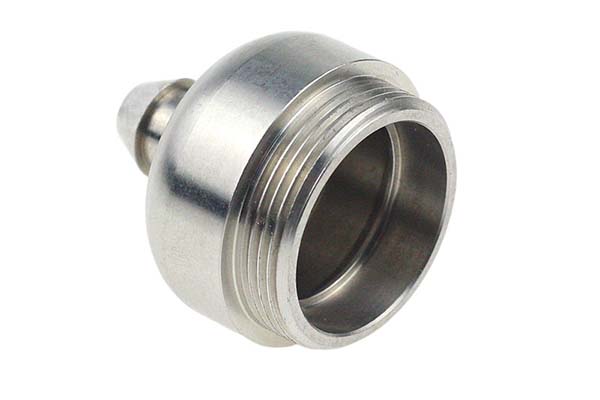
When your application demands extreme wear resistance and the ability to hold a sharp edge under demanding conditions, D3 tool steel offers a specialized solution. As a high-carbon, high-chromium cold-work tool steel, it achieves exceptional hardness through its elevated carbon content, making it a preferred choice for precision tools, cutlery, and molds where durability against abrasion is critical.
What Defines D3 Tool Steel?
The performance of D3 tool steel is driven by its chemical composition and the resulting microstructure. Its elevated carbon and chromium content create the hard carbides that provide exceptional wear resistance.
Chemical Composition
D3 tool steel’s composition is optimized for maximum wear resistance through a high density of hard carbides.
| Element | Content Range (%) | Functional Role |
|---|---|---|
| Carbon (C) | 1.80–2.30 | Significantly higher than D2. Forms dense chromium carbides that provide exceptional wear resistance and edge retention. |
| Chromium (Cr) | 11.50–13.00 | Creates chromium carbides for wear resistance and forms a protective oxide layer for good corrosion resistance. |
| Vanadium (V) | 0.80–1.20 | Refines grain structure and forms vanadium carbides, further enhancing wear resistance and toughness. |
| Molybdenum (Mo) | 0.30–0.50 | Improves hardenability and reduces brittleness, balancing extreme hardness with practical usability. |
| Manganese (Mn) | 0.20–0.40 | Enhances hardenability without creating coarse carbides that could weaken the steel. |
| Silicon (Si) | 0.20–0.40 | Aids deoxidation during manufacturing and stabilizes high-temperature performance. |
| Phosphorus (P) | ≤ 0.03 | Strictly controlled to prevent cold brittleness, critical for tools used in low-temperature environments. |
| Sulfur (S) | ≤ 0.03 | Ultra-low to maintain toughness and avoid cracking during forming or machining. |
Mechanical Properties
After proper heat treatment, D3 tool steel delivers mechanical properties that make it ideal for wear-intensive, low-impact applications.
| Property | Typical Value | Practical Significance |
|---|---|---|
| Hardness | 62–64 HRC | Achieves higher hardness than D2, providing superior wear resistance for precision cutting and forming tools. |
| Tensile Strength | ~2,200 MPa | Handles high loads in cold-forming operations without failure. |
| Yield Strength | ~1,800 MPa | Resists permanent deformation under heavy working pressures. |
| Elongation | ~8% | Limited ductility; sufficient to prevent sudden cracking in low-impact applications. |
| Wear Resistance | Excellent | Outperforms D2 by 15–20% in abrasion tests, extending tool life in high-volume production. |
| Impact Toughness | Moderate (low) | Lower than D2. Not suitable for applications involving sudden shocks or heavy impacts. |
| Fatigue Strength | ~750 MPa | Withstands repeated stress cycles in precision stamping and forming operations. |
Why Is It Preferred for Wear-Intensive Applications?
D3 tool steel’s reputation in precision tooling and cutlery comes from specific advantages that directly address the failure modes of wear-intensive applications.
Exceptional Wear Resistance
The high carbon content creates a dense distribution of hard chromium carbides throughout the steel matrix. In abrasive wear tests, D3 outperforms D2 by 15–20% and significantly outlasts lower-carbon tool steels. This translates directly to longer tool life in high-volume stamping, longer edge retention in cutlery, and reduced regrinding frequency in cutting tools.
High Edge Retention
For applications where a sharp edge is critical—such as precision cutlery and fine cutting tools—D3 maintains its edge significantly longer than most alternatives. A D3 blade or cutting tool can remain sharp through 35–40% more use cycles than a comparable D2 component.
Good Corrosion Resistance
The high chromium content provides a protective oxide layer that resists corrosion from mild acids, humidity, and common industrial chemicals. While not a substitute for stainless steel in marine environments, D3 performs well in applications like kitchen knives and molds exposed to release agents.
Dimensional Stability
When properly heat treated, D3 exhibits good dimensional stability. The air-quenching process minimizes distortion during hardening, allowing for precision components that maintain their geometry through the heat treatment cycle.
Where Is D3 Tool Steel Commonly Used?
D3 tool steel’s combination of extreme wear resistance and high hardness makes it ideal for applications where abrasion is the primary failure mode and impact is minimal.
- Precision Cutlery: Professional kitchen knives, particularly sushi knives and butcher blades that require exceptional edge retention for cutting through tough ingredients. Hunting and skinning knives where the blade must maintain sharpness through processing multiple animals. High-end tactical knives designed for light-to-moderate use where durability and edge retention are prioritized.
- Stamping and Forming Tools: Precision stamping dies for small electronics components like circuit board contacts and connector pins. Micro-punches for creating tiny holes (≤1 mm) in metal sheets where edge wear would distort critical dimensions. Cold forming tools for shaping hard metals like stainless steel wire.
- Cutting Tools: Industrial broaches and thread-cutting tools that must maintain precise cutting profiles through extended production runs. Fine cutting tools for machining operations where regrinding downtime is costly.
- Molds: Small plastic injection molds for high-volume production of components like toy parts and electronic housings. Mold components requiring high wear resistance against abrasive fillers in plastic compounds.
- Aerospace and Automotive Components: Tiny wear-resistant components like valve seats in auxiliary systems. Precision gear teeth for high-performance racing transmissions where friction reduction is critical.
How Is D3 Tool Steel Manufactured?
The manufacturing process for D3 tool steel requires precise control to manage its high carbon content and ensure optimal carbide distribution.
Steelmaking and Casting
D3 is typically produced in an Electric Arc Furnace (EAF) at temperatures between 1,650°C and 1,750°C. Scrap steel is combined with carbon, chromium, vanadium, and molybdenum, with continuous monitoring to maintain composition within the narrow ranges required. For large-scale production, the Basic Oxygen Furnace (BOF) process may be used, with alloying elements added after oxygen blowing to prevent oxidation.
Rolling and Forming
After casting, the steel undergoes hot rolling at 1,100–1,200°C to break down large carbides and shape the material into bars, plates, or sheets. For thin products like knife blanks, cold rolling may follow to improve surface finish and dimensional accuracy, though this increases hardness and requires subsequent annealing.
Heat Treatment
The heat treatment process for D3 requires careful temperature control to achieve the desired balance of hardness and toughness:
| Process | Temperature Range | Purpose |
|---|---|---|
| Annealing | 820–870°C, slow cool (30–50°C/hour) | Reduces hardness to 260–280 HB for marginal machinability before final shaping. |
| Stress Relief Annealing | 600–650°C | Performed after machining to reduce internal stresses that could cause cracking during quenching. |
| Austenitizing | 940–1000°C, 20–40 minutes | Prepares the steel for hardening. Shorter times than D2 prevent excessive grain growth. |
| Quenching | Air cool | Still air cooling hardens the steel to 64–66 HRC while minimizing distortion. |
| Tempering | 160–200°C (max hardness) or 250–300°C (slightly more toughness) | Reduces brittleness while retaining 62–64 HRC for practical use. |
Machining and Fabrication
Working with D3 tool steel presents challenges due to its high hardness and carbide content:
- Machining: Must be performed in the annealed condition using ultra-hard carbide tools. Cutting speeds should be 20–30% slower than for D2, with high-pressure coolant to prevent tool overheating.
- Grinding: After heat treatment, diamond wheel grinding is the primary finishing method, capable of achieving tolerances as tight as ±0.0005 mm for micro-punches.
- Forming: Limited to the annealed state. Bending is rarely attempted due to low elongation.
Surface Treatment
Optional surface treatments can enhance D3’s performance in specific applications:
- Nitriding: A 5–8 μm nitride layer formed at 500–550°C can boost wear resistance by up to 30% for mold cores and high-wear components.
- PVD/CVD Coatings: Thin coatings like titanium carbonitride applied to cutting tools can reduce friction and extend tool life by 2.5 times.
How Does It Compare to Other Tool Steels?
Understanding where D3 fits relative to other tool steels helps clarify its value for specific applications.
| Material | Hardness (HRC) | Wear Resistance | Impact Toughness | Machinability | Relative Cost | Best Applications |
|---|---|---|---|---|---|---|
| D3 | 62–64 | Excellent | Moderate (Low) | Very Difficult | 100% | Micro-stamping, high-end cutlery, fine cutting tools |
| D2 | 60–62 | Very Good | Moderate | Difficult | 85% | General stamping, forming tools, mid-range cutlery |
| A2 | 52–60 | Good | High | Good | 70% | Punches, dies with impact, general tooling |
| CPM S30V | 58–62 | Excellent | Moderate | Fair | 130% | High-end knives, wear-intensive cutlery |
| 440C | 56–58 | Good | Moderate | Good | 80% | Corrosion-resistant cutlery, bearings |
Key takeaways:
- D3 offers superior wear resistance and edge retention compared to D2, with a 15–20% advantage in abrasive environments.
- The trade-off is lower impact toughness and significantly more difficult machinability.
- For applications involving impact or shock, A2 or S7 tool steels are better choices despite lower wear resistance.
- For corrosion-critical applications with moderate wear requirements, 440C stainless steel may be preferred.
Case Studies: D3 Tool Steel in Real-World Applications
Case Study 1: Micro-Stamping Dies for Electronics Manufacturing
An electronics manufacturer was producing 0.5 mm diameter contacts for smartphone components using D2 tool steel stamping dies. The D2 dies showed measurable edge wear after 80,000 stampings, causing 15% of contacts to have irregular dimensions that failed quality inspection. The company switched to D3 tool steel for the stamping dies. The D3 dies lasted 180,000 stampings before any wear was detected—a 125% increase in tool life. Defect rates dropped from 15% to 1%, saving $30,000 annually in rework costs. While the D3 dies cost 30% more upfront, the extended life and quality improvements delivered $65,000 in annual savings.
Case Study 2: Professional Sushi Knife Edge Retention
A luxury knife brand producing high-end sushi knives was using D2 steel for their blades. Professional chefs reported that the knives required sharpening after 20–25 uses, disrupting workflow in busy kitchens. The company switched to D3 tool steel blades with optimized heat treatment. Testing showed D3 blades retained sharpness through 35–40 uses—a 60% improvement. Customer satisfaction ratings increased by 65%, and the brand successfully introduced a 15% price premium for the D3 line.
Case Study 3: Precision Thread-Cutting Tools
An industrial tool manufacturer producing thread-cutting taps for automotive applications was experiencing frequent regrinding requirements with D2 tools. Each regrind cycle removed material and reduced tool life. Switching to D3 tool steel extended the interval between regrinds by 40% while maintaining cutting precision. The reduced regrinding frequency lowered tool maintenance costs by 25% and increased production throughput by 15% due to fewer machine stoppages for tool changes.
D3 tool steel occupies a specialized position in the family of cold-work tool steels. Its exceptionally high carbon content creates a dense network of hard carbides that deliver superior wear resistance and edge retention, outperforming D2 and most other cold-work grades in abrasive environments. This makes it the material of choice for precision stamping dies, professional cutlery, and fine cutting tools where maintaining sharpness and dimensional accuracy through high-volume production is critical. However, these strengths come with trade-offs—lower impact toughness and significant machining difficulty. D3 is not suitable for applications involving sudden shocks or heavy impacts, where tougher grades like A2 or S7 are preferred. When the application demands uncompromising wear resistance and edge retention in low-impact scenarios, D3 tool steel delivers performance that justifies its specialized processing requirements and higher cost.
FAQ About D3 Tool Steel
Is D3 tool steel better than D2 for knives?
D3 offers better wear resistance and edge retention than D2, typically lasting 15–20% longer before requiring sharpening. This makes it superior for professional knives used in high-volume cutting applications, such as sushi blades or butcher knives. However, D2 has higher impact toughness and is easier to machine. For everyday carry knives or applications where the blade may encounter unexpected impacts, D2 may be a better choice.
Can D3 tool steel be used for high-impact applications?
No. D3 has moderate to low impact toughness and is prone to chipping or cracking under sudden force. It is not suitable for applications like heavy-duty punches, axes, or tools that experience shock loads. For high-impact applications, choose A2 tool steel for better toughness or S7 tool steel, which is specifically designed for impact resistance.
How difficult is it to machine D3 tool steel?
D3 is very difficult to machine. Its high carbon content creates hard carbides that quickly wear down standard tooling. Machining must be performed in the annealed condition (260–280 HB) using ultra-hard carbide tools. Cutting speeds should be 20–30% slower than those used for D2, and high-pressure coolant is required to prevent tool overheating. Hardened D3 cannot be machined; all shaping must be completed before heat treatment.
Does D3 tool steel rust?
D3 has good corrosion resistance for a tool steel, thanks to its high chromium content (11.50–13.00%). The chromium forms a protective oxide layer that resists corrosion from mild acids, humidity, and common industrial chemicals. However, it is not a stainless steel and will rust in marine environments or with prolonged exposure to corrosive chemicals. For applications requiring superior corrosion resistance, 440C stainless steel is a better choice.
How to write a spec that gets priced correctly
A drawing is a contract. If it leaves a number open, the shop fills that number in with its own default. The default is rarely the one you had in mind. Put these five lines on every RFQ and most of the back-and-forth disappears before it starts.
- Alloy designation and the standard behind it
- Temper or heat treatment condition
- Mechanical properties you actually need
- Mill certificate and traceability requirement
- Finish and the faces it applies to
The point is not paperwork. Each line removes a decision the shop would otherwise make for you. A complete RFQ comes back priced. An incomplete one comes back guessed.
What actually drives the price
Buyers usually push on material because it is the line they can see. In practice the material is rarely the biggest number on a quote. These five lines decide most of it:
- alloy grade and mill availability
- stock size versus finished size
- heat treatment and testing
- machinability
- certification
Ask for the quote split by line. A supplier who cannot break it down is guessing, and you will pay for the guess. The line you can usually renegotiate is the tolerance band, not the raw material.
Problems you will meet, and the fix
Every process has a failure mode it prefers. The same four show up again and again on this kind of work, and none of them are mysteries once you know what to look for.
- Substituting a similar grade without telling anyone
- Hardness that varies across a single bar
- Corrosion in a weld heat-affected zone
- Distortion after heat treatment on a thin part
Catch the fault on the first part, not the hundredth. A first-article check costs an hour. A bad batch costs the whole order. Write the check into the purchase order so nobody has to remember it.
Our solution for D3 Tool Steel: Properties, Applications
YiguProto runs metal sourcing and machining in house, from a single prototype to a production batch. We quote the process, the material and the finish as separate lines, so you can see where the money goes instead of arguing with one number.
Send a STEP file or a drawing and you get a DFM report in one to two business days. It flags the features that add cost and the features that will not hold tolerance on the process you picked.
Every order ships with an inspection report on the features you call out. If a part misses, we make it again. Ready to price a part? Start with a free quote and DFM review, or read more about our metal sourcing and machining. You can also talk to an engineer before you commit to a drawing.
FAQ about D3 Tool Steel: Properties, Applications
What should I check before approving the parts?
Datums first, then the features that mate, then the cosmetic faces. Ask for a dimensional report, a material certificate and a finish sample. A part can be inside every tolerance and still not fit, so assemble one before you sign.
What material should I specify?
Specify by standard, not by trade name. A trade name can change under you between two orders; a standard number cannot. Then add the one property that actually decides the part, whether that is strength, heat resistance or chemical exposure.
How do I compare two quotes fairly?
Match the scope first: same drawing, same material, same finish, same inspection. Then read the exclusions. Freight, tooling and certificates are the usual gaps, and a low number with three gaps is not a low number.
What files do you need in order to quote?
A STEP file plus a PDF drawing that carries the same revision letter. The model carries the geometry and the drawing carries the intent. When the two disagree, the shop picks one, and it is never the one you meant.
What tolerance can you hold on D3 Tool Steel: Properties, Applications?
The working default is ±0.05 mm on machined features, ±0.1 mm on formed ones. Tighter than that the process changes and so does the price, because every step tighter adds inspection time. Call out only the faces that mate with something else and leave the rest on the general tolerance.
What happens if a part is out of specification?
We measure it against the same drawing you approved and, if it misses, we make it again. What matters is that the report exists, because a disagreement without data is just an opinion.
The short version
D3 Tool Steel: Properties, Applications rewards the buyer who reads the data sheet and the drawing together. Pick the option for the property that matters, not for the price per kilo.
Tighten only what mates. Test a sample before the run. Then let the process do the rest.