
Metal Materials
EN L245 Pipeline Steel: Properties, Uses & Manufacturing Guide
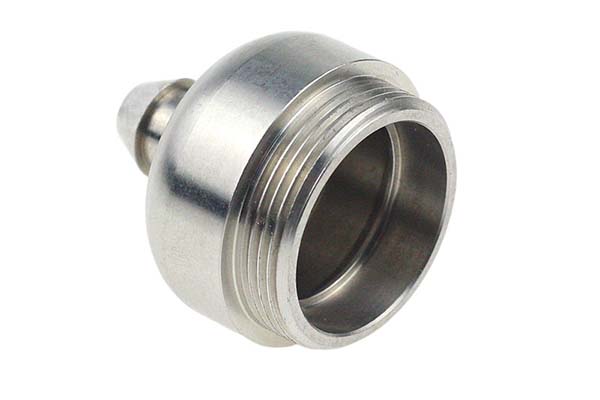
EN L245 pipeline steel is a reliable, cost-effective material for low-to-medium pressure applications in European oil and gas, water infrastructure, and industrial projects. As a core grade under European standards EN 10217 and EN 10297, it offers a minimum yield strength of 245 MPa, balancing performance with affordability.
What Makes EN L245 Pipeline Steel Unique?
Its performance comes from a carefully balanced chemical makeup. The steel uses a carbon-manganese mix to provide enough strength for medium pressure. At the same time, it controls impurities to keep the steel easy to weld and durable over time.
What Is Its Chemical Composition?
EN L245 follows strict European standards. The composition is designed for pipeline safety and fits well with standard European manufacturing. Here is a look at its typical chemical makeup:
| Element | Symbol | Content Range (%) | Key Role |
|---|---|---|---|
| Carbon (C) | C | ≤ 0.21 | Boosts strength but is kept low to preserve weldability |
| Manganese (Mn) | Mn | 0.90 – 1.50 | Increases tensile strength and ductility |
| Silicon (Si) | Si | 0.10 – 0.40 | Helps remove oxygen during steelmaking for structural integrity |
| Phosphorus (P) | P | ≤ 0.030 | Minimised to prevent brittle fractures in cold climates |
| Sulfur (S) | S | ≤ 0.030 | Controlled to avoid corrosion and weld defects |
| Chromium (Cr) | Cr | ≤ 0.30 | Adds mild corrosion resistance |
| Nickel (Ni) | Ni | ≤ 0.30 | Improves low-temperature impact toughness |
| Vanadium (V) | V | ≤ 0.08 | Refines grain structure for uniform strength |
| Molybdenum (Mo) | Mo | ≤ 0.10 | Trace element; minimal impact on standard performance |
| Copper (Cu) | Cu | ≤ 0.30 | Adds resistance to atmospheric corrosion for above-ground pipes |
What Are Its Key Mechanical Properties?
The mechanical properties are standardised to meet medium-pressure demands. These values ensure the steel performs reliably under stress.
- Yield Strength: 245 – 320 MPa. This is the minimum force needed to deform the pipe permanently. It guarantees the pipe can handle its rated pressure.
- Tensile Strength: 375 – 510 MPa. This measures the pipe’s ability to withstand a pulling force before breaking.
- Elongation: 22 – 28%. This indicates high ductility, meaning the steel can stretch without cracking. It is vital for withstanding ground shifts or pressure spikes.
- Impact Toughness: ≥ 35 J at 0 °C. This shows the steel’s ability to absorb energy without fracturing, crucial for withstanding impact or cold temperatures.
How Is EN L245 Used in Real Projects?
The balance of cost and performance makes EN L245 a popular choice. Its weldability and formability make it adaptable for different infrastructure needs.
Which Industries Rely on This Steel?
- Oil and Gas Pipelines: Used for onshore medium-pressure crude oil and natural gas distribution lines. For example, in regional networks across Poland or the UK, its weldability simplifies joining long pipe sections.
- Water Infrastructure: A Dutch water authority recently used EN L245 seamless pipes for an 80 km wastewater line in Rotterdam. The cement mortar-lined pipes have resisted corrosion in clay soils for over nine years with zero maintenance.
- Petrochemical Plants: Ideal for low-to-medium pressure process lines in European refineries, such as those in Rotterdam or Hamburg. It handles light hydrocarbons like propane safely.
- Industrial Gas Pipelines: Used for distributing nitrogen, oxygen, or compressed air in manufacturing hubs across Germany and Italy.
What Are the Manufacturing Steps for EN L245?
Producing EN L245 involves several controlled steps to meet European standards. This process ensures consistency and quality for every pipe.
How Is the Steel Made and Formed?
- Steelmaking: The steel is made in an Electric Arc Furnace (EAF) or Basic Oxygen Furnace (BOF). The process focuses on precise control of carbon and manganese levels.
- Rolling: The steel is Hot Rolled at 1,100 – 1,200 °C. This refines the grain structure, enhancing toughness for European climates.
- Pipe Forming: Pipes are made in two main formats. Seamless Pipes: A solid billet is heated and pierced to create a hollow tube. This is common for higher-pressure applications. Welded Pipes: Steel coils are bent into a cylinder and welded. Electric Resistance Welding (ERW) is used for small diameters, while Submerged Arc Welding (SAW) is for larger ones.
- Heat Treatment: Most pipes undergo normalization. They are heated to 800 – 850 °C and then air-cooled. This process boosts impact toughness for cold winters.
How Is the Pipe Finished and Protected?
- Surface Treatment: Coatings are applied based on the environment. 3PE (3-Layer Polyethylene): For underground soil or water pipelines. It resists corrosion for over 20 years. Zinc Plating: For coastal areas like the North Sea or Mediterranean. It provides a robust barrier against saltwater. Cement Mortar Lining: For water pipelines. It prevents rust and reduces friction.
- Quality Control: Rigorous testing is mandatory. Chemical Analysis: Verifies alloy content via spectrometry. Mechanical Testing: Includes tensile, impact, and hardness tests. Hydrostatic Testing: Pipes are filled with water and pressurised to 1.5 times the design pressure to check for leaks.
EN L245 vs. Other Pipeline Materials: Which Is Better?
Choosing the right material depends on your project’s specific pressure, cost, and environmental needs. Here is how EN L245 compares to common alternatives.
| Material | Key Similarities to EN L245 | Key Differences | Best For |
|---|---|---|---|
| API 5L X42 | Medium-pressure pipeline steel | U.S. API standard; slightly higher yield strength (290 MPa) | Global oil/gas projects; often interchangeable with EN L245 |
| EN L290 | European pipeline steel | Higher yield strength (290 MPa); more expensive | European medium-to-high pressure gas pipelines |
| API 5L X52 | Used for oil/gas transport | Higher yield strength (359 MPa); API standard; higher cost | Global high-pressure oil and gas pipelines |
| Stainless Steel | Pipeline use | Excellent corrosion resistance but 3x more expensive | European chemical or coastal water pipelines |
| Plastic (HDPE) | Low-pressure pipe use | Lightweight and corrosion-proof but lower strength | European residential water and sewage lines |
| EN L360 | European pipeline steel | Much higher yield strength (360 MPa) for high pressure | European cross-border oil pipelines |
A German energy company chose EN L245 welded pipes for a 120 km natural gas line in Bavaria. They saved 20% on material costs compared to higher-grade steels. The project was completed quickly thanks to the material’s easy weldability. It has operated for six years with no leaks, even in -10 °C winters. This case shows that EN L245 offers a cost-effective, reliable solution for many projects.
EN L245 pipeline steel is a versatile and dependable choice for low-to-medium pressure applications across Europe. Its strength lies in its balanced properties: it offers sufficient yield strength, excellent weldability, and good ductility, all at an affordable price point. Whether you are working on municipal water lines, regional gas distribution, or industrial process piping, this material delivers consistent performance. It meets European standards, ensuring compatibility with local manufacturing and regulatory requirements. By choosing EN L245, you are selecting a proven solution that balances project budgets with long-term reliability.
FAQ About EN L245 Pipeline Steel
Can EN L245 be used in very cold European climates like Scandinavia?
Yes, for temperatures down to 0 °C. For colder regions, you should select EN L245 with a low-temperature modification that guarantees impact toughness of at least 35 J at -20 °C to prevent brittleness.
What is the best coating for EN L245 in coastal areas?
Zinc plating or a 3PE coating is the best choice. Both provide excellent resistance to saltwater corrosion from seas like the North Sea or Mediterranean, ensuring the pipe’s longevity.
Is EN L245 interchangeable with API 5L X42?
For most medium-pressure applications, yes. EN L245 and API 5L X42 have similar performance characteristics. The main difference is the standard they follow (EN vs. API). They can be used interchangeably in global projects with minor adjustments to testing protocols.
What types of pipes are available in EN L245?
EN L245 pipes are available in both seamless and welded (ERW and SAW) formats. Seamless pipes are often used for higher-pressure applications, while welded pipes are common for large-diameter, low-to-medium pressure projects.
How to write a spec that gets priced correctly
A drawing is a contract. If it leaves a number open, the shop fills that number in with its own default. The default is rarely the one you had in mind. Put these five lines on every RFQ and most of the back-and-forth disappears before it starts.
- Alloy designation and the standard behind it
- Temper or heat treatment condition
- Mechanical properties you actually need
- Mill certificate and traceability requirement
- Finish and the faces it applies to
The point is not paperwork. Each line removes a decision the shop would otherwise make for you. A complete RFQ comes back priced. An incomplete one comes back guessed.
What actually drives the price
Buyers usually push on material because it is the line they can see. In practice the material is rarely the biggest number on a quote. These five lines decide most of it:
- alloy grade and mill availability
- stock size versus finished size
- heat treatment and testing
- machinability
- certification
Ask for the quote split by line. A supplier who cannot break it down is guessing, and you will pay for the guess. The line you can usually renegotiate is the tolerance band, not the raw material.
Problems you will meet, and the fix
Every process has a failure mode it prefers. The same four show up again and again on this kind of work, and none of them are mysteries once you know what to look for.
- Substituting a similar grade without telling anyone
- Hardness that varies across a single bar
- Corrosion in a weld heat-affected zone
- Distortion after heat treatment on a thin part
Catch the fault on the first part, not the hundredth. A first-article check costs an hour. A bad batch costs the whole order. Write the check into the purchase order so nobody has to remember it.
What to check on the first article
The first article is the cheapest inspection you will ever buy. Use it properly and the rest of the run becomes boring, which is exactly what you want.
- Every dimension on the drawing, with the measured value written beside it.
- The material certificate, matched to the heat or lot number on the parts.
- The finish against the sample you approved, under the same light.
- Fit against the mating part, assembled rather than measured.
- Packaging, because parts that arrive damaged were never in tolerance.
Check in this order: datums, then mating features, then cosmetic faces. If the datums are wrong, every number after them is noise. Keep the report on file. When a problem shows up in month six, that document is the only thing that tells you what changed.
How to compare two quotes fairly
Two numbers are not comparable unless the scope matches. Line them up before you decide, because a low number with three gaps is not a low number.
Same drawing, same material, same finish, same inspection. Anything else is a different job wearing the same part number. Then look at what each quote leaves out. Freight, packaging, certificates and tooling are the usual gaps.
Ask each supplier to state their assumptions in writing. The one who does is usually the one who has run the process before.
Scaling from one part to a batch
The first part teaches you the process. The hundredth teaches you the process cost.
Watch three things as volume grows: setup amortisation, tool wear, and how much hand work the finish still needs. If the unit price barely moves between ten and a hundred, the cost sits in material or in hand work, not in setup. Ask which, because only one of them is negotiable.
Lead time behaves the same way. A one-off is scheduled around other jobs. A repeat order is scheduled around your forecast. Give the shop a forecast and the lead time gets shorter, not longer.
How to read a supplier's quote
A quote is a short document with a long shadow. Four things in it decide whether the job runs smoothly, and only one of them is the price.
- The scope line. It should name the process, the material and the finish, not just the part.
- The tolerance basis. General tolerance or the drawing, and which standard it follows.
- The exclusions. Tooling, freight, certificates and inspection are the usual omissions.
- The validity date. Material prices move, and an open-ended quote is a promise nobody can keep.
Read the exclusions before you read the total. A quote that leaves out tooling is not cheaper. It is a quote for a different job.
What to send with the first order
The first order sets the pattern for every order after it. Send a complete package once and the shop files it, and the second order takes a fraction of the time.
- A STEP or native model plus a PDF drawing carrying the same revision letter.
- The material callout by standard number, not by trade name.
- The finish and the exact faces it applies to.
- Any test the part must pass: fit, seal, drop, salt spray, dielectric.
- A contact who can answer a question inside one working day.
Then write down what was agreed. An email that confirms the material, the finish and the date is worth more than a longer purchase order that leaves them open.
When this is the wrong choice
A good supplier tells you when the process does not fit. These are the cases where we say so.
- The volume is so low that setup costs more than the parts are worth.
- The tolerance is tighter than the process can hold without a second operation.
- The geometry cannot be made without a tool feature that will not pay back.
- The material you need is not available in the form the process requires.
- The schedule is shorter than the tooling or setup time, and nobody has said so yet.
None of these are refusals. They are reasons to look at a different route, and the earlier that conversation happens the cheaper it is. The most expensive mistake in manufacturing is a process chosen before the question was understood.
Our solution for EN L245 Pipeline Steel: Properties
YiguProto runs metal sourcing and machining in house, from a single prototype to a production batch. We quote the process, the material and the finish as separate lines, so you can see where the money goes instead of arguing with one number.
Send a STEP file or a drawing and you get a DFM report in one to two business days. It flags the features that add cost and the features that will not hold tolerance on the process you picked.
Every order ships with an inspection report on the features you call out. If a part misses, we make it again. Ready to price a part? Start with a free quote and DFM review, or read more about our metal sourcing and machining. You can also talk to an engineer before you commit to a drawing.
FAQ about EN L245 Pipeline Steel: Properties
What should I check before approving the parts?
Datums first, then the features that mate, then the cosmetic faces. Ask for a dimensional report, a material certificate and a finish sample. A part can be inside every tolerance and still not fit, so assemble one before you sign.
What happens if a part is out of specification?
We measure it against the same drawing you approved and, if it misses, we make it again. What matters is that the report exists, because a disagreement without data is just an opinion.
Is there a minimum order quantity?
No hard minimum. One part is fine. What changes with volume is which costs dominate, so a single unit is priced mostly on setup and a thousand units are priced mostly on cycle time and material.
Does the process work for prototypes as well as production?
Yes, and that is usually the point. Running the prototype on the production process removes a whole class of surprises, because the part you test is made the same way as the part you sell.
What files do you need in order to quote?
A STEP file plus a PDF drawing that carries the same revision letter. The model carries the geometry and the drawing carries the intent. When the two disagree, the shop picks one, and it is never the one you meant.
Can EN L245 Pipeline Steel: Properties be made in small quantities?
Yes, and small quantities are where a good supplier earns the next order. Setup dominates the price at low volume, so the cheapest route is usually the one with the fewest operations, not the cheapest material.
The short version
EN L245 Pipeline Steel: Properties rewards the buyer who reads the data sheet and the drawing together. Pick the option for the property that matters, not for the price per kilo.
Tighten only what mates. Test a sample before the run. Then let the process do the rest.