
Metal Stamping
GB Q420 High Strength Steel: What Are Its Properties and How Does It Compare Globally?
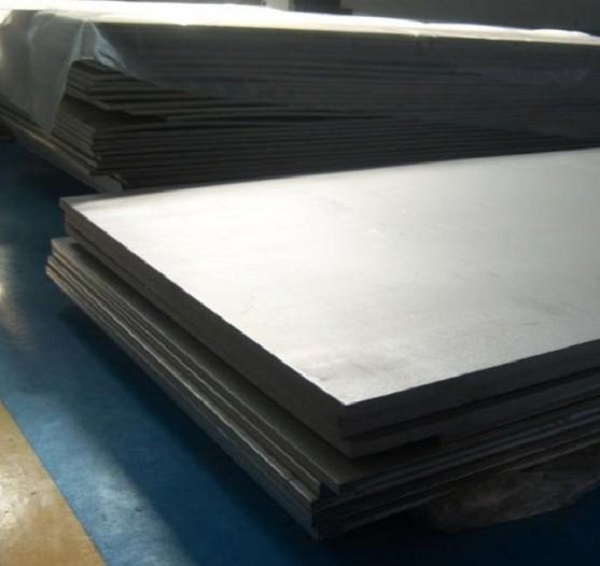
If you are working on high-rise buildings, long-span bridges, or heavy industrial projects in China or Asian markets, you have likely faced a common problem. Basic structural steels like Q235 or Q345 are just not strong enough for the job. When you need to support extreme loads, save space, and ensure long-term safety, you need a material that can handle the stress. GB Q420 high strength steel is the solution.
Key takeaways
- GB Q420 is engineered for one primary purpose: to resist extreme loads.
- GB Q420 is designed for high-stress, space-saving projects where strength and efficiency are non-negotiable.
- Producing GB Q420 requires precise control of chemistry and heat treatment.
- To understand where GB Q420 fits, you need to see it side-by-side with other common structural steels.
What Are the Material Properties of GB Q420 Steel?
GB Q420 is engineered for one primary purpose: to resist extreme loads. Its yield strength is 22% higher than Q345, making it ideal for projects where every millimeter of steel saved translates into more usable space or lower costs. Let’s look at what makes it tick.
What Is Its Key Alloy Composition?
The magic of GB Q420 lies in its carefully controlled chemistry. It is not just about adding more carbon, which would make the steel brittle and hard to weld. Instead, it uses a combination of microalloys to boost strength while keeping the material workable.
- Carbon Content: Maximum 0.20%. This is strictly limited to maintain weldability and prevent brittleness. This is critical for on-site structural assembly where welding is common.
- Manganese: 1.00 to 1.70%. This is the primary strengthener. It enhances tensile strength and hardness.
- Silicon: 0.55% max. It helps purify the steel during manufacturing.
- Microalloys (Vanadium & Niobium): Vanadium (0.02-0.15%) and niobium (0.015-0.06%) are the secret ingredients. These tiny additions refine the grain structure of the steel. This grain refinement pushes the yield strength up to 420 MPa without needing to add heavy and expensive alloys like nickel or chromium.
- Impurity Controls: Phosphorus and sulfur are each kept to a maximum of 0.045%. Tight control of these elements prevents the formation of weak spots in the steel that could fail under high stress.
What Are Its Critical Mechanical and Physical Properties?
The numbers on a data sheet tell the real story. Here are the key specifications you need to know.
| Property | Typical Value | Test Standard |
|---|---|---|
| Yield Strength | ≥ 420 MPa | GB/T 1591 |
| Tensile Strength | 520 – 680 MPa | GB/T 1591 |
| Elongation | ≥ 18% (in 200mm) | GB/T 1591 |
| Hardness (Brinell) | ≤ 210 HB | GB/T 231.1 |
| Density | 7.85 g/cm³ | GB/T 2975 |
| Thermal Conductivity | 42 W/(m·K) | GB/T 3651 |
| Impact Toughness (at -40°C) | ≥ 34 J | GB/T 229 |
Real-World Example: High-Rise Construction in Shenzhen An engineering firm in Shenzhen was designing a 25-story hotel. They needed to choose steel for the core columns. They compared GB Q420 against the more common Q345. The Test: Q420 columns supported floor loads of 35 tons, which was 1.2 times more than what Q345 could handle. The Result: Because Q420 was stronger, they could use steel that was 18% thinner. This simple change freed up an extra 250 square meters of usable floor space across all 25 floors. Furthermore, the steel’s guaranteed impact toughness at -40°C meant it could be safely used in cold northern climates where Q345 might become brittle.
Where Is GB Q420 High Strength Steel Used?
GB Q420 is designed for high-stress, space-saving projects where strength and efficiency are non-negotiable. It is not for simple sheds or low-rise buildings. It is for the skeleton of modern cities.
High-Rise Buildings
For the cores of buildings over 20 stories, the main load-bearing columns, and the shear walls that resist wind and earthquake forces, GB Q420 is an excellent choice.
Real-World Example: Beijing Residential Tower A developer in Beijing used GB Q420 for the core structure of a 30-story residential tower. The steel’s 420 MPa yield strength allowed them to cut the thickness of the main columns by 20%. This was a huge gain in interior space. Also, its excellent weldability meant that construction crews could assemble the steel frame 4 weeks faster than if they had used a more exotic, ultra-high-strength steel that is difficult to weld.
Bridges and Beams
For long-span bridges (40 to 80 meters), the main girders of highway overpasses, and railway bridge supports, GB Q420 provides the necessary strength and durability.
Real-World Example: Highway Bridge in Hubei The Hubei Department of Transportation needed a steel for a 60-meter highway bridge that would carry heavy truck traffic. The Choice: They selected GB Q420. The Result: The steel’s tensile strength range of 520-680 MPa easily handled the repeated 30-ton axle loads and resisted long-term sagging (creep). After five years in service, the bridge showed significantly less wear and required 50% lower maintenance costs compared to older nearby bridges built with Q345.
Heavy Construction and Industrial Buildings
GB Q420 is also used for large stadium roof trusses, heavy machinery frames, and power plant boiler supports.
Real-World Example: Auto Factory in Shanghai A Shanghai automobile factory needed a new frame for an 800-ton hydraulic stamping press. This machine creates massive vibration and shock loads every few seconds. They chose GB Q420 for its high strength and toughness. The steel’s ability to resist cracking from repeated impact (fatigue) was critical. The frame has been in operation for over three years with no signs of structural issues.
How Is GB Q420 High Strength Steel Manufactured?
Producing GB Q420 requires precise control of chemistry and heat treatment. It is more complex than making Q345, but simpler than producing ultra-high-strength steels for aerospace.
- Steelmaking: The process starts in an electric arc furnace. Molten steel is then moved to a ladle furnace for refining. Here, microalloys like vanadium and niobium are added in exact doses to meet the specifications of GB/T 1591.
- Continuous Casting: The molten steel is poured into molds to form thick rectangular blocks called blooms or slabs. They are cooled slowly to ensure the microalloys are distributed evenly throughout the steel. Uneven distribution would create weak spots.
- Hot Rolling: The blooms are reheated to around 1200°C and then rolled into final shapes like plates, beams, or H-sections. This process activates the microalloys and builds the strength of the steel.
- Heat Treatment (Optional but Recommended): For critical parts, the steel undergoes quenching and tempering. It is heated again, rapidly cooled in water to harden it, and then reheated to a lower temperature to reduce brittleness while preserving strength.
- Pickling: The steel is dipped in acid to remove the layer of oxide scale that forms during hot rolling. This is essential if the steel will be painted or coated for corrosion protection.
How to write a spec that gets priced correctly
A drawing is a contract. If it leaves a number open, the shop fills that number in with its own default. The default is rarely the one you had in mind. Put these five lines on every RFQ and most of the back-and-forth disappears before it starts.
- Part drawing with the tolerance stack called out
- Material grade, temper and thickness
- Strip layout or the feed direction you expect
- Surface finish and any coating
- Annual volume and the release schedule
The point is not paperwork. Each line removes a decision the shop would otherwise make for you. A complete RFQ comes back priced. An incomplete one comes back guessed.
What actually drives the price
Buyers usually push on material because it is the line they can see. In practice the material is rarely the biggest number on a quote. These five lines decide most of it:
- tool complexity and station count
- material utilisation in the strip
- press tonnage and cycle rate
- secondary operations
- annual volume
Ask for the quote split by line. A supplier who cannot break it down is guessing, and you will pay for the guess. The line you can usually renegotiate is the tolerance band, not the raw material.
Problems you will meet, and the fix
Every process has a failure mode it prefers. The same four show up again and again on this kind of work, and none of them are mysteries once you know what to look for.
- Burr on the shear edge that grows as the tool wears
- Gallng on a drawn wall after a few thousand strokes
- Punch break-out on thick material
- Part lift and misfeed at high stroke rates
Catch the fault on the first part, not the hundredth. A first-article check costs an hour. A bad batch costs the whole order. Write the check into the purchase order so nobody has to remember it.
What to check on the first article
The first article is the cheapest inspection you will ever buy. Use it properly and the rest of the run becomes boring, which is exactly what you want.
- Every dimension on the drawing, with the measured value written beside it.
- The material certificate, matched to the heat or lot number on the parts.
- The finish against the sample you approved, under the same light.
- Fit against the mating part, assembled rather than measured.
- Packaging, because parts that arrive damaged were never in tolerance.
Check in this order: datums, then mating features, then cosmetic faces. If the datums are wrong, every number after them is noise. Keep the report on file. When a problem shows up in month six, that document is the only thing that tells you what changed.
How to compare two quotes fairly
Two numbers are not comparable unless the scope matches. Line them up before you decide, because a low number with three gaps is not a low number.
Same drawing, same material, same finish, same inspection. Anything else is a different job wearing the same part number. Then look at what each quote leaves out. Freight, packaging, certificates and tooling are the usual gaps.
Ask each supplier to state their assumptions in writing. The one who does is usually the one who has run the process before.
Scaling from one part to a batch
The first part teaches you the process. The hundredth teaches you the process cost.
Watch three things as volume grows: setup amortisation, tool wear, and how much hand work the finish still needs. If the unit price barely moves between ten and a hundred, the cost sits in material or in hand work, not in setup. Ask which, because only one of them is negotiable.
Lead time behaves the same way. A one-off is scheduled around other jobs. A repeat order is scheduled around your forecast. Give the shop a forecast and the lead time gets shorter, not longer.
How to read a supplier's quote
A quote is a short document with a long shadow. Four things in it decide whether the job runs smoothly, and only one of them is the price.
- The scope line. It should name the process, the material and the finish, not just the part.
- The tolerance basis. General tolerance or the drawing, and which standard it follows.
- The exclusions. Tooling, freight, certificates and inspection are the usual omissions.
- The validity date. Material prices move, and an open-ended quote is a promise nobody can keep.
Read the exclusions before you read the total. A quote that leaves out tooling is not cheaper. It is a quote for a different job.
What to send with the first order
The first order sets the pattern for every order after it. Send a complete package once and the shop files it, and the second order takes a fraction of the time.
- A STEP or native model plus a PDF drawing carrying the same revision letter.
- The material callout by standard number, not by trade name.
- The finish and the exact faces it applies to.
- Any test the part must pass: fit, seal, drop, salt spray, dielectric.
- A contact who can answer a question inside one working day.
Then write down what was agreed. An email that confirms the material, the finish and the date is worth more than a longer purchase order that leaves them open.
When this is the wrong choice
A good supplier tells you when the process does not fit. These are the cases where we say so.
- The volume is so low that setup costs more than the parts are worth.
- The tolerance is tighter than the process can hold without a second operation.
- The geometry cannot be made without a tool feature that will not pay back.
- The material you need is not available in the form the process requires.
- The schedule is shorter than the tooling or setup time, and nobody has said so yet.
None of these are refusals. They are reasons to look at a different route, and the earlier that conversation happens the cheaper it is. The most expensive mistake in manufacturing is a process chosen before the question was understood.
How Does GB Q420 Compare to Other Materials?
To understand where GB Q420 fits, you need to see it side-by-side with other common structural steels.
| Material | Yield Strength | Tensile Strength | Cost (vs. Q420) | Key Advantage | Best For |
|---|---|---|---|---|---|
| GB Q420 | ≥ 420 MPa | 520-680 MPa | 100% (Baseline) | Chinese high-strength standard | 20+ story buildings, 40m+ bridges |
| GB Q235 | ≥ 235 MPa | 375-500 MPa | ~60% | Very low cost | 1-6 story buildings, light structures |
| GB Q345 | ≥ 345 MPa | 470-630 MPa | ~80% | Good balance of strength and cost | 7-19 story buildings, medium bridges |
| ASTM A36 | ≥ 250 MPa | 400-550 MPa | ~65% | Widely available in North America | Low-rise projects in the US |
| EN S355JR | ≥ 355 MPa | 470-630 MPa | ~85% | European standard for mid-strength | 7-19 story buildings in Europe |
| EN S460 | ≥ 460 MPa | 550-700 MPa | ~110% | European high-strength | 20+ story buildings in Europe |
How to use this table:
- If you are building a 25-story skyscraper in Shanghai, GB Q420 is the ideal choice. It meets local codes, saves space, and costs less than importing European S460.
- If you are building a 15-story hotel, Q345 is likely sufficient and will be about 20% cheaper.
- If you are working on a US-China joint project, you might compare ASTM A572 Grade 65 (which has a similar yield strength) to GB Q420.
GB Q420 high strength steel is a critical material for modern construction in China and Asia. It fills the gap perfectly between standard structural steels like Q345 and expensive, hard-to-weld ultra-high-strength alloys. Its combination of a 420 MPa yield strength, excellent weldability, and proven toughness in cold climates makes it the go-to choice for high-rise buildings, long-span bridges, and heavy industrial applications. By understanding its properties, how it is made, and how it compares to global grades, you can make an informed decision that balances strength, cost, and constructability for your next major project.
Our solution for GB Q420 High Strength Steel
YiguProto runs metal stamping in house, from a single prototype to a production batch. We quote the process, the material and the finish as separate lines, so you can see where the money goes instead of arguing with one number.
Send a STEP file or a drawing and you get a DFM report in one to two business days. It flags the features that add cost and the features that will not hold tolerance on the process you picked.
Every order ships with an inspection report on the features you call out. If a part misses, we make it again. Ready to price a part? Start with a free quote and DFM review, or read more about our metal stamping. You can also talk to an engineer before you commit to a drawing.
FAQ about GB Q420 High Strength Steel
How do I compare two quotes fairly?
Match the scope first: same drawing, same material, same finish, same inspection. Then read the exclusions. Freight, tooling and certificates are the usual gaps, and a low number with three gaps is not a low number.
How much does GB Q420 High Strength Steel cost?
Price comes from five lines: material, machine or tool time, setup, finishing and inspection. The material itself is usually the smallest of them. Send a drawing and we will split the quote so you can see which line is doing the damage.
How long does a first article take?
Usually a few business days once the drawing is frozen, and longer if tooling is involved. The date we give you is the date we confirm in writing, not the date we hope for.
What material should I specify?
Specify by standard, not by trade name. A trade name can change under you between two orders; a standard number cannot. Then add the one property that actually decides the part, whether that is strength, heat resistance or chemical exposure.
Can GB Q420 High Strength Steel be made in small quantities?
Yes, and small quantities are where a good supplier earns the next order. Setup dominates the price at low volume, so the cheapest route is usually the one with the fewest operations, not the cheapest material.
What files do you need in order to quote?
A STEP file plus a PDF drawing that carries the same revision letter. The model carries the geometry and the drawing carries the intent. When the two disagree, the shop picks one, and it is never the one you meant.
The short version
GB Q420 High Strength Steel rewards the buyer who reads the data sheet and the drawing together. Pick the option for the property that matters, not for the price per kilo.
Tighten only what mates. Test a sample before the run. Then let the process do the rest.