
3D Printing
Is High-Speed 3D Printing the Future of Making Things?
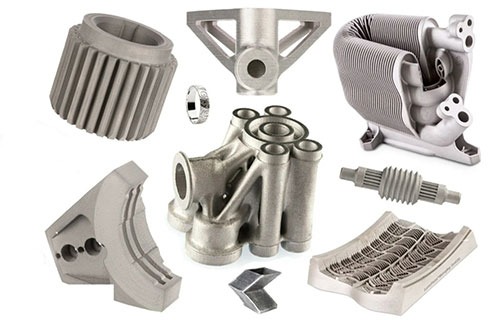
The world of making things is changing fast. For years, 3D printing was slow. It was good for one-off models, not for real production. But now, a new wave of high-speed 3D printing is here. Print heads zoom at 400mm per second or more. This is a game-changer. It turns long waits into short bursts of activity. This guide explores this shift. We will look at how we got here.
How Did Printing Get So Fast?
The story of 3D printing speed is one of big leaps. It moved from a crawl to a sprint.
Was Past Printing Always Slow?
Yes, for a long time it was. Early 3D printers were not built for speed. They focused on detail. Most printers ran at 70 to 80 millimeters per second. Printing a small plastic part could take many hours. This made sense for a single prototype. But it killed any hope for making lots of parts. The tech was stuck in the lab and small shops.
What Caused The Speed Boom?
A few key things came together. Better stepper motors and firmware allowed faster moves. Heated beds got better at keeping heat. This let layers stick fast. New ways to cool the plastic also emerged. These advanced cooling systems were vital. They hardened the melted plastic before it could sag. By the 2010s, printers hit 400mm/s. Now, some push past 700mm/s. This is not a small step. It is a giant leap for making things.
Why Does More Speed Matter?
Saving time is the clear win. But the real change is bigger. It makes 3D printing a true production-ready tool. A maker can now print a batch of parts in one hour, not one day. This changes how teams design and build products. It opens doors to new uses.
What Are The Real Gains?
Speed gets the headline. But the full value of high-speed 3D printing runs much deeper.
Does It Truly Boost Output?
Yes, it makes output soar. The time from a digital file to a part in your hand shrinks. For rapid prototyping, this is huge. Teams can test more ideas in less time. A tech firm had a case study. They made a new drone shell. An old printer took 2 days per version. A high-speed printer did it in 3 hours. They tested 15 designs in the time it once took for 2. This 85% cut in design cycle time lets innovation move fast.
Can It Save Money Over Time?
It can. The first cost is higher. A good high-speed printer may cost $10,000 to $50,000. A basic one is under $5,000. But the math changes over months of use. You save on labor and gain more parts per day.
| Cost Factor | Old Printer (80mm/s) | High-Speed Printer (400mm/s) | Outcome |
|---|---|---|---|
| Print Time | 2 hours per part | 24 minutes per part | 80% less time |
| Labor Cost per Day | $200 (makes 4 parts) | $200 (makes 20 parts) | Cost per part falls from $50 to $10 |
| Yearly Upkeep | ~$500 | ~$800 | Higher, but offset by labor savings |
A U.S. bike gear maker shared data. Their high-speed printer paid for itself in 7 months. They saved on overtime and could make parts on demand.
Does It Drive New Ideas?
It does. High speed forces new fixes. This sparks progress in materials science and software. For example, fast printing makes more heat. This led to new high-temperature filaments. One firm made a special PLA. It handles 120°C heat from fast printing. In software, new slicing algorithms are key. They plan the print path to avoid shakes at high speed. One aerospace supplier said this software cut their print failures by 60%.
Is Customization Now Cheap?
Yes, it is. Before, making one unique item was too costly. Now, high-speed printing makes small batch customization work. A shoe company uses it for custom insoles. A scan of your foot makes a unique model. Their printer makes the insole in 45 minutes. The added cost is only $20. This was not possible before. It blends mass production with personal touch.
Who Uses It Today?
High-speed 3D printing is not for one field. It solves problems in many fields.
How Do Car Makers Use It?
They use it for lightweight interior parts and functional prototypes. A German auto maker prints clips and cable guides. They use a speed of 400mm/s. They make 1,000 parts per week for new electric cars. Before, this took 3 weeks with old tools. Now it takes 5 days. They also saw fewer flaws. The defect rate fell from 8% to under 2%.
Is It Useful In Aerospace?
Very. The need for light, strong parts is constant. High-speed printing lets firms test more prototype designs fast. A jet engine maker shared their story. They needed a new duct design. With old methods, they could test one design per month. With a high-speed printer, they tested ten in the same time. This let them find the best design months sooner.
What About Consumer Goods?
Here, speed meets market demand. Firms use it for short-run production and custom goods. A popular case is phone accessories. A company makes custom phone cases. Users pick a text or logo. Their printer farm, running at 350mm/s, makes 250 cases a day. Each case is unique. Their customer happiness score rose by 30% in a year.
Can You Build Your Own?
Yes, the open-source world has answers. Projects offer plans for DIY high-speed printers.
What Open-Source Projects Exist?
Projects like “Voron” and “Rat Rig” are famous. They give full plans for fast printers. These plans include:
- A list of all parts needed.
- Guides to put it all together.
- Tips on the best high-flow hot ends and stepper drivers.
- Forums where users solve problems as a group.
Is It Hard To Build One?
It needs some skill, but help is there. A hobbyist spent $900 on parts. They followed the “Voron” guide. In two weeks, they had a printer that runs at 500mm/s. They said, “It works as well as my friend’s $12,000 machine for my needs.” This DIY path cuts cost and builds deep knowledge.
What Is The Future?
The road ahead is exciting. Speed will keep going up. But the focus will also be on new materials and smarter software.
Will New Materials Emerge?
For sure. The push is for stronger composites and faster-curing resins. Imagine printing with a fiber-filled plastic at high speed. Or a resin that hardens in a blink under special light. These will make parts for tougher uses, like car interiors or machine grips.
How Will Software Get Better?
AI-driven print software is the next step. This software will watch the print in real time. It will adjust speed and heat to avoid flaws. It will also plan the best support structures in seconds. This will push quality up and waste down.
Conclusion
High-speed 3D printing is more than a fast printer. It is a new way to think about making things. It bridges the gap between a prototype and a final product. It makes custom work scalable. It cuts cost over time. From car parts to your own phone case, its touch is growing. The tech will keep evolving. It will become more reliable and easier to use. For any team that makes things, ignoring this shift is a risk. Embracing it offers a clear path to faster, cheaper, and more personal production.
FAQ
Q: Is high-speed 3D printing good for making 10,000 parts?
A: It depends on the part size. For small plastic parts, it can be great. One maker prints 15,000 small clips per month. For very large parts or huge runs, methods like injection molding may still win on cost. But high-speed printing is perfect for bridge production or testing demand.
Q: Do you lose quality for speed?
A: Not if you set it up right. Using the right fast-print filament and slicing settings is key. A recent test showed parts printed at 400mm/s kept 95% of the strength of slow-printed parts. Surface finish can be just as good.
Q: What does upkeep cost for a fast printer?
A: A bit more than a slow one. Expect $800 to $1,200 per year. Parts like nozzles wear faster at high speed. But the big labor savings often pay for this extra cost many times over.
Discuss Your Projects with our shop
Do you have a part that takes too long to make? Is your design cycle stuck in slow motion? our shop can help. We use the latest high-speed 3D printing tech. We help you test designs fast and move to production sooner. Let’s talk about your project. We can find the best way to make it real, faster and smarter.
How to write a spec that gets priced correctly
A drawing is a contract. If it leaves a number open, the shop fills that number in with its own default. The default is rarely the one you had in mind. Put these five lines on every RFQ and most of the back-and-forth disappears before it starts.
- File format and units, with the model exported in millimetres
- Process and material grade, not a trade name
- Critical features and the tolerance each one needs
- Surface finish and the faces it applies to
- Quantity for the pilot build and for the year
The point is not paperwork. Each line removes a decision the shop would otherwise make for you. A complete RFQ comes back priced. An incomplete one comes back guessed.
What actually drives the price
Buyers usually push on material because it is the line they can see. In practice the material is rarely the biggest number on a quote. These five lines decide most of it:
- build volume and orientation
- layer height and support structure
- material grade and colour
- post-processing and hand finishing
- quantity per build plate
Ask for the quote split by line. A supplier who cannot break it down is guessing, and you will pay for the guess. The line you can usually renegotiate is the tolerance band, not the raw material.
Problems you will meet, and the fix
Every process has a failure mode it prefers. The same four show up again and again on this kind of work, and none of them are mysteries once you know what to look for.
- Warping on long flat faces where the part lifts off the plate
- Layer lines showing through a cosmetic surface
- Support scars on a mating face nobody flagged
- Dimensional drift on thin walls after cooling
Catch the fault on the first part, not the hundredth. A first-article check costs an hour. A bad batch costs the whole order. Write the check into the purchase order so nobody has to remember it.
What to check on the first article
The first article is the cheapest inspection you will ever buy. Use it properly and the rest of the run becomes boring, which is exactly what you want.
- Every dimension on the drawing, with the measured value written beside it.
- The material certificate, matched to the heat or lot number on the parts.
- The finish against the sample you approved, under the same light.
- Fit against the mating part, assembled rather than measured.
- Packaging, because parts that arrive damaged were never in tolerance.
Check in this order: datums, then mating features, then cosmetic faces. If the datums are wrong, every number after them is noise. Keep the report on file. When a problem shows up in month six, that document is the only thing that tells you what changed.
How to compare two quotes fairly
Two numbers are not comparable unless the scope matches. Line them up before you decide, because a low number with three gaps is not a low number.
Same drawing, same material, same finish, same inspection. Anything else is a different job wearing the same part number. Then look at what each quote leaves out. Freight, packaging, certificates and tooling are the usual gaps.
Ask each supplier to state their assumptions in writing. The one who does is usually the one who has run the process before.
Scaling from one part to a batch
The first part teaches you the process. The hundredth teaches you the process cost.
Watch three things as volume grows: setup amortisation, tool wear, and how much hand work the finish still needs. If the unit price barely moves between ten and a hundred, the cost sits in material or in hand work, not in setup. Ask which, because only one of them is negotiable.
Lead time behaves the same way. A one-off is scheduled around other jobs. A repeat order is scheduled around your forecast. Give the shop a forecast and the lead time gets shorter, not longer.
How to read a supplier's quote
A quote is a short document with a long shadow. Four things in it decide whether the job runs smoothly, and only one of them is the price.
- The scope line. It should name the process, the material and the finish, not just the part.
- The tolerance basis. General tolerance or the drawing, and which standard it follows.
- The exclusions. Tooling, freight, certificates and inspection are the usual omissions.
- The validity date. Material prices move, and an open-ended quote is a promise nobody can keep.
Read the exclusions before you read the total. A quote that leaves out tooling is not cheaper. It is a quote for a different job.
What to send with the first order
The first order sets the pattern for every order after it. Send a complete package once and the shop files it, and the second order takes a fraction of the time.
- A STEP or native model plus a PDF drawing carrying the same revision letter.
- The material callout by standard number, not by trade name.
- The finish and the exact faces it applies to.
- Any test the part must pass: fit, seal, drop, salt spray, dielectric.
- A contact who can answer a question inside one working day.
Then write down what was agreed. An email that confirms the material, the finish and the date is worth more than a longer purchase order that leaves them open.
Our solution for High-Speed 3D Printing
YiguProto runs 3D printing in house, from a single prototype to a production batch. We quote the process, the material and the finish as separate lines, so you can see where the money goes instead of arguing with one number.
Send a STEP file or a drawing and you get a DFM report in one to two business days. It flags the features that add cost and the features that will not hold tolerance on the process you picked.
Every order ships with an inspection report on the features you call out. If a part misses, we make it again. Ready to price a part? Start with a free quote and DFM review, or read more about our 3D printing. You can also talk to an engineer before you commit to a drawing.
FAQ about High-Speed 3D Printing
How long does a first article take?
Usually a few business days once the drawing is frozen, and longer if tooling is involved. The date we give you is the date we confirm in writing, not the date we hope for.
How do I compare two quotes fairly?
Match the scope first: same drawing, same material, same finish, same inspection. Then read the exclusions. Freight, tooling and certificates are the usual gaps, and a low number with three gaps is not a low number.
What is High-Speed 3D Printing used for?
High-Speed 3D Printing turns up wherever the part has to do a real job at a predictable cost: brackets, housings, fixtures, covers and the fittings that hold them together. The honest test is whether the properties match the load and the environment, not whether the material is fashionable.
How much does High-Speed 3D Printing cost?
Price comes from five lines: material, machine or tool time, setup, finishing and inspection. The material itself is usually the smallest of them. Send a drawing and we will split the quote so you can see which line is doing the damage.
Does the process work for prototypes as well as production?
Yes, and that is usually the point. Running the prototype on the production process removes a whole class of surprises, because the part you test is made the same way as the part you sell.
What material should I specify?
Specify by standard, not by trade name. A trade name can change under you between two orders; a standard number cannot. Then add the one property that actually decides the part, whether that is strength, heat resistance or chemical exposure.
The short version
High-Speed 3D Printing rewards the buyer who reads the data sheet and the drawing together. Pick the option for the property that matters, not for the price per kilo.
Tighten only what mates. Test a sample before the run. Then let the process do the rest.