
Die Casting
How Does Semi-Solid Die Casting Differ from Ordinary Die Casting?
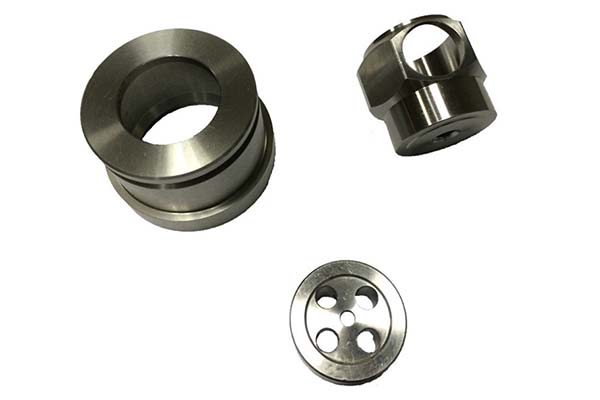
If you are choosing between semi-solid die casting and ordinary die casting, you are really choosing between two different philosophies of metal forming. One works with fully molten metal—fast, fluid, and cost-effective for high volume. The other uses metal in a semi-solid state—thick, controlled, and capable of producing parts with superior strength and fewer defects. They are not interchangeable.
What Are the Core Definitions and Principles?
The biggest difference lies in the state of the metal during processing.
Ordinary Die Casting
Metal state: Fully molten liquid. Aluminum alloy at ≥650°C flows like water—low viscosity, Newtonian fluid behavior.
Core mechanism: High speed and high pressure (100–150 MPa) force liquid metal into complex cavities in under 0.1 seconds. Rapid cooling solidifies the shape.
Microstructure result: Fast cooling creates fine but uneven grains, plus eutectic structures. This often leads to defects like shrinkage holes and porosity, especially in thick sections.
Semi-Solid Die Casting
Metal state: Semi-solid slurry—a solid-liquid mixture with 50–90% solid fraction. Behaves like toothpaste: thick, viscous, non-Newtonian (flows more when sheared).
Core mechanism: High viscosity and non-dendritic microstructure allow controlled, slower filling (no turbulent splashing). This reduces gas entrainment and defects.
Microstructure result: Spherical primary solid particles evenly distributed in liquid. After solidification: fine spherical grains, fibrous matrix, better property uniformity, fewer defects.
How Do the Processes Compare Operationally?
| Process Aspect | Ordinary Die Casting | Semi-Solid Die Casting |
|---|---|---|
| Metal pretreatment | Simple: melt metal directly; no special prep | Complex: requires slurry/billet production (mechanical mixing, electromagnetic stirring, or low-temperature deposition) |
| Filling characteristics | High-speed jetting (>5 m/s); prone to eddy currents and splashing | Slow smooth filling (<2 m/s); high viscosity prevents turbulence |
| Typical pressure | 100–150 MPa (overcomes liquid metal inertia) | 60–100 MPa (lower flow resistance) |
| Mold heat load | Extremely high; needs powerful cooling (channels every 20 mm) | Low; simpler cooling sufficient |
| Solidification shrinkage | Large; easy to form shrinkage defects | Smaller (solid phase already dominates) |
| Minimum wall thickness | Down to 0.5 mm—ideal for lightweight parts | ≥1 mm typical (viscosity struggles in tiny gaps) |
| Cycle time | <30 seconds per part | 45–90 seconds (includes slurry prep or billet reheating) |
How Does Performance Compare?
| Metric | Ordinary Die Casting | Semi-Solid Die Casting |
|---|---|---|
| Tensile strength | Lower (200–250 MPa for aluminum) | Higher (+15–30%; 230–325 MPa for aluminum) |
| Elongation | Low (2–5% for aluminum) | Doubled (4–10%); spherical grains hinder crack propagation |
| Defect rate | 5–12% scrap (porosity, shrinkage common) | 1–3% scrap (greatly reduced stomata/shrinkage) |
| Heat treatment stability | Poor—heat expands pores, causes deformation | Excellent—uniform microstructure resists deformation; suitable for T6 |
| Cost per part (aluminum) | Low ($0.30–1.00 per kg) | Higher ($0.80–2.00 per kg) |
When Should You Choose Each Process?
| Part Requirement | Prefer Semi-Solid | Prefer Ordinary |
|---|---|---|
| Safety-critical (steering knuckles, brake calipers) | ✓—needs high strength, low defects | ✗—not reliable enough |
| Pressure-resistant (hydraulic valves, compressor cylinders) | ✓—no pores to leak | ✗—porosity causes leaks |
| High-toughness (motorcycle hubs, golf heads) | ✓—withstands impact | ✗—brittle in comparison |
| High-temperature service (engine brackets) | ✓—stable microstructure | ✗—heat treatment problematic |
| Ultra-thin walls (0.5 mm housings) | ✗—viscosity too high | ✓—liquid metal fills tiny gaps |
| High-volume simple parts (appliance shells, consumer electronics) | ✗—slow cycles, higher cost | ✓—fast, cheap, good enough |
What Are the Equipment and Cost Differences?
Equipment Requirements
| Equipment Type | Ordinary Die Casting | Semi-Solid Die Casting |
|---|---|---|
| Core machine | Standard die casting machine (200–300 ton); widely available | Specialized machine with slurry feeding; often custom |
| Pretreatment gear | Basic melting furnace only | Slurry preparation equipment (electromagnetic stirrers, low-temperature units) |
| Mold design | Simple—focus on fast cooling | Optimized gating for viscous metal; may need larger runners |
Cost Breakdown (Aluminum Alloy, 10,000-Part Batch)
| Cost Category | Ordinary Die Casting | Semi-Solid Die Casting |
|---|---|---|
| Equipment investment | $50,000–100,000 | $150,000–300,000 |
| Mold cost | $5,000–15,000 | $10,000–25,000 |
| Per-part material | $0.30–0.50 (10–15% waste from defects) | $0.40–0.60 (3–5% waste) |
| Total batch cost | ~$8,000–17,500 | ~$25,000–51,000 |
The tradeoff: Semi-solid costs 2–3× more upfront, but delivers parts with 15–30% higher strength and 5× lower defect rates.
What Are the Future Trends?
Semi-Solid Die Casting Innovations
Intelligent slurry control: Real-time electromagnetic stirring monitors and adjusts solid fraction to ±2%, ensuring consistent quality.
Composite molding: Combining semi-solid with squeeze casting pushes density to >99.5%.
New materials: Expanding to magnesium alloys (lighter) and high-entropy alloys (superior heat resistance) for aerospace.
Green manufacturing: Uses ~20% less energy than ordinary die casting—no need to fully melt metal.
Ordinary Die Casting Improvements
Vacuum systems: Reduce porosity by 30–40% by removing gas during filling.
Full automation: Robotic part removal cuts labor costs 50% and improves consistency.
How to write a spec that gets priced correctly
A drawing is a contract. If it leaves a number open, the shop fills that number in with its own default. The default is rarely the one you had in mind. Put these five lines on every RFQ and most of the back-and-forth disappears before it starts.
- 3D model with the parting line marked
- Alloy grade and the standard it meets
- Wall thickness and draft on every face
- Machining allowance on the faces that will be cut
- Pressure tightness or porosity class
The point is not paperwork. Each line removes a decision the shop would otherwise make for you. A complete RFQ comes back priced. An incomplete one comes back guessed.
What actually drives the price
Buyers usually push on material because it is the line they can see. In practice the material is rarely the biggest number on a quote. These five lines decide most of it:
- die steel and cavity count
- part weight and wall section
- draft and slide count
- porosity requirement
- machining allowance
Ask for the quote split by line. A supplier who cannot break it down is guessing, and you will pay for the guess. The line you can usually renegotiate is the tolerance band, not the raw material.
Problems you will meet, and the fix
Every process has a failure mode it prefers. The same four show up again and again on this kind of work, and none of them are mysteries once you know what to look for.
- Cold shuts where two flow fronts meet
- Porosity that shows up only after machining
- Soldering on a hot spot in the die
- Shrinkage voids in a heavy section
Catch the fault on the first part, not the hundredth. A first-article check costs an hour. A bad batch costs the whole order. Write the check into the purchase order so nobody has to remember it.
What to check on the first article
The first article is the cheapest inspection you will ever buy. Use it properly and the rest of the run becomes boring, which is exactly what you want.
- Every dimension on the drawing, with the measured value written beside it.
- The material certificate, matched to the heat or lot number on the parts.
- The finish against the sample you approved, under the same light.
- Fit against the mating part, assembled rather than measured.
- Packaging, because parts that arrive damaged were never in tolerance.
Check in this order: datums, then mating features, then cosmetic faces. If the datums are wrong, every number after them is noise. Keep the report on file. When a problem shows up in month six, that document is the only thing that tells you what changed.
How to compare two quotes fairly
Two numbers are not comparable unless the scope matches. Line them up before you decide, because a low number with three gaps is not a low number.
Same drawing, same material, same finish, same inspection. Anything else is a different job wearing the same part number. Then look at what each quote leaves out. Freight, packaging, certificates and tooling are the usual gaps.
Ask each supplier to state their assumptions in writing. The one who does is usually the one who has run the process before.
Scaling from one part to a batch
The first part teaches you the process. The hundredth teaches you the process cost.
Watch three things as volume grows: setup amortisation, tool wear, and how much hand work the finish still needs. If the unit price barely moves between ten and a hundred, the cost sits in material or in hand work, not in setup. Ask which, because only one of them is negotiable.
Lead time behaves the same way. A one-off is scheduled around other jobs. A repeat order is scheduled around your forecast. Give the shop a forecast and the lead time gets shorter, not longer.
How to read a supplier's quote
A quote is a short document with a long shadow. Four things in it decide whether the job runs smoothly, and only one of them is the price.
- The scope line. It should name the process, the material and the finish, not just the part.
- The tolerance basis. General tolerance or the drawing, and which standard it follows.
- The exclusions. Tooling, freight, certificates and inspection are the usual omissions.
- The validity date. Material prices move, and an open-ended quote is a promise nobody can keep.
Read the exclusions before you read the total. A quote that leaves out tooling is not cheaper. It is a quote for a different job.
What to send with the first order
The first order sets the pattern for every order after it. Send a complete package once and the shop files it, and the second order takes a fraction of the time.
- A STEP or native model plus a PDF drawing carrying the same revision letter.
- The material callout by standard number, not by trade name.
- The finish and the exact faces it applies to.
- Any test the part must pass: fit, seal, drop, salt spray, dielectric.
- A contact who can answer a question inside one working day.
Then write down what was agreed. An email that confirms the material, the finish and the date is worth more than a longer purchase order that leaves them open.
When this is the wrong choice
A good supplier tells you when the process does not fit. These are the cases where we say so.
- The volume is so low that setup costs more than the parts are worth.
- The tolerance is tighter than the process can hold without a second operation.
- The geometry cannot be made without a tool feature that will not pay back.
- The material you need is not available in the form the process requires.
- The schedule is shorter than the tooling or setup time, and nobody has said so yet.
None of these are refusals. They are reasons to look at a different route, and the earlier that conversation happens the cheaper it is. The most expensive mistake in manufacturing is a process chosen before the question was understood.
Planning the ramp from prototype to production
The gap between one good part and a thousand identical ones is a plan, not a machine. Three decisions close it.
First, freeze the design. Every change after tooling starts is a re-cut, and re-cuts are where schedules go. Second, decide the inspection level. A prototype is checked by eye; a production part is checked against a report. Third, agree the change process in writing, including who pays for it.
Write the ramp down as dates and owners, not as intentions. A ramp plan with three names and three dates is worth more than a page of good intentions.
What documentation to expect
Paperwork is not bureaucracy when a part fails at the customer. It is the only record of what was agreed. A normal shipment should carry four documents.
- A dimensional report covering every callout on the drawing.
- A material certificate traceable to the heat or lot number.
- A finish or coating certificate where the specification requires one.
- A packing list that matches the carton labels.
If a supplier cannot produce these on request, they are not running a controlled process. Ask for one sample set before you place the first order and you will know exactly what you are buying.
FAQ About Semi-Solid vs. Ordinary Die Casting
Can semi-solid die casting make ultra-thin parts (0.5 mm walls)?
No. Semi-solid metal’s high viscosity cannot fill such tiny gaps. Ultra-thin parts (under 0.8 mm) need ordinary die casting’s low-viscosity liquid metal. For mixed thicknesses (e.g., 1 mm body + 0.6 mm ribs), consider hybrid: semi-solid for main body, post-machine the thin ribs.
Is semi-solid worth the higher cost for non-safety parts?
It depends on function. If the part withstands impact, pressure, or heat (hydraulic fittings), yes—semi-solid’s durability reduces long-term maintenance costs. If it is a non-load decorative part (lamp shades), ordinary die casting is more cost-effective. Calculate total cost of ownership, not just per-part price.
Can ordinary die casting parts be heat-treated to match semi-solid performance?
Rarely. Ordinary parts have hidden pores and uneven microstructures. Heat treatment (T6) expands these pores, causing deformation or cracking. Semi-solid parts, with uniform spherical grains, handle heat treatment without issues. For heat-treated parts, semi-solid is the reliable choice.
Which process has faster cycle times?
Ordinary die casting: <30 seconds per part. Semi-solid: 45–90 seconds (slurry prep or billet reheating adds time). For high-volume production, ordinary die casting wins on speed.
What is the defect rate difference?
Ordinary die casting: 5–12% scrap (porosity, shrinkage). Semi-solid: 1–3% scrap. For critical applications, that difference alone can justify the higher cost.
Semi-solid die casting and ordinary die casting serve different worlds:
- Ordinary die casting is fast, cheap, and great for high-volume simple parts. It handles ultra-thin walls (0.5 mm) and cycles in seconds. But it comes with porosity, lower strength, and heat treatment issues.
- Semi-solid die casting delivers superior parts—higher strength (15–30% more), doubled elongation, near-zero defects, and heat-treatable. But it costs more upfront, cycles slower, and cannot do ultra-thin walls.
Choose ordinary die casting for:
- High-volume consumer goods
- Parts with thin walls (under 0.8 mm)
- Non-critical applications where cost is king
Choose semi-solid die casting for:
- Safety-critical components (steering, brakes)
- Pressure-tight parts (hydraulics)
- High-toughness applications (motorcycle, golf)
- Parts needing heat treatment
The choice is not about which process is “better.” It is about which process fits your part’s requirements.
Our solution for Semi-Solid Die Casting Differ
YiguProto runs die casting in house, from a single prototype to a production batch. We quote the process, the material and the finish as separate lines, so you can see where the money goes instead of arguing with one number.
Send a STEP file or a drawing and you get a DFM report in one to two business days. It flags the features that add cost and the features that will not hold tolerance on the process you picked.
Every order ships with an inspection report on the features you call out. If a part misses, we make it again. Ready to price a part? Start with a free quote and DFM review, or read more about our die casting. You can also talk to an engineer before you commit to a drawing.
FAQ about Semi-Solid Die Casting Differ
How long does a first article take?
Usually a few business days once the drawing is frozen, and longer if tooling is involved. The date we give you is the date we confirm in writing, not the date we hope for.
Can Semi-Solid Die Casting Differ be made in small quantities?
Yes, and small quantities are where a good supplier earns the next order. Setup dominates the price at low volume, so the cheapest route is usually the one with the fewest operations, not the cheapest material.
Does the process work for prototypes as well as production?
Yes, and that is usually the point. Running the prototype on the production process removes a whole class of surprises, because the part you test is made the same way as the part you sell.
What files do you need in order to quote?
A STEP file plus a PDF drawing that carries the same revision letter. The model carries the geometry and the drawing carries the intent. When the two disagree, the shop picks one, and it is never the one you meant.
What should I check before approving the parts?
Datums first, then the features that mate, then the cosmetic faces. Ask for a dimensional report, a material certificate and a finish sample. A part can be inside every tolerance and still not fit, so assemble one before you sign.
How do I compare two quotes fairly?
Match the scope first: same drawing, same material, same finish, same inspection. Then read the exclusions. Freight, tooling and certificates are the usual gaps, and a low number with three gaps is not a low number.
The short version
Semi-Solid Die Casting Differ rewards the buyer who reads the data sheet and the drawing together. Pick the option for the property that matters, not for the price per kilo.
Tighten only what mates. Test a sample before the run. Then let the process do the rest.