
Die Casting
What Are Metal Die Casting Prototype Parts and How to Get Them Right?
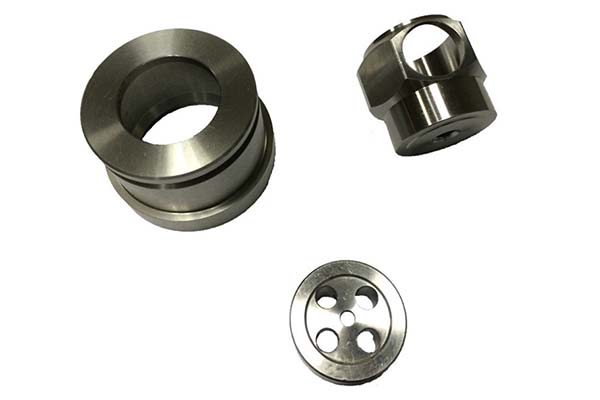
You have a new product design. It needs to be tested—fit, function, feel—before you commit to mass production. Metal die casting prototype parts are how you do that. They let you validate designs, catch mistakes, and iterate fast. But with material choices (aluminum, magnesium, zinc), process options (HPDC, vacuum-assisted), and design rules to follow, it is easy to get overwhelmed.
Key takeaways
- In product development, speed matters. Rapid prototyping options cut lead times so you can test sooner.
- Aluminum is the most popular prototype material—lightweight, strong, and affordable.
- If weight is your top priority (aerospace, high-end electronics), magnesium is the answer. It is 33% lighter than aluminum .
- Zinc flows easily into tight spaces, making it ideal for prototypes with fine details.
How Do You Get Prototypes Fast Without Sacrificing Quality?
In product development, speed matters. Rapid prototyping options cut lead times so you can test sooner.
| Solution | Lead Time | Best For | Example |
|---|---|---|---|
| Quick-turn casting parts | 3–5 days | Simple prototypes (basic housings) | Startup testing an electronic device shell |
| Fast metal prototype casting | 5–7 days | Moderate complexity (brackets) | Automotive supplier validating a sensor mount |
| 24-hour casting samples | <1 day | Emergency fixes, urgent design checks | Replacing a broken prototype for a client meeting |
| Express aluminum prototype | 2–4 days | Aluminum parts (most common material) | Testing a new kitchen tool handle |
The secret: Prioritize “good enough” for initial tests. If you are just checking fit, skip expensive anodizing. Focus on getting the part in hand to validate dimensions.
Aluminum Die-Cast Prototypes: The Go-To for Balance of Strength and Cost
Aluminum is the most popular prototype material—lightweight, strong, and affordable.
| Alloy | Key Properties | Best For |
|---|---|---|
| ADC12 prototype parts | Low cost, excellent castability, smooth finish | Cosmetic parts (phone cases, remote controls) |
| A380 aluminum prototype | High strength, good machinability, heat resistance | Structural parts (engine brackets, power tool housings) |
Why aluminum? A lightweight aluminum casting weighs 30–50% less than steel —perfect for portable devices or automotive parts. Plus, aluminum rapid casting delivers parts in 3–7 days.
Magnesium Die-Cast Prototypes: The Lightest Option for High-Performance
If weight is your top priority (aerospace, high-end electronics), magnesium is the answer. It is 33% lighter than aluminum.
AZ91D prototype parts: The most common magnesium alloy. Good strength and castability. Perfect for:
- Lightweight magnesium casting samples (laptop frames, drone bodies)
- Thin-wall magnesium casting (down to 0.5 mm for slim devices)
Tradeoffs: Magnesium costs more than aluminum and corrodes easily—you will need protective coating (chemical conversion). But for high-performance products, the weight savings are worth it.
Zinc Die-Cast Prototypes: Perfect for Small, Detailed Parts
Zinc flows easily into tight spaces, making it ideal for prototypes with fine details.
| Alloy | Key Properties | Best For |
|---|---|---|
| ZAMAK 3 prototype parts | Low melting point, good dimensional accuracy | Small precision parts (watch components, connector pins) |
| Zamak 5 casting sample | Higher strength than ZAMAK 3 | Durable parts (door handles, small gears) |
Zinc’s benefits:
- Miniature zinc prototype: Can cast parts as small as 5 mm × 5 mm with sharp details
- Zinc rapid casting: Fast cooling means shorter cycles—small batches in 2–4 days
High-Pressure Die Casting (HPDC) Prototypes: For Production-Ready Parts
HPDC prototype parts use the same process as mass production—perfect for validating how parts will perform in full-scale manufacturing.
Key features:
- Made with high pressure (100–150 MPa) for dense, strong parts
- Thin-wall HPDC casting: Walls as thin as 0.4 mm (smartphone frames)
- Multi-slide HPDC prototype: Casts complex shapes (undercuts) without extra machining
When to choose HPDC: When you are close to mass production and need a prototype that matches the final product’s properties. An HPDC aluminum prototype will have the same strength and surface finish as production parts.
Vacuum-Assisted Die Casting Prototypes: For Low-Porosity Parts
Porosity (tiny air bubbles) is a common issue—especially for parts that need to hold fluids (pumps) or withstand high pressure. Vacuum die casting prototype removes air from the mold before casting.
Benefits:
- Reduced-porosity casting: Cuts porosity 70–80% vs. standard die casting
- High-integrity vacuum casting: Ideal for hydraulic components, medical devices where strength and leak resistance matter
- Vacuum-cast aluminum parts: Most common—aluminum’s fluidity pairs well with vacuum to fill thin walls and complex shapes
Thin-Wall and Micro Die-Cast Prototypes: For Slim, Tiny Parts
Modern products are getting smaller. Prototypes need to keep up.
| Type | Minimum Wall | Best For |
|---|---|---|
| Thin-wall casting prototype | 0.3 mm (aluminum/magnesium) | Slim devices (earbud cases, smartwatch bands) |
| Micro die casting parts | 0.2 mm (zinc) | Tiny components (microchip connectors, medical needles) |
| Ultra-thin aluminum prototype | 0.3 mm | Lightweight slim parts (tablet back covers) |
| Mini zinc die casting | 0.2 mm | Small detailed parts (jewelry clasps, micro-gears) |
Tip: For thin walls, use vacuum-assisted casting (to ensure full filling) and conformal cooling (to prevent warpage).
Post-Machining and Finishing: Make Parts Look and Work Like Final Products
Casting alone rarely gives you a finished prototype. Post-processing is key.
| Step | Purpose | Best For |
|---|---|---|
| CNC machining casting prototype | Adds precision features (holes, threads) that can’t be cast | Parts needing tight tolerances (sensor mounts) |
| Trim and drill die casting | Removes excess metal (flash), adds simple holes | Basic prototypes where fit matters more than finish |
| Anodized casting sample | Adds protective colored layer (Type II cosmetic, Type III wear) | Aluminum prototypes (consumer goods, automotive trim) |
| Powder-coat prototype parts | Adds durable matte finish (any color) | Parts needing corrosion resistance (outdoor equipment) |
| Vibratory finish casting | Smooths edges, removes small burrs | Small parts (zinc hardware, magnesium brackets) |
Pro tip: For rapid prototypes, skip unnecessary steps. If testing functionality, trim and drill may be enough—save anodizing for final presentations.
Dimensional and Mechanical Testing: Prove Parts Meet Specs
You cannot trust a prototype until you test it.
| Test | Purpose | Acceptance Criteria |
|---|---|---|
| CT scan casting inspection | Finds hidden defects (porosity, cracks) | Total porosity <1% for structural parts |
| X-ray die casting check | Detects internal flaws (simpler than CT) | No pores >0.5 mm in critical areas |
| CMM prototype measurement | Verifies dimensions (hole diameter, length) | Within ±0.05 mm of design specs |
| Tensile test casting bar | Measures strength (force to break) | ≥80% of final production part strength |
| Porosity analysis report | Documents amount and location of porosity | No porosity in high-stress areas (bolt holes) |
Prioritize tests based on use. A magnesium drone frame needs tensile test and CT scan (check for weak spots). A zinc jewelry clasp just needs CMM check (ensure fit).
Low-Volume and Bridge-Tooling Strategies: From Prototype to Production
Once validated, you may need small batches (10–500 parts) before mass production.
| Strategy | Description | Best For |
|---|---|---|
| Soft-tool casting prototype | Low-cost aluminum molds; 1–2 week lead time | Small batches cheaper than production tooling |
| Insert die casting mold | Swaps inserts in standard mold base for different parts | Multiple prototype variants (3 lid designs) |
| Quick-change casting inserts | Changes inserts in <30 minutes | Low-volume runs with fast setup |
Bridge tooling is perfect for:
- Testing market demand (make 100 parts, sell, get feedback)
- Filling gaps between prototype and mass production (if production tooling is delayed)
Design for Die Casting (DfDC) Guidelines: Avoid Common Prototype Mistakes
Bad design leads to bad prototypes. Follow these rules.
| Rule | Guideline | Why |
|---|---|---|
| Draft angle | Add 1–3° to all vertical surfaces | No draft = parts stick in mold = wasted time and money |
| Fillet radii | Add rounded edges to all corners | Sharp corners cause stress cracks, harder casting |
| Uniform wall thickness | Keep within ±0.2 mm | Thick spots cool slowly (shrinkage); thin spots may not fill |
| Undercut avoidance | Avoid undercuts if possible; use slides if needed | Undercuts prevent part removal, add cost |
| Gate and runner optimization | Position gates for even filling; pinpoint gates for small parts | Ensures complete fill, easy gate removal |
Example: A client designed an aluminum prototype with 0° draft and sharp corners. Every part stuck in the mold, doubling lead time. Adding 2° draft and fillets fixed it.
How to write a spec that gets priced correctly
A drawing is a contract. If it leaves a number open, the shop fills that number in with its own default. The default is rarely the one you had in mind. Put these five lines on every RFQ and most of the back-and-forth disappears before it starts.
- 3D model with the parting line marked
- Alloy grade and the standard it meets
- Wall thickness and draft on every face
- Machining allowance on the faces that will be cut
- Pressure tightness or porosity class
The point is not paperwork. Each line removes a decision the shop would otherwise make for you. A complete RFQ comes back priced. An incomplete one comes back guessed.
What actually drives the price
Buyers usually push on material because it is the line they can see. In practice the material is rarely the biggest number on a quote. These five lines decide most of it:
- die steel and cavity count
- part weight and wall section
- draft and slide count
- porosity requirement
- machining allowance
Ask for the quote split by line. A supplier who cannot break it down is guessing, and you will pay for the guess. The line you can usually renegotiate is the tolerance band, not the raw material.
Problems you will meet, and the fix
Every process has a failure mode it prefers. The same four show up again and again on this kind of work, and none of them are mysteries once you know what to look for.
- Cold shuts where two flow fronts meet
- Porosity that shows up only after machining
- Soldering on a hot spot in the die
- Shrinkage voids in a heavy section
Catch the fault on the first part, not the hundredth. A first-article check costs an hour. A bad batch costs the whole order. Write the check into the purchase order so nobody has to remember it.
What to check on the first article
The first article is the cheapest inspection you will ever buy. Use it properly and the rest of the run becomes boring, which is exactly what you want.
- Every dimension on the drawing, with the measured value written beside it.
- The material certificate, matched to the heat or lot number on the parts.
- The finish against the sample you approved, under the same light.
- Fit against the mating part, assembled rather than measured.
- Packaging, because parts that arrive damaged were never in tolerance.
Check in this order: datums, then mating features, then cosmetic faces. If the datums are wrong, every number after them is noise. Keep the report on file. When a problem shows up in month six, that document is the only thing that tells you what changed.
How to compare two quotes fairly
Two numbers are not comparable unless the scope matches. Line them up before you decide, because a low number with three gaps is not a low number.
Same drawing, same material, same finish, same inspection. Anything else is a different job wearing the same part number. Then look at what each quote leaves out. Freight, packaging, certificates and tooling are the usual gaps.
Ask each supplier to state their assumptions in writing. The one who does is usually the one who has run the process before.
Scaling from one part to a batch
The first part teaches you the process. The hundredth teaches you the process cost.
Watch three things as volume grows: setup amortisation, tool wear, and how much hand work the finish still needs. If the unit price barely moves between ten and a hundred, the cost sits in material or in hand work, not in setup. Ask which, because only one of them is negotiable.
Lead time behaves the same way. A one-off is scheduled around other jobs. A repeat order is scheduled around your forecast. Give the shop a forecast and the lead time gets shorter, not longer.
How to read a supplier's quote
A quote is a short document with a long shadow. Four things in it decide whether the job runs smoothly, and only one of them is the price.
- The scope line. It should name the process, the material and the finish, not just the part.
- The tolerance basis. General tolerance or the drawing, and which standard it follows.
- The exclusions. Tooling, freight, certificates and inspection are the usual omissions.
- The validity date. Material prices move, and an open-ended quote is a promise nobody can keep.
Read the exclusions before you read the total. A quote that leaves out tooling is not cheaper. It is a quote for a different job.
FAQ About Metal Die Casting Prototype Parts
When should I choose magnesium prototype casting over aluminum?
Choose magnesium if weight is critical (aerospace, high-end electronics)—it is 33% lighter than aluminum. Pick aluminum for most other cases (better cost, corrosion resistance, availability). Magnesium works best when every gram saves fuel or improves performance.
What is the difference between HPDC prototype parts and standard die casting prototypes?
HPDC uses high pressure (100–150 MPa) to make dense, strong parts—matching mass production processes. Standard die casting uses lower pressure (50–80 MPa) and is cheaper/faster for initial tests. Use HPDC if you need a prototype that behaves like the final production part.
How can Design for Die Casting (DfDC) guidelines save time on prototypes?
DfDC rules (draft angles, uniform walls) prevent common issues like stuck parts or incomplete filling. Adding 1–3° draft avoids mold sticking—cutting rework time 50%. Skipping DfDC often leads to multiple prototype iterations, delaying your project.
What is the fastest way to get a metal die casting prototype?
24-hour casting samples are the fastest—but only for simple parts. For most prototypes, quick-turn casting (3–5 days) balances speed and complexity. Express aluminum prototypes (2–4 days) are a good middle ground.
How many prototypes should I order?
For initial validation, 5–10 pieces is usually enough. This lets you test fit, assemble a few units, and keep samples. For market testing or pre-production, order 50–100 pieces via soft-tooling.
Metal die casting prototype parts are essential for product development. They let you:
- Test designs before mass production
- Catch mistakes early when fixes are cheap
- Iterate fast with rapid prototyping options
- Validate materials (aluminum, magnesium, zinc) for your application
The keys to success:
- Choose the right material: Aluminum for balance, magnesium for weight, zinc for details
- Pick the right process: HPDC for production-ready, vacuum for low porosity, thin-wall for slim designs
- Follow DfDC rules: Draft angles, uniform walls, filleted corners
- Test thoroughly: CT scans, CMM measurements, tensile tests as needed
- Plan for next steps: Bridge tooling for small batches, production tooling for mass volume
Get these right, and your prototypes will validate your design, impress stakeholders, and speed your path to market.
Our solution for Metal Die Casting Prototype Parts
YiguProto runs die casting in house, from a single prototype to a production batch. We quote the process, the material and the finish as separate lines, so you can see where the money goes instead of arguing with one number.
Send a STEP file or a drawing and you get a DFM report in one to two business days. It flags the features that add cost and the features that will not hold tolerance on the process you picked.
Every order ships with an inspection report on the features you call out. If a part misses, we make it again. Ready to price a part? Start with a free quote and DFM review, or read more about our die casting. You can also talk to an engineer before you commit to a drawing.
FAQ about Metal Die Casting Prototype Parts
How do I compare two quotes fairly?
Match the scope first: same drawing, same material, same finish, same inspection. Then read the exclusions. Freight, tooling and certificates are the usual gaps, and a low number with three gaps is not a low number.
What material should I specify?
Specify by standard, not by trade name. A trade name can change under you between two orders; a standard number cannot. Then add the one property that actually decides the part, whether that is strength, heat resistance or chemical exposure.
How much does Metal Die Casting Prototype Parts cost?
Price comes from five lines: material, machine or tool time, setup, finishing and inspection. The material itself is usually the smallest of them. Send a drawing and we will split the quote so you can see which line is doing the damage.
What files do you need in order to quote?
A STEP file plus a PDF drawing that carries the same revision letter. The model carries the geometry and the drawing carries the intent. When the two disagree, the shop picks one, and it is never the one you meant.
Can Metal Die Casting Prototype Parts be made in small quantities?
Yes, and small quantities are where a good supplier earns the next order. Setup dominates the price at low volume, so the cheapest route is usually the one with the fewest operations, not the cheapest material.
What tolerance can you hold on Metal Die Casting Prototype Parts?
The working default is ±0.1 mm on cast features, ±0.05 mm after machining. Tighter than that the process changes and so does the price, because every step tighter adds inspection time. Call out only the faces that mate with something else and leave the rest on the general tolerance.
The short version
Metal Die Casting Prototype Parts rewards the buyer who reads the data sheet and the drawing together. Pick the option for the property that matters, not for the price per kilo.
Tighten only what mates. Test a sample before the run. Then let the process do the rest.