
Injection Molding
How Does Molding Shape Modern Manufacturing Today?
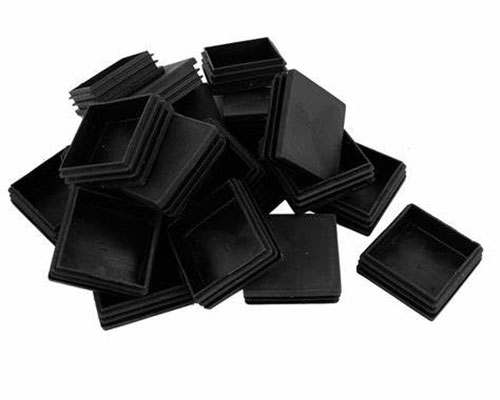
Look around you. The smartphone in your pocket, the dashboard in your car, the container holding your leftovers—all came from one powerful idea: molding. Molding is the foundation of mass production. It takes raw materials—polymers, metals, composites—and shapes them into identical, precise, cost-effective parts at scale. Without it, modern life as we know it wouldn’t exist. But molding isn’t static.
Key takeaways
- Every molding operation, regardless of complexity, follows three fundamental steps.
- Choosing the right process depends on part shape, material, volume, and cost. Here are the four most important techniques in modern manufacturing.
- The old image of molding facilities—workers manually removing parts, trimming excess, packing boxes—is disappearing.
- Manufacturing faces pressure to reduce environmental impact. Molding is no exception.
What Is the Basic Molding Process?
Every molding operation, regardless of complexity, follows three fundamental steps. Understanding these gives you a framework for learning any specific technique.
Step 1: Material Input
The process starts with preparing and loading raw material.
For injection molding, this means drying polymer pellets and feeding them into the machine’s hopper. For rotational molding, it means measuring and pouring powdered resin directly into the mold.
This step ensures material purity and consistency. Contamination here ruins every part that follows.
Step 2: The Molding Cycle
This is where transformation happens.
Material enters a closed mold cavity and faces specific conditions—usually heat and pressure—that force it to take the cavity’s shape.
For thermoplastics: melting, then cooling until solid.
For thermosets: heat triggers a chemical reaction (curing) that permanently hardens the material.
Step 3: Part Removal
Once solid and stable, the mold opens. An ejection system—pins or plates—pushes the finished part out.
The part may then move to trimming, assembly, or packaging. The cycle immediately starts again.
What Are the Main Molding Types?
Choosing the right process depends on part shape, material, volume, and cost. Here are the four most important techniques in modern manufacturing.
Injection Molding
Injection molding dominates high-volume production. The global market reached about $357 billion in 2023—and for good reason.
How it works: Thermoplastic or thermoset pellets heat until molten. The machine injects this liquid under high pressure into a precision-machined steel or aluminum mold. The material cools and solidifies. The part ejects.
Key strength: Incredible speed and precision. Millions of identical parts with tight tolerances at very low per-unit cost.
Key limitation: High initial tooling investment—thousands to hundreds of thousands of dollars.
Common applications: LEGO bricks, electronic housings, bottle caps, medical devices.
Blow Molding
If you’ve used a plastic bottle, you’ve used blow molding.
How it works: First, create a hollow tube-like piece of plastic called a parison (usually by extrusion or injection). Place this hot parison inside a two-part mold. Blow compressed air into it, inflating it like a balloon until it presses against the cold mold walls.
Key strength: Extremely fast process perfect for hollow containers.
Key limitation: Limited to hollow shapes; less control over wall thickness than other methods.
Common applications: Bottles, tanks, hollow containers for beverage, chemical, and consumer goods industries.
Compression Molding
Compression molding excels with thermosetting plastics and high-strength composites.
How it works: Place a pre-measured amount of material (the “charge”) into the bottom half of a heated, open mold. Close the top half. Apply pressure to force material into every part of the cavity. Heat and pressure trigger chemical cross-linking (curing), permanently hardening the part.
Key strength: Handles long-fiber composite materials; lower tooling costs than injection molding.
Key limitation: Much slower cycle times.
Common applications: Automotive body panels, electrical components, dinnerware.
Rotational Molding
For very large, hollow, stress-free parts, rotational molding (rotomolding) stands alone.
How it works: Load powdered polymer (usually polyethylene) into a hollow mold. Close the mold. Heat it in an oven while rotating slowly on two axes. The powder tumbles and melts, evenly coating the inside surface. Move to a cooling station, continuing rotation until the plastic solidifies.
Key strength: Extremely low-cost tooling; uniform wall thickness; stress-free parts.
Key limitation: Very slow cycle times; limited material options.
Common applications: Kayaks, large water storage tanks, playground equipment.
Molding Type Comparison
| Technique | How It Works | Common Materials | Typical Applications | Key Advantage | Key Limitation |
|---|---|---|---|---|---|
| Injection Molding | Molten material injected under high pressure | ABS, PP, PC, nylon | LEGO bricks, electronic housings, bottle caps | High speed, precision, low unit cost | High initial tooling cost |
| Blow Molding | Hollow tube (parison) inflated into mold shape | HDPE, PET | Bottles, tanks, hollow containers | Excellent for hollow parts, fast cycles | Limited to hollow shapes |
| Compression Molding | Material placed in open heated mold; mold closed under pressure | Thermosets, composites | Electrical components, automotive panels | Good for large, flat parts and composites | Slower cycle times |
| Rotational Molding | Powdered material heated in slowly rotating mold | Polyethylene (PE) | Kayaks, storage tanks, playground slides | Low tooling cost, uniform walls, stress-free | Very slow cycles, limited materials |
How Is Automation Changing Molding?
The old image of molding facilities—workers manually removing parts, trimming excess, packing boxes—is disappearing. Smart manufacturing is replacing it with seamless automation.
This isn’t just about replacing labor. It’s about achieving quality, speed, and cost-efficiency previously impossible.
Robotic Part Handling
Six-axis robots are now standard. They:
- Open the press door
- Remove newly molded parts with perfect consistency
- Place parts on conveyors for cooling
- Transfer to trimming stations
- Pack into shipping containers
Benefits: Faster, consistent cycle times; elimination of physical risks; 24/7 operation.
Quick Mold Changes (QMC)
Changing a multi-ton mold used to take an entire shift. That made small production runs uneconomical.
Quick Mold Change systems—using magnetic or hydraulic clamping and automated mold carts—reduce this to minutes.
Benefit: Manufacturers can now respond to demand for high-variety, low-volume production.
In-Line Quality Control
Modern molding cells integrate automated quality control. High-resolution vision systems and sensors inspect every part in real-time:
- Dimensional accuracy
- Surface defects
- Incomplete filling
This provides 100% inspection and immediate feedback to machine controllers, allowing self-correction before mass-producing defects.
Case Study: Automation ROI
Let’s look at a real example. We’ll call the company “PreciPart Inc.”
The Problem: A 20-year-old hydraulic machine required one full-time worker per shift for part removal and inspection. Cycle times varied with worker speed. Scrap rate from damage and missed defects: 5%.
The Solution: Invested $150,000 in a 6-axis robot for part removal and a vision system for post-mold inspection.
The Results (within 6 months):
- Labor: One worker per shift reassigned to higher-value roles
- Output: Increased by 15% from consistent cycle times
- Quality: Scrap rate dropped from 5% to under 0.5%
The ROI: Annual financial benefit exceeded $100,000. Payback period: under 18 months.
How Is Sustainability Advancing in Molding?
Manufacturing faces pressure to reduce environmental impact. Molding is no exception. Forward-thinking companies embrace a three-part approach: materials, energy, and waste.
Sustainable Materials
Bioplastics: Made from renewable resources—corn starch (PLA), microorganisms (PHA). Lower carbon footprint than fossil-fuel-based plastics. Many are biodegradable or compostable under industrial conditions.
Recycled polymers: The circular economy gains momentum. Using post-consumer recycled (PCR) materials like rPET and rHDPE diverts waste from landfills and cuts carbon emissions. For example, rPET reduces carbon footprint by over 60% compared to virgin PET.
Energy Efficiency
Molding consumes significant energy. Modern technology offers solutions.
All-electric vs. hydraulic machines: Traditional hydraulics use energy constantly. All-electric machines with servo motors use energy only when needed—saving 50–70% compared to hydraulic equivalents.
Process optimization: Heating and cooling the mold consumes major energy. Intelligent temperature controllers and efficient cooling channel design minimize waste without compromising quality.
Designing for Waste Reduction
The best waste is the waste you never create.
Hot runner systems: In conventional molding, plastic that fills channels leading to the part (the sprue and runner) becomes waste each cycle. Hot runners keep this plastic molten within the mold—eliminating scrap entirely.
Design for recyclability: We emphasize mono-material designs whenever possible. Avoiding inseparable mixed materials, incompatible labels, or certain additives ensures products can be easily and economically recycled at end of life.
What Does Industry 4.0 Mean for Molding?
If automation was the third industrial revolution, Industry 4.0 is the fourth. It connects the physical world of machines with a digital layer of data, analytics, and intelligence.
For molding, this means the smart factory—where processes are not just automated but self-optimizing, predictive, and transparent.
The Connected Mold
The mold is no longer a passive block of steel. Embedding IIoT (Industrial Internet of Things) sensors directly into the mold cavity creates a digital nervous system.
These sensors measure in real-time:
- Plastic pressure
- Temperature
- Flow rate
This data provides an unprecedented inside look at part formation, enabling immediate adjustments and unparalleled quality control.
Digital Twins
A digital twin is a virtual copy of a physical asset or process. In molding, we can create twins of the entire cell—machine, mold, robot, material properties.
Engineers use these virtual models to:
- Simulate process changes
- Test new mold designs
- Optimize cycle times
All without using physical materials or machine time. Perfection gets simulated before implementation.
Additive Manufacturing Partnership
Smart manufacturers don’t see 3D printing as a competitor—they see it as a powerful partner.
Rapid prototyping: 3D printing creates low-cost prototype molds in hours or days. Designers test and validate designs before committing to expensive steel tooling.
Advanced tooling: 3D printing with metal creates complex mold inserts with conformal cooling channels—cooling lines that follow the exact contours of the part. This is impossible with traditional drilling. Result: more uniform cooling, reduced cycle times, higher part quality.
Roadmap to Predictive Maintenance
Predictive maintenance shifts from “fix when broken” to “fix before failure.” Here’s a simple roadmap.
Phase 1: Basic Data Collection
Track what already exists: machine uptime, cycle times, temperature changes from the controller. Add low-cost sensors to key components if needed.
Phase 2: Pattern Recognition
Use simple software to look for trends. Not complex AI—just pattern recognition. A gradual temperature increase in a motor over weeks signals bearing wear.
Phase 3: Automated Alerts and Action
Create a system that acts on insights. Set up automated alerts for unusual patterns. Generate maintenance work orders before failure. Schedule maintenance during planned downtime, preventing catastrophic stops.
Conclusion: Molding’s Evolution Continues
Molding in manufacturing has traveled far from its origins as a purely mechanical art. It has become a sophisticated, data-driven science at the core of global industry.
We’ve seen how basic processes create everyday products. How automation drives unprecedented efficiency. How sustainability reshapes materials and energy use. How Industry 4.0 connects and optimizes everything.
The trajectory is clear:
- From manual art → automated science
- From standalone machines → connected ecosystems
- From production focus → sustainability mindset
Molding isn’t just about making parts. It’s about using technology to bring innovative, high-quality, sustainable products to life. And the evolution continues—driven by a relentless pursuit of perfection.
How to write a spec that gets priced correctly
A drawing is a contract. If it leaves a number open, the shop fills that number in with its own default. The default is rarely the one you had in mind. Put these five lines on every RFQ and most of the back-and-forth disappears before it starts.
- STEP file plus a 2D drawing with the revision letter
- Resin grade with the standard number, not the trade name
- Draft angle on every wall that runs along the pull
- Texture and the SPI grade it maps to
- Annual volume and the launch quantity
The point is not paperwork. Each line removes a decision the shop would otherwise make for you. A complete RFQ comes back priced. An incomplete one comes back guessed.
What actually drives the price
Buyers usually push on material because it is the line they can see. In practice the material is rarely the biggest number on a quote. These five lines decide most of it:
- tool steel grade and cavity count
- part weight and wall thickness
- cycle time
- surface texture and SPI grade
- resin grade and colour
Ask for the quote split by line. A supplier who cannot break it down is guessing, and you will pay for the guess. The line you can usually renegotiate is the tolerance band, not the raw material.
FAQ: Molding in Modern Manufacturing
What’s the difference between thermoplastics and thermosets in molding?
Thermoplastics melt when heated and solidify when cooled—reversibly. This makes them ideal for injection molding and recycling. Thermosets undergo an irreversible chemical reaction (curing) when heated. Once set, they cannot be remelted. They’re used for high-heat applications like electrical components.
Which molding process is fastest for high volumes?
Injection molding is the speed champion for high volumes. Cycle times of 15–60 seconds are typical, and multi-cavity molds produce multiple parts per cycle. For hollow parts like bottles, blow molding is similarly fast.
How much does an injection mold cost?
Costs range from $1,000 for simple aluminum prototype molds to $100,000+ for complex multi-cavity steel production molds. Factors include part size, complexity, material, and expected production volume.
Can I use recycled plastic in molding?
Yes—and increasingly, you should. Post-consumer recycled (PCR) materials like rPET and rHDPE are widely available. However, recycled content may affect flow properties and color. Test thoroughly before production runs.
What’s the most energy-efficient molding machine?
All-electric machines are significantly more efficient than hydraulic or hybrid machines. They use servo motors for all movements, consuming energy only when needed—saving 50–70% compared to hydraulic equivalents.
How do I choose between molding processes?
Ask three questions: 1) What shape? Hollow? Go blow or rotational molding. Solid? Consider injection or compression. 2) What volume? High volume favors injection molding. Low volume might use compression or rotomolding. 3) What material? Some processes work only with certain material types.
What’s the future of molding?
Industry 4.0 integration—smart sensors, digital twins, predictive maintenance, and AI-driven optimization. Also, increased use of sustainable materials and energy-efficient machines. And greater partnership with additive manufacturing for tooling and prototyping.
Our solution for Molding Shape Modern Manufacturing Today
YiguProto runs injection molding in house, from a single prototype to a production batch. We quote the process, the material and the finish as separate lines, so you can see where the money goes instead of arguing with one number.
Send a STEP file or a drawing and you get a DFM report in one to two business days. It flags the features that add cost and the features that will not hold tolerance on the process you picked.
Every order ships with an inspection report on the features you call out. If a part misses, we make it again. Ready to price a part? Start with a free quote and DFM review, or read more about our injection molding. You can also talk to an engineer before you commit to a drawing.
FAQ about Molding Shape Modern Manufacturing Today
What material should I specify?
Specify by standard, not by trade name. A trade name can change under you between two orders; a standard number cannot. Then add the one property that actually decides the part, whether that is strength, heat resistance or chemical exposure.
What is Molding Shape Modern Manufacturing Today used for?
Molding Shape Modern Manufacturing Today turns up wherever the part has to do a real job at a predictable cost: brackets, housings, fixtures, covers and the fittings that hold them together. The honest test is whether the properties match the load and the environment, not whether the material is fashionable.
What happens if a part is out of specification?
We measure it against the same drawing you approved and, if it misses, we make it again. What matters is that the report exists, because a disagreement without data is just an opinion.
How long does a first article take?
Usually a few business days once the drawing is frozen, and longer if tooling is involved. The date we give you is the date we confirm in writing, not the date we hope for.
What tolerance can you hold on Molding Shape Modern Manufacturing Today?
The working default is ±0.1 mm as a working default, ±0.05 mm on critical features. Tighter than that the process changes and so does the price, because every step tighter adds inspection time. Call out only the faces that mate with something else and leave the rest on the general tolerance.
Does the process work for prototypes as well as production?
Yes, and that is usually the point. Running the prototype on the production process removes a whole class of surprises, because the part you test is made the same way as the part you sell.
The short version
Molding Shape Modern Manufacturing Today rewards the buyer who reads the data sheet and the drawing together. Pick the option for the property that matters, not for the price per kilo.
Tighten only what mates. Test a sample before the run. Then let the process do the rest.