
Blogs
PLA 3D Printing Services
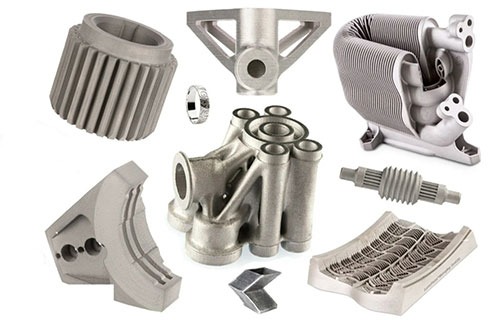
Discover the future of sustainable manufacturing with PLA 3D Printing—the eco-friendly solution powered by biodegradable polymer technology. Whether you need rapid prototypes, custom parts, or large-scale production, our expertise in Fused Deposition Modeling (FDM) and high-precision printing delivers cost-effective, high-quality results tailored to your industry.
Key takeaways
- At our shop we specialize in meeting diverse 3D printing needs with a range of core capabilities.
- PLA 3D Printing is an additive manufacturing process that uses Polylactic Acid (PLA)—a renewable, biodegradable polymer—as its primary material.
- PLA’s versatility is enhanced by various formulations, each suited to specific applications. Below are the most common materials we use:
- PLA 3D printing is transforming industries with its flexibility and sustainability. Below are key sectors we serve:

Our Capabilities: Delivering Customized Solutions
At our shop we specialize in meeting diverse 3D printing needs with a range of core capabilities. Below is a breakdown of our key services, designed to support projects of all sizes and complexities:
| Capability | Key Features | Typical Use Cases | Turnaround Time |
| Custom 3D Printing | Tailored designs for unique requirements; flexible material and color options | Prototypes, personalized consumer products | 1–5 business days |
| High-Precision Printing | Dimensional accuracy down to ±0.1mm; tight tolerance ranges | Medical devices, automotive components | 2–7 business days |
| Large-Scale Production | Batch manufacturing for 100+ units; consistent quality control | Industrial parts, educational tools | 5–14 business days |
| Rapid Prototyping | Fast iteration cycles; quick design adjustments | Product development, concept testing | 24–48 hours |
| Multi-Material Printing | Combine PLA with other materials (e.g., PLA blends, flexible filaments) | Functional parts, textured surfaces | 3–7 business days |
What Is PLA 3D Printing?
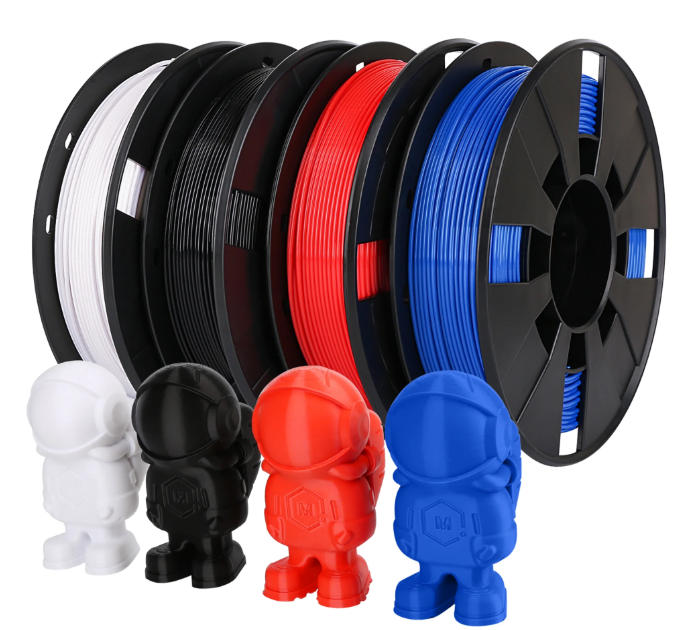
PLA 3D Printing is an additive manufacturing process that uses Polylactic Acid (PLA)—a renewable, biodegradable polymer—as its primary material.
Unlike traditional subtractive manufacturing, it builds objects through layer-by-layer construction, making it ideal for complex designs. The most common technology for PLA printing is Fused Deposition Modeling (FDM), which melts PLA filament and extrudes it to form precise shapes. PLA’s plant-based origin (derived from corn starch or sugarcane) makes it a greener alternative to petroleum-based plastics, aligning with modern sustainability goals.
Materials Used in PLA 3D Printing
PLA’s versatility is enhanced by various formulations, each suited to specific applications. Below are the most common materials we use:
| Material Type | Key Properties | Applications | Environmental Impact |
| PLA (Polylactic Acid) | Biodegradable, low warping, easy to print | Prototypes, consumer goods, educational tools | 100% compostable in industrial facilities |
| PLA Blends | Enhanced strength (e.g., PLA+wood, PLA+carbon) | Functional parts, decorative items | Still biodegradable (varies by blend) |
| Biodegradable Materials | Plant-based, zero petroleum content | Medical devices (e.g., dissolvable sutures) | Reduces plastic waste in landfills |
| Eco-Friendly Filaments | Recycled PLA, non-toxic additives | Sustainable packaging, toys | Low carbon footprint during production |
| Color Variants | Wide range of hues (matte, glossy, metallic) | Custom consumer products, branding items | No harmful dyes; color fades naturally in compost |
PLA 3D Printing Applications by Industry
PLA 3D printing is transforming industries with its flexibility and sustainability. Below are key sectors we serve:
| Industry | Common Applications | Key Benefits for the Industry | Example Projects |
| Consumer Products | Custom phone cases, toys, home decor | Fast production, personalized designs | 3D-printed plant pots with custom logos |
| Medical Devices | Surgical guides, dissolvable sutures, prosthetic parts | Biocompatibility, precise sizing | PLA surgical splints for pediatric patients |
| Automotive Parts | Prototypes for dashboards, interior components | Lightweight, cost-effective testing | PLA prototypes for electric vehicle (EV) door handles |
| Aerospace Components | Non-critical parts (e.g., brackets, cable organizers) | Reduced weight, quick iteration | PLA brackets for satellite equipment testing |
| Educational Tools | Anatomical models, engineering kits | Safe (non-toxic), affordable for schools | 3D-printed DNA models for biology classrooms |
PLA 3D Printing Case Studies: Our Success Stories
We’ve helped clients across industries achieve their goals with PLA 3D printing. Here are three notable examples:
Case Study 1: Medical Device Prototyping for a Healthcare Startup
- Challenge: A startup needed a fast, cost-effective way to test a new pediatric inhaler design.
- Solution: We used high-precision PLA 3D printing to create 10 prototypes in 48 hours. We applied chemical smoothing for a child-safe surface.
- Result: The client tested the prototypes, made design adjustments, and launched the final product 3 months faster than planned. The PLA’s biocompatibility ensured compliance with medical standards.
Case Study 2: Large-Scale Production for an Automotive Supplier
- Challenge: An auto supplier needed 500 PLA brackets for EV interior testing, with a 2-week deadline.
- Solution: We leveraged large-scale production capabilities, using FDM printers to batch-produce the brackets. We implemented strict quality control to ensure ±0.2mm dimensional accuracy.
- Result: All brackets were delivered on time, and the client saved 40% compared to traditional injection molding costs.
Case Study 3: Custom Educational Kits for a School District
- Challenge: A school district wanted affordable, eco-friendly science kits for 500 students.
- Solution: We created custom 3D printed PLA models (cells, gears) in bright color variants. The PLA’s non-toxic nature made it safe for classrooms.
Result: The kits were well-received, and the district reduced waste by 80% (compared to plastic kits) due to PLA’s biodegradability.
How to write a spec that gets priced correctly
A drawing is a contract. If it leaves a number open, the shop fills that number in with its own default. The default is rarely the one you had in mind. Put these five lines on every RFQ and most of the back-and-forth disappears before it starts.
- A model and a drawing that agree
- Material by standard number
- Tolerance only where it mates
- Finish and the faces it applies to
- Quantity and required date
The point is not paperwork. Each line removes a decision the shop would otherwise make for you. A complete RFQ comes back priced. An incomplete one comes back guessed.
What actually drives the price
Buyers usually push on material because it is the line they can see. In practice the material is rarely the biggest number on a quote. These five lines decide most of it:
- process choice
- material
- tolerance band
- finish
- volume
Ask for the quote split by line. A supplier who cannot break it down is guessing, and you will pay for the guess. The line you can usually renegotiate is the tolerance band, not the raw material.
Problems you will meet, and the fix
Every process has a failure mode it prefers. The same four show up again and again on this kind of work, and none of them are mysteries once you know what to look for.
- A drawing that contradicts the model
- A tolerance with no datum
- A cosmetic callout with no approved sample
- A quote compared against a different scope
Catch the fault on the first part, not the hundredth. A first-article check costs an hour. A bad batch costs the whole order. Write the check into the purchase order so nobody has to remember it.
What to check on the first article
The first article is the cheapest inspection you will ever buy. Use it properly and the rest of the run becomes boring, which is exactly what you want.
- Every dimension on the drawing, with the measured value written beside it.
- The material certificate, matched to the heat or lot number on the parts.
- The finish against the sample you approved, under the same light.
- Fit against the mating part, assembled rather than measured.
- Packaging, because parts that arrive damaged were never in tolerance.
Check in this order: datums, then mating features, then cosmetic faces. If the datums are wrong, every number after them is noise. Keep the report on file. When a problem shows up in month six, that document is the only thing that tells you what changed.
How to compare two quotes fairly
Two numbers are not comparable unless the scope matches. Line them up before you decide, because a low number with three gaps is not a low number.
Same drawing, same material, same finish, same inspection. Anything else is a different job wearing the same part number. Then look at what each quote leaves out. Freight, packaging, certificates and tooling are the usual gaps.
Ask each supplier to state their assumptions in writing. The one who does is usually the one who has run the process before.
Scaling from one part to a batch
The first part teaches you the process. The hundredth teaches you the process cost.
Watch three things as volume grows: setup amortisation, tool wear, and how much hand work the finish still needs. If the unit price barely moves between ten and a hundred, the cost sits in material or in hand work, not in setup. Ask which, because only one of them is negotiable.
Lead time behaves the same way. A one-off is scheduled around other jobs. A repeat order is scheduled around your forecast. Give the shop a forecast and the lead time gets shorter, not longer.
How to read a supplier's quote
A quote is a short document with a long shadow. Four things in it decide whether the job runs smoothly, and only one of them is the price.
- The scope line. It should name the process, the material and the finish, not just the part.
- The tolerance basis. General tolerance or the drawing, and which standard it follows.
- The exclusions. Tooling, freight, certificates and inspection are the usual omissions.
- The validity date. Material prices move, and an open-ended quote is a promise nobody can keep.
Read the exclusions before you read the total. A quote that leaves out tooling is not cheaper. It is a quote for a different job.
What to send with the first order
The first order sets the pattern for every order after it. Send a complete package once and the shop files it, and the second order takes a fraction of the time.
- A STEP or native model plus a PDF drawing carrying the same revision letter.
- The material callout by standard number, not by trade name.
- The finish and the exact faces it applies to.
- Any test the part must pass: fit, seal, drop, salt spray, dielectric.
- A contact who can answer a question inside one working day.
Then write down what was agreed. An email that confirms the material, the finish and the date is worth more than a longer purchase order that leaves them open.
When this is the wrong choice
A good supplier tells you when the process does not fit. These are the cases where we say so.
- The volume is so low that setup costs more than the parts are worth.
- The tolerance is tighter than the process can hold without a second operation.
- The geometry cannot be made without a tool feature that will not pay back.
- The material you need is not available in the form the process requires.
- The schedule is shorter than the tooling or setup time, and nobody has said so yet.
None of these are refusals. They are reasons to look at a different route, and the earlier that conversation happens the cheaper it is. The most expensive mistake in manufacturing is a process chosen before the question was understood.
Planning the ramp from prototype to production
The gap between one good part and a thousand identical ones is a plan, not a machine. Three decisions close it.
First, freeze the design. Every change after tooling starts is a re-cut, and re-cuts are where schedules go. Second, decide the inspection level. A prototype is checked by eye; a production part is checked against a report. Third, agree the change process in writing, including who pays for it.
Write the ramp down as dates and owners, not as intentions. A ramp plan with three names and three dates is worth more than a page of good intentions.
What documentation to expect
Paperwork is not bureaucracy when a part fails at the customer. It is the only record of what was agreed. A normal shipment should carry four documents.
- A dimensional report covering every callout on the drawing.
- A material certificate traceable to the heat or lot number.
- A finish or coating certificate where the specification requires one.
- A packing list that matches the carton labels.
If a supplier cannot produce these on request, they are not running a controlled process. Ask for one sample set before you place the first order and you will know exactly what you are buying.
How to handle a change after the order
Changes happen. What matters is whether the change is priced, scheduled and recorded, or absorbed quietly and discovered later.
Send the change as a new revision, not as a note in an email. Ask for three answers in writing: what it costs, what it does to the date, and what happens to material or tooling already committed. Then decide.
A change without a revision number is a rumour. The shop will build what it has on file, and both sides will be right and unhappy at the same time.
How the work actually runs, step by step
Most buyers see two numbers: a price and a date. Between them sits a sequence that decides both. On manufacturing work it looks like this.
- File review. The model and the drawing are checked against each other. Where they disagree, the shop stops and asks, because guessing is how scrap gets made.
- DFM feedback. The features that add cost and the features that will not hold tolerance are listed. This is the cheapest hour in the whole project.
- Setup or tooling. Fixtures, programs or a tool are built. Everything downstream inherits the quality of this step.
- First article. One part is made and measured against the drawing before anything else runs. Nothing is signed until it passes.
- Production. The run goes ahead with the parameters that produced the approved first article, not with new ones.
- Inspection and packing. The callouts are measured, the certificate is matched, and the parts are packed so they arrive in the condition they left in.
Ask any supplier to walk you through these six steps on your part. The answers tell you more about the shop than the price does.
How it compares with the alternatives
No process wins everywhere. The honest comparison is against the two routes you would otherwise take, and the answer usually turns on volume, tolerance and how much the tooling costs.
- Low volume, simple geometry: a faster process usually wins, because setup dominates the price and there is no tool to amortise.
- High volume, stable design: the dedicated process wins, because cycle time replaces labour and the tool cost spreads thin.
- Tight tolerance on a few faces: add a finishing operation rather than paying for a tighter process everywhere.
- One-off repair or legacy part: a digital route is often the only one that makes economic sense.
Decide with the crossover volume, not with a preference. Ask each supplier where their process stops being competitive, and you will usually get a straight answer.
FAQ of PLA 3D Printing
Our solution for PLA 3D Printing Services
YiguProto runs custom manufacturing in house, from a single prototype to a production batch. We quote the process, the material and the finish as separate lines, so you can see where the money goes instead of arguing with one number.
Send a STEP file or a drawing and you get a DFM report in one to two business days. It flags the features that add cost and the features that will not hold tolerance on the process you picked.
Every order ships with an inspection report on the features you call out. If a part misses, we make it again. Ready to price a part? Start with a free quote and DFM review, or read more about our custom manufacturing. You can also talk to an engineer before you commit to a drawing.
FAQ about PLA 3D Printing Services
Is PLA 3D printing suitable for outdoor use?
PLA is not highly resistant to UV light or moisture, so it may degrade over time outdoors. However, applying a coating (e.g., polyurethane) can extend its lifespan. For long-term outdoor use, we recommend PLA blends with UV inhibitors.
What is the maximum size of a PLA part you can print?
Our large-format printers can handle parts up to 1000mm × 1000mm × 800mm. For even larger parts, we offer assembly services—printing components separately and joining them with eco-friendly adhesives.
How long does it take for PLA parts to biodegrade?
In industrial compost facilities (with controlled heat and moisture), PLA biodegrades in 6–12 months. In home compost bins, it may take 2–5 years. If disposed of in landfills (without oxygen), it can take longer, but it still breaks down faster than petroleum-based plastics.
Is there a minimum order quantity?
No hard minimum. One part is fine. What changes with volume is which costs dominate, so a single unit is priced mostly on setup and a thousand units are priced mostly on cycle time and material.
What files do you need in order to quote?
A STEP file plus a PDF drawing that carries the same revision letter. The model carries the geometry and the drawing carries the intent. When the two disagree, the shop picks one, and it is never the one you meant.
Does the process work for prototypes as well as production?
Yes, and that is usually the point. Running the prototype on the production process removes a whole class of surprises, because the part you test is made the same way as the part you sell.
The short version
PLA 3D Printing Services rewards the buyer who reads the data sheet and the drawing together. Pick the option for the property that matters, not for the price per kilo.
Tighten only what mates. Test a sample before the run. Then let the process do the rest.