
Blogs
Our Polyester PBT Injection Molding Services
Our Polyester PBT Injection Molding Services, explained the way we would explain it across a table: what it is good at, what it costs you, and the details that keep the part out of the scrap bin.
Key takeaways
- Unlock precision and efficiency with our Polyester PBT Injection Molding services—where high-performance thermoplastic polymer processing meets custom solutions.
- At our shop, our PBT Processing capabilities are designed to meet the full spectrum of customer needs—from prototyping to mass production.
- Polyester PBT (Polybutylene Terephthalate) is a high-performance thermoplastic polymer renowned for its exceptional mechanical and chemical properties.
- The injection molding process for PBT is a structured sequence that balances precision and efficiency.
Our Polyester PBT Injection Molding Services
Unlock precision and efficiency with our Polyester PBT Injection Molding services—where high-performance thermoplastic polymer processing meets custom solutions.
From high-volume production to intricate precision parts, we deliver consistent quality that leverages PBT’s unique strengths, backed by rigorous technical specifications and end-to-end expertise.

Our Capabilities: Delivering Excellence in PBT Processing
At our shop, our PBT Processing capabilities are designed to meet the full spectrum of customer needs—from prototyping to mass production. We pride ourselves on blending advanced technology with industry expertise to deliver unmatched results. Here’s a detailed look at our core strengths:
Core Capabilities Overview
| Capability | Description | Key Benefits |
| Precision Molding | CNC-controlled machines with ±0.005mm tolerance | Creates intricate parts for high-precision industries (e.g., electronics, medical) |
| High Volume Production | 24/7 automated production lines (up to 500,000 parts/month) | Meets large-scale order demands with consistent quality |
| Custom Molding | Tailored solutions for unique part designs (complex geometries, small/large sizes) | Aligns with specific project requirements, no “one-size-fits-all” |
| Tooling Expertise | In-house tool design and maintenance (steel/aluminum molds) | Reduces lead times and ensures mold longevity |
| Quality Control | ISO 9001-certified processes (100% visual inspection, dimensional testing) | Eliminates defects and maintains batch-to-batch consistency |
Our team’s deep understanding of injection molding capabilities ensures that every PBT project—whether simple or complex—meets or exceeds customer expectations.
Definition: Understanding Polyester PBT Injection Molding
Polyester PBT (Polybutylene Terephthalate) is a high-performance thermoplastic polymer renowned for its exceptional mechanical and chemical properties. When combined with injection molding—a versatile manufacturing processing method—PBT transforms into durable, precise components for diverse industries. Below is a breakdown of key technical specifications that define quality Polyester PBT Injection Molding:
| Technical Specification | Standard Range | Key Purpose |
| Melting Point | 225–235°C | Ensures proper material flow during injection |
| Mold Temperature | 40–80°C | Enhances part dimensional stability post-cooling |
| Shrinkage Rate | 1.5–2.5% | Guides mold design for accurate final part size |
| Tensile Strength | 55–70 MPa | Guarantees structural integrity of finished parts |
| Chemical Resistance | Resistant to oils, solvents, and weak acids | Extends part lifespan in harsh environments |
In short, Polyester PBT Injection Molding merges the polymer’s inherent strengths with the molding process’s scalability, making it a top choice for demanding applications.
Process: Step-by-Step Polyester PBT Injection Molding
The injection molding process for PBT is a structured sequence that balances precision and efficiency. Each step is critical to achieving high-quality parts, and we optimize every phase to minimize waste and maximize consistency. Below are the key PBT molding steps:
- Material Preparation: First, we select the right Polyester PBT grade (e.g., reinforced, flame-retardant) based on the application. The material is dried (to <0.02% moisture) to prevent bubbling during injection—moisture can compromise part strength. We then load the dried PBT pellets into the molding machine’s hopper.
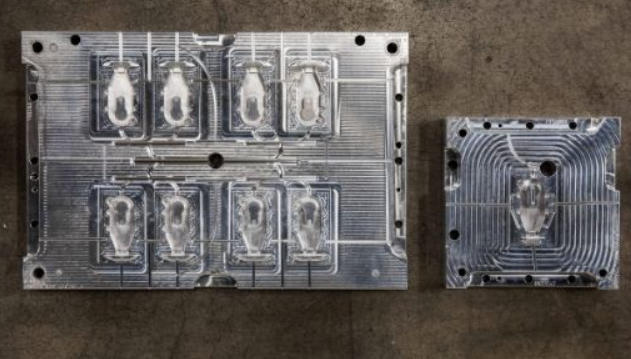
- Mold Design: Our engineers create custom molds (or adapt existing ones) based on part specifications. Mold design focuses on gate placement (for even material flow), cooling channels (to speed up solidification), and ejection systems (to avoid part damage). This step is foundational to precision molding.
- Injection: The dried PBT pellets are melted in a heated barrel (230–250°C) and injected into the mold cavity under high pressure (1000–2000 bar). The pressure ensures the molten polymer fills every detail of the mold, critical for complex part geometries.
- Cooling: The mold is cooled using water or oil circuits, lowering the PBT temperature to below its crystallization point (≈180°C). Cooling time (10–30 seconds, depending on part thickness) directly impacts dimensional stability—too fast, and parts may warp; too slow, and production slows.
- Ejection: Once cooled, the mold opens, and ejector pins push the finished part out. We inspect parts immediately for defects (e.g., flash, short shots) before moving to post-processing.
- Post-Processing: Depending on requirements, parts may undergo trimming (to remove excess material), deburring (for smooth edges), or surface treatment (e.g., painting, plating). This step ensures parts meet final aesthetic and functional standards.
Materials: Choosing the Right Polyester PBT for Your Project
Selecting the correct Polyester PBT grade is vital to part performance. PBT is available in various formulations, each tailored to specific industry needs. Below is a comparison of common PBT grades and their ideal applications:
| PBT Grade | Key Properties | Recommended Applications |
| Unreinforced PBT | Good impact resistance, easy processing | Consumer goods (e.g., appliance knobs, toy parts) |
| Reinforced PBT (30% glass fiber) | High strength, stiffness, and heat resistance (up to 150°C) | Automotive components (e.g., sensor housings, connector pins) |
| Flame Retardant PBT (UL94 V0 rated) | Self-extinguishing, low smoke emission | Electronics (e.g., circuit board enclosures, switchgear) |
| Mineral-Filled PBT | Improved dimensional stability, low shrinkage | Industrial components (e.g., pump housings, valve parts) |
| Conductive PBT | Anti-static properties | Medical devices (e.g., diagnostic tool casings) |
We partner with trusted thermoplastic materials suppliers to source high-purity PBT, ensuring consistent quality. Our material selection process involves: (1) understanding your part’s operating environment (temperature, chemicals, load), (2) matching needs to PBT grade properties, and (3) testing samples to validate performance.
Advantages: Why Polyester PBT Injection Molding Stands Out
Polyester PBT Injection Molding offers a unique set of advantages that make it superior to other thermoplastic molding processes (e.g., ABS, nylon). These benefits drive its popularity across industries:
- Cost Efficiency: PBT’s fast cooling time (10–30 seconds) reduces cycle times, lowering production costs—critical for high volume production. Additionally, PBT’s low shrinkage rate minimizes material waste, further cutting expenses.
- High Strength: Reinforced PBT grades (e.g., 30% glass fiber) have tensile strength up to 70 MPa, outperforming many thermoplastics. This makes PBT parts durable enough for heavy-load applications (e.g., automotive suspension components).
- Dimensional Stability: PBT’s low shrinkage (1.5–2.5%) and resistance to warping ensure parts maintain their shape—even in extreme temperatures (-40°C to 150°C). This is essential for precision parts like electronics connectors.
- Chemical Resistance: PBT resists oils, solvents, and weak acids, making it ideal for parts exposed to harsh fluids (e.g., industrial pumps, automotive fuel lines). Unlike nylon, PBT doesn’t absorb moisture, so its properties don’t degrade over time.
- Recyclability: PBT is fully recyclable—scrap material from molding can be reprocessed (with minimal property loss) into new parts. This reduces environmental impact and lowers material costs.
- Design Flexibility: Injection molding allows for complex PBT part designs (e.g., undercuts, thin walls) that would be impossible with other methods. Combined with custom tooling, this means we can bring even the most intricate designs to life.
Applications Industry: Where Polyester PBT Injection Molding Shines
Polyester PBT Injection Molding serves a wide range of industries, thanks to its versatile properties. Below are the key sectors and their common PBT applications:
| Industry | Key Applications | PBT Grade/Property Used |
| Automotive Industry | Sensor housings, connector pins, door lock components, mirror brackets | Reinforced PBT (high strength), chemical resistance (to oils) |
| Electronics | Circuit board enclosures, switchgear, LED housings, battery connectors | Flame Retardant PBT (UL94 V0), conductivity (plated PBT) |
| Consumer Goods | Appliance knobs, hair dryer casings, toy parts, cosmetic packaging | Unreinforced PBT (impact resistance), painted/textured PBT (aesthetics) |
| Industrial Components | Pump housings, valve bodies, gear wheels, conveyor parts | Mineral-filled PBT (dimensional stability), chemical resistance |
| Medical Devices | Diagnostic tool casings, surgical instrument handles, drug delivery components | Conductive PBT (anti-static), biocompatible PBT |
| Appliances | Washing machine control panels, refrigerator shelf supports, oven knobs | Heat-resistant PBT (up to 150°C), UV-resistant coating |

In each industry, PBT’s unique blend of strength, stability, and cost-effectiveness solves critical engineering challenges.
How to write a spec that gets priced correctly
A drawing is a contract. If it leaves a number open, the shop fills that number in with its own default. The default is rarely the one you had in mind. Put these five lines on every RFQ and most of the back-and-forth disappears before it starts.
- A model and a drawing that agree
- Material by standard number
- Tolerance only where it mates
- Finish and the faces it applies to
- Quantity and required date
The point is not paperwork. Each line removes a decision the shop would otherwise make for you. A complete RFQ comes back priced. An incomplete one comes back guessed.
What actually drives the price
Buyers usually push on material because it is the line they can see. In practice the material is rarely the biggest number on a quote. These five lines decide most of it:
- process choice
- material
- tolerance band
- finish
- volume
Ask for the quote split by line. A supplier who cannot break it down is guessing, and you will pay for the guess. The line you can usually renegotiate is the tolerance band, not the raw material.
Problems you will meet, and the fix
Every process has a failure mode it prefers. The same four show up again and again on this kind of work, and none of them are mysteries once you know what to look for.
- A drawing that contradicts the model
- A tolerance with no datum
- A cosmetic callout with no approved sample
- A quote compared against a different scope
Catch the fault on the first part, not the hundredth. A first-article check costs an hour. A bad batch costs the whole order. Write the check into the purchase order so nobody has to remember it.
What to check on the first article
The first article is the cheapest inspection you will ever buy. Use it properly and the rest of the run becomes boring, which is exactly what you want.
- Every dimension on the drawing, with the measured value written beside it.
- The material certificate, matched to the heat or lot number on the parts.
- The finish against the sample you approved, under the same light.
- Fit against the mating part, assembled rather than measured.
- Packaging, because parts that arrive damaged were never in tolerance.
Check in this order: datums, then mating features, then cosmetic faces. If the datums are wrong, every number after them is noise. Keep the report on file. When a problem shows up in month six, that document is the only thing that tells you what changed.
How to compare two quotes fairly
Two numbers are not comparable unless the scope matches. Line them up before you decide, because a low number with three gaps is not a low number.
Same drawing, same material, same finish, same inspection. Anything else is a different job wearing the same part number. Then look at what each quote leaves out. Freight, packaging, certificates and tooling are the usual gaps.
Ask each supplier to state their assumptions in writing. The one who does is usually the one who has run the process before.
Scaling from one part to a batch
The first part teaches you the process. The hundredth teaches you the process cost.
Watch three things as volume grows: setup amortisation, tool wear, and how much hand work the finish still needs. If the unit price barely moves between ten and a hundred, the cost sits in material or in hand work, not in setup. Ask which, because only one of them is negotiable.
Lead time behaves the same way. A one-off is scheduled around other jobs. A repeat order is scheduled around your forecast. Give the shop a forecast and the lead time gets shorter, not longer.
How to read a supplier's quote
A quote is a short document with a long shadow. Four things in it decide whether the job runs smoothly, and only one of them is the price.
- The scope line. It should name the process, the material and the finish, not just the part.
- The tolerance basis. General tolerance or the drawing, and which standard it follows.
- The exclusions. Tooling, freight, certificates and inspection are the usual omissions.
- The validity date. Material prices move, and an open-ended quote is a promise nobody can keep.
Read the exclusions before you read the total. A quote that leaves out tooling is not cheaper. It is a quote for a different job.
What to send with the first order
The first order sets the pattern for every order after it. Send a complete package once and the shop files it, and the second order takes a fraction of the time.
- A STEP or native model plus a PDF drawing carrying the same revision letter.
- The material callout by standard number, not by trade name.
- The finish and the exact faces it applies to.
- Any test the part must pass: fit, seal, drop, salt spray, dielectric.
- A contact who can answer a question inside one working day.
Then write down what was agreed. An email that confirms the material, the finish and the date is worth more than a longer purchase order that leaves them open.
Case Studies: Success Stories in Polyester PBT Injection Molding
Our Polyester PBT Injection Molding services have helped clients across industries overcome production hurdles and achieve their goals. Below are two standout case studies:
Case Study 1: Automotive Sensor Housing for a Global OEM
- Challenge: A leading automotive OEM needed a sensor housing that could withstand engine bay temperatures (up to 120°C), resist oil exposure, and meet tight dimensional tolerances (±0.01mm). Their previous ABS parts failed after 6 months of use.
- Solution: We recommended reinforced PBT (30% glass fiber) for its heat and chemical resistance. Our precision molding team designed a custom mold with optimized cooling channels to ensure dimensional stability. We also added a thin Teflon coating for extra oil resistance.
- Result: The PBT sensor housings passed 2,000 hours of durability testing (vs. 500 hours for ABS) and met all OEM specifications. Production scaled to 100,000 units/month with zero defects—saving the client 15% in replacement costs.
Case Study 2: Flame-Retardant Enclosures for a Medical Device Startup
- Challenge: A startup developing a portable diagnostic tool needed enclosures that were flame-retardant (UL94 V0), anti-static, and lightweight. They had a tight 8-week timeline to launch.
- Solution: We used flame retardant PBT with conductive additives (for anti-static properties). Our custom molding team fast-tracked tooling (5 weeks instead of 8) by leveraging existing mold bases. Post-processing included polishing for a sterile finish.
- Result: The enclosures passed UL94 V0 testing and weighed 20% less than the client’s original design. We delivered 5,000 units on time, helping the startup launch ahead of schedule.
Our solution for Our Polyester PBT Injection Molding
YiguProto runs custom manufacturing in house, from a single prototype to a production batch. We quote the process, the material and the finish as separate lines, so you can see where the money goes instead of arguing with one number.
Send a STEP file or a drawing and you get a DFM report in one to two business days. It flags the features that add cost and the features that will not hold tolerance on the process you picked.
Every order ships with an inspection report on the features you call out. If a part misses, we make it again. Ready to price a part? Start with a free quote and DFM review, or read more about our custom manufacturing. You can also talk to an engineer before you commit to a drawing.
FAQ about Our Polyester PBT Injection Molding
What is the typical lead time for Polyester PBT Injection Molding projects?
Lead times depend on project size and complexity. For custom tooling (new molds), lead times are 4–8 weeks. For production runs: small batches (100–1,000 parts) take 1–2 weeks, medium batches (1,000–10,000 parts) take 2–3 weeks, and high-volume batches (10,000+ parts) take 3–5 weeks. We offer expedited options (20% faster) for urgent orders.
Can you work with custom Polyester PBT formulations (e.g., specific colors, additives)?
Yes! We partner with top thermoplastic materials suppliers to create custom PBT formulations. Whether you need a specific color (matched to your brand Pantone), additive (e.g., UV stabilizers, anti-microbial agents), or blend (e.g., PBT/PC for improved impact resistance), our team will develop and test the material to meet your requirements.
How do you ensure the dimensional stability of PBT parts in high-temperature environments?
We use three key strategies: (1) Selecting the right PBT grade (e.g., reinforced PBT with glass fiber for heat resistance up to 150°C); (2) Optimizing mold design (even cooling channels, proper gate placement) to minimize warping; (3) Post-processing treatments (e.g., annealing) to relieve internal stresses. We also test parts in temperature chambers (-40°C to 150°C) to validate dimensional stability before delivery.
What is the lead time for Our Polyester PBT Injection Molding?
Expect 5 to 15 business days depending on process. Tooling, material stock and the finishing queue all move that number, so we confirm the date in writing before the run starts rather than after.
How much does Our Polyester PBT Injection Molding cost?
Price comes from five lines: material, machine or tool time, setup, finishing and inspection. The material itself is usually the smallest of them. Send a drawing and we will split the quote so you can see which line is doing the damage.
What should I check before approving the parts?
Datums first, then the features that mate, then the cosmetic faces. Ask for a dimensional report, a material certificate and a finish sample. A part can be inside every tolerance and still not fit, so assemble one before you sign.
The short version
Our Polyester PBT Injection Molding rewards the buyer who reads the data sheet and the drawing together. Pick the option for the property that matters, not for the price per kilo.
Tighten only what mates. Test a sample before the run. Then let the process do the rest.