
Blogs
Our PolyJet 3D Printing Services
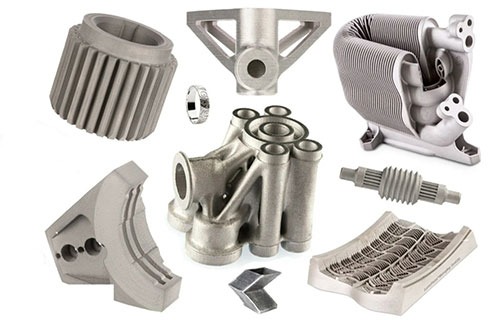
Our PolyJet 3D Printing Services, explained the way we would explain it across a table: what it is good at, what it costs you, and the details that keep the part out of the scrap bin.
Key takeaways
- Unlock the future of digital fabrication with PolyJet 3D Printing—your gateway to high-resolution additive manufacturing that turns complex designs into reality.
- At our shop we leverage the full potential of PolyJet to offer tailored solutions for every client.
- PolyJet 3D Printing is a cutting-edge 3D printing technology that falls under the umbrella of additive manufacturing.
- The PolyJet process is a streamlined, step-by-step workflow that ensures accuracy and efficiency from start to finish.
Our PolyJet 3D Printing Services
Unlock the future of digital fabrication with PolyJet 3D Printing—your gateway to high-resolution additive manufacturing that turns complex designs into reality.
Whether you need rapid prototyping for product development or customized parts with tight tolerances, our shop PolyJet process delivers unmatched precision, multi-material flexibility, and fast turnaround. Experience layer-by-layer fabrication that redefines what’s possible in automotive, medical, aerospace, and more industries—all with quality assurance you can trust.

Our PolyJet 3D Printing Capabilities
At our shop we leverage the full potential of PolyJet to offer tailored solutions for every client. Our capabilities are designed to meet the most demanding needs, combining advanced technology with expert craftsmanship.
| Capability | Key Benefit | Typical Application Example |
| Customized Solutions | Tailored to unique design requirements | Custom medical device components |
| High-Resolution Printing | Ultra-fine details (down to 16 µm layer thickness) | Jewelry prototypes with intricate patterns |
| Multi-Material Printing | Combine up to 14 materials in one part | Flexible grips on rigid tool handles |
| Complex Geometries | Print overhangs, hollow structures, and lattice designs | Aerospace engine components |
| Rapid Turnaround | Parts ready in hours (vs. days for traditional methods) | Emergency replacement parts for manufacturing lines |
| Large Build Volume | Print parts up to 1000 x 800 x 500 mm | Full-scale architectural models |
| Precision Engineering | Consistent dimensional accuracy | Dental aligners with tight fits |
| Quality Assurance | Rigorous testing at every stage | Medical implants meeting regulatory standards |
| Design Flexibility | Iterate designs quickly without tooling costs | Consumer electronics casings |
| Post-Processing Services | Smoothing, painting, and coating for finished look | Automotive interior trim pieces |
What Is PolyJet 3D Printing?

PolyJet 3D Printing is a cutting-edge 3D printing technology that falls under the umbrella of additive manufacturing. At its core, the PolyJet process uses photopolymer jetting—a method where tiny droplets of liquid photopolymer resin are jetted onto a build platform. These droplets are then instantly cured (hardened) with UV light, creating thin, precise layers. This layer-by-layer fabrication continues until the final part is complete, making it ideal for rapid prototyping and precision printing of even the most intricate designs.
Unlike some other 3D printing methods, PolyJet allows for seamless integration of multiple materials in a single print, opening up endless possibilities for functional and aesthetic parts.
The PolyJet 3D Printing Process
The PolyJet process is a streamlined, step-by-step workflow that ensures accuracy and efficiency from start to finish. Each stage is optimized to deliver high-quality parts with minimal waste.
- Digital Model Creation: Everything starts with a digital model—usually designed using computer-aided design (CAD) software. This model serves as the blueprint for the 3D print.
- CAD File Preparation: The CAD file is checked for errors (like missing surfaces) and optimized for printing. This step ensures the design is compatible with PolyJet technology.
- STL Conversion: The CAD file is converted to an STL (stereolithography) file—a standard format for 3D printing that represents the model as a series of triangular facets.
- Slicing Software: Slicing software breaks the STL file into hundreds or thousands of thin layers (typically 16–100 µm thick). It also adds support structures to hold the part during printing.
- Layer Deposition: The 3D printer jets droplets of photopolymer resin onto the build platform, following the sliced layers. Each layer is cured with UV light immediately after deposition.
- Support Structure Removal: Once printing is complete, the part is removed from the build platform, and support structure removal is done manually or with specialized tools (depending on the part’s complexity).
- Post-Curing: Some parts undergo post-curing—additional UV exposure—to enhance strength and durability, especially for functional components.
Inspection & Quality Control: The final part goes through inspection using tools like calipers or 3D scanners to ensure it meets dimensional requirements. Quality control checks confirm the part is free of defects and ready for use.
PolyJet 3D Printing Materials
PolyJet offers a wide range of photopolymers (resins) to suit different applications, from rigid structural parts to flexible elastomers. The ability to combine materials in a single print makes PolyJet one of the most versatile 3D printing technologies available.
| Material Type | Key Properties | Common Applications |
| Rigid Materials | High strength, impact resistance, heat stability | Automotive brackets, electronic housings |
| Flexible Materials | Elasticity (Shore A hardness 30–95), tear resistance | Grips, gaskets, wearable devices |
| Transparent Materials | Optical clarity (similar to glass or acrylic) | Light covers, lenses, medical fluid containers |
| Opaque Materials | Matte or glossy finish, color stability | Consumer product prototypes, toys |
| ABS-like Materials | Similar to injection-molded ABS—tough, durable | Functional prototypes, tooling |
| Rubber-like Materials | Soft, flexible, and resilient | Seals, bumpers, soft-touch components |
| Bio-Compatible Materials | Approved for contact with human skin/tissue | Dental appliances, surgical guides |
| High-Temperature Materials | Withstands temperatures up to 200°C | Engine components, industrial parts |
| Multi-Material Combinations | Mix textures, colors, and properties in one part | Prototypes with soft grips and rigid bodies |
Advantages of PolyJet 3D Printing
PolyJet stands out from other 3D printing technologies thanks to its unique blend of speed, precision, and versatility. Here’s how it benefits your business:
- High Resolution: Captures tiny details (down to 0.1 mm) for realistic prototypes and functional parts—no other additive method matches this level of detail.
- Multi-Material Printing: Combine rigid, flexible, transparent, and colored materials in one print—saves time and reduces assembly needs.
- Fast Prototyping: Produce parts in hours, not days—accelerates product development cycles and gets your ideas to market faster.
- Design Freedom: Print complex geometries (overhangs, lattices, hollow parts) that are impossible with traditional manufacturing (e.g., CNC machining).
- Cost-Effective: No tooling costs—ideal for small-batch production or design iterations. Saves money compared to injection molding for low-volume runs.
- Reduced Lead Time: Cut lead times by 50–70% vs. traditional methods. For example, a custom automotive prototype that once took 2 weeks can now be ready in 2 days.
- High Accuracy: Meets tight tolerances for critical applications—perfect for medical devices or aerospace components that require precise fits.
- Smooth Surface Finish: Parts have a near-net-shape finish, reducing the need for extensive post-processing.
- Environmental Sustainability: Uses only the resin needed for the part (minimal waste) and many photopolymers are recyclable—lowers your carbon footprint.

PolyJet 3D Printing Applications by Industry
PolyJet 3D Printing is transforming industries by enabling innovative designs and faster production. Here’s how different sectors use our technology:
| Industry | Key Applications | Benefits Gained |
| Automotive Industry | Prototypes for interior trim, engine components, tooling | Faster design iterations, reduced testing costs |
| Aerospace | Lightweight lattice structures, cabin components, maintenance parts | Weight reduction (saves fuel), quick replacement parts |
| Medical Devices | Surgical guides, dental aligners, implant prototypes | Customization for patient needs, bio-compatible materials |
| Consumer Electronics | Casings for smartphones, wearables, keyboard prototypes | High-detail designs, fast market testing |
| Architecture | Full-scale building models, interior design prototypes | Realistic visualization, client approval faster |
| Dental | Crowns, bridges, aligner molds | Precise fits, same-day prototypes |
| Jewelry | Intricate pendants, ring prototypes | High detail, custom designs for clients |
| Education & Research | Experimental parts, teaching models | Hands-on learning, fast testing of ideas |
| Product Design | Concept models, user testing prototypes | Quick feedback, reduced development time |
| Industrial Manufacturing | Jigs, fixtures, replacement parts for production lines | Minimized downtime, cost-effective small-batch production |

Case Studies: Real-World Success with PolyJet
Our clients have achieved remarkable results using PolyJet 3D Printing. Here are two standout examples:
Case Study 1: Medical Device Manufacturer
- Challenge: Needed custom surgical guides for spinal procedures—each guide had to fit a patient’s unique anatomy and meet strict medical standards.
- Solution: Used PolyJet’s bio-compatible materials and high accuracy to 3D print guides from patient MRI scans.
- Outcome: Reduced surgery time by 30%, improved guide fit (100% of surgeons reported better precision), and met ISO 13485 certification. The client also cut prototype costs by 40% vs. traditional machining.
Case Study 2: Automotive Supplier
- Challenge: Needed to test a new dashboard prototype with flexible air vents—traditional methods would take 4 weeks and require multiple tooling steps.
- Solution: Used PolyJet’s multi-material printing to combine rigid dashboard resin with flexible vent resin in one print.
Outcome: Delivered the prototype in 3 days, allowing the client to test and iterate 5 design versions in 2 weeks (vs. 8 weeks with traditional methods). The final design was approved 6 weeks earlier than planned, saving the client $50,000 in development costs.
How to write a spec that gets priced correctly
A drawing is a contract. If it leaves a number open, the shop fills that number in with its own default. The default is rarely the one you had in mind. Put these five lines on every RFQ and most of the back-and-forth disappears before it starts.
- A model and a drawing that agree
- Material by standard number
- Tolerance only where it mates
- Finish and the faces it applies to
- Quantity and required date
The point is not paperwork. Each line removes a decision the shop would otherwise make for you. A complete RFQ comes back priced. An incomplete one comes back guessed.
What actually drives the price
Buyers usually push on material because it is the line they can see. In practice the material is rarely the biggest number on a quote. These five lines decide most of it:
- process choice
- material
- tolerance band
- finish
- volume
Ask for the quote split by line. A supplier who cannot break it down is guessing, and you will pay for the guess. The line you can usually renegotiate is the tolerance band, not the raw material.
Problems you will meet, and the fix
Every process has a failure mode it prefers. The same four show up again and again on this kind of work, and none of them are mysteries once you know what to look for.
- A drawing that contradicts the model
- A tolerance with no datum
- A cosmetic callout with no approved sample
- A quote compared against a different scope
Catch the fault on the first part, not the hundredth. A first-article check costs an hour. A bad batch costs the whole order. Write the check into the purchase order so nobody has to remember it.
What to check on the first article
The first article is the cheapest inspection you will ever buy. Use it properly and the rest of the run becomes boring, which is exactly what you want.
- Every dimension on the drawing, with the measured value written beside it.
- The material certificate, matched to the heat or lot number on the parts.
- The finish against the sample you approved, under the same light.
- Fit against the mating part, assembled rather than measured.
- Packaging, because parts that arrive damaged were never in tolerance.
Check in this order: datums, then mating features, then cosmetic faces. If the datums are wrong, every number after them is noise. Keep the report on file. When a problem shows up in month six, that document is the only thing that tells you what changed.
How to compare two quotes fairly
Two numbers are not comparable unless the scope matches. Line them up before you decide, because a low number with three gaps is not a low number.
Same drawing, same material, same finish, same inspection. Anything else is a different job wearing the same part number. Then look at what each quote leaves out. Freight, packaging, certificates and tooling are the usual gaps.
Ask each supplier to state their assumptions in writing. The one who does is usually the one who has run the process before.
Scaling from one part to a batch
The first part teaches you the process. The hundredth teaches you the process cost.
Watch three things as volume grows: setup amortisation, tool wear, and how much hand work the finish still needs. If the unit price barely moves between ten and a hundred, the cost sits in material or in hand work, not in setup. Ask which, because only one of them is negotiable.
Lead time behaves the same way. A one-off is scheduled around other jobs. A repeat order is scheduled around your forecast. Give the shop a forecast and the lead time gets shorter, not longer.
How to read a supplier's quote
A quote is a short document with a long shadow. Four things in it decide whether the job runs smoothly, and only one of them is the price.
- The scope line. It should name the process, the material and the finish, not just the part.
- The tolerance basis. General tolerance or the drawing, and which standard it follows.
- The exclusions. Tooling, freight, certificates and inspection are the usual omissions.
- The validity date. Material prices move, and an open-ended quote is a promise nobody can keep.
Read the exclusions before you read the total. A quote that leaves out tooling is not cheaper. It is a quote for a different job.
What to send with the first order
The first order sets the pattern for every order after it. Send a complete package once and the shop files it, and the second order takes a fraction of the time.
- A STEP or native model plus a PDF drawing carrying the same revision letter.
- The material callout by standard number, not by trade name.
- The finish and the exact faces it applies to.
- Any test the part must pass: fit, seal, drop, salt spray, dielectric.
- A contact who can answer a question inside one working day.
Then write down what was agreed. An email that confirms the material, the finish and the date is worth more than a longer purchase order that leaves them open.
When this is the wrong choice
A good supplier tells you when the process does not fit. These are the cases where we say so.
- The volume is so low that setup costs more than the parts are worth.
- The tolerance is tighter than the process can hold without a second operation.
- The geometry cannot be made without a tool feature that will not pay back.
- The material you need is not available in the form the process requires.
- The schedule is shorter than the tooling or setup time, and nobody has said so yet.
None of these are refusals. They are reasons to look at a different route, and the earlier that conversation happens the cheaper it is. The most expensive mistake in manufacturing is a process chosen before the question was understood.
FAQ of PolyJet 3D Printing
Our solution for Our PolyJet 3D Printing Services
YiguProto runs custom manufacturing in house, from a single prototype to a production batch. We quote the process, the material and the finish as separate lines, so you can see where the money goes instead of arguing with one number.
Send a STEP file or a drawing and you get a DFM report in one to two business days. It flags the features that add cost and the features that will not hold tolerance on the process you picked.
Every order ships with an inspection report on the features you call out. If a part misses, we make it again. Ready to price a part? Start with a free quote and DFM review, or read more about our custom manufacturing. You can also talk to an engineer before you commit to a drawing.
FAQ about Our PolyJet 3D Printing Services
How long does it take to 3D print a part using PolyJet technology?
The time depends on the part’s size, complexity, and layer thickness. Small, simple parts (e.g., a 5 cm dental aligner mold) can be ready in 2–4 hours. Larger or more complex parts (e.g., a 30 cm automotive prototype) may take 12–24 hours. Our team provides a detailed timeline before starting your project, and we offer expedited options for urgent needs.
Are PolyJet 3D printed parts durable enough for functional use?
Yes! PolyJet parts can be extremely durable, especially when using high-strength materials like ABS-like or high-temperature resins. Many parts meet industry standards for impact resistance, heat tolerance, and wear—making them suitable for functional use in applications like industrial tooling, medical devices, and automotive components. We also offer post-curing and coating services to enhance durability further.
Can PolyJet 3D printing produce parts in large quantities?
While PolyJet is often associated with rapid prototyping and small-batch production, it can handle medium-volume runs (up to 1,000 parts) cost-effectively. For larger quantities, we often combine PolyJet with other methods (e.g., using PolyJet to create injection molds) to scale production. Our team will assess your volume needs and recommend the most efficient solution—whether it’s full PolyJet production or a hybrid approach.
What is Our PolyJet 3D Printing Services used for?
Our PolyJet 3D Printing Services turns up wherever the part has to do a real job at a predictable cost: brackets, housings, fixtures, covers and the fittings that hold them together. The honest test is whether the properties match the load and the environment, not whether the material is fashionable.
How long does a first article take?
Usually a few business days once the drawing is frozen, and longer if tooling is involved. The date we give you is the date we confirm in writing, not the date we hope for.
What material should I specify?
Specify by standard, not by trade name. A trade name can change under you between two orders; a standard number cannot. Then add the one property that actually decides the part, whether that is strength, heat resistance or chemical exposure.
The short version
Our PolyJet 3D Printing Services rewards the buyer who reads the data sheet and the drawing together. Pick the option for the property that matters, not for the price per kilo.
Tighten only what mates. Test a sample before the run. Then let the process do the rest.