
Rapid Prototyping
Why Use PP Material for Medical Device Prototypes? A Complete Guide for Engineers
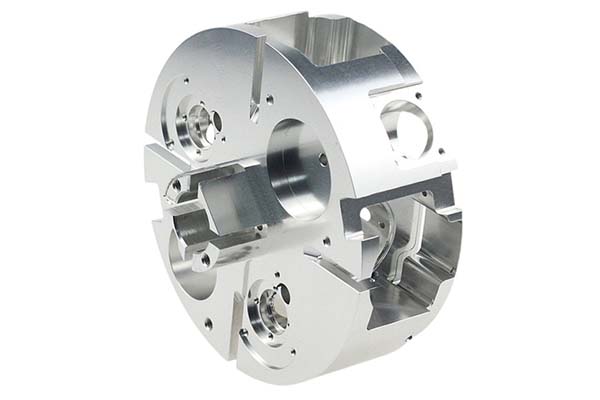
Early in my medical device career, I learned a hard lesson about material choice. We’d spent weeks designing a surgical instrument, machining prototypes from a plastic that looked perfect on paper. But when we tested it with actual surgeons, the device slipped in gloved hands. Worse, after sterilization with ethanol, the surface degraded. We’d chosen the wrong material. And it cost us months of rework.
Why Is PP Material the Gold Standard for Medical Device Prototypes?
Medical devices face unique demands. They must be safe for patient contact. They must survive sterilization. They must perform reliably in critical situations. PP meets these demands better than most alternatives.
How Does PP Compare on Biocompatibility?
PP is compliant with ISO 10993, the international standard for biological evaluation of medical devices. That means it’s proven safe for tissue contact.
Compare that to ABS, which has limited biocompatibility and isn’t recommended for direct patient contact. For prototypes that will be handled by clinicians or touch patients during testing, PP is the safer choice.
PMMA is also biocompatible, but it’s expensive and difficult to machine. PP gives you biocompatibility without the headaches.
What About Chemical Resistance?
Medical devices get cleaned. A lot. Ethanol, disinfectants, sterilization solutions—they all attack plastics.
PP resists disinfectants like ethanol exceptionally well. A glucose monitor prototype I worked on survived 500+ cycles of ethanol disinfection without degradation. The same test on ABS showed surface damage after 50 cycles.
For devices that need to withstand clinical cleaning, PP is hard to beat.
How Machinable Is PP?
PP is easy to machine with low tool wear. It cuts cleanly, doesn’t chip like ABS, and doesn’t require the specialized tools that PMMA demands.
This translates to faster turnaround and lower cost. A complex prototype that might take two weeks in PMMA can ship in one week in PP.
What About Cost?
At $2.50 to $4.00 per kilogram, PP is significantly cheaper than PMMA ($8-12/kg) and PU ($6.50-9/kg). For startups and iterative development, that cost advantage means more prototypes for the same budget.
| Material | Biocompatibility | Chemical Resistance | Machinability | Cost/kg | Best Uses |
|---|---|---|---|---|---|
| PP | ISO 10993 compliant | Excellent | Easy | $2.50-4.00 | Syringe housings, diagnostic casings |
| ABS | Limited | Good | Moderate | $3.00-5.50 | Device enclosures, non-contact parts |
| PMMA | Compliant | Poor | Difficult | $8.00-12.00 | Transparent viewports, fluid containers |
| PU | Compliant | Moderate | Moderate | $6.50-9.00 | Catheter tips, flexible parts |
Real-World Example: Portable Blood Glucose Monitor
A leading medical device company needed to prototype a handheld glucose monitor casing. They started with ABS but found it failed biocompatibility tests when exposed to skin oils.
Switching to PP solved multiple problems:
- The prototype withstood 500+ cycles of ethanol disinfection —critical for clinical use
- It cost 30% less than PMMA alternatives
- It survived 1.2m drop tests onto concrete, meeting durability requirements
The PP prototype gave them valid test data. The ABS prototype would have misled them.
How Do You Select the Right PP Grade for Medical Devices?
Not all PP is created equal. For medical prototypes, grade selection matters.
What Standards Should PP Meet?
For medical use, your PP should meet:
- ISO 10993-1 for biocompatibility
- USP Class VI for safety in medical devices
- FDA 21 CFR Part 177.1520 for food and medical contact approval
These certifications ensure the material is safe for its intended use.
What PP Types Work for Medical Devices?
Homo-PP (homopolymer) is rigid and strong. Best for housings, casings, and structural parts that don’t need to flex.
Co-PP (copolymer) adds flexibility. Ideal for catheter shafts, living hinges, or parts that must bend without cracking.
How Do You Verify Material Quality?
Request a certificate of analysis (CoA) from your supplier. This document confirms the material meets specified standards.
Avoid “general-purpose” PP for medical prototypes. It may contain additives like plasticizers that aren’t safe for medical use. Always specify medical-grade material.
What Data Preparation Ensures Prototype Accuracy?
Prototype quality starts with good data.
Should You Use 3D Drawings or 2D PDFs?
Always use CAD files like STEP or IGES. These let CNC machines read exact dimensions down to 0.01mm. 2D PDFs require manual interpretation, which introduces errors.
For a surgical forceps prototype, we needed jaw alignment within 0.1mm. That’s achievable from CAD files. From 2D drawings, it’s guesswork.
Why Make a Gypsum Sample First?
Before cutting expensive PP, make a gypsum sample to verify:
- Overall shape —does it fit in a doctor’s hand?
- Curvature —are edges smooth enough to avoid patient discomfort?
- Assembly points —do PP parts align with metal components?
A startup developing a PP-based inhaler skipped this step. They later discovered the mouthpiece was 2mm too narrow —costing two weeks of rework and $1,200 in wasted material.
The gypsum sample would have caught this for $50.
How Do You CNC Machine PP for Medical Prototypes?
CNC machining delivers the precision medical devices require.
What Tooling Works Best?
Use a high-speed steel (HSS) end mill with 30° helix angle. This geometry reduces heat buildup, preventing the melting that plagues PP machining.
PP has a low melting point—160-170°C. Too much heat from incorrect tooling will ruin your parts.
Should You Use Multi-Axis Machining?
For complex parts like valve bodies with internal channels, 5-axis CNC machining eliminates multiple setups and reduces errors by 40% compared to 3-axis.
A contract manufacturer reported that 5-axis machining of a PP cardiac catheter prototype cut lead time from 7 days to 3 days while improving dimensional accuracy to ±0.005mm.
What Cutting Parameters Prevent Melting?
- Cutting speed: 150-200 m/min
- Feed rate: 1000-1500 mm/min
Lower speed, higher feed. Let the tool cut, not burn.
What Post-Treatment Enhances PP Prototypes?
Raw machined PP may need additional work to meet medical standards.
How Do You Deburr Without Contamination?
Wet-sanding with 400-grit sandpaper removes tool marks safely. Dry-sanding creates PP dust, which is a contamination risk in medical environments.
Always use a HEPA vacuum during sanding to capture particles.
What Coatings Add Functionality?
For prototypes needing extra chemical resistance, apply a thin PTFE coating. This is common for test tubes and labware.
For aesthetics like device logos, use silk-screen printing with medical-grade inks compliant with ISO 10993-10.
A PP urine collection cup prototype received a hydrophilic coating to prevent fluid buildup inside. This improved diagnostic test accuracy during lab trials.
How Do You Assemble and Test PP Medical Prototypes?
Testing confirms your prototype meets requirements.
What Assembly Checks Matter?
Fit all PP parts with other components —rubber gaskets, metal sensors, whatever your device includes.
A PP insulin pen prototype failed initial assembly because the thread on the cap didn’t match the metal barrel. Adjusting the CNC program fixed it. Finding this early saved weeks.
What Functional Tests Are Critical?
Structural stability: Apply 50N of force to PP handles for 10 minutes. No deformation allowed.
Chemical exposure: Soak parts in 70% ethanol for 24 hours. No cracking or discoloration.
Simulated use: For a PP inhaler, perform 1,000 actuations. The spray pattern must remain consistent throughout.
What Environmental Testing Matters?
Medical devices face varied conditions. Test prototypes at relevant temperatures and humidity levels. PP should maintain its properties across the expected range.
How to write a spec that gets priced correctly
A drawing is a contract. If it leaves a number open, the shop fills that number in with its own default. The default is rarely the one you had in mind. Put these five lines on every RFQ and most of the back-and-forth disappears before it starts.
- A model you are willing to freeze for the build
- The question the prototype must answer
- Process and material that can answer it
- Tolerance on the features under test
- How many iterations you have budgeted
The point is not paperwork. Each line removes a decision the shop would otherwise make for you. A complete RFQ comes back priced. An incomplete one comes back guessed.
What actually drives the price
Buyers usually push on material because it is the line they can see. In practice the material is rarely the biggest number on a quote. These five lines decide most of it:
- process choice
- part size and feature count
- material
- finish and fit checks
- number of iterations
Ask for the quote split by line. A supplier who cannot break it down is guessing, and you will pay for the guess. The line you can usually renegotiate is the tolerance band, not the raw material.
Problems you will meet, and the fix
Every process has a failure mode it prefers. The same four show up again and again on this kind of work, and none of them are mysteries once you know what to look for.
- A prototype that is too good and hides a production problem
- A prototype that is too rough to test the real question
- Material chosen for speed rather than for the test
- No measurement plan, so the result is an opinion
Catch the fault on the first part, not the hundredth. A first-article check costs an hour. A bad batch costs the whole order. Write the check into the purchase order so nobody has to remember it.
What to check on the first article
The first article is the cheapest inspection you will ever buy. Use it properly and the rest of the run becomes boring, which is exactly what you want.
- Every dimension on the drawing, with the measured value written beside it.
- The material certificate, matched to the heat or lot number on the parts.
- The finish against the sample you approved, under the same light.
- Fit against the mating part, assembled rather than measured.
- Packaging, because parts that arrive damaged were never in tolerance.
Check in this order: datums, then mating features, then cosmetic faces. If the datums are wrong, every number after them is noise. Keep the report on file. When a problem shows up in month six, that document is the only thing that tells you what changed.
How to compare two quotes fairly
Two numbers are not comparable unless the scope matches. Line them up before you decide, because a low number with three gaps is not a low number.
Same drawing, same material, same finish, same inspection. Anything else is a different job wearing the same part number. Then look at what each quote leaves out. Freight, packaging, certificates and tooling are the usual gaps.
Ask each supplier to state their assumptions in writing. The one who does is usually the one who has run the process before.
Scaling from one part to a batch
The first part teaches you the process. The hundredth teaches you the process cost.
Watch three things as volume grows: setup amortisation, tool wear, and how much hand work the finish still needs. If the unit price barely moves between ten and a hundred, the cost sits in material or in hand work, not in setup. Ask which, because only one of them is negotiable.
Lead time behaves the same way. A one-off is scheduled around other jobs. A repeat order is scheduled around your forecast. Give the shop a forecast and the lead time gets shorter, not longer.
How to read a supplier's quote
A quote is a short document with a long shadow. Four things in it decide whether the job runs smoothly, and only one of them is the price.
- The scope line. It should name the process, the material and the finish, not just the part.
- The tolerance basis. General tolerance or the drawing, and which standard it follows.
- The exclusions. Tooling, freight, certificates and inspection are the usual omissions.
- The validity date. Material prices move, and an open-ended quote is a promise nobody can keep.
Read the exclusions before you read the total. A quote that leaves out tooling is not cheaper. It is a quote for a different job.
What to send with the first order
The first order sets the pattern for every order after it. Send a complete package once and the shop files it, and the second order takes a fraction of the time.
- A STEP or native model plus a PDF drawing carrying the same revision letter.
- The material callout by standard number, not by trade name.
- The finish and the exact faces it applies to.
- Any test the part must pass: fit, seal, drop, salt spray, dielectric.
- A contact who can answer a question inside one working day.
Then write down what was agreed. An email that confirms the material, the finish and the date is worth more than a longer purchase order that leaves them open.
When this is the wrong choice
A good supplier tells you when the process does not fit. These are the cases where we say so.
- The volume is so low that setup costs more than the parts are worth.
- The tolerance is tighter than the process can hold without a second operation.
- The geometry cannot be made without a tool feature that will not pay back.
- The material you need is not available in the form the process requires.
- The schedule is shorter than the tooling or setup time, and nobody has said so yet.
None of these are refusals. They are reasons to look at a different route, and the earlier that conversation happens the cheaper it is. The most expensive mistake in manufacturing is a process chosen before the question was understood.
How Do You Package and Ship Medical Prototypes?
Medical prototypes are delicate. Protect your investment.
What Packaging Prevents Damage?
Use anti-static bubble wrap. PP is prone to static buildup, which attracts dust—unacceptable for medical devices.
Place prototypes in sealed HDPE bags labeled “Medical Device Prototype—Fragile.”
Does Temperature Control Matter During Shipping?
PP softens above 40°C. If your prototype ships through hot climates or sits on a tarmac in summer, it could deform.
Choose logistics providers with temperature-controlled options for sensitive prototypes.
How Do You Speed Up Delivery?
Negotiate “medical prototype priority” shipping with your logistics partner. This can cut delivery time by 2-3 days, critical for tight development timelines.
Our solution for Use PP Material
YiguProto runs rapid prototyping in house, from a single prototype to a production batch. We quote the process, the material and the finish as separate lines, so you can see where the money goes instead of arguing with one number.
Send a STEP file or a drawing and you get a DFM report in one to two business days. It flags the features that add cost and the features that will not hold tolerance on the process you picked.
Every order ships with an inspection report on the features you call out. If a part misses, we make it again. Ready to price a part? Start with a free quote and DFM review, or read more about our rapid prototyping. You can also talk to an engineer before you commit to a drawing.
FAQ about Use PP Material
How long does a first article take?
Usually a few business days once the drawing is frozen, and longer if tooling is involved. The date we give you is the date we confirm in writing, not the date we hope for.
What should I check before approving the parts?
Datums first, then the features that mate, then the cosmetic faces. Ask for a dimensional report, a material certificate and a finish sample. A part can be inside every tolerance and still not fit, so assemble one before you sign.
What is the lead time for Use PP Material?
Expect 3 to 7 business days for a first article. Tooling, material stock and the finishing queue all move that number, so we confirm the date in writing before the run starts rather than after.
What happens if a part is out of specification?
We measure it against the same drawing you approved and, if it misses, we make it again. What matters is that the report exists, because a disagreement without data is just an opinion.
Does the process work for prototypes as well as production?
Yes, and that is usually the point. Running the prototype on the production process removes a whole class of surprises, because the part you test is made the same way as the part you sell.
What material should I specify?
Specify by standard, not by trade name. A trade name can change under you between two orders; a standard number cannot. Then add the one property that actually decides the part, whether that is strength, heat resistance or chemical exposure.
The short version
Use PP Material rewards the buyer who reads the data sheet and the drawing together. Pick the option for the property that matters, not for the price per kilo.
Tighten only what mates. Test a sample before the run. Then let the process do the rest.