
Sheet Metal
What Is Precision Sheet Metal Prototype Parts Forming? A Complete Guide
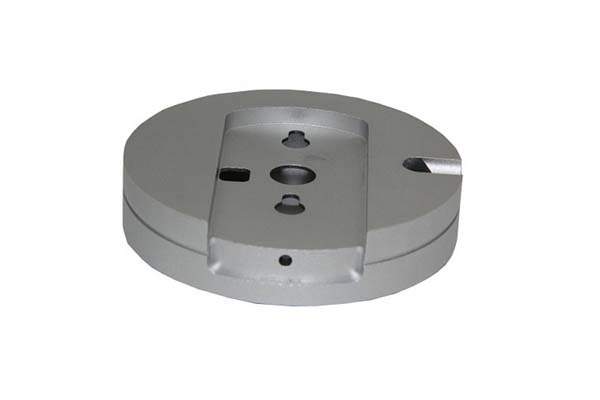
Product development demands precision. Your designs exist as ideas, then as CAD models. The next step matters most—turning those digital files into physical parts that you can hold, test, and evaluate. Precision sheet metal prototype parts forming makes this transition possible. It transforms complex, customized sheet metal designs into high-quality physical prototypes. The parts come out accurate.
Key takeaways
- Many prototypes consist of multiple components. Welding and assembly join these pieces into complete functional parts.
- After welding and assembly, prototypes receive surface treatment. This step improves both appearance and durability.
- Quality control runs through every step of the process. Final inspection is particularly critical.
- Precision sheet metal prototype parts forming transforms custom designs into physical reality through a structured process.
What Makes Precision Sheet Metal Prototype Parts Forming Different?
The Definition
Precision sheet metal prototype parts forming is a manufacturing process that creates custom metal components with high accuracy. It focuses on prototypes and low-volume production rather than mass manufacturing.
The key word is precision. Dimensions hold tight tolerances. Features align exactly as designed. Surfaces are smooth and consistent. Every detail matches the original intent.
Why Precision Matters
Prototypes serve critical purposes. They validate designs before tooling investment. They demonstrate concepts to investors and customers. They undergo testing to reveal flaws. If prototypes lack precision, these purposes fail.
A prototype with wrong dimensions misleads testing. A rough surface hides fit issues. Poor accuracy undermines confidence in the design. Precision ensures prototypes provide reliable information.
How Does Design and Planning Lay the Foundation?
Step 1: 3D Modeling
Every precision prototype starts as a digital model. Advanced CAD software like SolidWorks or AutoCAD builds these models. Every dimension, every hole, every curve exists in the virtual space.
The goal is accuracy. The model must reflect design intent completely. No features are too small to include. No details are too minor to capture. This model becomes the master reference for everything that follows.
Step 2: Design Optimization
Creating the model is not enough. The design must also be manufacturable. Professional software analyzes the model for potential problems.
Mold flow analysis checks whether material will flow smoothly during forming. It identifies areas where material might pool, stall, or tear. Designers adjust these areas before any metal is cut.
Structural analysis tests whether the prototype will survive its intended use. A shell that looks good but collapses under light pressure fails its purpose. Analysis finds weak points so designers can strengthen them.
Example: A company developing a custom sheet metal shell for a new electronic device started with a basic CAD model. Mold flow analysis revealed a sharp corner where material would likely tear during forming. Structural analysis showed the bottom panel would flex too much under normal use. Both issues were fixed in the design phase, saving weeks of rework later.
| Design Stage | Specific Operations | Core Objectives |
|---|---|---|
| 3D Modeling | Build precise model in CAD software | Capture all dimensions and features accurately |
| Design Optimization | Run mold flow and structural analysis | Verify manufacturability, improve structural strength |
What Materials Work Best for Precision Prototypes?
Material Selection Principles
Two principles guide material selection for precision prototypes.
First, match design requirements. Consider the product’s use environment and performance needs. If the prototype needs corrosion resistance, stainless steel is the choice. If lightweight matters most, aluminum alloy works better.
Second, consider processability. The material must be easy to cut, bend, and weld. Difficult materials slow production and increase costs. They may also compromise precision.
Common Material Choices
Stainless steel offers excellent corrosion resistance. It works for medical devices, food equipment, and outdoor applications. SUS 304 is the most common grade.
Aluminum alloy provides light weight and good formability. 6061 aluminum works for aerospace, automotive, and consumer products where weight matters.
Mild steel is economical and easy to process. It suits prototypes where corrosion resistance is not critical and cost is a concern.
Copper conducts electricity and heat exceptionally well. It works for electrical components and heat transfer applications.
Material Pretreatment Steps
Before processing, materials need preparation.
Deburring removes sharp edges and burrs from raw sheets. This prevents scratches during handling and ensures operator safety.
Cleaning removes oil, dust, and other impurities. Clean surfaces improve adhesion for later surface treatments.
Preliminary surface treatment like pickling or passivation may be needed. These processes enhance rust resistance before fabrication begins.
How Does CNC Machining Achieve High Precision?
CNC machining is the core of precision prototype forming. Computer-controlled equipment performs cutting and bending operations with accuracy impossible by hand.
Precise Cutting
CNC laser cutting uses a high-powered laser beam to cut metal. The laser follows paths programmed from your CAD model. It cuts complex shapes with accuracy up to ±0.1mm. Intricate contours, small holes, and tight corners are all possible.
CNC punching works faster for simple shapes. It uses tools to punch holes and cut outlines. Quality remains consistent across multiple parts.
Question: Why is CNC cutting more accurate than traditional manual cutting?
Answer: CNC cutting eliminates human error. Computer programs control every movement precisely. Advanced sensors monitor the cutting process in real time. They adjust parameters automatically to maintain accuracy. Manual cutting depends on operator skill and varies from part to part.
Fine Bending
CNC press braking forms bends in the cut metal. The machine holds the material and applies force through a punch and die. Computer controls determine exactly how far the punch descends. This controls the final angle precisely.
Bending angle errors stay within ±0.5 degrees. This consistency matters when prototypes must fit together perfectly.
Operators simply load the material and start the program. The machine handles the rest, repeating the same bend accurately across multiple parts.
How Does Welding and Assembly Combine Parts?
Many prototypes consist of multiple components. Welding and assembly join these pieces into complete functional parts.
Precision Welding
TIG welding (tungsten inert gas) works well for thin materials and stainless steel. It provides excellent control and produces clean, strong welds.
MIG welding (metal inert gas) is faster and works well for aluminum and thicker materials.
Both techniques control heat input carefully. Too much heat causes distortion. Too little creates weak joints. Precision welding balances these factors for optimal results.
Quality requirements: Welds must be smooth and uniform. No pores, cracks, or slag inclusion are acceptable. Weld tensile strength should be at least 80% of the base material strength.
Careful Assembly
Assembly follows design drawings precisely. Precision measuring tools like calipers, micrometers, and coordinate measuring machines verify positions during assembly.
The core goal is accurate fit. Each component must align correctly. Assembly gaps should stay within design limits—typically not more than 0.2mm.
Example: A robotics company needed a prototype arm assembly with four moving joints. Precision welding created strong connections. Careful assembly ensured each joint moved freely without binding. The prototype performed exactly as the design predicted.
How Does Surface Treatment Enhance Appearance and Performance?
After welding and assembly, prototypes receive surface treatment. This step improves both appearance and durability.
Advanced Polishing
Polishing smooths welding seams, cut edges, and other surfaces. Professional tools like polishing machines and sandpaper remove imperfections.
The result is a smooth, flat surface without scratches or bumps. Consumer product prototypes often need this level of finish for presentations and user testing.
Special Coatings
Different coatings serve different purposes.
Anti-rust coatings improve corrosion resistance. They extend prototype life in humid or corrosive environments.
Conductive coatings provide electrical conductivity. They work for electronic product shells that must shield or ground components.
Decorative coatings enhance appearance. They make prototypes look like production parts, supporting market research and investor presentations.
How to write a spec that gets priced correctly
A drawing is a contract. If it leaves a number open, the shop fills that number in with its own default. The default is rarely the one you had in mind. Put these five lines on every RFQ and most of the back-and-forth disappears before it starts.
- Flat pattern or STEP file plus a dimensioned drawing
- Material grade and thickness with the standard number
- Bend radii, K-factor and the direction of the grain
- Finish, masking and which faces stay bare
- Quantity and the assembly sequence
The point is not paperwork. Each line removes a decision the shop would otherwise make for you. A complete RFQ comes back priced. An incomplete one comes back guessed.
What actually drives the price
Buyers usually push on material because it is the line they can see. In practice the material is rarely the biggest number on a quote. These five lines decide most of it:
- blank size and nesting efficiency
- number of bends and weld joints
- material grade and thickness
- finish and masking
- batch quantity
Ask for the quote split by line. A supplier who cannot break it down is guessing, and you will pay for the guess. The line you can usually renegotiate is the tolerance band, not the raw material.
Problems you will meet, and the fix
Every process has a failure mode it prefers. The same four show up again and again on this kind of work, and none of them are mysteries once you know what to look for.
- Stretching at a bend that is tighter than the material allows
- Hole distortion when a hole sits too close to a bend line
- Weld draw on a visible face
- Springback that pulls a formed angle out of tolerance
Catch the fault on the first part, not the hundredth. A first-article check costs an hour. A bad batch costs the whole order. Write the check into the purchase order so nobody has to remember it.
What to check on the first article
The first article is the cheapest inspection you will ever buy. Use it properly and the rest of the run becomes boring, which is exactly what you want.
- Every dimension on the drawing, with the measured value written beside it.
- The material certificate, matched to the heat or lot number on the parts.
- The finish against the sample you approved, under the same light.
- Fit against the mating part, assembled rather than measured.
- Packaging, because parts that arrive damaged were never in tolerance.
Check in this order: datums, then mating features, then cosmetic faces. If the datums are wrong, every number after them is noise. Keep the report on file. When a problem shows up in month six, that document is the only thing that tells you what changed.
How to compare two quotes fairly
Two numbers are not comparable unless the scope matches. Line them up before you decide, because a low number with three gaps is not a low number.
Same drawing, same material, same finish, same inspection. Anything else is a different job wearing the same part number. Then look at what each quote leaves out. Freight, packaging, certificates and tooling are the usual gaps.
Ask each supplier to state their assumptions in writing. The one who does is usually the one who has run the process before.
Scaling from one part to a batch
The first part teaches you the process. The hundredth teaches you the process cost.
Watch three things as volume grows: setup amortisation, tool wear, and how much hand work the finish still needs. If the unit price barely moves between ten and a hundred, the cost sits in material or in hand work, not in setup. Ask which, because only one of them is negotiable.
Lead time behaves the same way. A one-off is scheduled around other jobs. A repeat order is scheduled around your forecast. Give the shop a forecast and the lead time gets shorter, not longer.
How to read a supplier's quote
A quote is a short document with a long shadow. Four things in it decide whether the job runs smoothly, and only one of them is the price.
- The scope line. It should name the process, the material and the finish, not just the part.
- The tolerance basis. General tolerance or the drawing, and which standard it follows.
- The exclusions. Tooling, freight, certificates and inspection are the usual omissions.
- The validity date. Material prices move, and an open-ended quote is a promise nobody can keep.
Read the exclusions before you read the total. A quote that leaves out tooling is not cheaper. It is a quote for a different job.
What to send with the first order
The first order sets the pattern for every order after it. Send a complete package once and the shop files it, and the second order takes a fraction of the time.
- A STEP or native model plus a PDF drawing carrying the same revision letter.
- The material callout by standard number, not by trade name.
- The finish and the exact faces it applies to.
- Any test the part must pass: fit, seal, drop, salt spray, dielectric.
- A contact who can answer a question inside one working day.
Then write down what was agreed. An email that confirms the material, the finish and the date is worth more than a longer purchase order that leaves them open.
How Does Quality Control Ensure Final Quality?
Quality control runs through every step of the process. Final inspection is particularly critical.
Thorough Inspection
Dimensional inspection uses high-precision equipment. Coordinate measuring machines and laser measuring instruments check all key dimensions. Every measurement must fall within design tolerance.
Visual inspection examines appearance. Surface smoothness, weld quality, and coating uniformity all matter. Prototypes with obvious defects are rejected or reworked.
Functional Testing
Testing verifies that prototypes perform as intended.
Load-bearing tests check brackets and structural parts. Can they support required weights without bending?
Waterproof and dustproof tests check enclosures. Do they protect internal components as designed?
Movement tests check hinges and moving parts. Do they operate smoothly through their full range?
Purpose: Functional testing validates performance and durability. It reveals problems before production tooling is committed. Issues found at this stage cost little to fix. Issues found after mass production cost thousands.
Precision sheet metal prototype parts forming transforms custom designs into physical reality through a structured process.
Design and planning create the digital foundation. Material selection chooses the right raw materials. CNC machining achieves precise cutting and bending. Welding and assembly combine components. Surface treatment enhances appearance and performance. Quality control verifies everything meets requirements.
Each step builds on the previous one. Skipping or rushing any step compromises the final result. Following the complete process delivers prototypes that match your design, perform as intended, and provide reliable information for development decisions.
Whether you need a single prototype for testing or a small batch for market validation, precision forming delivers quality parts you can trust.
Our solution for Precision Sheet Metal Prototype Parts
YiguProto runs sheet metal fabrication in house, from a single prototype to a production batch. We quote the process, the material and the finish as separate lines, so you can see where the money goes instead of arguing with one number.
Send a STEP file or a drawing and you get a DFM report in one to two business days. It flags the features that add cost and the features that will not hold tolerance on the process you picked.
Every order ships with an inspection report on the features you call out. If a part misses, we make it again. Ready to price a part? Start with a free quote and DFM review, or read more about our sheet metal fabrication. You can also talk to an engineer before you commit to a drawing.
FAQ about Precision Sheet Metal Prototype Parts
How much does Precision Sheet Metal Prototype Parts cost?
Price comes from five lines: material, machine or tool time, setup, finishing and inspection. The material itself is usually the smallest of them. Send a drawing and we will split the quote so you can see which line is doing the damage.
What should I check before approving the parts?
Datums first, then the features that mate, then the cosmetic faces. Ask for a dimensional report, a material certificate and a finish sample. A part can be inside every tolerance and still not fit, so assemble one before you sign.
What is Precision Sheet Metal Prototype Parts used for?
Precision Sheet Metal Prototype Parts turns up wherever the part has to do a real job at a predictable cost: brackets, housings, fixtures, covers and the fittings that hold them together. The honest test is whether the properties match the load and the environment, not whether the material is fashionable.
What material should I specify?
Specify by standard, not by trade name. A trade name can change under you between two orders; a standard number cannot. Then add the one property that actually decides the part, whether that is strength, heat resistance or chemical exposure.
Is there a minimum order quantity?
No hard minimum. One part is fine. What changes with volume is which costs dominate, so a single unit is priced mostly on setup and a thousand units are priced mostly on cycle time and material.
Can Precision Sheet Metal Prototype Parts be made in small quantities?
Yes, and small quantities are where a good supplier earns the next order. Setup dominates the price at low volume, so the cheapest route is usually the one with the fewest operations, not the cheapest material.
The short version
Precision Sheet Metal Prototype Parts rewards the buyer who reads the data sheet and the drawing together. Pick the option for the property that matters, not for the price per kilo.
Tighten only what mates. Test a sample before the run. Then let the process do the rest.