
Rapid Prototyping
What Really Determines the Cost of Aluminum Alloy Prototypes and How to Estimate It?
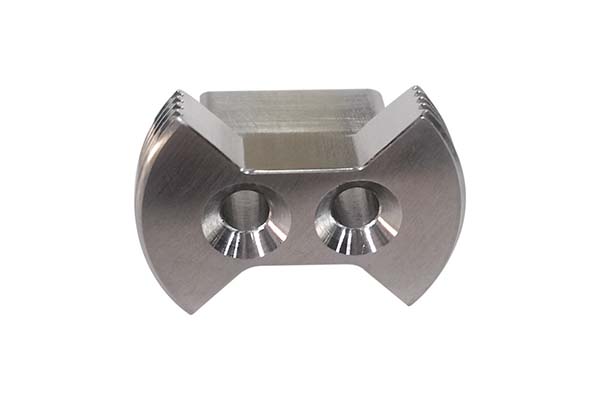
Getting a quote for an aluminum alloy prototype can feel confusing. One shop quotes 500 CNY, another says 8,000 CNY for what looks like the same part. Why such a huge difference? This article breaks down exactly what drives these prices. You’ll learn the five core factors that shape every quote, see real cost examples, and get practical tips to estimate your own project budget.
Key takeaways
- The cost of your prototype isn’t random. It comes down to five key areas that work together. Let’s look at each one so you know where your money goes.
- Not every prototype needs to be perfect. Match your project to the right price level.
- You don’t have to accept the first quote. Smart planning can save you money.
- Getting a fair quote for an aluminum alloy prototype comes down to understanding what drives the price.
What Are the Main Factors That Determine the Price?
The cost of your prototype isn’t random. It comes down to five key areas that work together. Let’s look at each one so you know where your money goes.
How Do Material Choices Affect Your Quote?
The type of aluminum you pick changes the price right from the start.
- Common alloys (6061 or 6063): These cost about 20-30 CNY per kg. They are easy to machine and work well for most parts like housings or brackets.
- High-strength alloys (7075): This material costs 50-80 CNY per kg. It’s much stronger but harder on cutting tools, which adds machining time.
Material usage also matters. Suppliers don’t just charge for the final part weight. They add 10-20% extra for material lost during cutting. For a 500g part made of 6061, you might pay for 600g of material. That’s about 12 CNY for material alone.
Why Does Machining Complexity Drive Up Costs?
This is usually the biggest chunk of your quote, often 40-60% of the total. Shops bill by machine time, typically 50-200 CNY per hour.
- Simple parts: A basic block with a few holes might take 1-2 hours. Machining cost: 50-100 CNY.
- Complex parts: Thin walls, deep cavities, or curved surfaces can take 5-10 hours. Machining cost: 500-1,000+ CNY.
Real example: A customer needed a prototype with internal cooling channels. CNC machining required special tooling and took 8 hours. Cost: 1,200 CNY. A simpler version without channels took 2 hours. Cost: 150 CNY. The complexity added 1,050 CNY.
When Does 3D Printing Make Sense?
For extremely complex shapes that CNC can’t do, 3D printing is an option. But it’s pricey at 10-50 CNY per gram. A 100g printed part could cost 3,000 CNY. Only use this for geometries like internal lattices or complex cavities.
How Much Do Surface Treatments Add?
The finish you want can add 10-30% to your cost. Here’s a quick comparison:
| Treatment | Cost Range | Best For |
|---|---|---|
| Sandblasting | 100-500 CNY/part | Matte finish, hiding tool marks |
| Polishing | 150-600 CNY/part | Smooth, shiny surface |
| Anodization | 0.5-2 CNY/cm² | Color, hardness, corrosion resistance |
| Electroplating | 500-2,000 CNY/part | High gloss, conductivity |
Example: A 10cm x 10cm part needs anodization. At 1 CNY/cm², the surface area is about 200 cm² (all sides). That’s 200 CNY just for the finish.
What’s the Impact of Quantity on Unit Price?
Ordering more pieces always lowers the cost per part. This is because the setup work (programming the machine) gets spread out.
- Single piece: Highest price. You pay for all the setup.
- 5-10 pieces: Unit price drops by 20-30%. The setup cost is shared.
- 50+ pieces: May switch to die casting with a mold fee (2,000-8,000 CNY), but the per-part cost falls to 50-100 CNY.
How Does Design Complexity Change the Quote?
Your part’s design has a huge effect. Small details can double the cost.
- Tight tolerances: Standard is ±0.1mm. If you need ±0.01mm, expect to pay 2x more. It requires slower speeds and more inspections.
- Thin walls: Walls under 1mm are risky and time-consuming to machine. They often break, so machinists go very slow.
- Threads and inserts: Adding threaded holes or metal inserts costs extra, typically 50-200 CNY.
What Are Typical Price Ranges for Different Needs?
Not every prototype needs to be perfect. Match your project to the right price level.
How Much Should You Pay for a Simple Visual Model?
If you just need to check the shape and fit, go for a simple prototype.
- Price: 500 – 1,500 CNY per piece
- What you get: Basic CNC machining, 6061 alloy, standard ±0.1mm tolerance, maybe simple sandblasting.
- Good for: Initial design checks, non-functional brackets.
What Does a Functional Test Part Cost?
For parts that need to work and look decent, choose a medium-complexity prototype.
- Price: 1,500 – 3,500 CNY per piece
- What you get: CNC machining plus basic anodization or polishing, moderate ±0.05mm tolerance.
- Good for: Electronic device shells, heat sinks, pre-production samples.
When Do You Need High-Precision Prototyping?
For parts under real stress or with strict performance needs, invest in a high-precision prototype.
- Price: 3,000 – 8,000 CNY per piece
- What you get: Complex machining, 7075 alloy, tight ±0.01-0.05mm tolerance, advanced finishes like electroplating.
- Good for: Aerospace brackets, medical device parts.
How Can You Lower Your Prototype Costs?
You don’t have to accept the first quote. Smart planning can save you money.
What Design Changes Reduce Machining Time?
Small tweaks to your CAD model make a big difference.
- Avoid thin walls: Change walls from 1mm to 1.5mm or 2mm. This cuts machining time by 30-50% because the part is more rigid and cuts can be faster.
- Don’t over-specify tolerances: Only mark tight tolerances (±0.01mm) on surfaces that truly need it. Leave the rest at ±0.1mm. This can cut cost by 50%.
- Combine parts: Instead of welding two small brackets together, design them as one solid piece. This saves 100-500 CNY in assembly costs.
Which Manufacturing Process Is Cheaper?
Pick the right method for your geometry.
- Stick with CNC: For 90% of parts, CNC machining is the most cost-effective. It’s 50-70% cheaper than 3D printing for simple to moderate complexity.
- Example: A simple bracket costs 800 CNY with CNC. The same part printed costs 2,500 CNY. You save 1,700 CNY by choosing CNC.
How to Choose a Surface Treatment That Fits Your Budget?
Be strategic about finishes.
- Internal parts: Use sandblasting (100-500 CNY) instead of electroplating (500+ CNY). No one sees it.
- Appearance parts: Clear anodization is cheaper than colored anodization. If color isn’t critical, skip the dye.
- Matte finish: Sandblasting gives a nice look for much less money than polishing.
What Information Helps Suppliers Give Accurate Quotes?
A clear request gets you a fair price. Always provide:
- 3D files: STEP or IGS format works best.
- Material: Specify “6061 aluminum” or “7075 aluminum.”
- Surface finish: Say “black anodization” or “as-machined.”
- Quantity: State exactly how many pieces.
- Delivery: Standard lead time (7 days) vs. expedited (3 days, costs 1.5-2x more).
Pro tip: Tell them what the part is for. “This is just for appearance” might let them suggest a cheaper alloy like 6061 instead of 7075.
How to write a spec that gets priced correctly
A drawing is a contract. If it leaves a number open, the shop fills that number in with its own default. The default is rarely the one you had in mind. Put these five lines on every RFQ and most of the back-and-forth disappears before it starts.
- A model you are willing to freeze for the build
- The question the prototype must answer
- Process and material that can answer it
- Tolerance on the features under test
- How many iterations you have budgeted
The point is not paperwork. Each line removes a decision the shop would otherwise make for you. A complete RFQ comes back priced. An incomplete one comes back guessed.
What actually drives the price
Buyers usually push on material because it is the line they can see. In practice the material is rarely the biggest number on a quote. These five lines decide most of it:
- process choice
- part size and feature count
- material
- finish and fit checks
- number of iterations
Ask for the quote split by line. A supplier who cannot break it down is guessing, and you will pay for the guess. The line you can usually renegotiate is the tolerance band, not the raw material.
Problems you will meet, and the fix
Every process has a failure mode it prefers. The same four show up again and again on this kind of work, and none of them are mysteries once you know what to look for.
- A prototype that is too good and hides a production problem
- A prototype that is too rough to test the real question
- Material chosen for speed rather than for the test
- No measurement plan, so the result is an opinion
Catch the fault on the first part, not the hundredth. A first-article check costs an hour. A bad batch costs the whole order. Write the check into the purchase order so nobody has to remember it.
What to check on the first article
The first article is the cheapest inspection you will ever buy. Use it properly and the rest of the run becomes boring, which is exactly what you want.
- Every dimension on the drawing, with the measured value written beside it.
- The material certificate, matched to the heat or lot number on the parts.
- The finish against the sample you approved, under the same light.
- Fit against the mating part, assembled rather than measured.
- Packaging, because parts that arrive damaged were never in tolerance.
Check in this order: datums, then mating features, then cosmetic faces. If the datums are wrong, every number after them is noise. Keep the report on file. When a problem shows up in month six, that document is the only thing that tells you what changed.
How to compare two quotes fairly
Two numbers are not comparable unless the scope matches. Line them up before you decide, because a low number with three gaps is not a low number.
Same drawing, same material, same finish, same inspection. Anything else is a different job wearing the same part number. Then look at what each quote leaves out. Freight, packaging, certificates and tooling are the usual gaps.
Ask each supplier to state their assumptions in writing. The one who does is usually the one who has run the process before.
Scaling from one part to a batch
The first part teaches you the process. The hundredth teaches you the process cost.
Watch three things as volume grows: setup amortisation, tool wear, and how much hand work the finish still needs. If the unit price barely moves between ten and a hundred, the cost sits in material or in hand work, not in setup. Ask which, because only one of them is negotiable.
Lead time behaves the same way. A one-off is scheduled around other jobs. A repeat order is scheduled around your forecast. Give the shop a forecast and the lead time gets shorter, not longer.
How to read a supplier's quote
A quote is a short document with a long shadow. Four things in it decide whether the job runs smoothly, and only one of them is the price.
- The scope line. It should name the process, the material and the finish, not just the part.
- The tolerance basis. General tolerance or the drawing, and which standard it follows.
- The exclusions. Tooling, freight, certificates and inspection are the usual omissions.
- The validity date. Material prices move, and an open-ended quote is a promise nobody can keep.
Read the exclusions before you read the total. A quote that leaves out tooling is not cheaper. It is a quote for a different job.
What to send with the first order
The first order sets the pattern for every order after it. Send a complete package once and the shop files it, and the second order takes a fraction of the time.
- A STEP or native model plus a PDF drawing carrying the same revision letter.
- The material callout by standard number, not by trade name.
- The finish and the exact faces it applies to.
- Any test the part must pass: fit, seal, drop, salt spray, dielectric.
- A contact who can answer a question inside one working day.
Then write down what was agreed. An email that confirms the material, the finish and the date is worth more than a longer purchase order that leaves them open.
What Should You Watch Out for When Getting Quotes?
Not all quotes are good quotes. Here’s how to avoid problems.
How Do You Spot Hidden Costs?
A very low price is often a trap.
- The low-price trap: A quote for 300 CNY on a part that normally costs 1,500 CNY is a red flag. They might use cheap recycled aluminum or skip final inspection. You’ll likely get a bad part and have to pay for a redo.
- Unclear scope: Make sure the quote includes everything. Does it cover anodization? Inspection? Some shops quote just the machining and add fees for everything else later.
- Rush fees: Need it fast? Expedited service usually costs 1.5-2x the normal rate. Confirm this before you agree.
What Makes a Supplier Reliable?
Choosing the right partner saves headaches.
- Experience matters: Look for shops with 3+ years making aluminum prototypes. Ask for photos of similar parts they’ve made.
- Certifications help: ISO 9001 certified shops follow standard processes. This means more consistent quality.
- Test with a sample: Before a big order, ask for a simple test part. A small block with the finish you want tells you a lot about their skill.
Getting a fair quote for an aluminum alloy prototype comes down to understanding what drives the price. Material choice, machining complexity, surface finish, quantity, and design details all play a role. A simple visual model might cost 500-1,500 CNY, while a high-precision functional part can reach 8,000 CNY or more. To control costs, simplify your design where possible, choose CNC over 3D printing for most parts, and pick surface treatments wisely. Always give suppliers clear information and watch out for quotes that seem too good to be true. By matching your prototype’s purpose to the right specifications, you’ll get the quality you need without overspending.
Our solution for Really Determines
YiguProto runs rapid prototyping in house, from a single prototype to a production batch. We quote the process, the material and the finish as separate lines, so you can see where the money goes instead of arguing with one number.
Send a STEP file or a drawing and you get a DFM report in one to two business days. It flags the features that add cost and the features that will not hold tolerance on the process you picked.
Every order ships with an inspection report on the features you call out. If a part misses, we make it again. Ready to price a part? Start with a free quote and DFM review, or read more about our rapid prototyping. You can also talk to an engineer before you commit to a drawing.
FAQ about Really Determines
Is there a minimum order quantity?
No hard minimum. One part is fine. What changes with volume is which costs dominate, so a single unit is priced mostly on setup and a thousand units are priced mostly on cycle time and material.
What is the lead time for Really Determines?
Expect 3 to 7 business days for a first article. Tooling, material stock and the finishing queue all move that number, so we confirm the date in writing before the run starts rather than after.
How long does a first article take?
Usually a few business days once the drawing is frozen, and longer if tooling is involved. The date we give you is the date we confirm in writing, not the date we hope for.
What files do you need in order to quote?
A STEP file plus a PDF drawing that carries the same revision letter. The model carries the geometry and the drawing carries the intent. When the two disagree, the shop picks one, and it is never the one you meant.
What should I check before approving the parts?
Datums first, then the features that mate, then the cosmetic faces. Ask for a dimensional report, a material certificate and a finish sample. A part can be inside every tolerance and still not fit, so assemble one before you sign.
What is Really Determines used for?
Really Determines turns up wherever the part has to do a real job at a predictable cost: brackets, housings, fixtures, covers and the fittings that hold them together. The honest test is whether the properties match the load and the environment, not whether the material is fashionable.
The short version
Really Determines rewards the buyer who reads the data sheet and the drawing together. Pick the option for the property that matters, not for the price per kilo.
Tighten only what mates. Test a sample before the run. Then let the process do the rest.