
Rapid Prototyping
What Is the Difference Between a Prototype and a Replica?
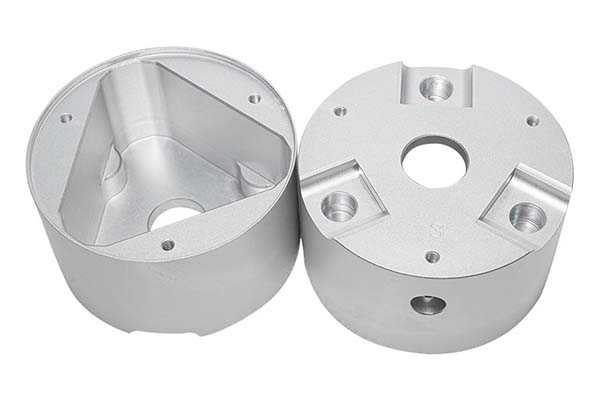
In product development and manufacturing, the terms prototype and replica are often used interchangeably. But they mean very different things. A prototype is a first draft—a test version of a new idea. A replica is an exact copy of something that already exists. Confusing them can lead to wasted time, money, and miscommunication.
Key takeaways
- A prototype is an original or preliminary version of a product, created to test and refine a concept before mass production.
- A replica is an exact copy or reproduction of an existing product, artwork, or object.
- Prototypes and replicas serve very different purposes. A prototype is a test model for something new—a tool for innovation and iteration.
- Q1: Can a prototype become a replica?A: No. A prototype is a preliminary version of a new product. A replica is a copy of an existing item.
What Is a Prototype?
A prototype is an original or preliminary version of a product, created to test and refine a concept before mass production. It is the “first draft” of a physical product, meant to be changed and improved.
Key Characteristics
- Preliminary nature: It is a work in progress, not a final product.
- Testing focus: Its main job is to validate design concepts, identify flaws, and test functionality.
- Varied forms: Prototypes can range from simple sketches and 3D-printed models to fully functional mock-ups.
- Iterative development: They go through multiple versions. Each round of testing leads to tweaks and improvements.
Common Uses
- Product design: To test form, fit, and function before investing in production.
- Engineering: To evaluate structural integrity, material performance, and mechanical function.
- Software development: To test user interfaces, workflows, and features.
- Marketing: To gather feedback from focus groups or stakeholders before finalizing a product.
What Is a Replica?
A replica is an exact copy or reproduction of an existing product, artwork, or object. Unlike a prototype, a replica aims to duplicate something that already exists with high precision.
Key Characteristics
- Copycat nature: Designed to be as identical as possible to the original.
- Post-production focus: Created after the original has been finalized and often mass-produced.
- Accuracy: The goal is to match the original’s appearance, dimensions, and sometimes functionality.
- Preservation purpose: Often used to share valuable, fragile, or rare items without risking the original.
Common Uses
- Museums and galleries: To display copies of fragile artifacts, letting the public appreciate them without endangering the originals.
- Film and TV: To create realistic props that look like historical items, expensive equipment, or rare artifacts.
- Collectibles: To produce affordable versions of luxury items, art, or historical objects.
- Education: To provide students with hands-on models of rare specimens, like dinosaur fossils or ancient tools.
Prototype vs. Replica: A Side-by-Side Comparison
| Factor | Prototype | Replica |
|---|---|---|
| Purpose | Test and refine new concepts | Copy an existing item exactly |
| Timing | Created before mass production | Created after the original exists |
| Originality | Original or preliminary design | Exact copy of an existing item |
| Iteration | Often modified through multiple versions | Typically not modified once created |
| Functionality | May be partially functional for testing | Fully functional (if the original is) |
| Examples | 3D-printed model of a new phone case, software wireframe | Museum copy of the Mona Lisa, replica of a vintage car |
How Are Prototypes and Replicas Made?
The methods used reflect their different goals.
Prototype Manufacturing
Prototypes are made with rapid, flexible methods that allow quick changes.
- 3D printing: Ideal for complex shapes, fast and cost-effective.
- CNC machining: Computer-controlled tools carve prototypes from plastic or metal with high precision.
- Handcrafting: For simple prototypes like clay models or paper sketches, low-cost.
- Silicone molding: A mold can be made from a prototype to create small batches for further testing.
Replica Manufacturing
Replicas require precise techniques to match the original.
- Molding and casting: A mold is made from the original, then filled with resin or metal to form an exact copy.
- 3D scanning and printing: The original is scanned to create a digital model, then 3D-printed accurately.
- Hand replication: Skilled craftspeople recreate the original by hand, matching every detail.
- Mass production tools: For replicas of consumer products, factories use the same processes as the original production line.
When Should You Use a Prototype vs. a Replica?
Use a Prototype When…
- You are developing a new product or concept.
- You need to test functionality, design, or user experience.
- You want to gather feedback and make improvements before mass production.
- You are in the early stages of innovation—startups, R&D projects.
Use a Replica When…
- You need an exact copy of an existing item.
- The original is rare, expensive, or fragile and must be preserved.
- You need multiple copies for display, education, or collection.
- You work in industries like film, museums, or collectibles.
Common Mistakes to Avoid
Mistake 1: Using the Terms Interchangeably
Calling a prototype a “replica” or vice versa causes confusion. If a client asks for a prototype and you deliver a replica of an existing product, you have missed the goal entirely.
Mistake 2: Expecting a Prototype to Be Perfect
Prototypes are meant to have flaws. That is why you test them. Do not be discouraged if the first version does not work perfectly. Iteration is the point.
Mistake 3: Assuming Replicas Are Easy to Make
Creating an accurate replica requires precision. Even small differences from the original can make a replica look cheap or inaccurate, especially for valuable items like art or antiques.
Prototypes and replicas serve very different purposes. A prototype is a test model for something new—a tool for innovation and iteration. A replica is an exact copy of something that already exists—a tool for preservation, education, and access. Understanding the difference helps you communicate clearly, choose the right process, and achieve your goals. Use prototypes to create the future. Use replicas to honor and share the past.
How to write a spec that gets priced correctly
A drawing is a contract. If it leaves a number open, the shop fills that number in with its own default. The default is rarely the one you had in mind. Put these five lines on every RFQ and most of the back-and-forth disappears before it starts.
- A model you are willing to freeze for the build
- The question the prototype must answer
- Process and material that can answer it
- Tolerance on the features under test
- How many iterations you have budgeted
The point is not paperwork. Each line removes a decision the shop would otherwise make for you. A complete RFQ comes back priced. An incomplete one comes back guessed.
What actually drives the price
Buyers usually push on material because it is the line they can see. In practice the material is rarely the biggest number on a quote. These five lines decide most of it:
- process choice
- part size and feature count
- material
- finish and fit checks
- number of iterations
Ask for the quote split by line. A supplier who cannot break it down is guessing, and you will pay for the guess. The line you can usually renegotiate is the tolerance band, not the raw material.
Problems you will meet, and the fix
Every process has a failure mode it prefers. The same four show up again and again on this kind of work, and none of them are mysteries once you know what to look for.
- A prototype that is too good and hides a production problem
- A prototype that is too rough to test the real question
- Material chosen for speed rather than for the test
- No measurement plan, so the result is an opinion
Catch the fault on the first part, not the hundredth. A first-article check costs an hour. A bad batch costs the whole order. Write the check into the purchase order so nobody has to remember it.
What to check on the first article
The first article is the cheapest inspection you will ever buy. Use it properly and the rest of the run becomes boring, which is exactly what you want.
- Every dimension on the drawing, with the measured value written beside it.
- The material certificate, matched to the heat or lot number on the parts.
- The finish against the sample you approved, under the same light.
- Fit against the mating part, assembled rather than measured.
- Packaging, because parts that arrive damaged were never in tolerance.
Check in this order: datums, then mating features, then cosmetic faces. If the datums are wrong, every number after them is noise. Keep the report on file. When a problem shows up in month six, that document is the only thing that tells you what changed.
How to compare two quotes fairly
Two numbers are not comparable unless the scope matches. Line them up before you decide, because a low number with three gaps is not a low number.
Same drawing, same material, same finish, same inspection. Anything else is a different job wearing the same part number. Then look at what each quote leaves out. Freight, packaging, certificates and tooling are the usual gaps.
Ask each supplier to state their assumptions in writing. The one who does is usually the one who has run the process before.
Scaling from one part to a batch
The first part teaches you the process. The hundredth teaches you the process cost.
Watch three things as volume grows: setup amortisation, tool wear, and how much hand work the finish still needs. If the unit price barely moves between ten and a hundred, the cost sits in material or in hand work, not in setup. Ask which, because only one of them is negotiable.
Lead time behaves the same way. A one-off is scheduled around other jobs. A repeat order is scheduled around your forecast. Give the shop a forecast and the lead time gets shorter, not longer.
How to read a supplier's quote
A quote is a short document with a long shadow. Four things in it decide whether the job runs smoothly, and only one of them is the price.
- The scope line. It should name the process, the material and the finish, not just the part.
- The tolerance basis. General tolerance or the drawing, and which standard it follows.
- The exclusions. Tooling, freight, certificates and inspection are the usual omissions.
- The validity date. Material prices move, and an open-ended quote is a promise nobody can keep.
Read the exclusions before you read the total. A quote that leaves out tooling is not cheaper. It is a quote for a different job.
What to send with the first order
The first order sets the pattern for every order after it. Send a complete package once and the shop files it, and the second order takes a fraction of the time.
- A STEP or native model plus a PDF drawing carrying the same revision letter.
- The material callout by standard number, not by trade name.
- The finish and the exact faces it applies to.
- Any test the part must pass: fit, seal, drop, salt spray, dielectric.
- A contact who can answer a question inside one working day.
Then write down what was agreed. An email that confirms the material, the finish and the date is worth more than a longer purchase order that leaves them open.
When this is the wrong choice
A good supplier tells you when the process does not fit. These are the cases where we say so.
- The volume is so low that setup costs more than the parts are worth.
- The tolerance is tighter than the process can hold without a second operation.
- The geometry cannot be made without a tool feature that will not pay back.
- The material you need is not available in the form the process requires.
- The schedule is shorter than the tooling or setup time, and nobody has said so yet.
None of these are refusals. They are reasons to look at a different route, and the earlier that conversation happens the cheaper it is. The most expensive mistake in manufacturing is a process chosen before the question was understood.
Planning the ramp from prototype to production
The gap between one good part and a thousand identical ones is a plan, not a machine. Three decisions close it.
First, freeze the design. Every change after tooling starts is a re-cut, and re-cuts are where schedules go. Second, decide the inspection level. A prototype is checked by eye; a production part is checked against a report. Third, agree the change process in writing, including who pays for it.
Write the ramp down as dates and owners, not as intentions. A ramp plan with three names and three dates is worth more than a page of good intentions.
What documentation to expect
Paperwork is not bureaucracy when a part fails at the customer. It is the only record of what was agreed. A normal shipment should carry four documents.
- A dimensional report covering every callout on the drawing.
- A material certificate traceable to the heat or lot number.
- A finish or coating certificate where the specification requires one.
- A packing list that matches the carton labels.
If a supplier cannot produce these on request, they are not running a controlled process. Ask for one sample set before you place the first order and you will know exactly what you are buying.
FAQ About Prototypes and Replicas
Q1: Can a prototype become a replica?
A: No. A prototype is a preliminary version of a new product. A replica is a copy of an existing item. A prototype can evolve into a final product, but it only becomes a replica if that final product is later copied.
Q2: Are replicas always cheaper than originals?
A: Not necessarily. High-quality replicas of luxury items, art, or rare artifacts can be expensive due to the precision and materials required to match the original. Some replicas may even cost more than mass-produced originals.
Q3: How long does it take to make a prototype vs. a replica?
A: Prototypes can be made quickly—hours to days—using methods like 3D printing. Replicas often take longer—days to weeks—because they require precise measurements and careful matching of the original’s details.
Q4: Are prototypes always functional?
A: Not always. Some prototypes, like appearance models, are only for visual reference. Others are fully functional for testing. The level of function depends on the stage of development and the goal of the prototype.
Q5: Can I use the same company to make both prototypes and replicas?
A: Yes, many product development and manufacturing companies offer services for both. They have the technology (3D printing, CNC, scanning, molding) to create prototypes for new designs and accurate replicas of existing items.
Our solution for Difference Between
YiguProto runs rapid prototyping in house, from a single prototype to a production batch. We quote the process, the material and the finish as separate lines, so you can see where the money goes instead of arguing with one number.
Send a STEP file or a drawing and you get a DFM report in one to two business days. It flags the features that add cost and the features that will not hold tolerance on the process you picked.
Every order ships with an inspection report on the features you call out. If a part misses, we make it again. Ready to price a part? Start with a free quote and DFM review, or read more about our rapid prototyping. You can also talk to an engineer before you commit to a drawing.
FAQ about Difference Between
What is the lead time for Difference Between?
Expect 3 to 7 business days for a first article. Tooling, material stock and the finishing queue all move that number, so we confirm the date in writing before the run starts rather than after.
How do I compare two quotes fairly?
Match the scope first: same drawing, same material, same finish, same inspection. Then read the exclusions. Freight, tooling and certificates are the usual gaps, and a low number with three gaps is not a low number.
What files do you need in order to quote?
A STEP file plus a PDF drawing that carries the same revision letter. The model carries the geometry and the drawing carries the intent. When the two disagree, the shop picks one, and it is never the one you meant.
What happens if a part is out of specification?
We measure it against the same drawing you approved and, if it misses, we make it again. What matters is that the report exists, because a disagreement without data is just an opinion.
What tolerance can you hold on Difference Between?
The working default is ±0.1 mm on most processes, tighter after machining. Tighter than that the process changes and so does the price, because every step tighter adds inspection time. Call out only the faces that mate with something else and leave the rest on the general tolerance.
How long does a first article take?
Usually a few business days once the drawing is frozen, and longer if tooling is involved. The date we give you is the date we confirm in writing, not the date we hope for.
The short version
Difference Between rewards the buyer who reads the data sheet and the drawing together. Pick the option for the property that matters, not for the price per kilo.
Tighten only what mates. Test a sample before the run. Then let the process do the rest.