
Die Casting
What Makes Pure Aluminum Die Casting Ideal for High-End Manufacturing?
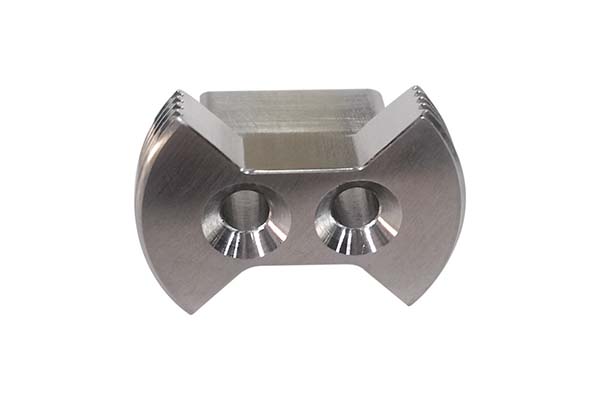
Pure aluminum die casting serves a specific world. While most aluminum castings use alloys with silicon, copper, and magnesium, pure aluminum parts prioritize something else: exceptional purity, thermal conductivity, and corrosion resistance. With aluminum content at 99.5% or higher , these components excel where contamination cannot be tolerated—semiconductor equipment, optical instruments, chemical processing.
What Is Pure Aluminum Die Casting?
Basic definition
Pure aluminum die casting forces molten high-purity aluminum (99.5-99.9% Al) into precision steel molds at 80-150 MPa pressure and controlled 1-3 m/s speed. The metal solidifies in 15-40 seconds under sustained pressure, then undergoes targeted post-processing like CNC machining or anodizing.
The key difference from alloy die casting (like ADC12) is prioritizing material purity over strength. Alloys add elements for better casting or higher strength—but those same elements reduce conductivity and introduce impurities.
Material advantages of pure aluminum
| Property | Pure Aluminum (99.5%+) | Aluminum Alloy (ADC12) | Impact |
|---|---|---|---|
| Thermal conductivity | 237 W/(m·K) | 100-130 W/(m·K) | 2× faster heat dissipation |
| Electrical conductivity | 63% IACS | 30-40% IACS | Enables electrical components |
| Corrosion resistance | Excellent (natural oxide) | Good (needs treatment) | Withstands acids without plating |
| Material purity | 99.5%+ Al | 85-90% Al | No impurity-induced defects |
Pure aluminum’s natural oxide layer reforms instantly if scratched. Alloys rely on surface treatments that can wear off.
How Is Pure Aluminum Die Casting Done?
Step 1: Material preparation and melting
Purity starts with raw materials. Use only 99.5%+ pure aluminum ingots—grades like 1050 or 1060. Reject any with visible oxide layers or foreign particles.
Heat ingots in a ceramic-lined furnace to 660-680°C. Steel furnaces contaminate the melt with iron. Stir gently every 10 minutes for uniform temperature. Overheating above 700°C causes oxide formation.
Add a refining agent like hexachloroethane to absorb non-metallic inclusions. Skim off dross immediately—it reabsorbs if left.
Step 2: High-pressure die casting parameters
Pure aluminum’s poor fluidity demands precise control:
| Parameter | Recommended Range | Why | Mistake to Avoid |
|---|---|---|---|
| Injection pressure | 80-150 MPa | Forces metal into complex cavities | <80 MPa: incomplete fill; >150 MPa: mold damage |
| Injection speed | 1-3 m/s | Balances fill efficiency and oxidation | >3 m/s: turbulent flow traps air; <1 m/s: cold shuts |
| Mold temperature | 200-250°C | Prevents premature solidification | <200°C: surface cracks; >250°C: slow cycles |
| Holding pressure | 50-80 MPa | Compacts solidifying metal | <50 MPa: high porosity ruins conductivity |
Step 3: Post-processing for performance
CNC precision machining: Focus on critical features like mounting holes. Hold tolerances at ±0.05mm. Use diamond-coated tools—they won’t scratch pure aluminum’s soft surface.
Anodizing: Apply 10-20μm anodized layer (Type II or III). This boosts surface hardness from 20 HB to 300+ HB while improving corrosion resistance. For optical parts, clear anodizing maintains transparency.
Sandblasting: Use 120-180 grit aluminum oxide for matte finishes at Ra 0.8-1.6μm. Never use steel grit—it causes iron contamination.
Step 4: Quality control
No part leaves without testing:
Purity testing: Optical emission spectroscopy verifies aluminum content. Reject below 99.5%.
Porosity inspection: X-ray testing for high-stress parts. Reject porosity above 1% —it reduces corrosion resistance.
Thermal conductivity testing: Laser flash analyzer must show ≥220 W/(m·K) for heat-related applications.
Where Is Pure Aluminum Die Casting Used?
Electronics and semiconductor
Heat sinks for CPUs, LEDs, and 5G base stations. Pure aluminum’s high thermal conductivity prevents overheating. A 100mm × 100mm pure aluminum sink dissipates twice the heat of an ADC12 alloy sink the same size.
Electrical conductors: Bus bars and connector housings. High conductivity reduces energy loss versus alloys.
Optical and precision instrumentation
Optical component frames: Holders for lenses and mirrors. Low impurity content avoids light scattering. Alloying elements cause optical defects.
Sensor housings: Enclosures for pressure and temperature sensors. Pure aluminum’s low thermal expansion ensures sensor accuracy.
Chemical and pharmaceutical equipment
Corrosion-resistant parts: Tanks, valves, pipes for nitric acid or peroxide processing. Natural oxide layer resists chemical attack. Alloys corrode quickly in oxidizing acids.
Cleanroom components: Parts for pharmaceutical manufacturing. Pure aluminum is easy to sterilize and doesn’t shed particles—critical for cleanroom compliance.
| Industry | Applications | Key Benefit |
|---|---|---|
| Electronics | Heat sinks, bus bars | 2× thermal conductivity |
| Optical | Lens holders, sensor housings | No impurity-induced defects |
| Chemical | Tanks, valves, pipes | Natural corrosion resistance |
| Pharmaceutical | Cleanroom components | No particle shedding |
What Challenges Exist and How Do You Solve Them?
Poor fluidity
Pure aluminum has higher viscosity than alloys—no silicon to reduce friction. This causes filling defects.
Solutions:
- Increase mold temperature to 230-250°C
- Add fillet design with R1-2mm in mold cavities to guide flow
- Add 0.1% magnesium —minimal purity impact, improves fluidity
High material cost
99.5%+ pure aluminum ingots cost 30-50% more than alloy ingots.
Solutions:
- Optimize designs for minimal waste
- Reuse scrap pure aluminum—re-melt and refine to maintain purity
- Use thin-walled designs to reduce material usage by 20-30%
Mold wear
Pure aluminum adheres to steel molds during solidification.
Solutions:
- Apply titanium nitride (TiN) coating to mold surfaces—reduces adhesion
- Use water-based mold release agents —avoid oil contamination
- Shorten mold contact time—solidify parts in 15-25 seconds
| Challenge | Cause | Solutions |
|---|---|---|
| Poor fluidity | Higher viscosity | 230-250°C mold, fillets, 0.1% Mg |
| High cost | Pure ingots 30-50% more | Optimize design, reuse scrap, thin walls |
| Mold wear | Adhesion to steel | TiN coating, water-based release, fast cycles |
Industry Experience: Pure Aluminum in Action
An electronics manufacturer needed heat sinks for high-power LEDs. Alloy sinks couldn’t keep LEDs below 85°C. Switching to pure aluminum die casting with 99.7% purity and anodized finish dropped operating temperature to 72°C. LED life extended by 40%.
A chemical processor required valves for nitric acid lines. Stainless steel corroded after 6 months. Pure aluminum die cast valves with natural oxide layer lasted 3+ years with no visible corrosion. No plating needed.
An optical instrument maker produced lens holders that caused light scattering. Trace impurities in alloy castings were the culprit. Pure aluminum die casting at 99.8% purity eliminated scattering. Image quality improved measurably.
How to write a spec that gets priced correctly
A drawing is a contract. If it leaves a number open, the shop fills that number in with its own default. The default is rarely the one you had in mind. Put these five lines on every RFQ and most of the back-and-forth disappears before it starts.
- 3D model with the parting line marked
- Alloy grade and the standard it meets
- Wall thickness and draft on every face
- Machining allowance on the faces that will be cut
- Pressure tightness or porosity class
The point is not paperwork. Each line removes a decision the shop would otherwise make for you. A complete RFQ comes back priced. An incomplete one comes back guessed.
What actually drives the price
Buyers usually push on material because it is the line they can see. In practice the material is rarely the biggest number on a quote. These five lines decide most of it:
- die steel and cavity count
- part weight and wall section
- draft and slide count
- porosity requirement
- machining allowance
Ask for the quote split by line. A supplier who cannot break it down is guessing, and you will pay for the guess. The line you can usually renegotiate is the tolerance band, not the raw material.
Problems you will meet, and the fix
Every process has a failure mode it prefers. The same four show up again and again on this kind of work, and none of them are mysteries once you know what to look for.
- Cold shuts where two flow fronts meet
- Porosity that shows up only after machining
- Soldering on a hot spot in the die
- Shrinkage voids in a heavy section
Catch the fault on the first part, not the hundredth. A first-article check costs an hour. A bad batch costs the whole order. Write the check into the purchase order so nobody has to remember it.
What to check on the first article
The first article is the cheapest inspection you will ever buy. Use it properly and the rest of the run becomes boring, which is exactly what you want.
- Every dimension on the drawing, with the measured value written beside it.
- The material certificate, matched to the heat or lot number on the parts.
- The finish against the sample you approved, under the same light.
- Fit against the mating part, assembled rather than measured.
- Packaging, because parts that arrive damaged were never in tolerance.
Check in this order: datums, then mating features, then cosmetic faces. If the datums are wrong, every number after them is noise. Keep the report on file. When a problem shows up in month six, that document is the only thing that tells you what changed.
How to compare two quotes fairly
Two numbers are not comparable unless the scope matches. Line them up before you decide, because a low number with three gaps is not a low number.
Same drawing, same material, same finish, same inspection. Anything else is a different job wearing the same part number. Then look at what each quote leaves out. Freight, packaging, certificates and tooling are the usual gaps.
Ask each supplier to state their assumptions in writing. The one who does is usually the one who has run the process before.
Scaling from one part to a batch
The first part teaches you the process. The hundredth teaches you the process cost.
Watch three things as volume grows: setup amortisation, tool wear, and how much hand work the finish still needs. If the unit price barely moves between ten and a hundred, the cost sits in material or in hand work, not in setup. Ask which, because only one of them is negotiable.
Lead time behaves the same way. A one-off is scheduled around other jobs. A repeat order is scheduled around your forecast. Give the shop a forecast and the lead time gets shorter, not longer.
How to read a supplier's quote
A quote is a short document with a long shadow. Four things in it decide whether the job runs smoothly, and only one of them is the price.
- The scope line. It should name the process, the material and the finish, not just the part.
- The tolerance basis. General tolerance or the drawing, and which standard it follows.
- The exclusions. Tooling, freight, certificates and inspection are the usual omissions.
- The validity date. Material prices move, and an open-ended quote is a promise nobody can keep.
Read the exclusions before you read the total. A quote that leaves out tooling is not cheaper. It is a quote for a different job.
What to send with the first order
The first order sets the pattern for every order after it. Send a complete package once and the shop files it, and the second order takes a fraction of the time.
- A STEP or native model plus a PDF drawing carrying the same revision letter.
- The material callout by standard number, not by trade name.
- The finish and the exact faces it applies to.
- Any test the part must pass: fit, seal, drop, salt spray, dielectric.
- A contact who can answer a question inside one working day.
Then write down what was agreed. An email that confirms the material, the finish and the date is worth more than a longer purchase order that leaves them open.
When this is the wrong choice
A good supplier tells you when the process does not fit. These are the cases where we say so.
- The volume is so low that setup costs more than the parts are worth.
- The tolerance is tighter than the process can hold without a second operation.
- The geometry cannot be made without a tool feature that will not pay back.
- The material you need is not available in the form the process requires.
- The schedule is shorter than the tooling or setup time, and nobody has said so yet.
None of these are refusals. They are reasons to look at a different route, and the earlier that conversation happens the cheaper it is. The most expensive mistake in manufacturing is a process chosen before the question was understood.
Planning the ramp from prototype to production
The gap between one good part and a thousand identical ones is a plan, not a machine. Three decisions close it.
First, freeze the design. Every change after tooling starts is a re-cut, and re-cuts are where schedules go. Second, decide the inspection level. A prototype is checked by eye; a production part is checked against a report. Third, agree the change process in writing, including who pays for it.
Write the ramp down as dates and owners, not as intentions. A ramp plan with three names and three dates is worth more than a page of good intentions.
What documentation to expect
Paperwork is not bureaucracy when a part fails at the customer. It is the only record of what was agreed. A normal shipment should carry four documents.
- A dimensional report covering every callout on the drawing.
- A material certificate traceable to the heat or lot number.
- A finish or coating certificate where the specification requires one.
- A packing list that matches the carton labels.
If a supplier cannot produce these on request, they are not running a controlled process. Ask for one sample set before you place the first order and you will know exactly what you are buying.
What Future Trends Are Emerging?
Green manufacturing
Using 100% recycled pure aluminum is now feasible with advanced refining. This cuts carbon emissions by 50% versus virgin aluminum.
Smart process monitoring
Integrating temperature and pressure sensors into molds enables real-time parameter adjustment. Defect rates drop by 40%.
Hybrid designs
Combining pure aluminum (for heat and conductivity) with aluminum alloys (for strength) in single parts. Example: A heat sink with pure aluminum fins bonded to an alloy mounting bracket—cost-effective and high-performance.
| Trend | Impact |
|---|---|
| Green manufacturing | 50% lower carbon emissions |
| Smart monitoring | 40% fewer defects |
| Hybrid designs | Best of both materials |
Pure aluminum die casting serves high-end applications where purity, conductivity, and corrosion resistance outweigh strength. With thermal conductivity double that of alloys, electrical conductivity at 63% IACS, and natural corrosion resistance, it excels in electronics, optics, and chemical processing. Success requires overcoming poor fluidity with 230-250°C molds and fillet-guided flow, managing higher material costs through optimized design and scrap reuse, and preventing mold wear with TiN coatings and fast cycles. When controlled properly, pure aluminum die casting delivers parts that meet the strictest standards for purity and performance.
Our solution for Makes Pure Aluminum Die Casting
YiguProto runs die casting in house, from a single prototype to a production batch. We quote the process, the material and the finish as separate lines, so you can see where the money goes instead of arguing with one number.
Send a STEP file or a drawing and you get a DFM report in one to two business days. It flags the features that add cost and the features that will not hold tolerance on the process you picked.
Every order ships with an inspection report on the features you call out. If a part misses, we make it again. Ready to price a part? Start with a free quote and DFM review, or read more about our die casting. You can also talk to an engineer before you commit to a drawing.
FAQ about Makes Pure Aluminum Die Casting
What is Makes Pure Aluminum Die Casting used for?
Makes Pure Aluminum Die Casting turns up wherever the part has to do a real job at a predictable cost: brackets, housings, fixtures, covers and the fittings that hold them together. The honest test is whether the properties match the load and the environment, not whether the material is fashionable.
Does the process work for prototypes as well as production?
Yes, and that is usually the point. Running the prototype on the production process removes a whole class of surprises, because the part you test is made the same way as the part you sell.
How long does a first article take?
Usually a few business days once the drawing is frozen, and longer if tooling is involved. The date we give you is the date we confirm in writing, not the date we hope for.
Can Makes Pure Aluminum Die Casting be made in small quantities?
Yes, and small quantities are where a good supplier earns the next order. Setup dominates the price at low volume, so the cheapest route is usually the one with the fewest operations, not the cheapest material.
What is the lead time for Makes Pure Aluminum Die Casting?
Expect 20 to 30 business days including die build. Tooling, material stock and the finishing queue all move that number, so we confirm the date in writing before the run starts rather than after.
What tolerance can you hold on Makes Pure Aluminum Die Casting?
The working default is ±0.1 mm on cast features, ±0.05 mm after machining. Tighter than that the process changes and so does the price, because every step tighter adds inspection time. Call out only the faces that mate with something else and leave the rest on the general tolerance.
The short version
Makes Pure Aluminum Die Casting rewards the buyer who reads the data sheet and the drawing together. Pick the option for the property that matters, not for the price per kilo.
Tighten only what mates. Test a sample before the run. Then let the process do the rest.