
Rapid Prototyping
What Is Rapid Prototyping Technology? A Complete Guide to Its Core Principles and Processes
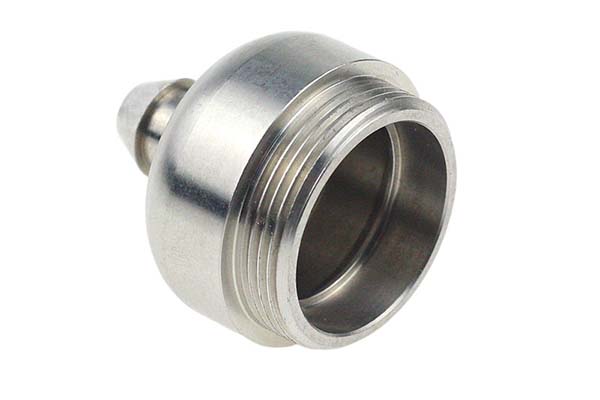
In today’s fast-paced manufacturing world, where new product development cycles are getting shorter and market demands are constantly changing, rapid prototyping (RP) technology has emerged as a true game-changer. But what exactly is rapid prototyping, and how does it work?
Key takeaways
- Rapid prototyping is an advanced manufacturing technology that has developed rapidly in recent years.
- At present, there are more than ten methods of rapid prototyping technology.
- Rapid prototyping technology has revolutionized the way products are designed and developed.
1. What Is Rapid Prototyping Technology?
Rapid prototyping is an advanced manufacturing technology that has developed rapidly in recent years. At its core, it is a digital prototyping technology that can quickly produce solid parts or models with arbitrarily complex shapes directly from CAD (Computer-Aided Design) data. The most remarkable thing about it is that it achieves “die-less manufacturing” of new product development. This means you don’t need to invest in expensive dies, cutters, and tools upfront, which significantly reduces the initial costs of product development.
But the benefits don’t stop there. Rapid prototyping greatly shortens the development cycle. Instead of waiting weeks or months for traditional manufacturing processes to produce a prototype, you can have a physical model in a matter of days. This allows you to evaluate and modify the product design quickly in response to market demand, giving your enterprise a competitive edge. It can automatically and rapidly turn your creative ideas into prototypes or directly manufacture parts with certain structures and functions, making the product development process more efficient and flexible.
2. What Is the Fundamental Principle of Rapid Prototyping?
The Discrete-Superposition Principle: The Backbone of RP
The forming principle of rapid prototyping technology is based on the discrete-superposition principle. This principle is what enables the rapid machining of prototypes or parts. So, what do “discrete” and “superposition” mean in this context?
“Discrete” refers to breaking down the 3D CAD model of the required part into a series of orderly units. Usually, this breakdown happens along the Z-direction (the vertical direction) according to a certain thickness. By doing this, the original 3D CAD model is transformed into a series of 2D layers, just like slicing a loaf of bread into thin slices. Each of these layers has its own unique contour information.
“Superposition” is the next step. After discretizing the model, the technology uses various methods (such as solidification, bonding, welding, sintering, polymerization, or other chemical reactions) to “superimpose” materials layer by layer to form the three-dimensional entity. It is similar to building a house brick by brick, but here, the “bricks” are the discrete layers, and the process is highly automated and precise.
The Basic Working Process
The working process of rapid prototyping can be broken down into several key steps, all of which are driven by digital data:
- Design the 3D Model: First, you need to design the computer three-dimensional model of the required parts using CAD software. You can also obtain the 3D model or the surface data of the part entity through measuring instruments and then transform it into a usable 3D model.
- Discretization (Layer Slicing): Next, according to the process requirements and a certain scale, the model is discretized along a certain direction (usually the Z direction). This involves slicing the 3D model into a series of 2D plane layers. The thickness of these layers can vary depending on the technology and the required precision.
- Generate NC Code: After getting the contour information of each layer, you enter the processing parameters. The system then automatically generates the CNC code based on this information. This code acts as the instruction manual for the forming machine, telling it exactly how to move and where to deposit or solidify the material.
- Layer-by-Layer Formation and Superposition: Finally, the forming machine, controlled by a special CAM system, starts to work. It forms each layer according to the NC code and automatically connects them together. By regularly and accurately stacking these layers, a three-dimensional physical entity is obtained.
3. What Are the Typical Rapid Prototyping Processes?
At present, there are more than ten methods of rapid prototyping technology. The mainstream forming methods include the following four, each with its own unique characteristics, advantages, and limitations.
Stereo Lithography Apparatus (SLA)
Stereo lithography apparatus, also known as stereolithography, is one of the most well-known and widely used rapid prototyping technologies. The SLA process is based on the principle of photopolymerization of liquid photosensitive resins. Under the irradiation of ultraviolet light with a specific wavelength and intensity, the liquid photosensitive resin rapidly undergoes photopolymerization, changing from a liquid to a solid state.
The forming process is as follows: The liquid tank is filled with liquid photosensitive resin. Under the control of a deflection mirror, the laser beam can scan on the liquid surface. Wherever the light spot scans, the liquid resin solidifies. After focusing, the spot scans the liquid surface point by point according to the computer’s instructions, resulting in point-by-point solidification. When a layer of scanning is completed, the untreated area remains liquid resin. Then, the elevator drives the platform down by one layer’s height, and a new layer of resin covers the formed layer. A scraper smooths the liquid surface of the high-viscosity resin, and then the next layer is scanned. The newly solidified layer is firmly adhered to the previous layer. This process is repeated until the entire part is manufactured, resulting in a three-dimensional solid model.
Advantages of SLA: It is a mature, well-researched technology that offers high precision. Generally, the thickness of each layer is between 0.1-0.15 mm, and the processing accuracy can reach 0.1 mm, with the highest accuracy now at 0.05 mm. Limitations include the need for support structures, resin shrinkage which can affect accuracy, and the toxicity of the resin itself.
Laminated Object Manufacturing (LOM)
Laminated object manufacturing works by laminating layers of material, usually paper, plastic, or metal foil, together and then cutting each layer to the desired shape using a laser or a knife. A sheet of material is fed onto the build platform. A heated roller presses the sheet onto the previous layer to ensure good adhesion. A laser cutter then cuts the outline of the current layer and also cuts away any excess material. The platform then lowers by the thickness of one layer, and a new sheet is fed into place.
Advantages include low cost, good mechanical properties in the finished parts, and no need for support structures. Limitations are a poor surface finish, a limited range of materials, and the generation of significant waste material.
Selective Laser Sintering (SLS)
Selective laser sintering uses a laser to sinter powdered materials, such as plastic, metal, ceramic, or composite powders, into a solid part. The laser selectively fuses the powder particles together according to the cross-sectional geometry of each layer. After sintering one layer, the build platform lowers, and a new layer of powder is spread over the previous layer.
Advantages include a wide range of materials, no need for support structures as the unsintered powder acts as support, and good mechanical properties. Limitations are a relatively rough surface finish, potential issues with part accuracy, and higher equipment and material costs.
Fused Deposition Modeling (FDM)
Fused deposition modeling works by extruding a thermoplastic filament through a heated nozzle, which melts the filament. The nozzle moves along a predefined path, depositing the molten material layer by layer to build up the part. The material solidifies almost immediately after being deposited, bonding to the previous layer.
Advantages include ease of use, low cost, and a wide availability of thermoplastic materials. Limitations are visible layer lines, lower accuracy compared to SLA, and the need for support structures for overhanging features.
How to write a spec that gets priced correctly
A drawing is a contract. If it leaves a number open, the shop fills that number in with its own default. The default is rarely the one you had in mind. Put these five lines on every RFQ and most of the back-and-forth disappears before it starts.
- A model you are willing to freeze for the build
- The question the prototype must answer
- Process and material that can answer it
- Tolerance on the features under test
- How many iterations you have budgeted
The point is not paperwork. Each line removes a decision the shop would otherwise make for you. A complete RFQ comes back priced. An incomplete one comes back guessed.
What actually drives the price
Buyers usually push on material because it is the line they can see. In practice the material is rarely the biggest number on a quote. These five lines decide most of it:
- process choice
- part size and feature count
- material
- finish and fit checks
- number of iterations
Ask for the quote split by line. A supplier who cannot break it down is guessing, and you will pay for the guess. The line you can usually renegotiate is the tolerance band, not the raw material.
Problems you will meet, and the fix
Every process has a failure mode it prefers. The same four show up again and again on this kind of work, and none of them are mysteries once you know what to look for.
- A prototype that is too good and hides a production problem
- A prototype that is too rough to test the real question
- Material chosen for speed rather than for the test
- No measurement plan, so the result is an opinion
Catch the fault on the first part, not the hundredth. A first-article check costs an hour. A bad batch costs the whole order. Write the check into the purchase order so nobody has to remember it.
What to check on the first article
The first article is the cheapest inspection you will ever buy. Use it properly and the rest of the run becomes boring, which is exactly what you want.
- Every dimension on the drawing, with the measured value written beside it.
- The material certificate, matched to the heat or lot number on the parts.
- The finish against the sample you approved, under the same light.
- Fit against the mating part, assembled rather than measured.
- Packaging, because parts that arrive damaged were never in tolerance.
Check in this order: datums, then mating features, then cosmetic faces. If the datums are wrong, every number after them is noise. Keep the report on file. When a problem shows up in month six, that document is the only thing that tells you what changed.
How to compare two quotes fairly
Two numbers are not comparable unless the scope matches. Line them up before you decide, because a low number with three gaps is not a low number.
Same drawing, same material, same finish, same inspection. Anything else is a different job wearing the same part number. Then look at what each quote leaves out. Freight, packaging, certificates and tooling are the usual gaps.
Ask each supplier to state their assumptions in writing. The one who does is usually the one who has run the process before.
Scaling from one part to a batch
The first part teaches you the process. The hundredth teaches you the process cost.
Watch three things as volume grows: setup amortisation, tool wear, and how much hand work the finish still needs. If the unit price barely moves between ten and a hundred, the cost sits in material or in hand work, not in setup. Ask which, because only one of them is negotiable.
Lead time behaves the same way. A one-off is scheduled around other jobs. A repeat order is scheduled around your forecast. Give the shop a forecast and the lead time gets shorter, not longer.
How to read a supplier's quote
A quote is a short document with a long shadow. Four things in it decide whether the job runs smoothly, and only one of them is the price.
- The scope line. It should name the process, the material and the finish, not just the part.
- The tolerance basis. General tolerance or the drawing, and which standard it follows.
- The exclusions. Tooling, freight, certificates and inspection are the usual omissions.
- The validity date. Material prices move, and an open-ended quote is a promise nobody can keep.
Read the exclusions before you read the total. A quote that leaves out tooling is not cheaper. It is a quote for a different job.
What to send with the first order
The first order sets the pattern for every order after it. Send a complete package once and the shop files it, and the second order takes a fraction of the time.
- A STEP or native model plus a PDF drawing carrying the same revision letter.
- The material callout by standard number, not by trade name.
- The finish and the exact faces it applies to.
- Any test the part must pass: fit, seal, drop, salt spray, dielectric.
- A contact who can answer a question inside one working day.
Then write down what was agreed. An email that confirms the material, the finish and the date is worth more than a longer purchase order that leaves them open.
4. A Comparison of Mainstream Rapid Prototyping Processes
| Process | Principle | Key Advantages | Main Limitations | Typical Layer Thickness | Accuracy |
|---|---|---|---|---|---|
| SLA | Photopolymerization of liquid resins | Mature technology, high precision, good surface finish | Needs supports, resin shrinkage, toxicity | 0.1 – 0.15 mm | Up to 0.05 mm |
| LOM | Laminating and cutting material sheets | Low cost, good mechanical properties, no supports | Poor surface finish, material limits, waste | 0.1 – 0.5 mm | ±0.1 mm |
| SLS | Laser sintering of powdered materials | Wide material range, no supports, good properties | Surface roughness, accuracy issues, higher cost | 0.05 – 0.3 mm | ±0.2 mm |
| FDM | Extruding molten thermoplastic filament | Easy to use, low cost, wide material availability | Layer visibility, lower accuracy, needs supports | 0.1 – 0.4 mm | ±0.3 mm |
Rapid prototyping technology has revolutionized the way products are designed and developed. By leveraging the discrete-superposition principle, it allows for the quick, cost-effective creation of complex physical models directly from digital data. With a variety of processes available—from the high-precision SLA to the accessible FDM—designers and engineers can choose the best method for their specific needs, accelerating innovation and bringing better products to market faster than ever before.
Our solution for Rapid Prototyping Technology
YiguProto runs rapid prototyping in house, from a single prototype to a production batch. We quote the process, the material and the finish as separate lines, so you can see where the money goes instead of arguing with one number.
Send a STEP file or a drawing and you get a DFM report in one to two business days. It flags the features that add cost and the features that will not hold tolerance on the process you picked.
Every order ships with an inspection report on the features you call out. If a part misses, we make it again. Ready to price a part? Start with a free quote and DFM review, or read more about our rapid prototyping. You can also talk to an engineer before you commit to a drawing.
FAQ about Rapid Prototyping Technology
What material should I specify?
Specify by standard, not by trade name. A trade name can change under you between two orders; a standard number cannot. Then add the one property that actually decides the part, whether that is strength, heat resistance or chemical exposure.
How do I compare two quotes fairly?
Match the scope first: same drawing, same material, same finish, same inspection. Then read the exclusions. Freight, tooling and certificates are the usual gaps, and a low number with three gaps is not a low number.
What happens if a part is out of specification?
We measure it against the same drawing you approved and, if it misses, we make it again. What matters is that the report exists, because a disagreement without data is just an opinion.
Does the process work for prototypes as well as production?
Yes, and that is usually the point. Running the prototype on the production process removes a whole class of surprises, because the part you test is made the same way as the part you sell.
Can Rapid Prototyping Technology be made in small quantities?
Yes, and small quantities are where a good supplier earns the next order. Setup dominates the price at low volume, so the cheapest route is usually the one with the fewest operations, not the cheapest material.
What files do you need in order to quote?
A STEP file plus a PDF drawing that carries the same revision letter. The model carries the geometry and the drawing carries the intent. When the two disagree, the shop picks one, and it is never the one you meant.
The short version
Rapid Prototyping Technology rewards the buyer who reads the data sheet and the drawing together. Pick the option for the property that matters, not for the price per kilo.
Tighten only what mates. Test a sample before the run. Then let the process do the rest.